
7 Warning Signs Your Driveway Needs Repaving - And Why Acting Early Saves You Money
By Driveway Specialists | Serving Natick, MA and Greater MetroWest Since 1988
Your driveway takes a beating every single day, from freezing New England winters, spring rains, summer heat, and thousands of tire rotations year after year. Most homeowners don’t think twice about their driveway until the damage becomes impossible to ignore. But here’s the truth: the longer you wait, the more expensive the fix.
At Driveway Specialists, we’ve been repairing and replacing asphalt driveways across Natick, MA, and surrounding communities since 1988. Over 35 years, we’ve seen the same story play out again and again: small problems that could have been caught early turn into full replacements that cost three to four times more.
This guide walks you through the 7 clear warning signs that your asphalt driveway is telling you it’s time to repave, and what you can do about it.
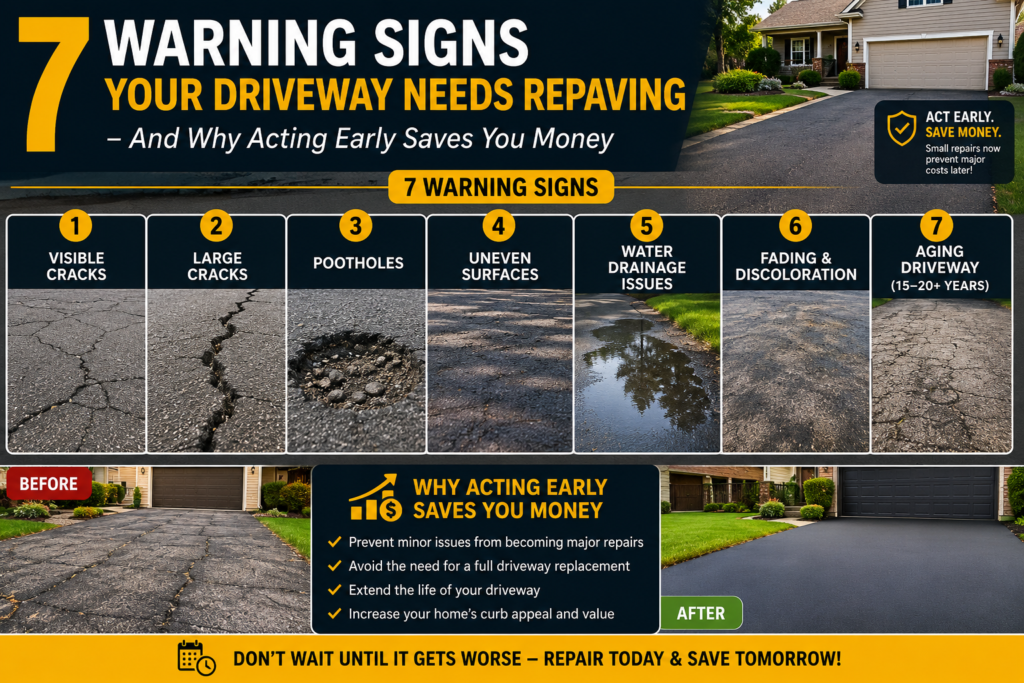
1. Cracks That Are Getting Wider or More Frequent
A thin hairline crack here and there is normal. Asphalt naturally expands and contracts with the Massachusetts temperature swings. But when you start noticing cracks that are wider than a quarter inch, spreading in a network pattern (called “alligator cracking”), or growing longer season after season, that’s your driveway crying for help.
Water is the real enemy here. Every crack is an entry point for moisture. Once water gets under your asphalt surface and freezes during a New England winter, it expands, forces the crack wider, and weakens the base layer underneath. What starts as a surface crack can quickly become a structural failure.
What to do: Small, isolated cracks can often be filled. Widespread cracking, especially alligator or spiderweb patterns, usually means the base is compromised, and repaving is the smarter long-term investment.
2. Potholes Are Forming
Potholes don’t appear overnight. They’re the final result of untreated cracks letting water in, the water freezing and expanding under the surface, and the pavement collapsing into the void below. Once a pothole forms, patching it alone only buys you time, especially if the surrounding pavement is already weakened.
Multiple potholes across your driveway are a strong sign that the base layer is deteriorating beneath the surface. In this case, patching is like putting a bandage on a broken arm.
What to do: A single pothole in an otherwise healthy driveway can be patched. If you’re seeing several, get a professional evaluation. The team at Driveway Specialists will assess whether a patch or a full repave makes more economic sense for your situation.
3. Drainage Problems – Water Pooling After Rain
Water should roll off your driveway and into proper drainage areas. If you’re noticing puddles sitting on the surface for hours after it rains, or water pooling near your garage foundation, something is wrong.
This usually means the driveway has shifted, settled unevenly, or the original grading was poor. Standing water is dangerous; it creates slip hazards in winter when it freezes, and it slowly destroys your pavement from the inside out.
What to do: This is a job for professionals. Drainage problems often involve regrading the base layer, not just resurfacing the top. Driveway Specialists handle full drainage and foundation work along with paving, so the problem gets fixed the right way.
4. The Surface Has Turned Gray and Looks Worn Out
Fresh asphalt is a rich, dark black color. Over time, UV rays from the sun oxidize the surface, and it turns gray. This isn’t just a cosmetic issue; the oxidation means the asphalt is drying out and becoming brittle, making it far more susceptible to cracking.
If your driveway looks faded, rough, and dry to the touch, it’s aging. Regular sealcoating every few years can slow this process dramatically and extend the life of your driveway by years.
What to do: If the surface is gray but the base is still solid, sealcoating may be enough to restore protection and appearance. If the driveway is also cracking or crumbling at the edges, it may be time to repave.
5. Crumbling or Raveling Edges
The edges of an asphalt driveway are always the most vulnerable. They don’t have the same structural support as the center and are constantly exposed to vehicle tires, lawn equipment, and landscaping runoff.
When you see the edges starting to crumble, chip, or fray, that’s called raveling. It means the asphalt binder is breaking down, and the aggregate (small stones) is separating from the surface. Left alone, edge raveling spreads inward toward the center of the driveway.
What to do: Cobblestone aprons and edging can provide a durable, attractive border that reinforces the edges of your driveway and prevents further crumbling. This is one of Driveway Specialists’ most popular upgrade services for homeowners in Natick and surrounding towns.
6. Your Driveway Is More Than 20 Years Old
Even a well-maintained asphalt driveway has a lifespan. In Massachusetts, where freeze-thaw cycles are extreme and winters are harsh, most asphalt driveways last between 15 and 25 years with proper maintenance.
If your driveway is approaching or past the 20-year mark, even if it “looks okay,” it’s worth getting a professional inspection. The structural integrity may be compromised beneath the surface in ways that aren’t immediately visible until they suddenly become a big problem.
What to do: Don’t wait for visible failure. A proactive repave at year 18–22 is almost always cheaper than an emergency replacement after the base fails completely. Call us for a free estimate, and we’ll give you an honest assessment.
7. You’re Trying to Sell Your Home
Your driveway is one of the very first things a potential buyer sees. Curb appeal matters enormously in real estate, and a cracked, patchy, faded driveway can shake buyer confidence before they even walk through the front door.
Studies show that a well-maintained or newly paved driveway can significantly improve a home’s perceived value and speed up the sale time. In competitive markets like Natick and the MetroWest area, first impressions are everything.
What to do: Repaving your driveway before listing is one of the highest-ROI home improvements you can make. A fresh, clean asphalt driveway signals to buyers that the property has been well cared for.
How Massachusetts Winters Accelerate Driveway Damage
Living in Natick, MA, means your driveway deals with something most of the country doesn’t: extreme freeze-thaw cycles. From November through March, temperatures swing above and below freezing repeatedly. Water trapped in pavement cracks freezes, expands, thaws, and refreezes. Every single cycle makes existing damage worse.
Add road salt (which accelerates asphalt breakdown), snowplow scraping, and heavy vehicles, and it’s easy to see why New England driveways age faster than those in warmer climates.
This is exactly why working with a local contractor who understands Massachusetts weather conditions matters. At Driveway Specialists, every project is built to withstand the specific demands of Middlesex and Norfolk County winters.
Asphalt vs. Other Driveway Materials – What’s Right for You?
Many homeowners ask us whether they should replace their asphalt driveway with concrete, pavers, or a tar-and-chip surface. Here’s a quick breakdown:
Asphalt – Most cost-effective upfront, handles freeze-thaw cycles extremely well, easy to repair and maintain, lasts 20–25 years with proper care. Best for most Massachusetts homeowners.
Tar and Chip (Chip Seal) – A rustic, attractive look with natural stone aggregate. More affordable than full asphalt, excellent traction, and a great option for private roads and rural driveways. Driveway Specialists offers professional tar and chip installation throughout the region.
Cobblestone Aprons and Edging – Perfect for upgrading the look of an asphalt driveway without replacing the whole thing. Cobblestone borders add elegance and structural edge support.
Concrete – More expensive upfront, can crack in freeze-thaw cycles, and is harder to repair. Not always the best fit for New England climates.
Why Choose Driveway Specialists for Your Natick Driveway?
Since 1988, Driveway Specialists has been the trusted choice for homeowners and businesses across Norfolk and Middlesex counties. Here’s what sets us apart:
Three Generations of Family Experience – We’re not a franchise or a national chain. We’re a family-owned business, and our owners personally oversee every single project we take on.
35+ Years of Local Knowledge – We know Massachusetts weather, soil conditions, and local regulations better than anyone. That knowledge goes into every driveway we pave.
Full-Service Solutions – From driveway paving and parking lot work to retaining walls, walkways, patios, cobblestone edging, and stone foundation waterproofing, we handle everything in one place.
Honest Assessments – We’ll never sell you a full replacement if a repair is the right call. Our reputation is built on doing right by our customers.
Free Estimates – We make it easy to find out exactly what your project will cost before you commit to anything.
Conclusion
Your driveway is more than a parking spot; it’s part of your home’s first impression, its safety, and its long-term value. Whether you’ve noticed the early warning signs of damage or you’re simply overdue for a professional check-up, the time to act is before small problems turn into expensive emergencies.
At Driveway Specialists, we’ve spent over three decades earning the trust of homeowners and businesses across Natick and the greater MetroWest area. We show up, we do the work right, and we stand behind it.
Ready to take the next step? Contact us today for your free estimate. There’s no obligation, no pressure, just an honest evaluation from people who know asphalt.
Frequently Asked Questions
How much does it cost to repave a driveway in Natick, MA?
Driveway repaving costs in Massachusetts typically range based on the size of the driveway, the condition of the existing base, and what materials are used. Small residential driveways will cost significantly less than large or multi-car driveways. The best way to get an accurate number is to schedule a free on-site estimate. Contact Driveway Specialists at (413) 337-3772.
How long will my new asphalt driveway last?
A properly installed asphalt driveway in Massachusetts typically lasts between 15 and 25 years. The key factors are the quality of the base preparation, the materials used, and how well you maintain it with sealcoating every 3–5 years.
When is the best time of year to repave a driveway in Massachusetts?
Late spring through early fall (May through October) is ideal for asphalt paving in New England. Temperatures need to be warm enough for the asphalt to be properly laid and compacted. Avoid paving in freezing temperatures.
Can cracks be repaired without full repaving?
Yes, minor, isolated cracks can often be filled and sealed without a full repave. However, widespread alligator cracking, multiple potholes, or significant base failure usually require a full replacement. A professional inspection from Driveway Specialists will tell you exactly what you’re dealing with.
What is tar and chip paving, and is it a good option?
Tar and chip (also called chip seal) is a paving method that applies a layer of liquid asphalt and then presses stone aggregate into the surface. It has a natural, textured look, excellent traction, and is more affordable than standard asphalt. It’s a great option for private driveways, country roads, or homeowners who want a distinctive appearance. Driveway Specialists offers professional tar and chip installation throughout MetroWest.
What is tar and chip paving, and is it a good option?
Tar and chip (also called chip seal) is a paving method that applies a layer of liquid asphalt and then presses stone aggregate into the surface. It has a natural, textured look, excellent traction, and is more affordable than standard asphalt. It’s a great option for private driveways, country roads, or homeowners who want a distinctive appearance. Driveway Specialists offers professional tar and chip installation throughout MetroWest.
Do you serve areas outside of Natick?
Yes! Driveway Specialists serves a wide range of communities across Norfolk and Middlesex counties, including Framingham, Newton, Wellesley, Needham, Westborough, Concord, Lexington, Brookline, and many more. Visit our website for the full service area list.
How soon can I use my driveway after repaving?
Most asphalt driveways can handle foot traffic within 24 hours of paving. Vehicle traffic is typically safe after 48-72 hours, though the asphalt continues to cure and harden over the following weeks. Your crew will give you specific guidance based on conditions.