
Driveway Paving in Framingham, MA
If you’re reading this, your Framingham driveway has probably told you it’s done. Edges have broken away, the surface has gone soft or cracked in a pattern that doesn’t come from one bad winter, or you’re staring at a bare patch of gravel where a driveway needs to go in before anything else on the property gets finished. Either way, you’re trying to figure out who to call and what it’s actually going to take.
Framingham doesn’t give you one answer to that question. We work on dense lots near the center and the north side streets, where two-family houses sit close together and a driveway might be barely wide enough for one car to clear the house next door. We work in the post-war subdivisions through the middle of town, where driveways were poured decades ago on a base nobody thinks about until it fails. And we work on the larger lots south of town, where the driveway is longer, the grade does more, and drainage becomes the whole conversation. Each of those needs a different scope, and we don’t quote one without seeing it.
What happens when we come out
A site visit means walking the driveway, not glancing at it. We check the grade – does it fall toward the garage, toward the street, or pool somewhere in the middle. We check what’s under the existing surface where we can, because a driveway that looks fine on top can be sitting on a base that’s already failed underneath. We look at trees. A lot of Framingham properties have mature oaks and maples close to the driveway edge, and roots under asphalt will heave a surface no matter how well it was laid. We also look at access – can a paver and a roller actually get into the space, or does the truck need to park on the street and run material in.
All of that changes the scope before we ever talk price. A flat, short apron on a subdivision lot is a different job than a long drive on a sloped lot with root pressure from an old maple at the edge. We tell you which one you have and why it matters, not just a number.


What Our Clients Say
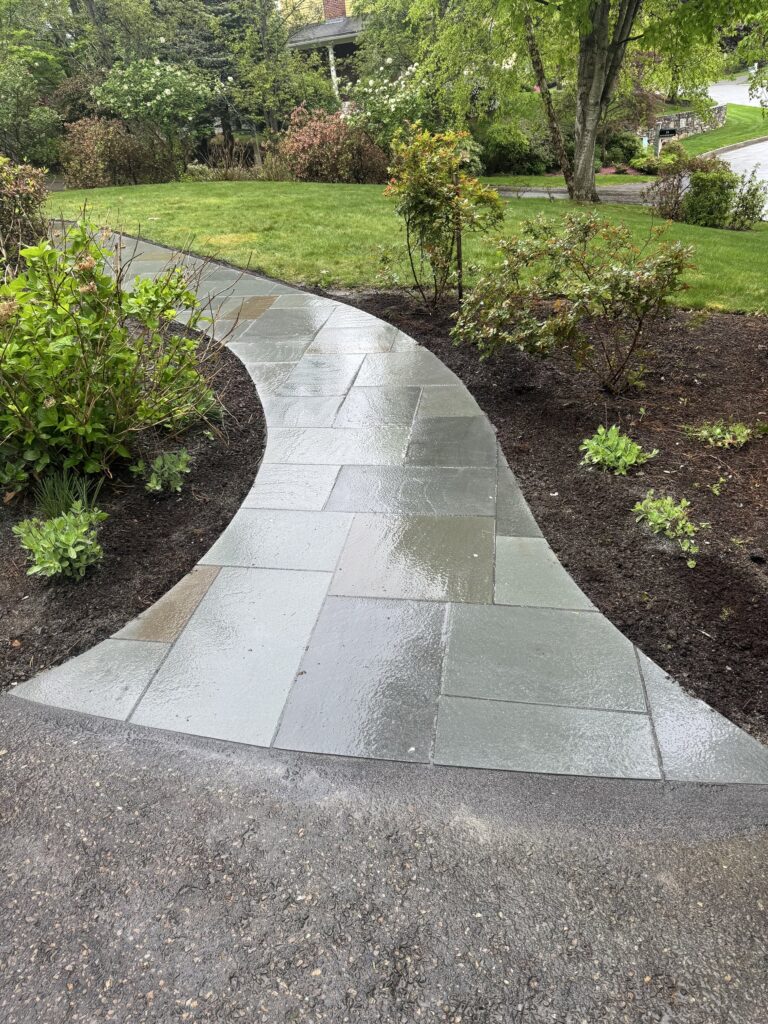
Why the base decides everything
The asphalt on top is what everyone sees, but the base underneath decides how long it lasts. Framingham’s soil varies block to block – some lots drain well, others hold water in heavier, clay-influenced ground, especially where grading has shifted as neighborhoods were built out over the years. A base laid on ground that doesn’t drain will heave, settle, and crack years before one laid where water actually moves through and away from the driveway.
This is where a resurfacing outfit and an actual paving contractor part ways. Anyone can lay hot asphalt over an existing surface. Whether it holds depends entirely on what’s underneath, and that’s never visible from the driveway.
Full replacement or overlay
Not every tired driveway needs to be torn out. If the base is sound – no cracks running through to the ground, no soft spots, no standing water after rain – an overlay gives you a fresh surface without the cost of full excavation. But overlaying a failed base just hides the problem for a season before the same cracks return, wasting that money.
Telling the difference takes more than a look. We check for depressions, test how the surface responds underfoot, and ask how the driveway has handled past Framingham winters. A drive that cracks in the same spots repeatedly, or holds water after rain, has a base problem no overlay will fix. One with isolated surface wear and a stable base is a strong candidate for resurfacing at a fraction of the cost of starting over.

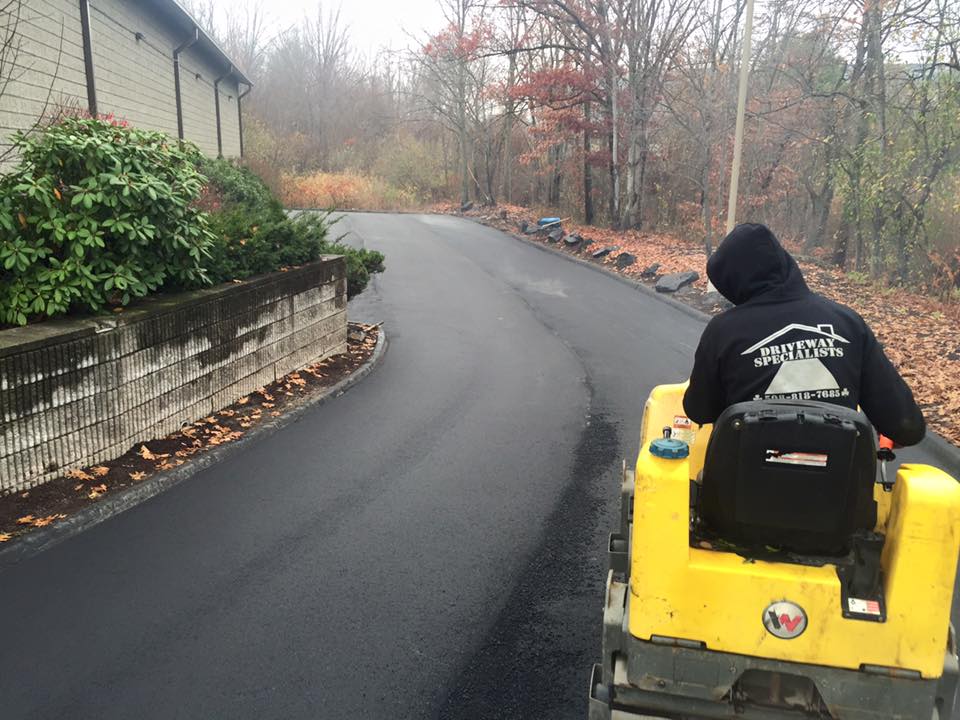
What actually drives the price
Square footage is the obvious factor, but it’s rarely the one that moves a quote the most. Depth of excavation matters more – a driveway that needs the old base dug out and hauled away costs differently than one going in on clean ground. Material removal and disposal, site access for equipment, the grade of the lot, where water needs to go, and whether the apron ties into a town-accepted road or a private way all factor in separately.
Framingham’s older neighborhoods add their own wrinkles: mature tree roots that have heaved the existing base, narrow lots off the main roads that limit how equipment gets positioned, and clay-heavy soil in parts of town that needs extra attention for drainage before any asphalt or pavers go down.
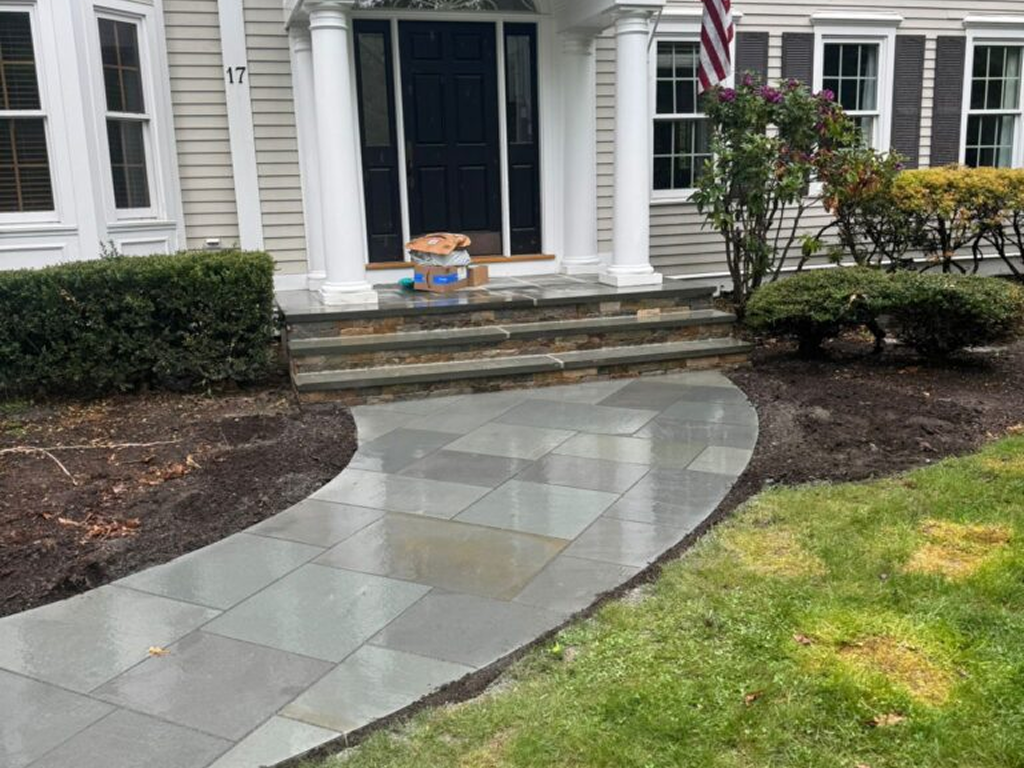
What drives the price
Several things set the cost of a driveway, and each one is visible only on site.
- Square footage : The area to be paved, plus any widening, turnaround or parking pad you want added.
- Depth of excavation : How far down the old material has to come out, and how much of the base has to be rebuilt.
- Material removed : The old asphalt has to be hauled away, and the amount depends on what is there.
- Access: A paver, a roller and delivery trucks all need to get in and turn around. Tight Framingham frontages can limit what equipment fits, which changes how the work is staged.
- Grade: A steep drive is harder to prepare, harder to compact and harder to drain correctly.
- Drainage: If water needs to be moved off the drive and away from the house, that work is part of the job.
- The apron: On many Framingham lots the apron meets the sidewalk with very little room between the street and the house. How that transition is built affects both the drive and the walk, and we look at it closely.
Anyone who gives you a firm figure without having stood on your driveway is guessing. When the guess is wrong, the extra cost shows up later as shortcuts in the base.
Scheduling around Massachusetts weather
Paving in Massachusetts runs on a season, not a calendar date, and asphalt plants adjust their own schedules around temperature and conditions. That means booking ahead matters more than most homeowners expect, particularly if you’re planning around a specific event or closing date. We’ll give you a realistic window once we’ve seen the job, rather than a date that sounds good on the phone and doesn’t hold.
Once the work is scheduled, your part is straightforward: move vehicles clear of the work area for the full job, and keep the new surface free of traffic for the period we tell you on-site – that window depends on the mix, the weather, and how the compaction holds. The first season on a new driveway is also when you’ll see how it settles and sheds water, which is exactly why we grade it right the first time instead of leaving that to chance.
Get a scope, not a guess
A Framingham driveway that’s reached the end of its life, or a new build waiting on its driveway, both need the same thing first: someone who looks at the ground before talking numbers. That’s the visit we do.
Call Driveway Specialists at (413) 337-3772 to set up a site visit. We’ve been doing this work across Middlesex County since 1988, and we’ll tell you straight whether your driveway needs an overlay, a full rebuild, or something in between.
FAQs
How do I know if my Framingham driveway needs full replacement or just an overlay?
It comes down to the base. If there's no major cracking through to the ground, no soft spots, and water doesn't pool after rain, an overlay can work. If the same cracks keep coming back or water sits on the surface, the base has failed and an overlay won't hold – it needs to come out.
Why does the base matter more than the asphalt itself?
The surface is only as stable as what's under it. Ground that drains poorly will shift and heave a base over time, and no amount of asphalt thickness on top fixes that. Framingham has a mix of soil conditions across town, so what's under one driveway isn't necessarily what's under the next.
Can you give me a price without seeing the driveway?
Not an accurate one. Price depends on excavation depth, material removal, access for equipment, grade, drainage, and how the apron meets the road. Those vary enough from one Framingham property to the next that a phone quote is a guess, not a number you can plan around.
When can paving work actually get scheduled?
Paving in Massachusetts follows the season rather than a fixed date, since asphalt plants and crews work around weather and conditions. We'll give you a realistic window once we've seen the site, and booking ahead matters if you have a specific timeline in mind.
What do I need to do once the driveway is scheduled?
Clear vehicles from the work area for the day of the job and keep traffic off the new surface for the period we specify on-site, which depends on conditions. The first season is when the driveway settles in, which is also why getting the grade right at the start matters.
Call us
If your Framingham driveway has reached the end of its life, or you are putting one in for the first time, call (413) 337-3772. We will arrange a time to see the site, measure it, and tell you what it needs.