
Driveway Paving in Sherborn, MA
A driveway in Sherborn rarely looks like a driveway anywhere else in MetroWest. It is often a few hundred feet of surface cut through trees, crossing ledge, dropping and rising with the land before it ever reaches the garage. When that surface starts to crack, heave, or pond water halfway down its length, the question is not whether to fix it but whether what is under it can be trusted to hold a new one. That is the call we get: a driveway that has reached the end of what patching can do, or a new build on a wooded lot with no driveway in yet.
We have worked this kind of ground across Norfolk and Middlesex counties for over 35 years, as a family-run outfit since 1988. Sherborn’s large lots, ledge, and conservation-adjacent frontage change how a driveway gets built and how long it lasts. Here is what we look at, what decides the scope, and what actually drives the cost.
What happens when we come out
A site visit on a Sherborn property takes longer than it would on a quarter-acre suburban lot, because there is more to see. We walk the full length of the drive, not just the end near the house. We look at where the grade falls, where water already runs or pools, where tree roots have lifted the edge, and whether ledge is close enough to the surface to affect excavation. On a long wooded drive, the first fifty feet near the road can be in completely different ground than the last fifty feet near the house, and both have to be accounted for before anyone talks about material.
We measure square footage, but on these lots that number means less than it does elsewhere. A long rural drive is really several different drainage and base conditions strung together, and the quote has to reflect that.
Why the base is the whole job
Anyone can lay new surface over whatever is already there. Whether that surface survives a Massachusetts winter depends entirely on what is underneath it. A base that drains freely holds up; one that sits on clay or traps water under a wooded canopy will heave and crack again, often faster than the original. On a ledge-heavy lot, the base question gets more specific still: shallow rock can mean the drainage has to move sideways instead of down, which changes how the whole base is built. This is the difference between a paving contractor and a resurfacing outfit, and it is where most of the cost in a Sherborn job actually goes.


What Our Clients Say
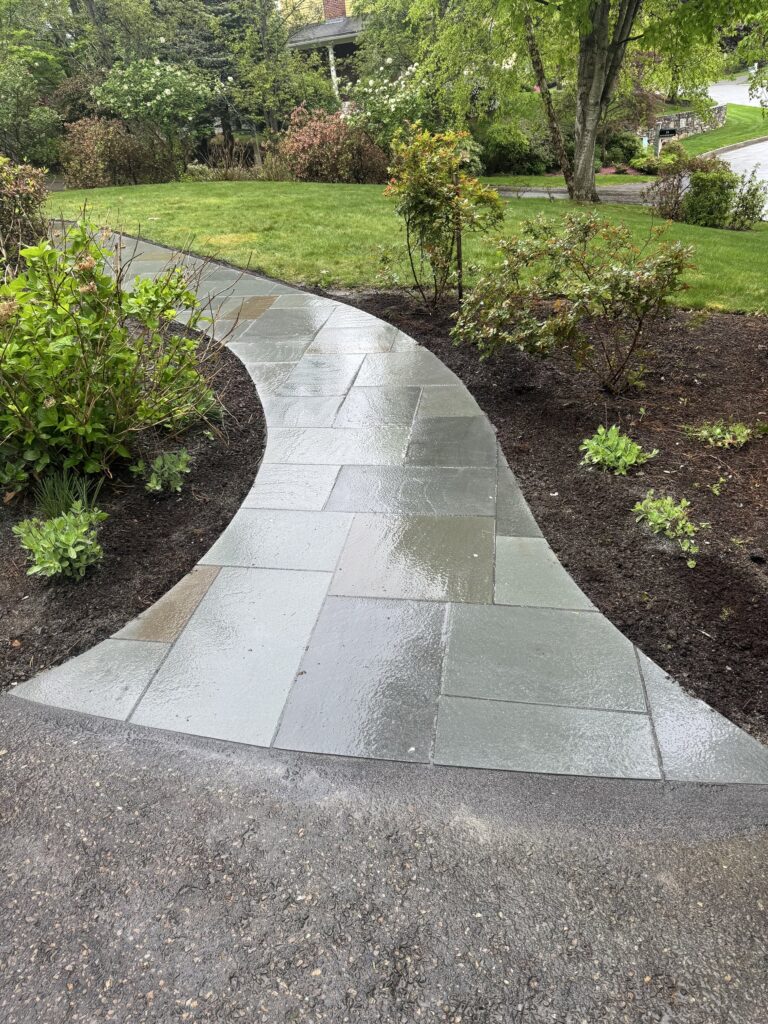
Full Replacement or Overlay
An overlay only makes sense when the base underneath is sound. On a Sherborn drive with root heave from old trees, standing water, or ledge-related drainage trouble, an overlay just traps the same problem under a fresh surface and it reopens, usually within a season or two. A sound base is dry, stable underfoot, and free of the alligator cracking that signals it has already failed. If we see that, an overlay can work well and save you real money. If we don't, we say so, because paying for an overlay on a failed base is money spent twice. That's when full replacement earns its keep: we pull up the old surface, correct the grading and drainage, rebuild the base properly, and pave fresh.
What Drives the Price
Square footage is only one input. Depth of excavation, how much material has to come out, access for equipment, grade, drainage work, and the apron at the road all factor in, and on a wooded Sherborn lot each of these can swing the number more than on a flat suburban drive. Many of these parcels sit on ledge or heavy clay, and when excavation hits rock or standing water, the scope of work changes before a single ton of base material is spread. Getting a paver and a roller down a tree-lined private drive without damaging stone walls, root systems, or low-hanging canopy takes planning that a straight, open lot simply does not require, and sometimes means hand work where machines can't fit. Culverts, swales, and town setback requirements near wetlands add their own cost.

Scheduling Around New England Weather
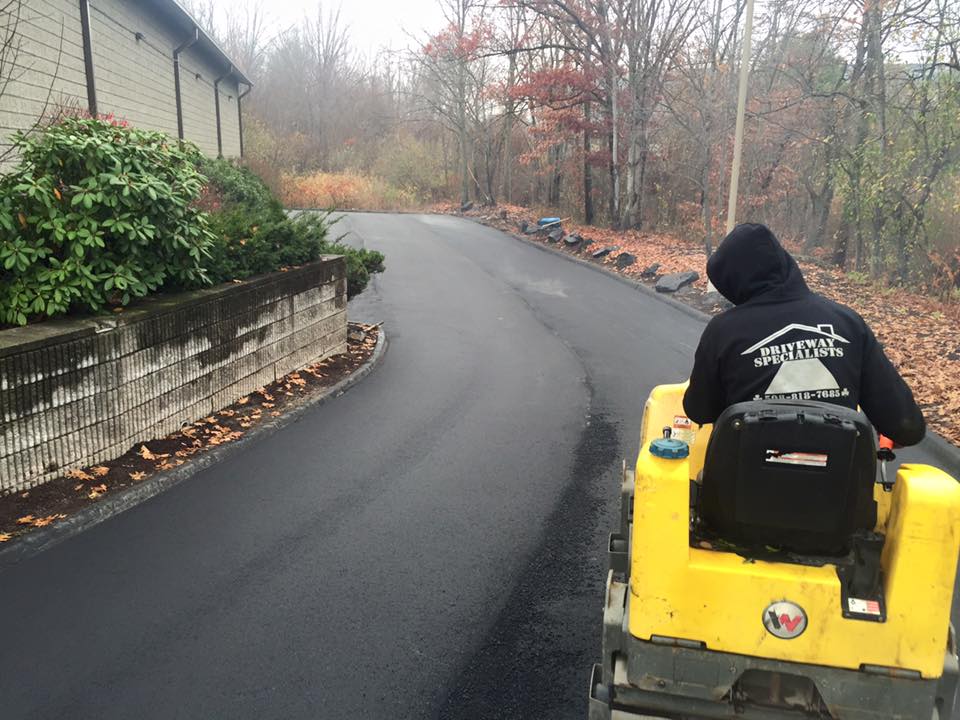
Paving in Massachusetts runs on a seasonal window, roughly from late spring through mid-fall once ground temperatures hold steady enough for asphalt to compact and cure properly. Sherborn’s long rural drives often take more working days than a short flat one in a tighter subdivision, simply because there is more ground to cover, more grading to true up, and more drainage to get right before any surface goes down near wooded lots and low-lying areas. We book around that reality rather than promise a date that a wet spring or an early frost can undo. Once work starts, the homeowner’s job is straightforward: keep vehicles off the new surface for the period we specify on site, avoid parking in the same spot repeatedly during the first few warm weeks, and expect the first season to be when the surface settles in fully under normal New England weather and use.
What drives the price
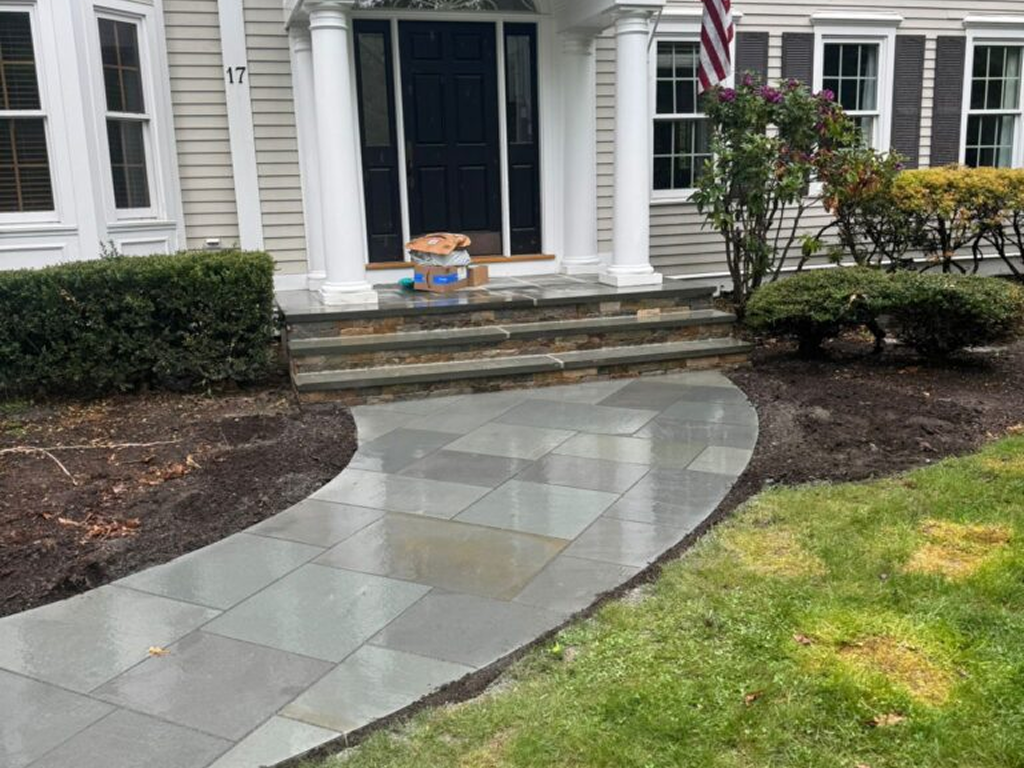
Several things set the cost of a driveway, and each one is visible only on site.
- Square footage : The area to be paved, plus any widening, turnaround or parking pad you want added.
- Depth of excavation : How far down the old material has to come out, and how much of the base has to be rebuilt.
- Material removed : The old asphalt has to be hauled away, and the amount depends on what is there.
- Access: A paver, a roller and delivery trucks all need to get in and turn around. Tight Sherborn frontages can limit what equipment fits, which changes how the work is staged.
- Grade: A steep drive is harder to prepare, harder to compact and harder to drain correctly.
- Drainage: If water needs to be moved off the drive and away from the house, that work is part of the job.
- The apron: On many Sherborn lots the apron meets the sidewalk with very little room between the street and the house. How that transition is built affects both the drive and the walk, and we look at it closely.
Anyone who gives you a firm figure without having stood on your driveway is guessing. When the guess is wrong, the extra cost shows up later as shortcuts in the base.
Trees, Roots, and Shade
Mature oaks and maples line most long drives in Sherborn, and their roots do not stop at the edge of the surface. Root heave under asphalt shows up as a ridge or a soft spot long before it cracks through. A shaded, tree-covered drive also stays damp longer after rain, which matters when we are deciding how the base needs to shed water instead of hold it.
Ledge and Grade Through the Woods
A drive that climbs or drops through wooded terrain is a drainage problem before it is a paving one. Water has to go somewhere, and on a lot with ledge near the surface, it often cannot go straight down. We grade and build the base so runoff moves away from the surface and the foundation, instead of carving channels under it after the first hard rain. This is where a generic quote falls apart on this kind of ground.
Ready to Have It Looked At
If your Sherborn driveway has reached the point where patching no longer holds, or you are building new and need the drive put in right from the base up, the next step is a site visit, not a phone estimate. Call Driveway Specialists at (413) 337-3772 and we will walk the ground with you and tell you plainly what it needs.
FAQs
How long does paving a long Sherborn driveway take?
It depends on the length, the grade, and how much drainage and base work the ground needs before surface goes down. A long wooded drive with ledge or root issues takes longer than a short flat one of the same square footage, since the base work is rarely uniform along its full length.
Can an existing gravel driveway be paved over directly?
Sometimes, if the existing base is compacted, well-drained, and free of soft spots. On many Sherborn lots the gravel has settled unevenly over roots or ledge, so we check it on site before saying whether it can serve as the base or needs rebuilding.
Does ledge near the surface add to the cost?
It can, mainly because drainage sometimes has to be routed sideways rather than straight down when rock sits close to the surface. We only know how much this affects a given drive after walking it.
What time of year do you pave in Sherborn?
Paving here follows the Massachusetts paving season. We schedule around weather and ground conditions rather than fixed dates, and we'll talk through timing specific to your project when we visit.
Call us
If your Sherborn driveway has reached the end of its life, or you are putting one in for the first time, call (413) 337-3772. We will arrange a time to see the site, measure it, and tell you what it needs.