
Driveway Paving in Shrewsbury, MA
If you’re looking at a driveway in Shrewsbury that’s cracked through to the base, heaving at the edges, or just gone soft and uneven after another New England winter, you’re probably past the point where patching makes sense. Same if you’re building new and staring at a stretch of graded dirt that needs to become a driveway before anyone can park on it. Either way, the question isn’t whether to pave. It’s who does the work and whether they get the base right.
Shrewsbury isn’t one kind of town to pave in. Around the lake, drives are short, tight to the house, and often shoehorned between mature trees and a neighbor’s property line. Out on the eastern side, in the newer subdivisions off Route 20 and further out, lots are bigger, drives are longer, and the grading was done more recently by a developer rather than inherited from a 1950s lot. Both need the same thing underneath – a base that actually does its job – but how you get there differs, and so does the equipment that can realistically reach the work area.
Soil here is part of the problem on older lots especially. A lot of Shrewsbury’s original driveway bases were never properly compacted gravel – they were whatever was on hand when the house went up, sometimes with loam or clay too close to the surface. That’s exactly what causes the frost heave and alligator cracking you see after a hard winter, because water gets under the asphalt, freezes, expands, and has nowhere to go. A proper rebuild means digging out the old surface, sometimes deeper than homeowners expect, and laying a compacted gravel base thick enough to drain and to handle freeze-thaw cycles without shifting.
What happens when you call us is straightforward. We come out and look at the actual driveway, not a satellite photo of it. That means checking the grade – does water run toward the garage or away from it – looking at what’s growing near the edges, and finding out what’s actually under the existing surface if there is one. A short, flat lakeside apron with decent drainage is a different job from a long subdivision drive on clay fill that was never compacted properly before the asphalt went down. We measure square footage, note where trees and roots are likely to be a problem, and figure out how a paver and roller are actually going to get in and turn around, which on some of the tighter lake streets is its own puzzle.
From there we tell you honestly whether you’re looking at a full replacement or whether the existing base can be reused. That’s the conversation that matters most, because it’s also where a driveway quote can go badly wrong if the person giving it never got out of the truck. A few things worth knowing before that visit:


What Our Clients Say
Why the Base Decides Everything
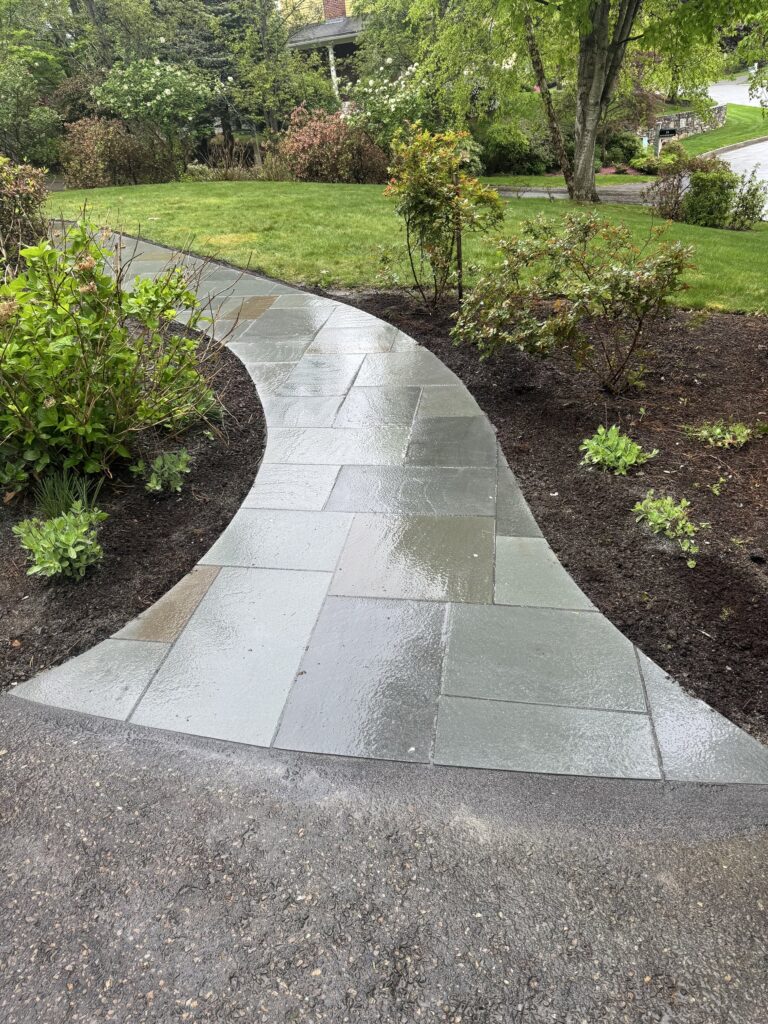
The asphalt on top is the part everyone sees, but it's the base that decides whether a Shrewsbury driveway lasts or fails early. A properly built base starts with excavating out the old material and soft soil, then compacting in layers of crushed gravel that let water drain away instead of pooling under the surface. That drainage is what resists the freeze-thaw cycle that pushes New England pavement apart every winter, cracking anything built on a shortcut base. Skip that step and no amount of fresh asphalt on top will fix it come spring.
Full Replacement or Overlay
An overlay – a new layer of asphalt over the old – only works if the base beneath it is still sound. Minor surface cracking, fading, and a driveway that still drains properly are good signs you're a candidate. Base failure looks different: alligatored cracking across wide areas, soft or spongy spots underfoot, edges crumbling away from the lawn, or water sitting in low spots after rain. If you see that, an overlay just buries the problem under a thin skin of new material that will fail again, usually within a season or two. On a Shrewsbury lakeside lot where the water table sits close to the surface, a bad base shows up even sooner, since trapped moisture has nowhere to go. We check the base properly before recommending either option – probing soft spots, checking drainage patterns, and looking at how the existing asphalt has aged.

What Drives the Price
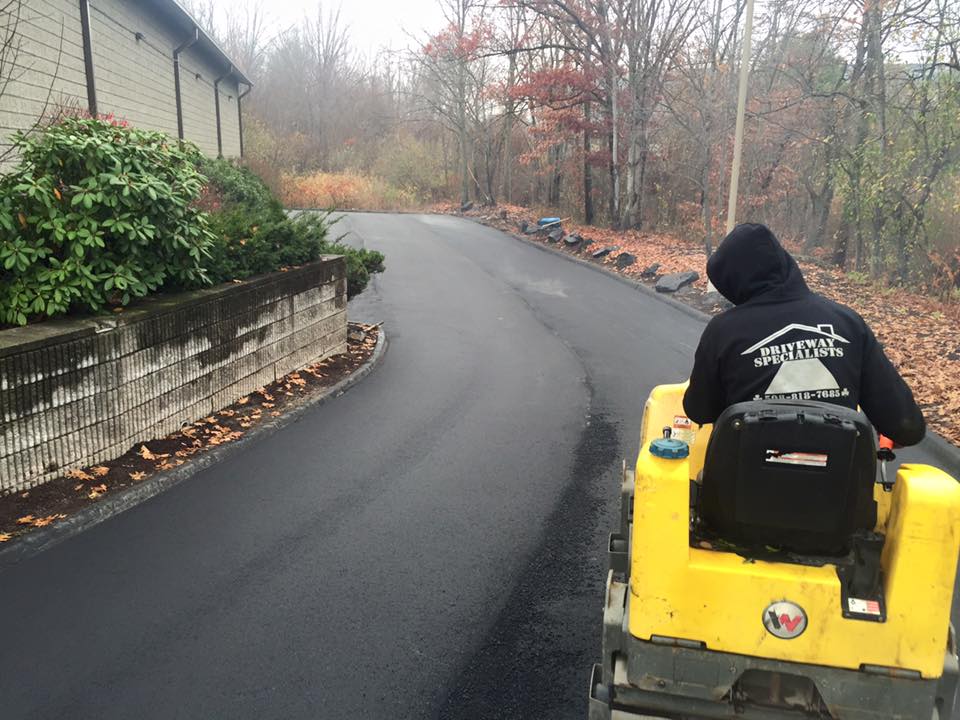
Square footage is the obvious factor, but it’s rarely the deciding one. Depth of excavation matters more – a driveway built on sandy, well-drained soil near the lake needs less dug out and replaced than one on compacted clay fill out toward the newer subdivisions. Removing and hauling off old asphalt or gravel base, access for equipment on a narrow lake street versus an open subdivision lot, the grade and where water needs to go, and whether the apron ties into a town road or a private way all change the scope.
- Base depth and material – thin gravel fixes versus a full rebuild
- Drainage work – swales, culverts, or regrading to keep water off the surface
- Site access – tight streets near the lake can slow equipment and add time
- Apron and curb cuts – tying into town roads often means extra permitting
What drives the price
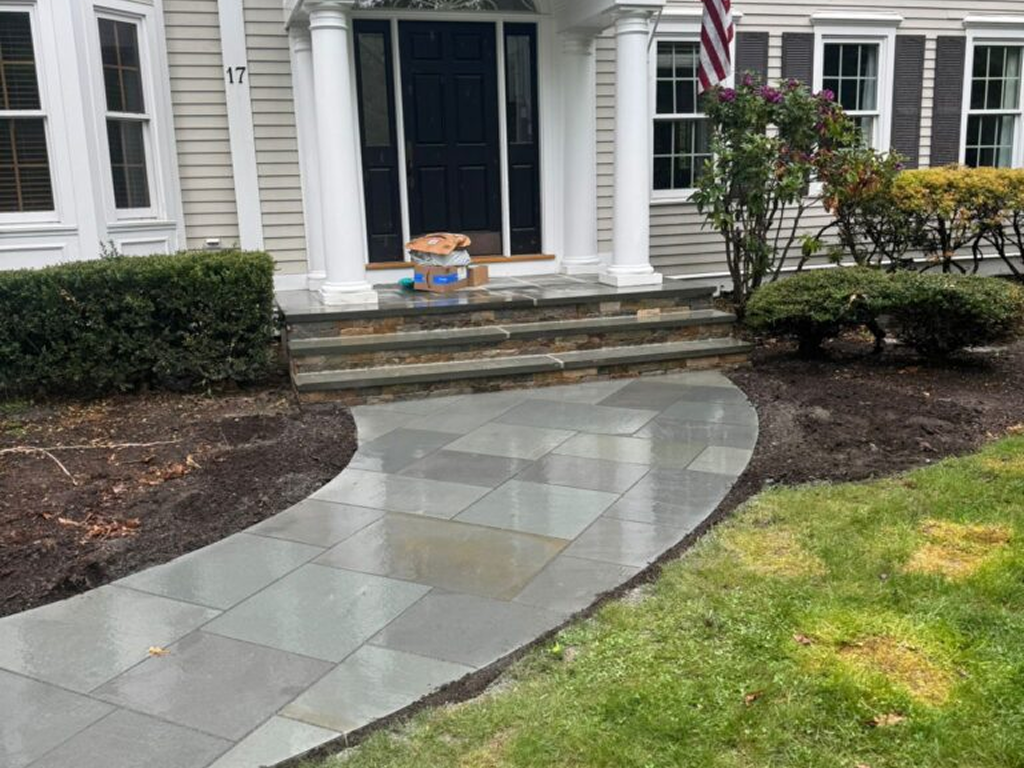
Several things set the cost of a driveway, and each one is visible only on site.
- Square footage : The area to be paved, plus any widening, turnaround or parking pad you want added.
- Depth of excavation : How far down the old material has to come out, and how much of the base has to be rebuilt.
- Material removed : The old asphalt has to be hauled away, and the amount depends on what is there.
- Access: A paver, a roller and delivery trucks all need to get in and turn around. Tight Shrewsbury frontages can limit what equipment fits, which changes how the work is staged.
- Grade: A steep drive is harder to prepare, harder to compact and harder to drain correctly.
- Drainage: If water needs to be moved off the drive and away from the house, that work is part of the job.
- The apron: On many Shrewsbury lots the apron meets the sidewalk with very little room between the street and the house. How that transition is built affects both the drive and the walk, and we look at it closely.
Anyone who gives you a firm figure without having stood on your driveway is guessing. When the guess is wrong, the extra cost shows up later as shortcuts in the base.
Scheduling Around Massachusetts Weather
Paving in Massachusetts is seasonal work, and Shrewsbury is no exception. That means booking ahead matters, especially if your driveway is failing and you’d rather not spend another freeze-thaw cycle watching it get worse. Once we’re on-site, you’ll need to keep cars off the new surface and clear of the work area while it’s done. The first season after paving is when a new driveway settles in, so we’ll walk you through what to expect and what to avoid, like parking in the same spot every day or letting water pool against a new edge, before we leave the job.
Getting Started
Whether your Shrewsbury driveway is cracked through from the base up or you’re putting one in for the first time, the next step is the same: a site visit where we actually look at your ground, your grade, and your access before we talk numbers. We’ve been doing this work across Worcester County and the towns around it since 1988, as a family business, not a franchise. Call (413) 337-3772 and we’ll set up a time to come take a look.
FAQs
How do I know if my Shrewsbury driveway needs full replacement or just an overlay?
Look at the base, not just the surface. Minor surface cracks with good drainage can often take an overlay. Soft or spongy spots, wide alligator cracking, or crumbling edges mean the base has failed, and an overlay over that will fail again quickly. A site visit settles it faster than guessing.
Does it matter that my lot is near the lake versus out in a newer subdivision?
Yes. Lakeside lots tend to have shorter, tighter drives with sandier soil and closer water tables, while the newer subdivisions on the eastern side often sit on compacted fill with longer drives and different grading needs. Both affect how deep we excavate and how we handle drainage.
Can you give me a price over the phone?
Not a firm one. Price depends on square footage, excavation depth, what's hauled out, site access, grade, and drainage, all of which we need to see in person to quote accurately.
When can paving start in Shrewsbury?
Paving here is seasonal work, so timing depends on current weather and how far out our schedule is booked. Call ahead and we'll give you a realistic window rather than a guess.
What should I do right after my new driveway is paved?
Keep vehicles off it for the time we specify on-site, avoid parking in the exact same spot repeatedly while it cures over the first season, and make sure water isn't allowed to pool against new edges.
Call us
If your Shrewsbury driveway has reached the end of its life, or you are putting one in for the first time, call (413) 337-3772. We will arrange a time to see the site, measure it, and tell you what it needs.