
Stone Foundation Waterproofing: How to Protect Your Home from Water Damage
If your home has a stone foundation, water is your biggest enemy. Stone foundations are common in older New England homes, and while they’re strong, they’re also porous. That means moisture can quietly seep in through mortar joints and gaps for years before you ever notice a problem, until you’re staring at a cracked, damp, or crumbling basement wall.
The good news? Stone foundation waterproofing is one of the most effective ways to stop water damage before it turns into a five-figure repair bill. Here’s what every homeowner should know before hiring someone to fix it.
Why Stone Foundations Are More Prone to Water Damage
Unlike poured concrete foundations, stone foundations are built from individual stones held together with mortar. Over decades, that mortar breaks down, shrinks, or cracks, creating small gaps where groundwater can seep through.
Add in New England’s freeze-thaw winters, where water expands as it freezes inside those gaps, and you get a slow but steady process of structural wear. This is especially common in older homes across Middlesex County, including areas like Maynard, Natick, and surrounding towns.
Signs Your Stone Foundation Needs Waterproofing
You don’t need to be a contractor to spot the warning signs. Watch for:
- Musty or damp odors in the basement
- Visible water stains or damp patches on stone walls
- White, chalky residue (efflorescence) on the surface
- Crumbling or soft mortar between stones
- Mold or mildew growth
- Standing water or pooling after rain
If you’re seeing even one or two of these, it’s worth getting a professional inspection before the damage spreads.
Common Stone Foundation Waterproofing Methods
There’s no one-size-fits-all fix. A good contractor will recommend a method (or combination) based on the extent of the damage.
Exterior Waterproofing
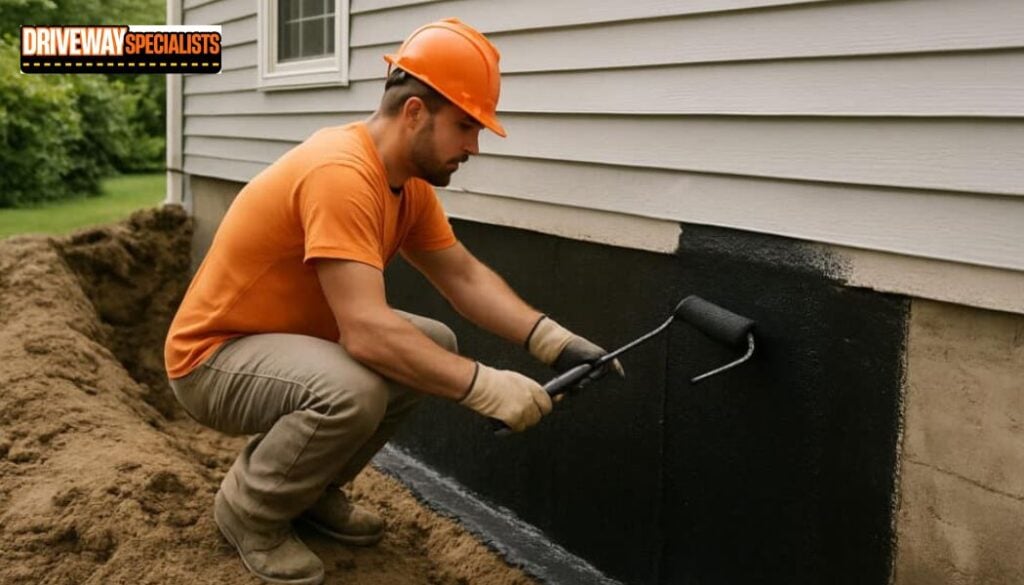
This is the most thorough approach. It involves excavating around the foundation, cleaning and prepping the stone, applying waterproof membranes and coatings, and installing drainage systems to redirect water away from the house before it ever reaches the wall.
Interior Waterproofing
A less invasive option, ideal for managing moisture from the inside. This typically includes interior drainage channels, sump pumps, vapor barriers, and sealant applications to keep basements and crawl spaces dry.
Crack Injection and Sealing
Cracks are the easiest entry point for water. Polyurethane or epoxy injections seal cracks from the inside out, creating a permanent, waterproof bond.
Drainage System Installation
French drains, perimeter drains, and downspout extensions work together to manage groundwater and keep it moving away from your foundation instead of pooling around it.
Repair and Restoration
If a previous waterproofing job has failed, restoration services, reapplying membranes, resealing cracks, removing efflorescence, can bring the system back to full strength without a full rebuild.
Why Professional Waterproofing Matters
DIY sealant from a hardware store might buy you a season or two, but it won’t address the root cause. Professional waterproofing from Driveway Specialists starts with a full site evaluation, checking drainage, soil moisture, foundation construction, and existing damage, so the fix targets the actual source of the problem, not just the symptoms.
Done right, it protects your home in several ways:
- Prevents structural deterioration and mold growth
- Improves indoor air quality and basement comfort
- Increases property value and buyer confidence
- Withstands freeze-thaw cycles year after year
- Delivers long-term structural strength
Protecting the Rest of Your Property, Too
A dry foundation is a great start, but water damage often connects to what’s happening above ground too. Poor grading, cracked pavement, and drainage issues near your driveway or parking area can send water straight toward your foundation walls.
If you’re a homeowner or property manager in Maynard, MA, it’s worth looking at your property as a whole system:
- Private driveway paving in Maynard, MA: A properly graded, well-installed driveway directs water away from your home instead of toward it.
- Parking lot paving in Maynard, MA: For commercial properties, solid drainage-conscious paving reduces pooling that can eventually affect nearby foundations.
- Tar and chip in Maynard, MA: A durable, budget-friendly surface option that also holds up well against New England’s freeze-thaw seasons.
Handling foundation waterproofing and exterior paving work together often saves homeowners money and prevents the same drainage problem from resurfacing in a different spot.
Conclusion
A stone foundation is part of what gives an older New England home its character, but it needs the right care to stay dry, stable, and structurally sound. Whether you’re dealing with early warning signs or a foundation that’s already showing damage, waterproofing is an investment that protects your home’s value and your peace of mind for decades to come.
And if water problems near your foundation trace back to your driveway or parking area, it’s worth tackling both at once. From private driveway paving to parking lot paving and tar and chip work in Maynard, MA, handling the full picture means fewer surprises down the road. Ready to protect your home? Get a free waterproofing estimate or call (413) 337-3772 to schedule a consultation.
Frequently Asked Questions
Why do stone foundations need waterproofing?
Stone foundations are more porous than concrete. Moisture seeps through mortar joints and gaps over time, which can lead to dampness, mold, and structural deterioration if left untreated.
What are the signs of water problems in a stone foundation?
Common signs include musty odors, damp or stained walls, crumbling mortar, visible mold, and standing water in the basement or crawl space after rain.
What's the difference between interior and exterior waterproofing?
Exterior waterproofing addresses water at the source, before it reaches the foundation wall, and is more comprehensive but more involved. Interior waterproofing manages water after it enters, using drainage and sump systems, and is less invasive.
Can waterproofing stop basement leaks permanently?
A properly installed waterproofing system, paired with good drainage and regular maintenance, can significantly reduce or eliminate leaks for the long term.
How long does stone foundation waterproofing take?
Most projects take a few days to about a week, depending on the extent of the damage, site accessibility, and whether interior or exterior work (or both) is needed.
Does driveway or parking lot drainage affect foundation waterproofing?
Yes. Poorly graded driveways or parking areas can direct water toward your foundation instead of away from it. Addressing paving and drainage together helps prevent repeat water issues.