
The Driveway Paving Process: What to Expect from Start to Finish
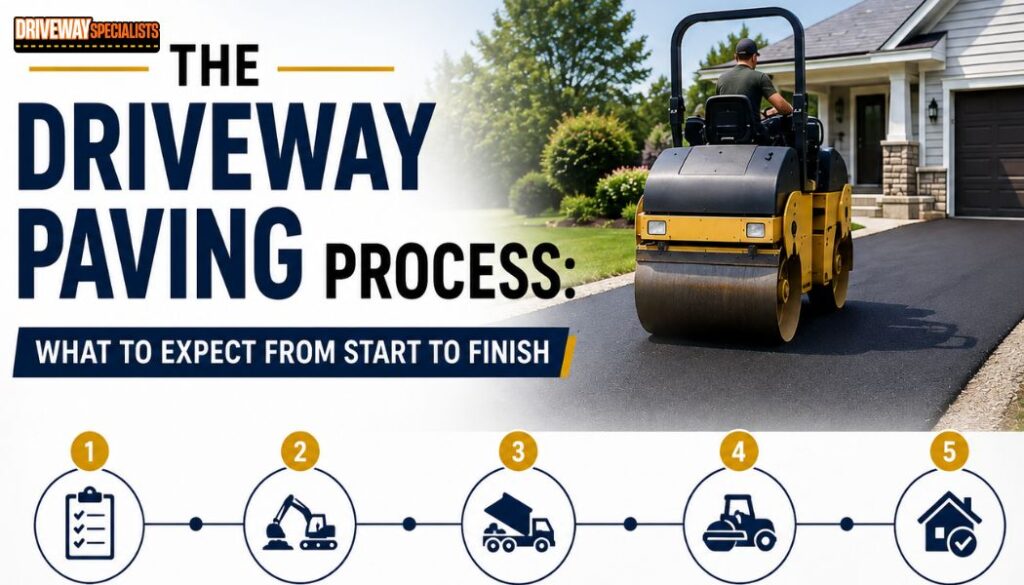
Investing in a new driveway is one of the best ways to boost your home’s curb appeal and property value, but the process can feel like a mystery if you’ve never been through it before. How long does it take? Will there be a mess in your yard? What happens if it rains?
At Driveway Specialists, we’ve guided homeowners across Norfolk and Middlesex Counties through the asphalt paving process since 1988. This guide walks you through exactly what to expect during driveway paving, from the first site visit to the final rolled surface, so you can plan with confidence and know what “quality work” actually looks like.
Step 1: Free Estimate and Site Evaluation
Every project starts with a conversation, not a shovel. A member of our team visits your property to evaluate the existing surface, drainage patterns, soil conditions, and the overall scope of the job. We’ll measure the area, discuss your goals (a simple resurface versus a full tear-out and rebuild), and answer any questions about timeline or budget.
This is also the stage where we flag anything unusual, standing water, cracked foundations, or grading issues, that could affect the paving process. If your property has a stone foundation showing signs of moisture intrusion, we may also recommend stone foundation waterproofing in Natick, MA before paving begins, since trapped water near a foundation wall can undermine even a freshly paved surface nearby.
Step 2: Excavation and Grading
Once you approve your free estimate, our crew arrives to excavate the old driveway or prepare a new one from bare ground. This step involves:
- Removing existing asphalt, gravel, or damaged material
- Excavating to the proper depth (typically 8–12 inches for residential driveways)
- Grading the sub-base to ensure water drains away from your home and garage
Proper grading is arguably the single most important step in the entire asphalt paving process. Skipping it, or rushing it, is the number one reason cheap driveways crack, pool water, or heave within a year or two.
Step 3: Building the Gravel Base
A durable driveway is built from the ground up, literally. We install and compact a layer of crushed stone (processed gravel) that serves as the structural foundation for the asphalt above it. This base layer:
- Provides load-bearing strength for vehicles
- Allows water to drain instead of collecting under the pavement
- Prevents frost heave during New England winters
We compact this base in stages using heavy machinery, checking slope and elevation as we go. This is one part of the job you genuinely can’t rush, a compromised base guarantees a shortened driveway lifespan no matter how nice the top layer looks.
Step 4: Binder Course Installation
Next comes the binder (or base) course, a coarser layer of hot-mix asphalt that adds strength and stability. This layer is typically installed at 2–3 inches thick and rolled with a compactor to eliminate air pockets. Think of the binder course as the muscle of your driveway; the finish coat is the skin.
Step 5: Top Coat and Final Compaction
The final layer is the smooth, dense-graded asphalt surface course most people picture when they think of a driveway. We pave this layer at a consistent thickness (usually 1.5–2 inches), then compact it thoroughly with a roller while the asphalt is still hot and workable. Proper compaction at this stage is what gives a driveway its long-term strength and that clean, dark, freshly paved look.
We also hand-edge and clean up borders along garages, walkways, and landscaping so the finished product looks intentional and professional, not just functional.
Step 6: Curing Time
Fresh asphalt needs time to cure before it can handle regular use:
- Avoid walking on it for 24-48 hours
- Avoid driving on it for 3-5 days
- Full cure (able to handle sharp turns without scuffing) can take up to 30 days
We’ll give you specific care guidelines based on the weather and time of year, since curing time can vary in summer heat versus cooler fall temperatures.
What About Tar and Chip Driveways?
Not every homeowner wants a traditional asphalt driveway, and that’s where tar and chip in Framingham, MA comes in. Tar and chip (also called chip seal) uses a layer of hot liquid asphalt topped with crushed stone, rolled into place for a textured, rustic surface. The process differs from standard paving in a few key ways:
- No hot-mix asphalt plant material required
- Faster curing time than traditional asphalt
- A more textured, natural stone appearance popular in historic New England neighborhoods
If you’re weighing tar and chip against asphalt for your Framingham property, our team can walk you through the pros, cons, and cost differences during your free estimate.
Why Homeowners Trust Driveway Specialists
Since 1988, our family-owned crew has poured, compacted, and finished driveways throughout Natick, Framingham, and the surrounding Norfolk and Middlesex County communities. Every job is personally overseen by our owners, and we use the same quality materials and process on every project, no shortcuts, no guesswork.
Whether you’re planning a full asphalt driveway replacement, exploring tar and chip for a classic New England look, or dealing with a moisture issue near your foundation before paving begins, our team can walk you through exactly what to expect for your specific property.
Final Thoughts
Understanding the driveway paving process helps homeowners know what to expect, avoid common installation mistakes, and choose a contractor who prioritizes proper preparation over shortcuts. From grading and base installation to final compaction and curing, every step contributes to a driveway that performs well for years. If you’re planning a new driveway in Massachusetts, Driveway Specialists is here to help with expert guidance, quality workmanship, and personalized recommendations. Schedule a professional site evaluation with Driveway Specialists to determine the best paving solution for your property and ensure long-lasting results.
Common Questions About the Paving Process
How long does driveway paving take?
Most residential driveways take 1–3 days from excavation to final rolling, depending on size and whether a full tear-out is required.
Can I pave over an existing driveway?
Sometimes. If the existing base is stable and drainage is sound, an overlay may be possible. Our site evaluation will determine whether your driveway needs a full replacement or a resurface.
What's the best time of year to pave a driveway in Massachusetts?
Late spring through early fall offers the best temperatures for proper asphalt compaction and curing, though we schedule projects throughout the season based on demand.
Do I need drainage or waterproofing work done first?
If your home has a fieldstone or block foundation near the paving area, we often recommend addressing stone foundation waterproofing in Natick, MA first, since water intrusion issues near a foundation can eventually affect adjacent pavement and grading.
Should I sealcoat a new asphalt driveway right away?
No. Most contractors recommend waiting about 6-12 months before applying the first sealcoat so the asphalt has enough time to cure properly.
What causes a new driveway to crack?
Cracking is often caused by poor base preparation, inadequate drainage, heavy vehicle traffic, freeze-thaw cycles, or natural aging. Proper installation significantly reduces the risk of early cracking.