
When to Pave Your Driveway in Massachusetts: The Complete Seasonal Timing Guide
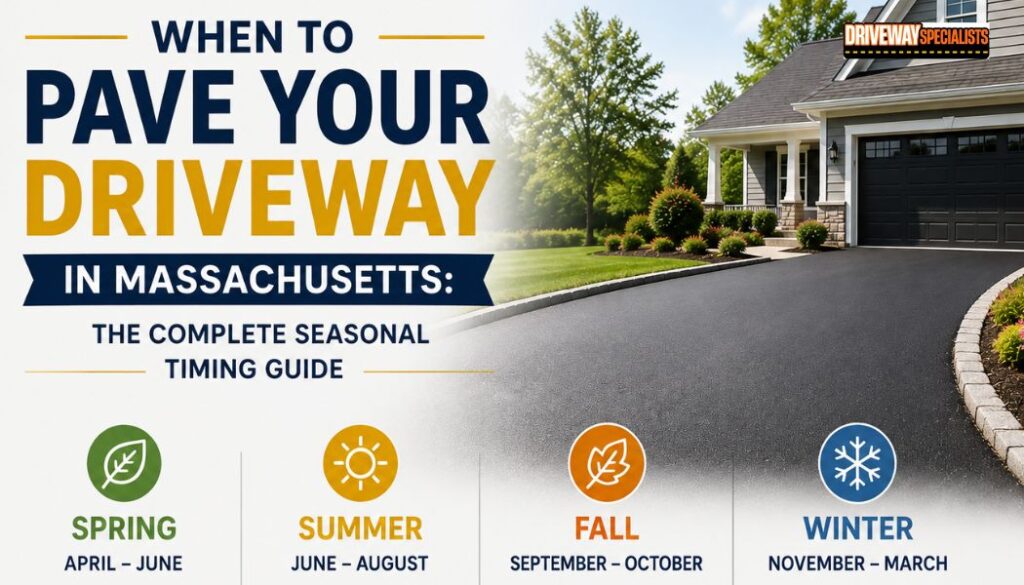
The best time to pave a driveway in Massachusetts is mid-May through mid-October, when air and ground temperatures consistently remain above 50°F (10°C). Warm weather allows asphalt to be properly placed, compacted, and cured, helping create a stronger, longer-lasting surface. While summer offers the most ideal paving conditions, early fall is also an excellent time for asphalt installation before colder temperatures arrive.
If you’re planning a new driveway, walkway, or patio project in Norfolk or Middlesex County, timing plays a major role in the quality and longevity of your investment. Massachusetts experiences harsh freeze-thaw cycles, fluctuating temperatures, humidity, and seasonal storms that can all affect how asphalt performs if it’s installed under the wrong conditions.
In this guide, we’ll explain why the paving season matters, compare the advantages of each season, discuss what can happen if you pave too early or too late in the year, and share expert tips to help you plan your project. Whether you’re considering walkway installation in Framingham or private driveway paving in Natick, understanding the best time to pave will help you achieve a durable, long-lasting result.
Best Time to Pave a Driveway in Massachusetts: Season Comparison
Season | Good for Paving? | Why |
Spring (Mid-May–June) | Spring (Mid-May–June) | The ground has thawed, and warmer temperatures provide suitable conditions for paving. |
Summer (July–Early September) | Best | Consistent warm temperatures allow asphalt to compact and cure properly for maximum durability. |
Fall (September–Mid-October) | Very Good | Cooler weather is still ideal as long as temperatures remain above 50°F (10°C). |
Winter (Late October–April) | Not Recommended | Cold temperatures and frozen ground prevent proper compaction and curing. |
Why Timing Matters for Asphalt Driveways in New England
Asphalt is a temperature-sensitive material. When it’s mixed at the plant, it’s heated to roughly 300°F, then trucked to your property and compacted while still hot and pliable. For it to bond, compact, and cure properly, both the ground temperature and air temperature need to stay warm enough long enough.
Pave too early in spring or too late in fall, and you risk:
- Poor compaction – cold asphalt stiffens too fast to be rolled properly, leaving air pockets that weaken the surface
- Cracking and raveling – the mix cools before it fully bonds to the base layer
- Reduced lifespan – a driveway that should last 15–20 years may need repair in half that time
- Voided warranties – many manufacturers won’t warranty asphalt installed outside recommended temperature ranges
This is why an experienced Massachusetts paving contractor won’t just take your call any day of the year, the calendar is part of the job.
When to Pave a Driveway: A Season-by-Season Breakdown
Spring (Mid-May Through June) – Good, With Caveats
Spring is a popular time to pave once the ground has fully thawed and dried out. However, early spring in Massachusetts is often too wet and cold. Frost needs to be completely out of the ground before excavation and base work begin, or the driveway can settle unevenly once the soil fully thaws. Waiting until mid-to-late May typically gives contractors stable, workable conditions.
Summer (July Through Early September) – Ideal Window
This is generally the best time to pave a driveway in Massachusetts. Consistent daytime highs, low humidity swings, and dry ground allow asphalt to compact evenly and cure at the correct rate. Most paving companies, including ours, see peak demand during these months, which means booking early is the best way to secure your preferred install date.
Fall (September Through Mid-October) – Still a Strong Choice
Early-to-mid fall remains a great window, especially for homeowners who missed the summer rush. Daytime temperatures are usually still warm enough, and cooler nights don’t pose a problem as long as paving happens during daylight hours with adequate ground and air temperature. Once temperatures start regularly dropping below 50°F at night, though, quality starts to suffer.
Winter (Late October Through April) – Avoid New Asphalt Installation
Reputable Massachusetts paving contractors won’t install new asphalt driveways during freezing or near-freezing conditions. Cold asphalt cools before it can be properly compacted, and frozen ground makes proper base preparation impossible. If your driveway fails in winter, the right move is a temporary patch or gravel fill until the spring paving season opens back up, not a rushed cold-weather pour.
Signs You Should Start Planning Now (Even If It's Off-Season)
Even though paving itself is seasonal, planning isn’t. If you notice any of the following, it’s smart to schedule a free estimate now so you’re first in line when the weather cooperates:
- Alligator-pattern cracking across large sections of the driveway
- Potholes or crumbling edges
- Standing water or drainage issues after rain
- A driveway that’s more patch than pavement
- Visible sinking or unevenness near the foundation or garage apron
Contractors book out fastest for May through September, so homeowners who reach out in late winter or early spring often get the earliest, best-scheduled installation dates.
Walkway Installation in Framingham, MA: Timing and Design Considerations
Walkways face the same seasonal constraints as driveways, but there’s more room for creative material choices. In Framingham, homeowners often pair a new walkway installation with cobblestone edging, paver borders, or a connected patio for a cohesive front-yard look. Because walkways involve smaller surface areas and more hand-detailing around landscaping, plantings, and steps, spring and early fall tend to be especially popular; mild weather makes it easier to match new hardscaping with existing lawns and gardens without disturbing them during peak growing season.
If you’re in Framingham and considering a walkway alongside a driveway refresh, bundling both projects into one seasonal visit often saves on mobilization costs and gets your whole property looking finished at once.
Private Driveway Paving in Natick, MA: What to Expect
As a Natick-based company, we handle a high volume of private driveway paving in Natick, MA, and the process typically follows four steps regardless of season:
- Free on-site estimate – we assess your current driveway, soil conditions, and drainage needs
- Excavation and base preparation – old asphalt is removed and a proper gravel base is compacted
- Asphalt installation – hot-mix asphalt is laid and compacted to the correct thickness for residential use
- Curing period – new driveways need roughly 3–5 days before foot traffic and 7–10 days (or longer, depending on temperature) before vehicles should park on the surface
Natick’s mix of older homes and newer developments means every driveway has slightly different grading and drainage challenges, which is why an in-person estimate, not a phone quote, is always the right first step.
Final Thoughts
Choosing the right time to pave your driveway is one of the most important decisions you can make for its long-term performance. Scheduling your project during Massachusetts’ ideal paving season, from mid-May through mid-October,helps ensure proper asphalt compaction, stronger curing, and a driveway that can better withstand New England’s freeze-thaw cycles. Planning ahead also gives you more flexibility when choosing a contractor and securing your preferred installation date during the busiest months.
If you’re ready to replace an aging driveway, install a new walkway, or improve your property’s curb appeal, Driveway Specialists has been helping homeowners throughout Norfolk and Middlesex Counties since 1988. Contact our team today for a free, no-obligation estimate and expert guidance on planning your next paving project.
Frequently Asked Questions
When is the best time to pave a driveway in Massachusetts?
Late May through mid-October, when air and ground temperatures stay reliably above 50°F, gives asphalt the best chance to compact and cure correctly.
Can you pave a driveway in the fall in MA?
Yes, as long as it’s done by mid-October in most years. After that, overnight temperatures typically drop too low for a durable installation.
How long does a new asphalt driveway last in New England?
With proper installation timing and routine sealcoating, a well-installed asphalt driveway typically lasts 15–20 years in Massachusetts’s climate.
Should I wait until spring if my driveway is falling apart in winter?
In most cases, yes. A temporary patch can get you through the cold months safely, with full replacement scheduled once paving season returns.
What weather conditions are best for driveway paving?
Dry weather with daytime temperatures above 50°F (10°C) is ideal. Warm, stable conditions help asphalt compact evenly and cure properly, reducing the likelihood of future cracks or premature wear.
Why is warm weather important for asphalt paving?
Asphalt must remain hot long enough to be properly spread, compacted, and bonded to the base. Cold temperatures cause the material to cool too quickly, which can reduce compaction, increase the risk of cracking, and shorten the driveway’s lifespan.