
Why Your Old Stone Foundation Is Leaking - And How to Fix It for Good
If your basement smells musty, your walls look damp, or you’ve spotted white powdery stains near the floor, your stone foundation is trying to tell you something. Water is getting in, and it’s only a matter of time before that small problem becomes a very expensive one.
Stone foundations are common in older New England homes, and they were built to last. But unlike modern poured concrete, stone and mortar are naturally porous. Over time, moisture finds its way through, and when it does, it doesn’t stop on its own.
This guide explains why stone foundations leak, what the warning signs look like, what waterproofing actually involves, and how Driveway Specialists can protect your home from water damage before it gets worse.
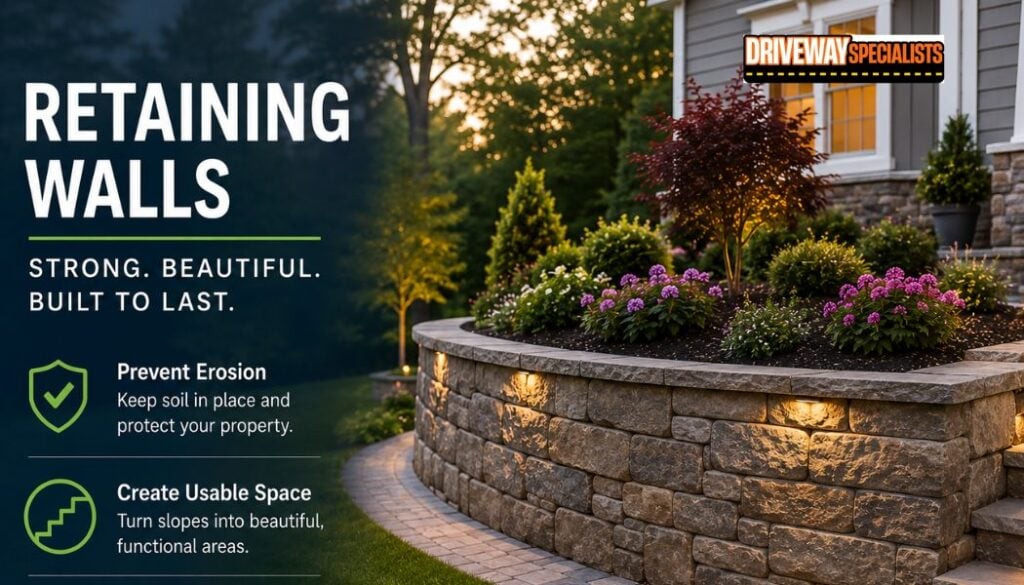
Retaining walls do far more than hold dirt in place. They create level, functional outdoor areas where there were none. They redirect water away from your home’s foundation. They prevent expensive erosion from undercutting your driveway, garden beds, or landscaping. And when built with the right material, they add a striking visual element that enhances your property’s curb appeal and market value.
This guide covers everything you need to know about retaining walls, what they are, which materials work best, how the installation process works, and when to call in a professional.
What Makes Stone Foundations Different from Modern Foundations
Most homes built before the 1950s in Massachusetts have stone foundations. These were constructed using fieldstone, granite, or rubble stone held together with lime or Portland cement mortar.
They were strong and durable for their time, but they were never designed with modern waterproofing standards in mind.
Here is what makes stone foundations particularly vulnerable to moisture:
Stone is porous by nature, so water passes through it slowly but steadily. Mortar joints crack and crumble over time, creating easy entry points for water. The natural freeze-thaw cycle in New England expands and contracts the stone repeatedly every winter, which widens cracks each year. Older drainage systems around these foundations were minimal or non-existent, meaning water has nowhere to go except inward.
In short, your stone foundation is fighting against water every single season, and without proper waterproofing, it is a battle it will eventually lose.
Warning Signs Your Stone Foundation Needs Waterproofing
Many homeowners do not realize their foundation has a water problem until the damage is already significant. These are the most common warning signs to look for:
Musty or damp smell in your basement. This is often the first sign. Even if you cannot see water, moisture trapped in stone walls creates a persistent musty odor that does not go away with ventilation alone.
White powdery deposits on the walls. This is called efflorescence. It happens when water moves through the stone and carries dissolved minerals to the surface, leaving a white residue behind. It is a clear sign that water is actively moving through your foundation.
Damp or wet walls after rain. If your basement walls feel wet or show water staining after heavy rain or snowmelt, your foundation is not managing water properly.
Crumbling or deteriorating mortar. The mortar between stones softens and breaks down when exposed to repeated moisture. Once mortar fails, water enters freely through every joint.
Mold or mildew growth. Mold needs moisture to survive. If you are seeing mold in your basement or crawl space, water infiltration is almost certainly the root cause.
Puddles or pooling water. Water actually standing in your basement means your foundation drainage has completely failed and the problem requires immediate attention.
If you recognize any of these signs, waterproofing should not be delayed. The longer moisture stays in contact with your foundation, the more structural damage occurs.
What Stone Foundation Waterproofing Actually Involves
Waterproofing a stone foundation is not simply painting on a sealant and calling it done. A proper waterproofing solution addresses moisture from multiple angles, both from the outside and the inside.
Exterior Waterproofing
This is the most thorough and long-lasting approach. It addresses water at its source, before it ever reaches your foundation walls.
The process involves excavating the soil around the entire foundation perimeter, cleaning and preparing the stone surfaces, applying professional-grade waterproofing membranes and coatings directly to the exterior, installing drainage board and a perimeter drain system to redirect water safely away from the foundation, and backfilling with appropriate gravel drainage material.
Exterior waterproofing is the gold standard because it stops water entry at the source rather than managing it after it gets inside.
Interior Waterproofing
For many homeowners, interior waterproofing provides an effective and less disruptive solution. Instead of stopping water before it enters, interior systems manage water after it enters the wall and redirect it before it causes damage.
Interior waterproofing typically includes installation of interior drainage channels along the base of the foundation walls, a sump pump system to collect and discharge water away from the home, vapor barriers to control moisture migration, and wall sealant applications to slow water infiltration through the stone.
This approach works very well for managing chronic moisture and keeping basements dry without the cost and disruption of full exterior excavation.
Crack Injection and Mortar Repointing
Before any membrane or coating is applied, cracks and failed mortar joints must be addressed directly. Polyurethane and epoxy injection materials are used to fill and seal cracks from the inside out, creating a permanent waterproof bond. Deteriorated mortar joints are repointed with fresh mortar to restore the integrity of the stone structure.
Skipping this step and applying a coating over damaged mortar is one of the most common mistakes in foundation waterproofing, and it leads to early failure.
Drainage Systems
Even the best waterproofing membrane will eventually fail if water has nowhere to go and pressure builds up against the foundation. A proper drainage system is essential to every stone foundation waterproofing project.
Solutions include French drains, perimeter drain systems, downspout extensions, and sump pump integration to manage groundwater and surface water runoff throughout every season.
Why New England Homes Face Higher Foundation Water Risk
Homeowners in Massachusetts deal with some of the most demanding conditions for foundation health in the country. Heavy spring rainfall saturates the soil around foundations. Winter snowmelt creates sudden high-volume water runoff. The freeze-thaw cycle, which can happen dozens of times between November and March, repeatedly expands and contracts the stone, widening cracks and breaking down mortar year after year.
Homes in towns like Framingham, Natick, Wellesley, Newton, Lexington, and surrounding communities are particularly susceptible because of the age of housing stock combined with heavy seasonal moisture.
Getting ahead of these problems with professional waterproofing is far less expensive than repairing structural damage after water has been working its way through your foundation for years.
The Real Cost of Ignoring a Leaking Stone Foundation
Some homeowners put off foundation waterproofing because it feels like a big investment. But consider what happens when the problem is left unaddressed:
Persistent moisture deteriorates mortar joints progressively, requiring increasingly expensive repairs. Mold growth inside basement walls creates indoor air quality problems that affect the entire home and can become a health concern. Water damage to finished basement spaces means replacing flooring, drywall, and belongings. In severe cases, water infiltration undermines the structural integrity of the foundation itself, turning a waterproofing project into a full foundation repair or replacement.
Most importantly, a wet or damaged foundation is one of the most significant red flags for home buyers. A professionally waterproofed foundation, on the other hand, increases buyer confidence and property value.
What to Expect When You Work with Driveway Specialists
At Driveway Specialists, every stone foundation waterproofing project begins with a thorough on-site assessment. The team examines your foundation construction, existing drainage conditions, soil moisture levels, and signs of active water damage to understand exactly where moisture is coming from and how it is moving through your foundation.
From there, a customized waterproofing plan is developed for your specific property — not a one-size-fits-all solution. Materials are selected based on your foundation type, your budget, and the severity of the moisture problem.
The process is transparent from start to finish. You will know exactly what work is being done, why each step matters, and what the expected results are before work begins.
Driveway Specialists has been serving homeowners across Massachusetts since 1988, and stone foundation waterproofing is one of the core services the team has built its reputation on.
Conclusion: Protect Your Home's Foundation Before Water Wins
Your stone foundation has been doing its job for decades, keeping your home standing through harsh New England winters, heavy rains, and everything in between. But moisture is patient, and even the strongest stone foundation needs help managing water over time.
Professional stone foundation waterproofing is one of the most important investments you can make in your home. It protects the structural integrity of your foundation, improves your indoor air quality, prevents mold, and preserves your property value for years to come.
If you have noticed any signs of moisture in your basement, or if you simply want to get ahead of the problem before it starts, Driveway Specialists is ready to help. The team serves homeowners across Massachusetts and brings decades of real experience to every project.
Contact us today for a free consultation and expert assessment. We’ll help you protect your stone foundation, keep your basement dry, and give you peace of mind for years to come.
Frequently Asked Questions About Stone Foundation Waterproofing
Why do stone foundations need waterproofing when they have lasted for decades?
Stone foundations were built before modern waterproofing materials and standards existed. They have lasted because of the quality of the stone and the craftsmanship, but that does not mean they are impervious to moisture. Over decades, mortar deteriorates, drainage systems fail, and water pressure increases. Waterproofing addresses what the original construction was never designed to handle.
Is interior or exterior waterproofing better for a stone foundation?
Exterior waterproofing is more comprehensive because it stops water at the source. However, interior waterproofing is highly effective for many homes and is less disruptive. The best choice depends on the severity of the problem, the accessibility of the foundation, and your budget. A professional assessment will identify which approach is right for your specific situation.
How long does stone foundation waterproofing last?
A professionally installed waterproofing system with quality materials can last 20 to 30 years or more when properly maintained. The longevity depends on the type of system installed, the drainage conditions around the property, and whether minor maintenance issues are addressed promptly.
Can I waterproof a stone foundation myself?
DIY sealants and coatings are available, but they rarely provide lasting protection on stone foundations. The irregular surface of stone and mortar joints, combined with active hydrostatic pressure, causes surface-applied DIY products to fail relatively quickly. A proper waterproofing system requires professional assessment, preparation, and installation to deliver reliable long-term results.
Will waterproofing fix the musty smell in my basement?
Yes. Musty odors in basements are caused by moisture, either from active water infiltration or high humidity levels. Once moisture is controlled through a proper waterproofing and drainage system, the musty smell disappears. In cases where mold has already developed, remediation may be needed alongside waterproofing.
How do I know if my foundation needs repair before waterproofing?
A professional inspection will identify whether cracks, failing mortar, or structural concerns need to be addressed before waterproofing is applied. Waterproofing over an unstable or damaged foundation is ineffective. Crack injection, mortar repointing, and any necessary structural repairs are part of a complete waterproofing project.
How soon should I act if I notice water in my basement?
As soon as possible. Water damage compounds over time. What starts as moisture seeping through mortar joints can progress to active leaks, mold growth, and structural deterioration. Early action is always less expensive than waiting.