
Asphalt vs Concrete Driveway: Which One Is Actually Worth It?
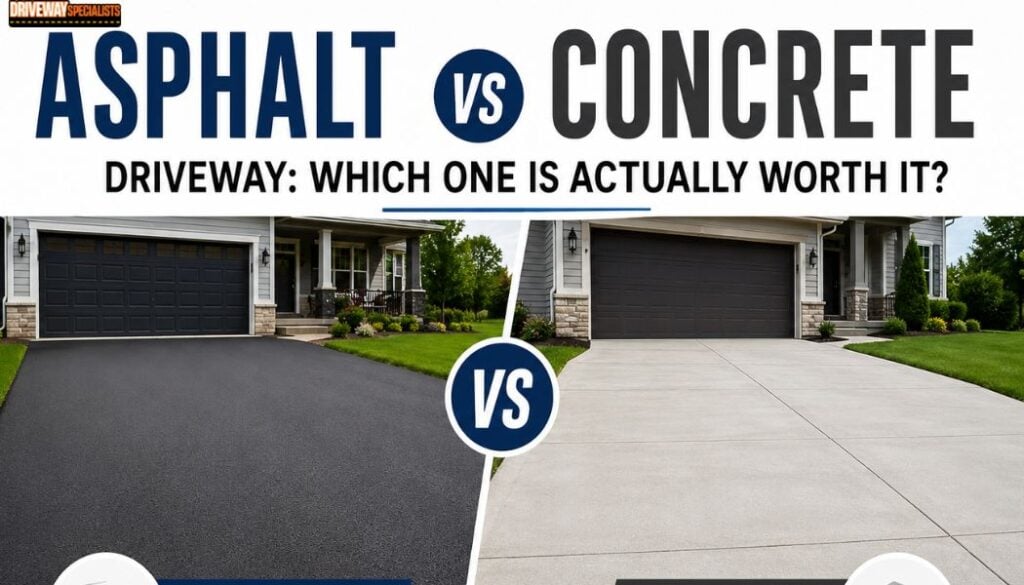
Choosing between asphalt and concrete isn’t just about appearance, it’s about finding the right material for your climate, budget, and long-term maintenance goals. In Massachusetts, harsh winters and freeze-thaw cycles can significantly affect driveway performance. This guide compares asphalt vs concrete driveways, including cost, durability, maintenance, lifespan, and curb appeal, so you can confidently choose the best option for your home.
If you’re replacing or installing a new driveway, the asphalt vs concrete driveway decision is usually the first big fork in the road. Both materials can look great and last for decades, but they behave very differently once winter, budget, and maintenance schedules enter the picture, especially here in Massachusetts, where freeze-thaw cycles are brutal on pavement.
At Driveway Specialists, we’ve been paving driveways across Eastern Massachusetts since 1988, as a third-generation, family-run operation. We’ve poured, patched, and replaced enough of both materials to give you a straight answer instead of a sales pitch. Here’s how asphalt and concrete actually compare.
Asphalt vs Concrete Driveway
For most New England homeowners, asphalt is the better all-around choice because it flexes with freeze-thaw cycles, costs less upfront, and is easier to repair. Concrete can outperform asphalt in warmer, drier climates and offers more design flexibility, but it’s more prone to cracking here and costs significantly more to install and fix.
That said, the right answer depends on your budget, climate exposure, and how long you plan to stay in your home. Let’s break it down.
Cost Comparison: What Drives the Price Difference
When homeowners search for the best driveway material cost, they’re usually surprised by how much the price gap actually is. As a general rule in the Massachusetts market:
- Asphalt driveways typically run $4–$7 per square foot installed, depending on base preparation, thickness, and drainage needs.
- Concrete driveways typically run $8–$14 per square foot installed, with stamped or decorative finishes pushing costs even higher.
For an average 600-square-foot driveway, that’s roughly a $2,400–$4,200 asphalt project versus a $4,800–$8,400 concrete project. The gap widens further if the concrete includes color, stamping, or exposed aggregate finishes.
Asphalt’s lower material and labor cost is one reason it remains the go-to option for driveways throughout Natick, Framingham, Sudbury, Wayland, and the rest of MetroWest; it delivers durability without the premium price tag.
How Each Material Handles New England Winters
This is where the decision really gets made for most local homeowners.
Asphalt is a flexible pavement. It expands and contracts slightly with temperature swings, which means it resists the freeze-thaw cracking that’s so common in our climate. It also handles road salt well and can be resealed every 2–3 years to extend its life to 20+ years with proper maintenance.
Concrete is a rigid material. It doesn’t flex, so when water gets into small cracks and freezes, it expands and forces the crack wider, a cycle that repeats every winter. Concrete is also more vulnerable to damage from de-icing salts, which can cause surface scaling and pitting over time. On the plus side, concrete driveways can last 25–30 years if properly sealed and maintained in a suitable climate.
Maintenance and Repair
- Asphalt is easier and cheaper to repair. Cracks, potholes, and surface wear can typically be patched or sealcoated without replacing the entire driveway.
- Concrete repairs are trickier. Because concrete is poured in sections, a damaged section often needs to be cut out and replaced, and matching the color/texture of the original pour isn’t always possible.
If low-hassle, budget-friendly upkeep matters to you, asphalt has a clear edge.
Appearance and Curb Appeal
Concrete wins on design versatility. It can be stamped, stained, colored, or exposed-aggregate finished to mimic stone, brick, or slate. Asphalt offers a clean, classic black finish that many homeowners actually prefer for its simplicity and the way it makes edging, landscaping, and lighting pop by contrast.
Installation Timeline
Asphalt driveways are ready for light use within 24–48 hours and full use within a few days. Concrete needs a longer cure time, typically 7 days before light vehicle use and closer to 28 days for a full cure, which matters if you’re on a tight schedule.
Beyond the Driveway: Other Projects We Handle
A driveway is rarely the only exterior project on a homeowner’s list, and we’re often brought in for related work in the same neighborhoods where we pave.
Walkway installation in Natick, MA is one of the most common add-ons we get asked about. A well-designed walkway ties your driveway, entryway, and landscaping together, and pairing the two projects in one visit typically saves on mobilization and material costs compared to scheduling them separately.
We also handle stone foundation waterproofing in Framingham, MA, particularly for older homes with fieldstone or block foundations that are prone to water intrusion. This is closely tied to driveway drainage. poor grading or a driveway that slopes toward the house is a leading cause of basement moisture problems. When we assess a driveway replacement, we’re also looking at where that water goes, and waterproofing is often part of the same conversation.
Why Homeowners Choose Driveway Specialists
We’re a family-run paving contractor that’s been serving Ashland, Concord, Dover, Framingham, Holliston, Hopkinton, Hudson, Marlborough, Natick, Newton, Sherborn, Southborough, Sudbury, Wayland, Westborough, and Weston since 1988. A few things set us apart:
- The owners, not junior crew members, handle every estimate and every pour, bringing 15+ years of hands-on paving experience to your project.
- We own our trucks and equipment outright, which keeps our quotes competitive instead of padded to cover rental or lease costs.
- Every estimate is explained in person, in detail, not buried in a PDF you have to decode yourself.
- We’re fully insured and bonded across more than 30 Massachusetts towns and cities.
- All work is guaranteed.
Final Thoughts
When comparing an asphalt vs concrete driveway, there’s no one-size-fits-all answer,it ultimately depends on your budget, design preferences, and long-term maintenance expectations. However, for most homeowners in Massachusetts, asphalt offers the best combination of affordability, durability, and performance in the region’s harsh freeze-thaw climate. Concrete remains an excellent choice for those seeking a more decorative, customized appearance and are prepared for the higher upfront investment. At Driveway Specialists, we’ve been helping homeowners make the right driveway decisions since 1988. Whether you’re planning a new driveway installation, replacing an aging surface, or exploring additional services like walkway installation or foundation waterproofing, our experienced team is here to provide honest recommendations and quality workmanship. Contact us today for a free estimate and let us help you choose the driveway solution that’s built to last.
Frequently Asked Questions
Is asphalt or concrete better for Massachusetts weather?
Asphalt generally performs better in Massachusetts because it flexes with freeze-thaw cycles instead of cracking under them, and it handles road salt with fewer issues than concrete.
What is the best driveway material cost for a typical home?
Most Massachusetts homeowners pay $4–$7 per square foot for asphalt and $8–$14 per square foot for concrete, meaning a standard 600-square-foot driveway ranges from roughly $2,400 to $8,400 depending on material and finish.
How long does an asphalt driveway last compared to concrete?
A well-maintained asphalt driveway lasts 20+ years with periodic sealcoating, while concrete can last 25–30 years, but only in climates and conditions where it’s less prone to cracking.
Can I get a walkway and driveway installed at the same time?
Yes. Combining walkway installation with a driveway project in Natick, MA and surrounding towns is common and often more cost-effective than scheduling them as separate jobs.