
Driveway Paving in Concord, MA
A cracked, heaving driveway on one of Concord’s older lots looks different from a failed surface anywhere else. Near the centre you’re often working against a historic district aesthetic, where a stark black asphalt edge against an antique house doesn’t sit right. Further out, past the center and toward West Concord or the Nine Acre Corner area, the problem is often a long rural drive that was never built with a real base to begin with. Either way, the driveway has reached the point where patching doesn’t help and it’s time to call someone who will look at the ground, not just the surface.
When you call, the first thing that happens is a site visit, not a quote. We walk the drive, look at where water sits after rain, check the grade from the street or road to the garage or house, and dig a small test area if the base is in question. In Concord that last part matters more than people expect. Soil here varies block to block – some lots sit on reasonably well-draining sandy loam, others on heavier, wetter ground that holds water against the base all winter. A drive that looks fine in August can be heaving by March if what’s underneath it can’t shed water.
What we’re actually measuring
We measure square footage, but we’re also reading the grade, counting mature trees close to the edges, and looking at how a truck and roller will actually get onto the property. A straight run off a town-accepted road near the center is a different access problem than a long gravel approach off a rural road with no room to turn around. Both are common in Concord, and both change the scope before a single number gets written down.
The base is where the money and the lifespan both live. Excavate too shallow, skip proper compaction, or leave a soft, wet subgrade under new asphalt and you’ve paved over the problem instead of fixing it. That’s the difference between a contractor building a driveway and an outfit resurfacing one. We’ll tell you plainly which one your drive needs, even if it’s not the answer that gets us the bigger job.
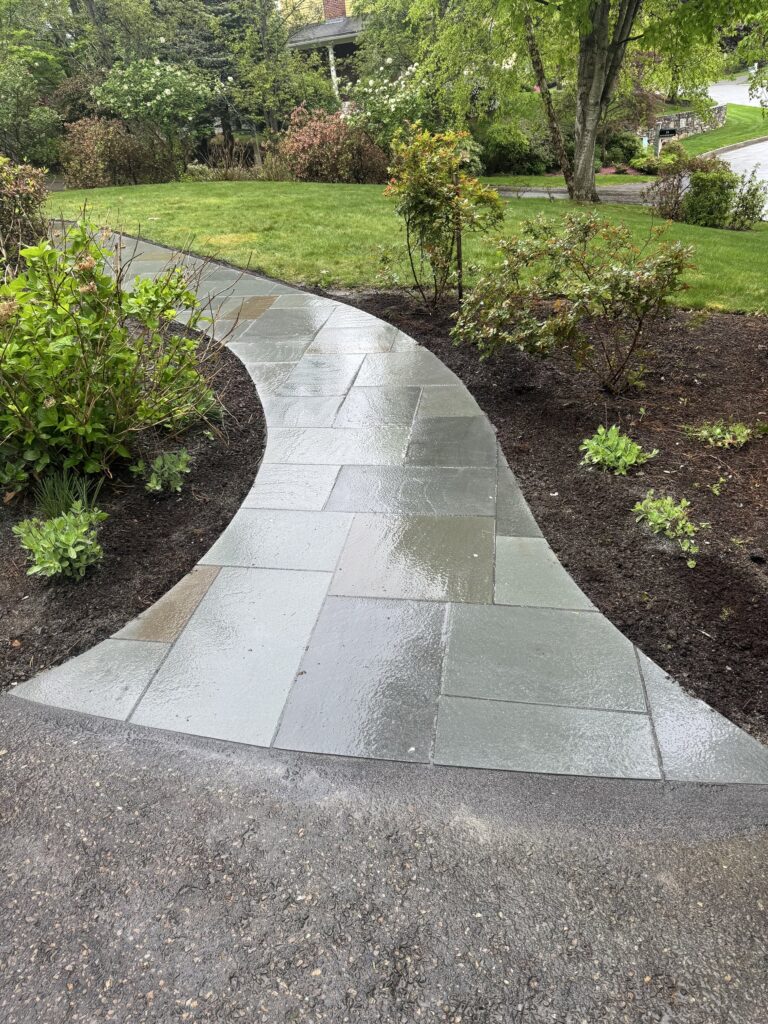
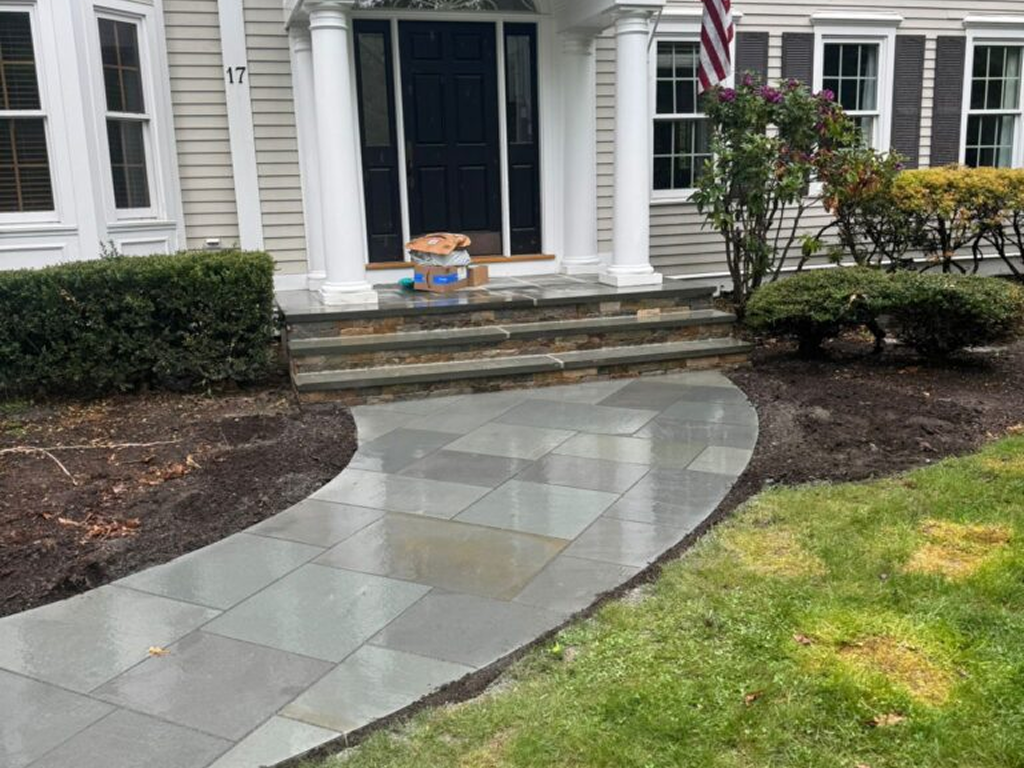
Edging and transitions deserve the same attention as the paving itself, especially on the older Concord lots where a driveway meets a stone wall, a mature tree’s root flare, or a front walk laid decades ago. A clean, consistent border not only holds the asphalt edge together through freeze-thaw cycles, it’s often the difference between a drive that looks like it belongs on the property and one that looks bolted on. We’ll talk through edging material and the width of the apron where it meets the road, since towns and private associations sometimes have their own expectations there.


What Our Clients Say
Full Replacement or Overlay
Not every tired driveway needs to come out. If the base is intact – no deep cracking that runs edge to edge, no soft or spongy spots, no standing water pooling against the garage – an overlay can add years at a fraction of the cost of starting over. But an overlay on a failed base just hides the problem for a season or two before the same cracks telegraph straight back through. We’ll tell you honestly which one you’re looking at, because guessing wrong wastes your money, not ours.
Historic District Surfaces
Homes near Concord center, particularly within the historic district, often need a surface that reads as period-appropriate rather than a plain black commercial-grade asphalt edge. That can mean a different edge treatment, a border material, or a finish that sits quietly next to an old stone wall, granite curbing, or a fieldstone foundation instead of fighting it. Options worth discussing include a soldier-course brick or granite cobble border, a tar-and-chip surface that reads less uniform than smooth asphalt, or simply a tighter, hand-cut edge where the drive meets a stone wall. It's a conversation worth having at the site visit, not after the asphalt truck shows up, because the base work underneath doesn't change – proper gravel depth and drainage matter just as much on a historic lot – only what sits on top of it does.


Long Rural Drives
Away from the center, plenty of Concord properties have long approaches cut through wooded lots, often with mature oaks close to the edges. Roots under or beside a drive heave the surface over time, and the shade keeps the asphalt damp longer after rain or snowmelt, which matters for how it handles freeze-thaw cycling through a New England winter. These drives also tend to run at a grade for at least part of their length, so where the water goes once it leaves the surface has to be part of the plan, not an afterthought once the paving is down.
What drives the price
Several things set the cost of a driveway, and each one is visible only on site.
- Square footage : The area to be paved, plus any widening, turnaround or parking pad you want added.
- Depth of excavation : How far down the old material has to come out, and how much of the base has to be rebuilt.
- Material removed : The old asphalt has to be hauled away, and the amount depends on what is there.
- Access: A paver, a roller and delivery trucks all need to get in and turn around. Tight Concord frontages can limit what equipment fits, which changes how the work is staged.
- Grade: A steep drive is harder to prepare, harder to compact and harder to drain correctly.
- Drainage: If water needs to be moved off the drive and away from the house, that work is part of the job.
- The apron: On many Concord lots the apron meets the sidewalk with very little room between the street and the house. How that transition is built affects both the drive and the walk, and we look at it closely.
Anyone who gives you a firm figure without having stood on your driveway is guessing. When the guess is wrong, the extra cost shows up later as shortcuts in the base.
What Drives the Price
Square footage is only the starting point. Depth of excavation, how much material has to come out and be hauled away, access for equipment, the grade of the drive, drainage work, and the apron where it meets the road all factor in. A long rural approach with a steep pitch and heavy tree cover costs differently than a short flat pad near a historic-district front entrance, even at the same square footage. Anyone willing to give you a firm number without walking the site is pricing blind, and that number tends to move once the work starts.
Scheduling Around New England Weather
Asphalt paving in Massachusetts is a seasonal trade. Work gets booked around the stretch of the year when temperatures and ground conditions cooperate, and that window fills early, especially for driveways near the historic district where scheduling can also mean coordinating visibility and access on narrower streets. Once your date is set, plan on keeping vehicles off the new surface for the stretch we specify, and expect the asphalt to firm up fully over its first season through a full range of weather, not the first week.
Getting Started
If your driveway is cracking, heaving, or was never properly built in the first place, the next step is a site visit, not a guess over the phone. We’ll look at the ground, tell you honestly whether it needs an overlay or a full rebuild, and give you a price based on what your property actually requires. Call Driveway Specialists at (413) 337-3772 to set up a visit for your Concord property.
FAQs
Does a historic district location limit what driveway surface I can install?
It can influence the finish and edge treatment rather than the base construction underneath. We'll talk through options that fit the look of an older Concord property during the site visit, based on what's actually on your lot.
My driveway is long and runs through wooded land - does that change the cost?
Yes. Root heave from mature trees, shade that keeps the base damp, and grade changes along a long rural drive all add work beyond simple square footage. We account for that once we've walked the property.
Can you tell me a price over the phone?
Not accurately. Depth of excavation, drainage, access, and grade all vary enough across Concord properties that a real number requires seeing the site first.
How do I know if my driveway needs full replacement instead of an overlay?
If the base is sound – no edge-to-edge cracking, no soft or wet spots, no pooling water – an overlay can work. If the base has failed, an overlay just delays the same problem reappearing.
When can paving work actually get done?
Paving is seasonal in Massachusetts, so the workable stretch of the year fills up early. It's worth calling ahead of when you actually need the work finished.
Call us
If your Concord driveway has reached the end of its life, or you are putting one in for the first time, call (413) 337-3772. We will arrange a time to see the site, measure it, and tell you what it needs.