
Walkway Installation in Waltham, MA
A lot of Waltham’s housing stock sits on hillside streets with two- and three-family homes stacked close together, shared drives, and front yards that drop fast from the sidewalk to the door. On that kind of lot, a front walk is not a side project. It is the one surface everyone uses every day, it has to handle a real grade change, and it usually has to work around a shared or stacked driveway that leaves very little flat ground to build on. Getting a new walkway right here means solving the slope and the access problem before anyone picks a material.
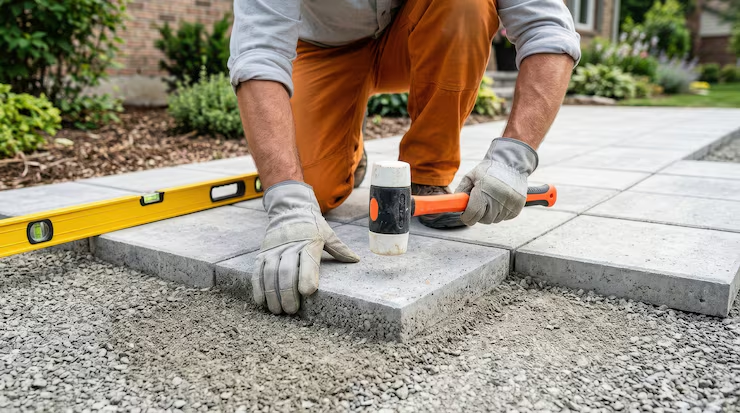
Most of what decides whether that walk lasts happens before the surface goes down. We excavate below the topsoil, set a compacted base, bed the units on a level layer, and lock the edges with restraint so the whole path holds its line. New England ground freezes and thaws through the cold months, and frost is what pushes shallow, poorly based paths up and apart. A walkway built on a skipped or thin base will heave unevenly wherever moisture collects under it, and on a sloped Waltham lot that usually means right where the path meets the steps or the drive. On the steeper sections common off streets near Bacon or Trapelo, that base work often has to include a step or landing built into the path itself, not just a ramp of pavers trying to follow the grade on their own.
Material trade-offs that actually matter: Concrete is the lowest-maintenance option and reads clean against a newer façade, but a crack is a crack for good unless the slab is replaced. Natural stone and clay pavers cost more up front, age better on an older or shingle-style Waltham house, and if a frost heave or a root does lift a section, you pull those units and relay them instead of breaking out concrete. Poured-in-place surfaces are harder to repair in sections and harder to match later if you extend the path or tie in a new planting bed.
Grade is the other half of the job. Water has to go somewhere once a hard surface replaces lawn, and on a hillside lot it wants to run straight at the foundation unless the path is pitched to carry it away from the house and toward the street or a drain. We tie the new walkway into the existing drive, entry, and any retaining walls or planting beds already in place, matching step heights and material tone so it reads as part of the property, not an addition bolted onto it. On a shared-drive lot, we also pay attention to where the walkway edge meets the driveway surface, since that joint is where most of the settling and cracking shows up first if it isn’t detailed properly.
A few things worth deciding before we design:
- How steep the lot actually runs from sidewalk to door, and whether a step or landing belongs in the path
- Whether the walk shares an edge with a driveway or neighbor’s path that needs a clean transition
- Concrete versus stone or paver, weighed against your home’s age and style
- Where runoff needs to go once the new surface is in


What Our Clients Say
Below the Surface
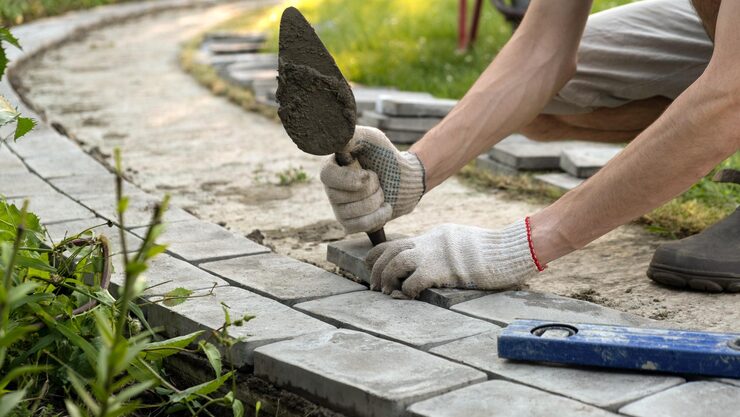
Excavation depth, a compacted gravel base, and a proper bedding layer underneath the stone, paver, or concrete decide whether a Waltham walkway stays flat or starts to heave and wave after a few freeze-thaw winters settle into the ground below.
Why Edge Restraint Matters
Without a locked edge, pavers creep sideways under foot traffic and Waltham's freeze-thaw cycles.
Concrete vs. Pavers
Concrete is cheaper upfront and gives Waltham walkways a clean, uniform look. Pavers cost more but handle freeze-thaw heaving better, and a single lifted or cracked paver can be swapped out instead of breaking out an entire slab section.
Pitching Away From the House
A walkway that slopes toward the foundation sends water where you least want it. Around Waltham homes, where clay-heavy soil already drains slowly, correct pitch matters even more.
Matching an Older House
Stone and clay paver tones can be chosen to sit alongside a shingle or colonial-era Waltham home in a way poured concrete usually can’t.
Tying Into the Driveway
Where a walk meets a shared or stacked drive, the transition has to handle both foot traffic and tire weight without a lip or step forming.
Choosing a material
The materials are not equal. Each suits some properties and not others.
Working Around Steps and Retaining Walls
Many Waltham lots slope sharply from street to door, so the walkway often has to step down in stages around existing retaining walls.
Shaded, Damp Sections
Mature trees on tight Waltham lots keep some walkway sections shaded and slow to dry, inviting moss and algae growth.
Repairability Over Time
A unit-paved walk can be lifted, re-based, and relaid section by section as Waltham's clay-heavy soil settles or tree roots shift nearby.
Access for the Crew
Waltham's dense streets and shared driveways leave little room for equipment near the home.
Planning Around Property Lines
On stacked two- and three-family lots common around Waltham, a new walkway often runs close to a neighboring foundation, fence, or shared drive.


Where This Fits in Waltham
Waltham’s hillside streets, shared drives, and close-set two- and three-family houses mean most walkway work here starts with a grade problem, not a style choice. A path that ignores the slope will shed water toward a foundation or pond at the base of the steps regardless of how good the surface material looks. We spend time on the excavation and drainage plan first, because on a steep, narrow lot there’s rarely a second flat area to fall back on if the first layout doesn’t carry water correctly.
Tight lots also mean the walkway usually has to do double duty: it connects the sidewalk to the door, skirts a shared driveway, and sometimes doubles as the only dry path to a side entrance or basement stairwell. That makes edge restraint and a solid base even more important, since there’s often no room to widen or reroute the path later if it starts failing. We lay out these jobs to work with the grade that’s already there instead of fighting it.
What drives the price
A new walk has to meet several existing things cleanly.
- The entry : The walk must arrive at the door at a sensible height. The threshold sets the finished level, so the work starts at the door and runs outward.
- The drive : Where a walk meets a drive, the levels and the drainage have to agree. A mismatch becomes a trip edge or a puddle.
- Walls and planting : Existing stone walls, foundation beds and mature trees constrain the route. Roots under a path are worked around, not cut through without thought.
- An older house : Scale, colour and pattern should follow the architecture. A narrow, dark stone walk suits an old house differently than a broad paver field does.

Getting Started
If you’re weighing a new front walk against a hillside lot, a shared drive, or an older Waltham house that needs the new work to match what’s already there, the first step is a look at the actual grade and ground conditions on your property. Waltham’s mix of sloped yards, older clay-heavy soil, and freeze-thaw winters all affect how a walkway performs over time, so we start by walking the site in person rather than quoting from a photo. That on-site visit is what determines the base depth, the drainage plan, and which materials make sense, whether that’s a poured concrete path, natural stone, brick, or pavers set to complement an existing driveway or front steps.
- Current grading and any low spots that collect water
- Soil type and how it’s handled through freeze-thaw cycles
- Proximity to trees, foundations, and existing hardscape
- Desired width, shape, and material to match your home’s style
Call Driveway Specialists at (413) 337-3772 to set up a time to walk the site and get a straightforward plan for your walkway.
Before you call
It helps to know:
- Where the walk starts and where it needs to end
- Whether the route crosses a slope or a shared area
- Which material you lean towards, and whether the house is older
- Where water currently runs on the property
Questions people ask
Why does a walkway heave in the winter if it was built flat?
Frost moving through shallow or poorly compacted soil under the path pushes sections up unevenly. A properly excavated base and compacted sub-base below frost-affected soil is what keeps a path flat through repeated freeze-thaw cycles.
Is concrete or paver better for a sloped Waltham lot?
Pavers generally handle grade changes and later repairs better, since a single lifted or settled section can be reset without breaking out a whole slab. Concrete looks clean and costs less upfront but is harder to fix in sections if the ground shifts.
Can a new walkway tie into an existing shared driveway?
Yes. The transition needs careful grading so it doesn't create a lip or step, and the base under that transition point typically needs to handle both foot and vehicle loads, since shared drives see more traffic than a private one.
What happens to drainage once a walkway replaces lawn?
Grass absorbs rainfall; a hard surface does not. The walkway has to be pitched during installation to carry water away from the house and off the path, particularly on a hillside lot where water already wants to run downhill toward the foundation.
Does a new walkway need to match my driveway material?
Not necessarily, but the transition point between the two should be planned so the materials meet cleanly and the grading lines up. Many Waltham homes mix a paver or stone walk with an asphalt drive without issue.
Next step
Call Driveway Specialists on (413) 337-3772. We are a family-run company in business since 1988, and we will walk the route with you and talk through material, grade and drainage before anything is priced.