
Foundation Work in Medfield, MA
Water coming through a basement wall after heavy rain. A damp patch that never quite dries out, even in July. A corner of the foundation that looks like it is bowing, or mortar that crumbles when you touch it. If any of that sounds familiar, you are not looking at a cosmetic problem. You are looking at what happens to an old foundation wall once it has been sitting against wet soil for decades, and it is a different job from anything we do with pavement.
Many of the older houses around Medfield were built on fieldstone or rubble foundations, sometimes with a later concrete wall poured against them, and almost none of them have a working membrane or a perimeter drain at the footing. There was nothing wrong with the method when the house was built. It just was not designed to keep water out the way a modern foundation is. Over time, water in the surrounding soil finds the path of least resistance, and that path is straight through the wall itself, not under it. You see the result as a stain, a damp smell, a white mineral crust on the block, or in worse cases a section that has started to lean or crack.
Why this has to be dealt with from outside. A lot of homeowners try an interior fix first, because it is cheaper and faster: a sealant on the inside face, a sump pump, a dehumidifier running all summer. Those things manage the symptom. They do not stop water from moving through the wall, and they do not stop the freeze-thaw cycle from continuing to open up cracks in the material. Treating the cause means going to the outside of the wall, which means excavation, and that is more disruptive and more expensive than a can of sealant. We will tell you that plainly before any work starts, because it is a real decision, not a sales point.
On a well-kept Medfield lot with generous frontage and established planting beds close to the foundation, the excavation itself is usually the part that needs the most thought. We are not just digging a trench. We are working out what has to be protected, what has to be moved, and what the machine can actually reach without going through a hedge or a retaining wall to get there. Once a wall is exposed, we can actually see what we are dealing with: hairline cracking versus structural movement, surface dampness versus active water intrusion, and whether the footing itself has settled unevenly. That inspection changes the scope more often than people expect.
A proper repair typically involves:
- Clearing soil down to the footing to expose the full wall
- Patching or rebuilding damaged sections of stone, block, or concrete
- Installing a drainage membrane and a perimeter drain tied to daylight or a sump
- Backfilling with material that will not hold water against the wall again
- Regrading the surface so runoff moves away from the house


What Our Clients Say
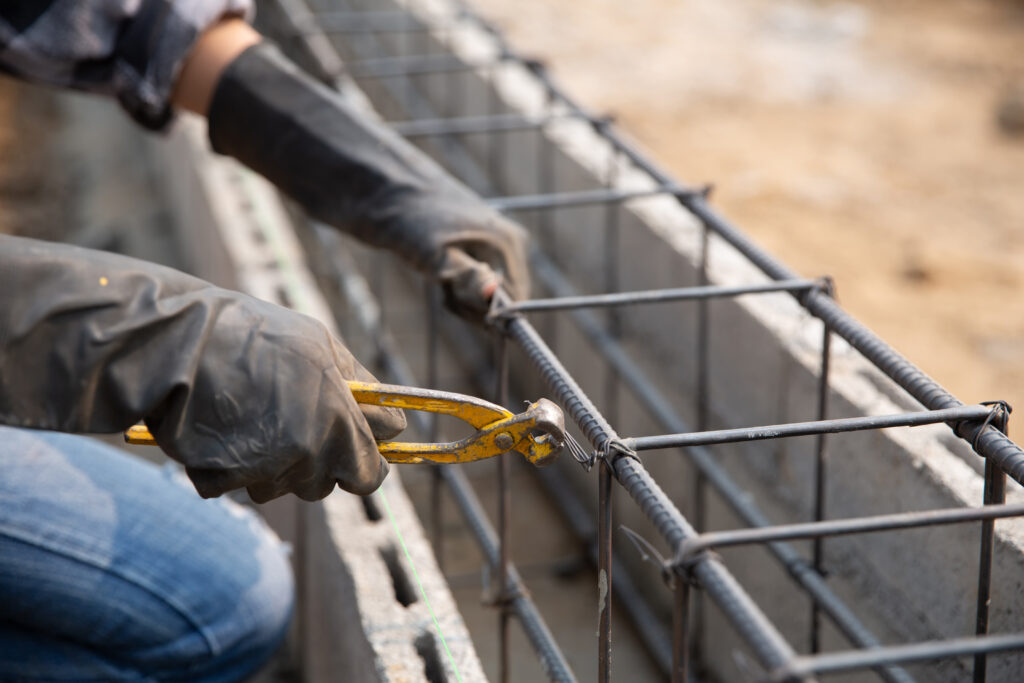
What is actually happening behind the wall
Fieldstone and old mortar were never watertight. They were built to hold the weight of the house, not to resist hydrostatic pressure. When the soil around the footing saturates, that pressure pushes water through the joints and the stone itself, and in winter whatever moisture is already in the wall freezes and expands, widening the gaps a little more each year. Medfield’s mix of clay-heavy soil and older fieldstone and brick foundations makes this a common story, especially on properties graded toward the house instead of away from it.
That is why the damp patch that started small ten years ago is now a crack, and why painting over an efflorescence stain does nothing for what is happening on the other side of the wall. The white powder is just mineral salt left behind as water evaporates through the masonry; the real movement is underneath, where pressure keeps building against a surface that was never meant to hold it back.
Fixing it means addressing where that water goes, not just where it shows up. That can involve:
Excavation, access and what happens to the yard
The work generally runs in the same order regardless of the house: expose the wall by excavating down to the footing on the affected side, deal with the wall surface, install drainage, backfill properly, then restore the ground on top. On a mature Medfield lot, the excavation step is where planning matters most, because the access that got a machine onto the property fifty years ago rarely matches what a mini-excavator needs today.
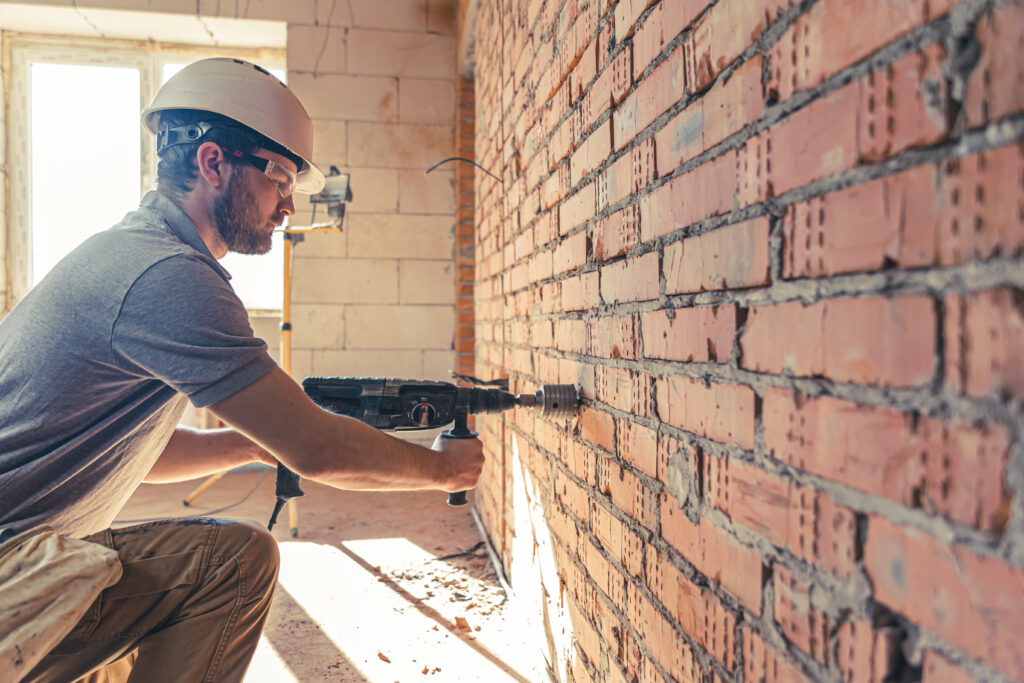
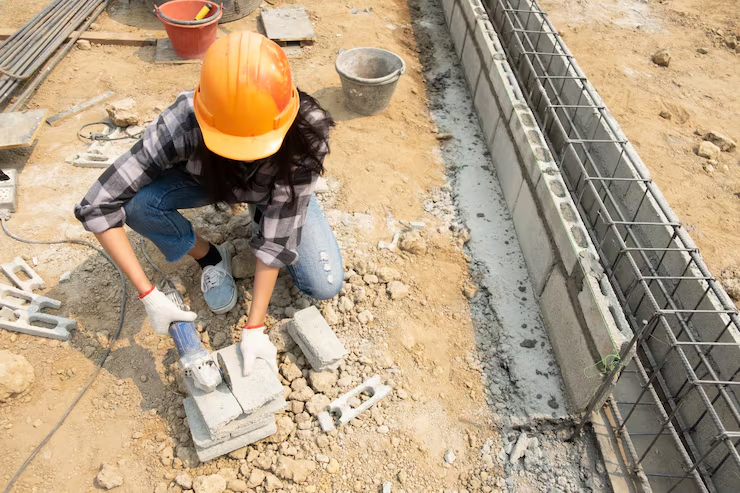
The work, in order
Wall treatment once exposed
Once the footing is exposed, the wall itself gets attention: cleaning, repointing or patching where mortar has failed, and a damp-proofing or waterproofing coating applied to the exterior face before anything is backfilled against it.
Drainage at the footing
A perimeter drain at the base of the footing gives water somewhere to travel other than through the wall. It ties into existing drainage or daylights away from the house, moving groundwater past the foundation instead of against it.
Backfill matters as much as the wall
What goes back into the trench affects how long the fix lasts. Free-draining material against the wall keeps water moving down to the drain rather than sitting against the new coating and the stone behind it.
Regrading the surface
Soil that has settled or was never sloped away from the house gets reshaped so surface water runs away from the foundation instead of pooling at it, which matters even more once the wall below has been repaired.
When the driveway or walk is in the way
If a drive, walk or patio sits directly over the dig line, that surface has to come up before excavation and gets reinstated after. We coordinate that step rather than leaving a gap in the work.
Access on a Medfield lot
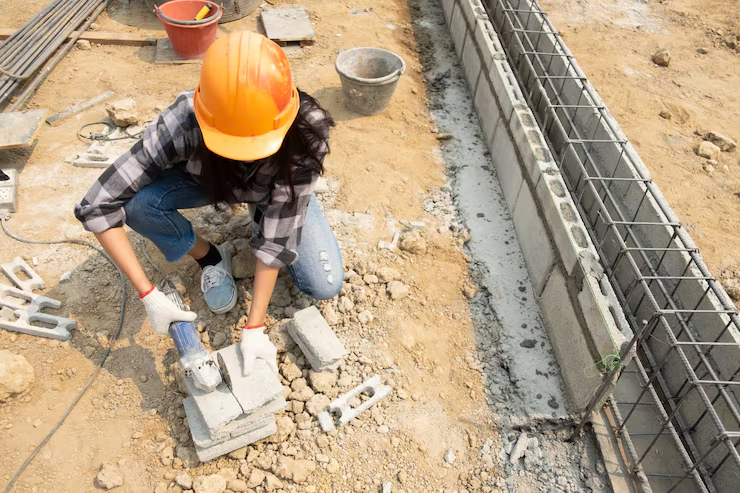
Most of the lots we see around Medfield have straight, level driveways and enough frontage to get an excavator and a small dump truck fairly close to the house, which helps. The limiting factor is usually the side or rear yard where the actual foundation problem sits. Mature trees, a finished patio, stone walls, or a narrow gap between the house and a neighbouring structure can mean hand digging for part of the run even when the front of the property has plenty of room. Older Medfield neighbourhoods near the town center tend to have tighter lots than the newer subdivisions, so access can vary a lot street to street.

What to check before you call
Before anyone comes out, take a few photos of the damp area or crack, note which direction the wall faces and whether the problem gets worse after rain or snowmelt specifically. Check whether gutters and downspouts near that section are clear and actually discharging away from the house, since a blocked or misdirected downspout can mimic or worsen a foundation drainage problem and is worth ruling out first. If you know roughly when the symptom started, that helps us understand whether it is a longstanding issue or something that changed recently, which points to a different cause.
If you are seeing water, damp, or a wall that is not sitting the way it should, call (413) 337-3772 and describe what you are looking at. We will tell you honestly whether it looks like an exterior excavation job and what the access on your property means for how it gets done.
What to check and write down first
These are the pointers that help most before anyone visits.
- Note where and when. Which wall, which corner, and whether it follows heavy rain, snowmelt or a particular season.
- Photograph it dry and wet. Take pictures of the same spot on a dry day and again after rain.
- Look at the outside. Check whether the ground beside that wall slopes toward the house, whether a downspout empties near it, and whether anything piles water against it.
- Check for movement. Look for horizontal cracks, a wall that leans in, or stones that have shifted. Mark the ends of a crack with a pencil and date it, so changes can be seen.
- Check the stonework. Press on the mortar. If it crumbles or sands away, say so.
- Think about access. Where could a machine stand, and what is in its way? Tell us who shares the drive or boundary.
- Leave it as you found it. Do not seal or patch the wall before we see it. It hides what we need to look at.
Questions we get asked
Is this the same crew that does your driveway paving?
No. Foundation excavation and drainage work is a separate trade from paving, and we treat it as its own job with its own sequence, even though the same company handles both.
Will you guarantee a dry basement after the work?
We will not promise a specific outcome. What exterior excavation, wall treatment and drainage do is remove the mechanism that pushes water through the wall. How much that improves a given basement depends on the house.
How do you deal with established gardens right against the foundation?
We look at the planting before we quote the job and tell you plainly what is likely to be lost or needs moving. On older Medfield lots this is often the main constraint on how the dig is sequenced.
Does the driveway or walkway need to be torn up?
Only if it sits directly over the section being excavated. If the affected wall is elsewhere on the house, your paved surfaces are not involved in the work.
What should I do before calling about a damp wall?
Photograph the area, note whether it worsens after rain, and check that nearby gutters and downspouts are clear and directing water away from the house. That information helps us assess the problem before we arrive.
Next step
Call us on (413) 337-3772. Tell us which wall, what you have seen, and how the lot slopes around it. We have worked across Middlesex County since 1988, and we will tell you plainly what is likely going on and whether outside work is the right answer.