
Walkway Installation in Concord, MA
A front walk in Concord has two very different jobs to do depending on where the house sits. Close to the centre, near the historic district, a new path has to sit comfortably next to a Colonial or Federal-era house, match the formality of the street, and survive a Massachusetts winter without heaving out of true. Further out, on the longer rural lots toward the edges of town, the walk is often doing a harder job: carrying people from a long driveway or a parking apron to a front door that may be fifty or a hundred feet away, across open lawn or through tree cover. Both situations call for the same underlying work, even though the finished look is completely different.
This is not driveway paving. A walkway carries foot traffic, not vehicle loads, so the base doesn’t need to be built the same way, but it still has to resist frost heave, tree roots and standing water, and it still has to look right against an older house for decades, not just the first season.
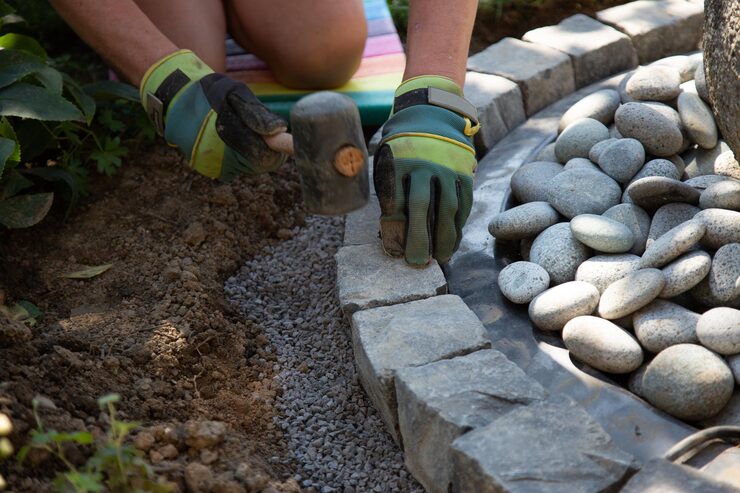
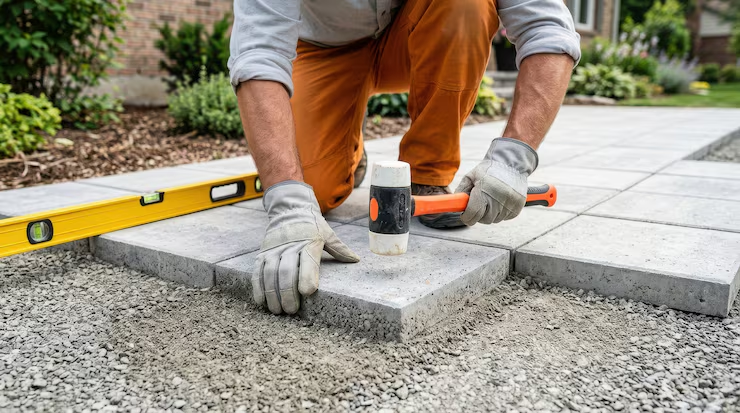
What’s actually underneath. Everything that makes a walkway stay flat happens before the surface goes down. The existing topsoil gets excavated out, because topsoil holds moisture and compresses unevenly over time. A compacted gravel base replaces it, graded to shed water rather than hold it. Bedding material goes on top of that to give the final surface – pavers, stone, or brick – a stable, even plane to sit on. Edge restraint locks the sides so the whole assembly doesn’t creep outward under frost pressure. On the longer rural stretches of walk, it’s also worth routing around established tree roots rather than cutting through them; a root cut close to a mature oak or maple will often win the argument with the walkway within a few seasons. Skip any one of these steps and the walk looks fine for a year or two, then starts to dip, heave, or separate at the joints as the ground freezes and thaws underneath it.
Materials, honestly:
- Bluestone reads as the classic Concord material – it sits well against stone walls and older brick, ages to a flat, even grey, and can be reset individually if a section heaves. It costs more up front and isn’t the easiest surface to walk on when wet.
- Brick suits a Colonial or Federal house better than almost anything else, but it moves more with frost than stone does and needs a firmer edge restraint to stay in line.
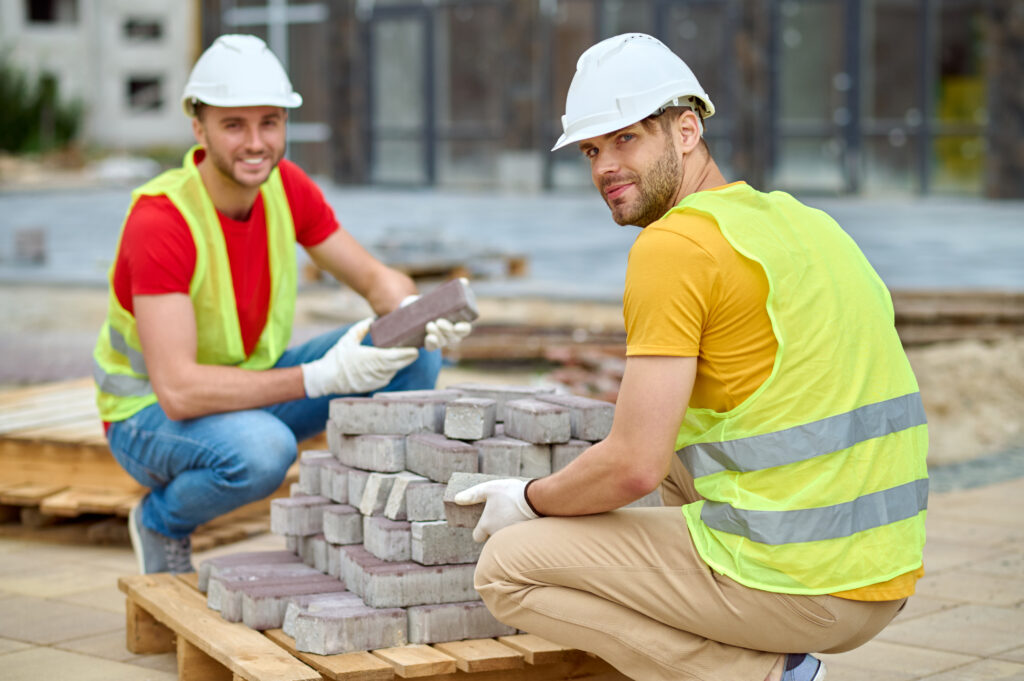
- Concrete pavers are the practical middle ground – lower cost, wide range of finishes, and any single paver can be pulled and reset if root heave or frost disturbs it without redoing the whole path.
- Poured concrete is the cheapest option and the hardest to repair selectively; once it cracks, you’re usually replacing a slab, not a unit.


What Our Clients Say
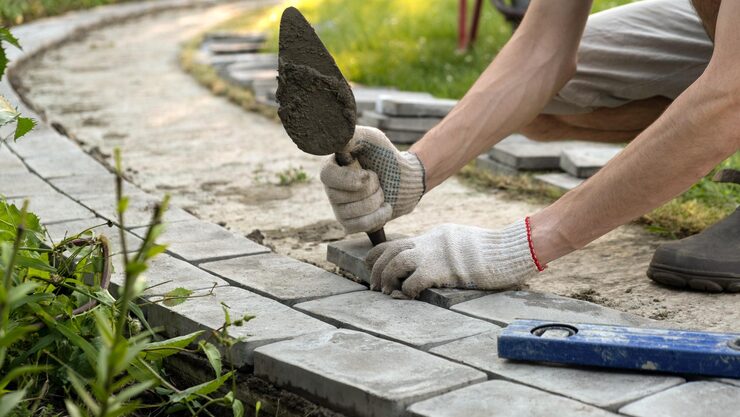
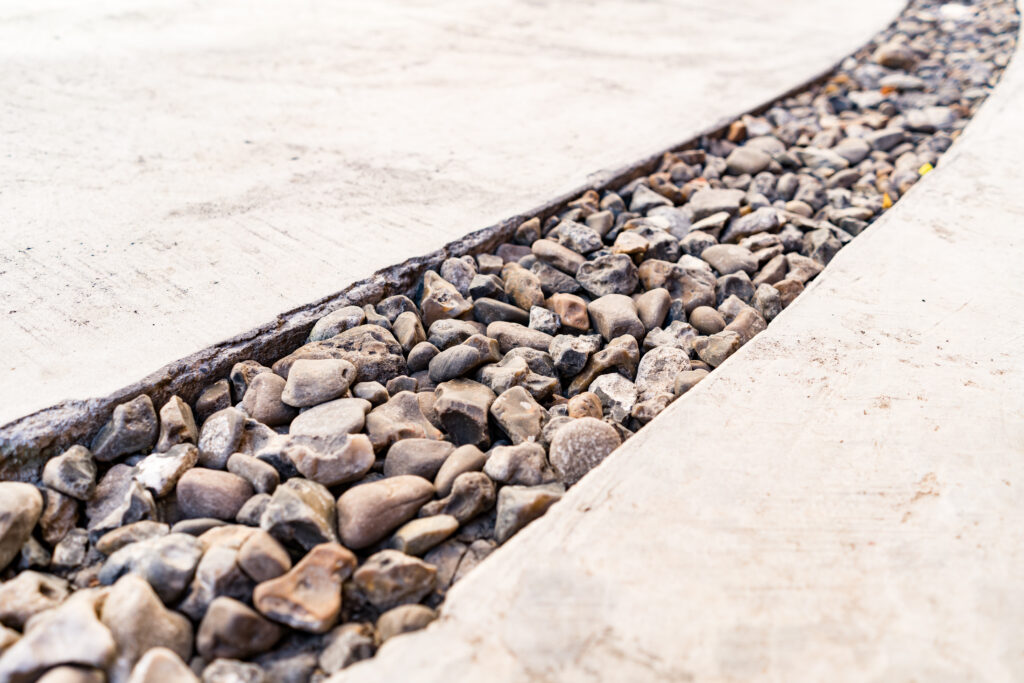
Water has to go somewhere once a hard surface replaces lawn. A walkway built with the wrong pitch sheds water toward the foundation instead of away from it, which creates problems well beyond the path itself.
On Concord’s older lots, tree roots are often the real adversary. Oaks and maples near a front walk will lift stone and brick over years, which is one more reason individual units beat a single poured slab.
Grade matters as much as material.
A walkway rarely stands alone. It has to meet the driveway edge, the front step, and often an existing stone wall, without looking like three separate projects stitched together.
Matching an older Concord house means thinking about proportion as much as material – a path too wide or too formal for a modest Colonial frontage looks wrong no matter how well it’s built.
On the longer rural properties outside the centre, a walkway often has further to travel – from a parking apron or driveway loop across open ground to the door, with grade changes along the way.
Choosing a material
The materials are not equal. Each suits some properties and not others.
Edge restraint is what keeps pavers and brick from spreading under frost pressure and plow-thrown snow common to Concord winters.
Bluestone’s cost is easiest to justify on a short, visible front walk near the street, where the material is doing real work for the house’s presentation.
Concrete pavers hold up well on longer rural Concord paths where budget has to stretch further.
Existing stone walls, common on older Concord lots, give a natural material cue – picking a walkway stone that reads as part of the same family keeps the property looking considered rather than assembled piecemeal.
None of this needs to be guessed at from the street. Walking the actual property, the actual trees, and the actual approach to the door is what tells you which base depth and which material make sense here.
Where this fits in Concord specifically
Concord’s housing stock splits fairly cleanly into two situations, and both show up constantly in this kind of work. Near the centre and through the historic district, the priority is getting material and proportions right against an older house – a path that reads as original rather than added on. That usually means stone or brick, laid with attention to how the existing entry, steps and any stone walls already look, rather than defaulting to whatever’s cheapest to install.
Out toward the town’s edges, where lots run larger and drives run longer, the walkway solves a different problem: getting people comfortably from a parking area or driveway to the door, often across uneven ground under mature tree cover. Root heave is a real factor on these lots, and it changes the calculus on material – something repairable in sections, like pavers or individually set stone, holds up better than a continuous poured surface. Either way, it’s the work below the surface – excavation, base, drainage, edge restraint – that decides whether the walk still looks right in ten winters.
What drives the price
A new walk has to meet several existing things cleanly.
- The entry : The walk must arrive at the door at a sensible height. The threshold sets the finished level, so the work starts at the door and runs outward.
- The drive : Where a walk meets a drive, the levels and the drainage have to agree. A mismatch becomes a trip edge or a puddle.
- Walls and planting : Existing stone walls, foundation beds and mature trees constrain the route. Roots under a path are worked around, not cut through without thought.
- An older house : Scale, colour and pattern should follow the architecture. A narrow, dark stone walk suits an old house differently than a broad paver field does.
Getting started
If you’re planning a new walkway in Concord, the next step is a site visit, not a quote over the phone. Base depth, drainage direction, and material all depend on what’s actually on the ground – the slope of the lot, the trees nearby, the age and style of the house, and what the path needs to connect. A walkway installed without that assessment tends to show its problems within a few winters, once frost and roots have had a chance to work on it. Concord’s older neighborhoods often mean mature trees with invasive roots, uneven historic grading, and a mix of stone walls and plantings that a new path has to work around rather than through.
Before you call
It helps to know:
- Where the walk starts and where it needs to end
- Whether the route crosses a slope or a shared area
- Which material you lean towards, and whether the house is older
- Where water currently runs on the property
Questions people ask
Why does a stone or brick walkway heave over time in Concord?
Frost moves water-saturated soil beneath the surface as it freezes and thaws through a New England winter. Without a properly excavated and compacted base, that movement pushes individual stones or bricks unevenly, which is why a walkway laid directly on topsoil starts to wave within a few seasons while one built on a proper base stays flat for decades.
Can a new walkway match an older Concord house without looking out of place?
Yes, but it depends on matching proportion and material to the house, not just picking an attractive stone. A narrow bluestone or brick path suits a Colonial or Federal frontage far better than a wide, modern paver layout, and tying the new work into any existing stone walls or steps helps it read as original to the property.
Is bluestone or paver better for a long rural walkway outside the town centre?
Pavers are usually the more practical choice for longer paths on larger lots, mainly because individual units can be reset if tree roots or frost disturb a section, without redoing the whole walk. Bluestone looks the part but costs more and is harder to justify over a long run where budget has to cover more ground.
How does drainage affect where a walkway can be built?
A walkway has to be pitched to carry water away from the house, not toward it. Adding any hard surface changes how rainwater moves across a lot, so grade has to be planned before installation, especially where the path runs close to a foundation or crosses a low point in the yard.
Next step
Call Driveway Specialists on (413) 337-3772. We are a family-run company in business since 1988, and we will walk the route with you and talk through material, grade and drainage before anything is priced.