
Walkway Installation in Dover, MA
A Dover property is rarely a small front yard and a straight path to the door. Most lots here run on acreage, set well back from the road behind long wooded drives, with conservation land or wetland setbacks shaping where anything can actually go. By the time a walkway reaches the entry, it has usually had to cross sloped lawn, work around mature trees, and tie into a drive that may itself be gravel, asphalt, or a paver apron. The walkway is the part of the property people actually walk on every day, so the decisions here are about footing, water, and how the path reads against the house, not just how it looks from the street.
On a lot like this, a walkway is rarely one isolated job. It has to connect a long driveway to a front door that might sit forty or sixty feet back from where cars park, step across uneven grade, and hold its line through root zones that a smaller suburban lot never has to deal with. That’s a different design problem than a straight municipal sidewalk replacement, and it is worth treating as one. A path that simply draws a straight line from pavement to porch often ends up crossing the worst parts of a sloped yard; a better route works with the grade, picking up changes in level gradually rather than forcing a steep run that turns icy the first hard frost.
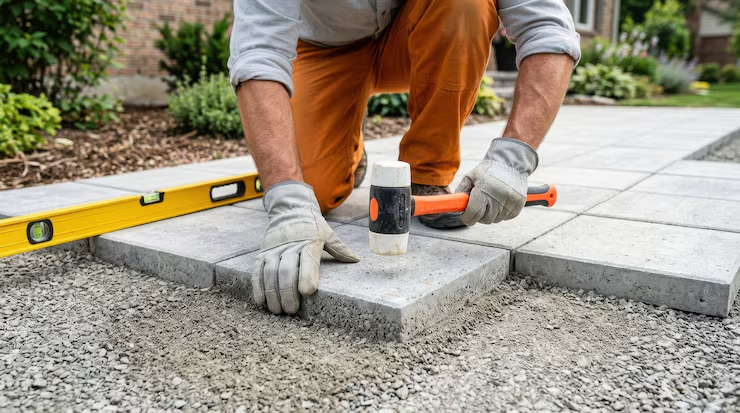
The visible surface of a walkway is the smallest part of the job. Underneath it there is excavation to a workable depth, a compacted base course, bedding material, and an edge restraint holding the whole assembly together. In Massachusetts, frost is the reason this matters. Water in the soil beneath a walkway freezes and expands through the winter, and if the base underneath isn’t built to handle that movement, the surface heaves unevenly, joints open, and pavers or stones start to rock. A walkway built on a thin bed laid straight over topsoil will move the first winter. One built on a proper compacted base moves far less, because the base itself is doing the work of managing that frost action rather than fighting it.
On wooded Dover lots this gets more complicated. Tree roots don’t stop politely at a property line, and a walkway routed too close to a mature oak or maple will eventually get pushed by root growth the same way a shallow driveway edge does. Part of the planning work is routing around root zones where possible, and where it isn’t possible, building in enough base depth and flexibility that root movement doesn’t crack the surface in the first few years.


What Our Clients Say
Materials: not all of them age the same way
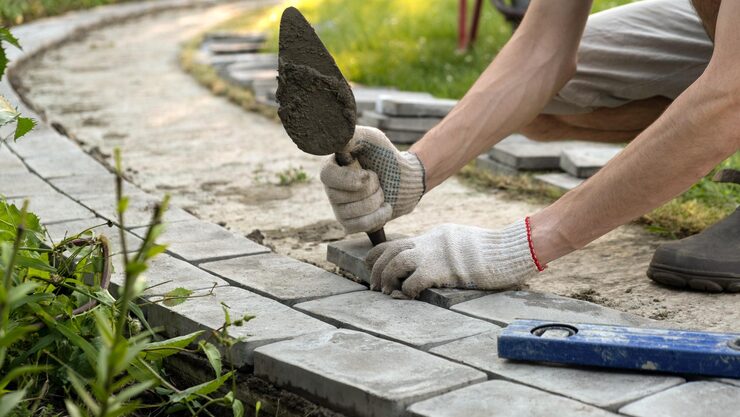
Bluestone, brick, and concrete pavers top the list for Dover walkways, each aging differently. Bluestone looks formal but costs more; brick suits period homes but can show frost damage; pavers install evenly but look manufactured.
Where the water goes
Any new path changes how water moves across your Dover yard. Even a "level" walkway needs built-in pitch, working with the existing grade, to carry runoff away from the foundation.
Tying the walkway into what's already there
A new walkway has to connect cleanly to a driveway apron, meet entry steps at the right height, and match existing stone walls or plantings.
Routing around mature trees
Dover’s wooded lots mean a path often has to work around root zones rather than straight through them. Routing decisions made early avoid root heave later, and preserve the tree canopy that gives these properties their shaded, established character.
Working with ledge and setbacks
Exposed ledge and conservation setbacks on many Dover lots dictate where a path can run before design even starts. Working with the site’s natural constraints, rather than against them, usually produces a better-looking result anyway.
Long drive, long walk
When the front door sits well back from where cars park, the walkway itself becomes a real piece of landscape architecture, not an afterthought.
Choosing a material
The materials are not equal. Each suits some properties and not others.
Matching an older house
Dover has a fair number of older colonials and farmhouses where a path needs to look like it belongs, not like a recent addition. Material choice and joint pattern do most of that work.
Grade changes along the route
A walkway crossing sloped lawn may need a step or a landing partway along, rather than one continuous pitch. Done well, it reads as intentional rather than as a compromise.
Edge restraint in a frost climate
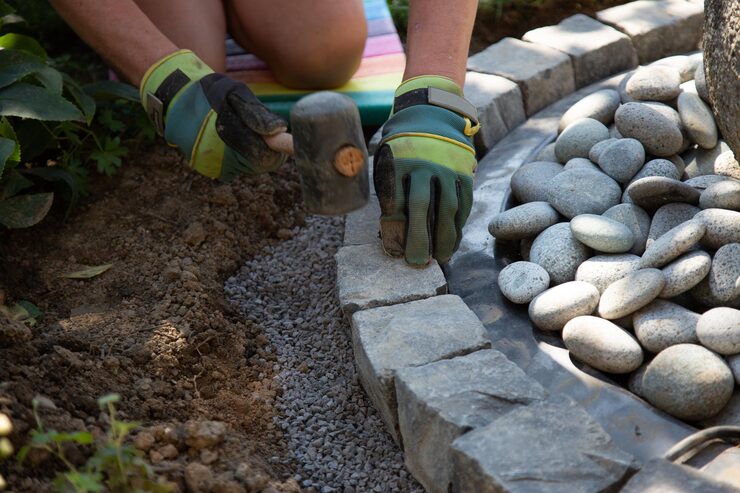
Without a proper edge restraint, paver and stone walkways spread at the margins as frost pushes outward each winter. A buried edge holds the line so the path stays tight for years, not just the first season.
Lighting and night use
On a long, tree-shaded path, low-voltage lighting set into the walkway edge does real work after dark around Dover properties. It’s worth planning during installation, since adding conduit later means digging up the finished path again.
Repairability over time
Dry-laid stone or paver walkways can be lifted and reset section by section if Dover’s frost heave or roots disturb them. Mortared surfaces can’t adjust the same way—worth weighing before committing to a walkway you’ll live with for decades.

Why this fits large Dover lots
Dover’s estate-scale lots put real distance and real grade between the road and the front door. The path from where people actually park to where they actually enter the house is its own project, with its own drainage, root zones to navigate, and conservation setbacks that may limit where it can sit at all. A walkway here isn’t a weekend add-on. It has to hold up to New England winters, handle water shed from a long run of hard surface, and still look right against an older house or a heavily wooded setting.
What drives the price
A new walk has to meet several existing things cleanly.
- The entry : The walk must arrive at the door at a sensible height. The threshold sets the finished level, so the work starts at the door and runs outward.
- The drive : Where a walk meets a drive, the levels and the drainage have to agree. A mismatch becomes a trip edge or a puddle.
- Walls and planting : Existing stone walls, foundation beds and mature trees constrain the route. Roots under a path are worked around, not cut through without thought.
- An older house : Scale, colour and pattern should follow the architecture. A narrow, dark stone walk suits an old house differently than a broad paver field does.
Next step
A walkway on a Dover property is worth walking the site for before anything is priced, because the routing, the grade, and the material decision all depend on what’s actually on the ground: the trees, the ledge, the setback lines, and how far the entry sits from where people park. A short path that looks simple on paper can still need drainage work, root navigation, or a retaining edge once you’re standing on the actual grade, and that’s the kind of detail that only shows up in person.
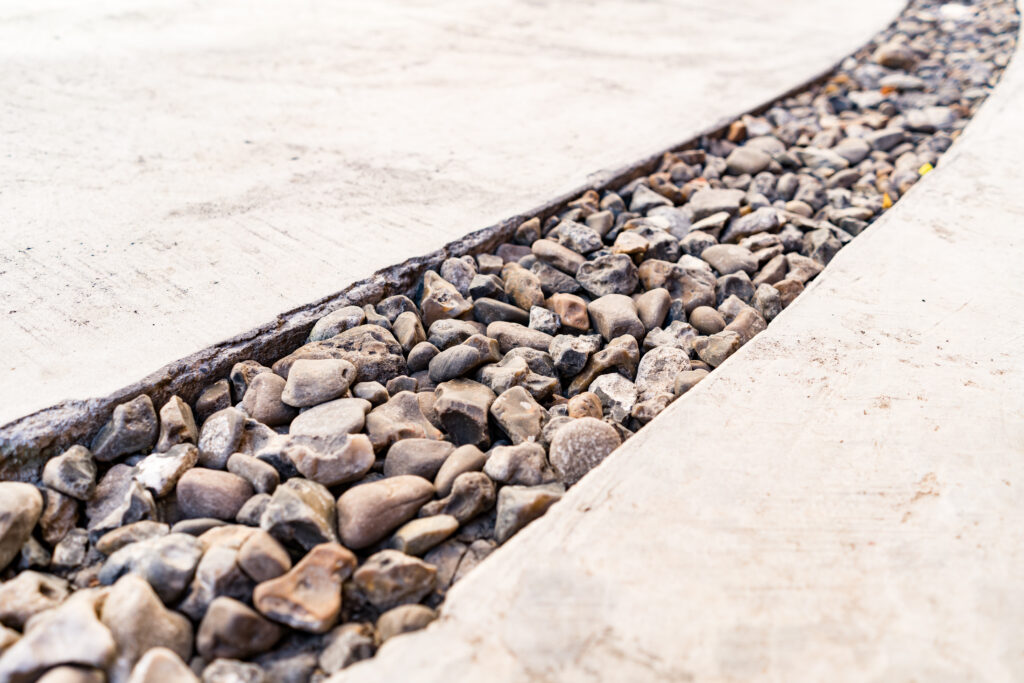
During a site visit, Driveway Specialists will walk the proposed route with you, flag any grading or drainage concerns, and talk through material options that suit the house and the budget, whether that’s bluestone, pavers, poured concrete, or a gravel path with a steel or stone edge. You’ll leave with a clear sense of:
- What the site actually requires before work begins
- Which materials make sense for the setting and traffic
- A realistic timeline for the project
Call Driveway Specialists at (413) 337-3772 to arrange a site visit and talk through what the property actually needs.
Before you call
It helps to know:
- Where the walk starts and where it needs to end
- Whether the route crosses a slope or a shared area
- Which material you lean towards, and whether the house is older
- Where water currently runs on the property
Questions people ask
What walkway material holds up best in a wooded, shaded yard?
Shaded, damp areas under tree canopy stay wetter longer, which favors materials that handle moisture well and can be reset individually if ground movement occurs, such as bluestone or concrete pavers. Brick can work too, but it needs correct bedding to avoid holding moisture at the surface.
Can a walkway be routed around a conservation setback on my property?
Yes, and on many Dover lots this is the first design question rather than the last. Routing has to work within whatever setback and ledge constraints exist on the specific property before material or style decisions are finalized.
Will tree roots eventually damage a new walkway?
Roots can heave a path over time if it's routed directly over a root zone with a shallow base. Routing around major roots where possible, and building adequate base depth where it isn't possible, reduces this risk significantly.
How does a walkway tie into an existing driveway or entry?
The walkway needs to meet the driveway apron and entry step at a consistent height and grade, and ideally match material tone with existing walls or hardscape already on the property, so it reads as one connected design rather than two separate additions.
Does a long walkway need lighting built in?
On a long path across a wooded or sloped lot, low-voltage lighting set into the edge during installation is far easier than adding it later, since retrofitting means digging up a finished path.
Next step
Call Driveway Specialists on (413) 337-3772. We are a family-run company in business since 1988, and we will walk the route with you and talk through material, grade and drainage before anything is priced.