
Cobblestone Aprons and Edging in Brookline, MA
On a lot in Brookline, the strip between the street and the garage is often the only piece of hardscape a passerby ever sees. On the Victorian and prewar streets around town, that strip is short, it meets the sidewalk almost immediately, and it usually sits in front of a house with real architectural detail. Asphalt butted straight against a granite curb reads as a repair. A cobblestone apron, with a clean edge and a proper transition at the sidewalk, reads as part of the house.
This is not a driveway fix. It is a finish detail, and it gets judged as one. The work is small in square footage and big in how much it’s looked at, which changes how it should be built and what it should be built from. A few square yards of cobble, laid with a sloppy joint pattern or an uneven edge, will bother a homeowner far more than the same flaw would on a back patio nobody sees from the street.
Material choice matters here in a way it doesn’t on a plain concrete drive. Reclaimed granite cobbles, cut to a consistent face but left with some texture, tend to suit the older housing stock best. New cobble, cut cleaner and more uniform, can look right on a more recently built or renovated property, but it can also look stark against a hundred-year-old foundation if the color and jointing aren’t considered. Matching the existing sidewalk material, where there is one, usually reads better than contrasting with it.
Everything that keeps a cobblestone apron flat happens below the stone, before any of it goes down. The base is excavated out, a compacted gravel layer goes in, and the stones are set on a bedding layer with joints packed tight. In Massachusetts, frost is what undoes shortcuts here. Water gets under a thin or poorly compacted base, freezes, expands, and heaves the stones unevenly through the winter. Come spring, you get the rolling, uneven apron that’s common on older Brookline streets, not because the stone failed but because what’s underneath it never had the depth or compaction to resist the freeze-thaw cycle.
Edge restraint matters just as much. Without a firm edge, either a steel restraint or stone set and backed properly, the outer rows walk outward year by year, especially where a plow blade clips the corner every winter. A well-edged apron holds its line for decades. A loose one needs resetting within a few seasons, and each reset disturbs the joints a little more.
A few things worth asking about before work starts:
- Whether the existing curb cut and apron grade have ever been reviewed by the town, since abutting a public way or sitting within a historic district can mean a review is required before the curb cut or apron relationship to the sidewalk is finalized
- What base depth is planned, given actual Brookline frost depth rather than a generic standard
- How the new apron’s joint pattern and stone size will relate to any existing walkway or steps
That’s a conversation worth having early, not after materials are ordered.


What Our Clients Say
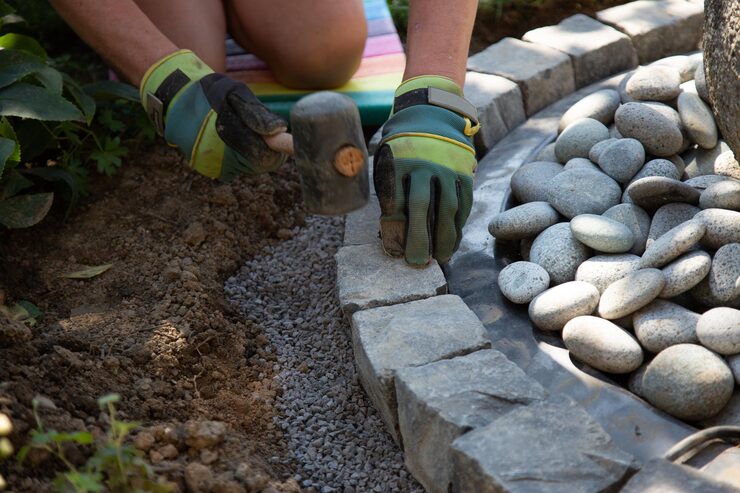
What the work involves below the surface
The stone is the last and smallest part of the job. A cobblestone apron stays flat or goes wavy depending on what is underneath it.
Granite cobblestone holds its edge and color for decades but costs more and is harder to source in matched pieces. Concrete pavers cost less and replace easily but can fade and chip at corners over time.
Reclaimed cobblestone suits a pre-war house with a shaded frontage and some uneven grade already built into the lot. It settles in, rather than sitting on top of the landscape.
New-cut granite block gives sharper, more uniform lines for Brookline driveways and entry aprons.
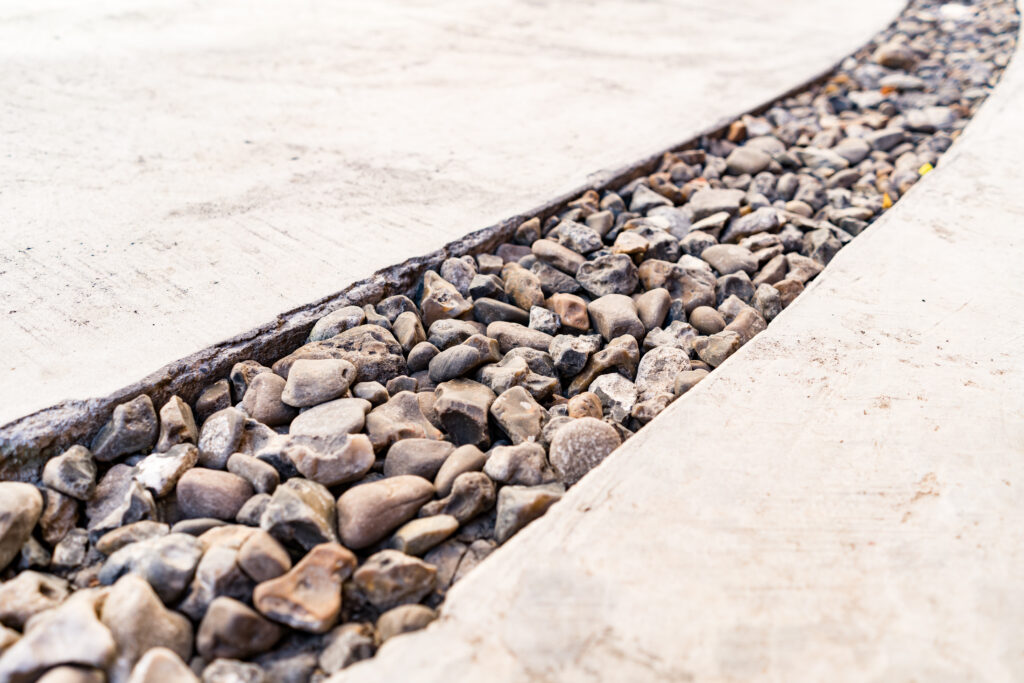
Water has to leave the apron, not pool at the sidewalk or the garage slab. On Brookline driveways we set pitch during base compaction, before a single cobblestone is laid, so edging stays stable through freeze-thaw winters.
A flat apron trapped between two foundations, common on tighter Brookline lots, needs a drain line considered, not just a slope and hope.
Materials and the trade-offs
Tying it into what's already there
Most Brookline properties already have something to match: a granite curb, a brick or bluestone walk, a low fieldstone wall, or a foundation with visible period detail. A cobblestone apron that ignores all of that looks bolted on. One that picks up the same stone tone or joint pattern as the entry walk reads as original to the house, even when it’s new work.
This also means the transition points matter more than the field of the apron itself. Where the cobblestone meets the existing driveway surface, where it meets the sidewalk, and where it meets a planting bed or low wall are the spots that get noticed first if they’re done poorly, and the spots that make the whole job look deliberate when they’re done well.
On a shared drive between two attached or closely built houses, which is common in parts of Brookline, the edge detail and the line of the apron also have to work for both households, not just look right from one side.
Where cobblestone suits a tight Brookline lot
Short, narrow frontages are exactly where cobblestone earns its cost. A full driveway repaving on a tiny apron barely registers, but a well-set stone edge against the sidewalk changes how the whole front of the house reads. On lots where the drive, walk, and entry steps all sit within a few feet of each other, cobblestone gives you one consistent material instead of three competing surfaces.
Streets with granite curbing already in place are a natural fit too. Matching a new apron to existing granite work looks intentional in a way that asphalt against granite never does. And on lots where mature trees have pushed roots toward the street, cobblestone handles minor, gradual movement better than a poured or paved surface, since individual stones can be lifted and reset without tearing up the whole apron.
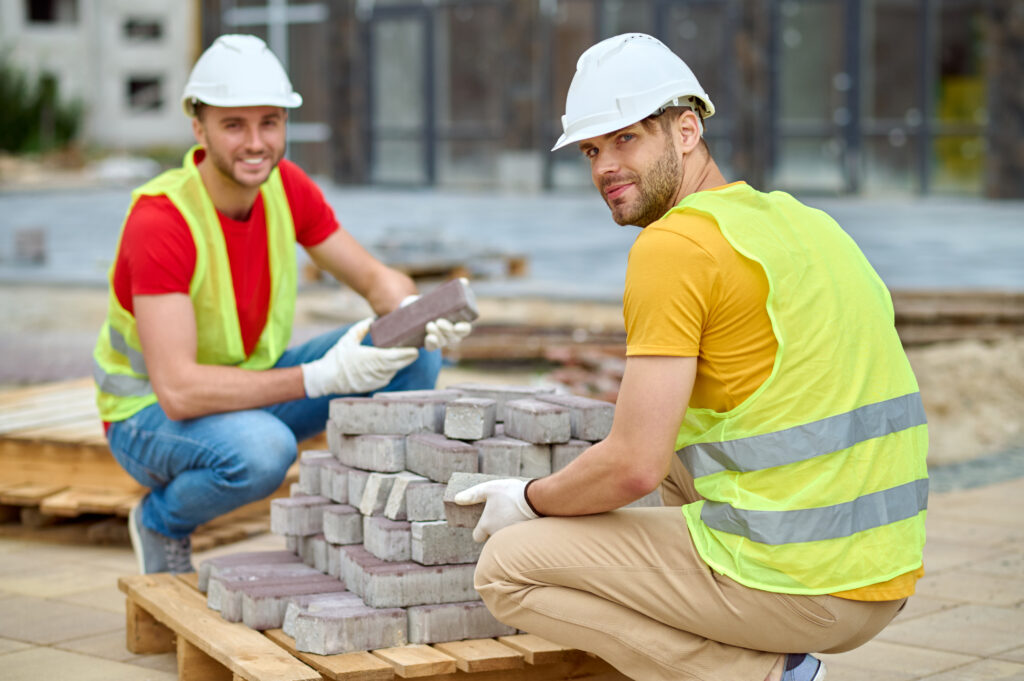
Access for the work itself is part of the planning. Materials and equipment have to reach a tight urban lot without blocking a narrow street for long, and that’s worked out before the crew arrives, not during the job.
Getting started on a Brookline apron
A cobblestone apron or edging job in Brookline starts with a look at the actual site: the width of the frontage, the condition of what’s already there, the grade, and whether the work touches the sidewalk or curb cut in a way that needs review first. Many Brookline streets have tight setbacks and established plantings close to the drive, so access for equipment and protection of existing landscaping get planned before any stone comes up. From there, the base depth, stone choice, and edge detail get worked out together, since each decision affects the others — a deeper base matters more on clay-heavy soil, while the edge detail changes depending on whether the apron meets asphalt, a granite curb, or a walkway.
Driveway Specialists has been doing this kind of close-in hardscape work across Norfolk and Middlesex counties, including nearby Brighton and Newton, since 1988. Family-run, built around getting the base right the first time so the visible stone stays flat and tight for years rather than needing early rework.
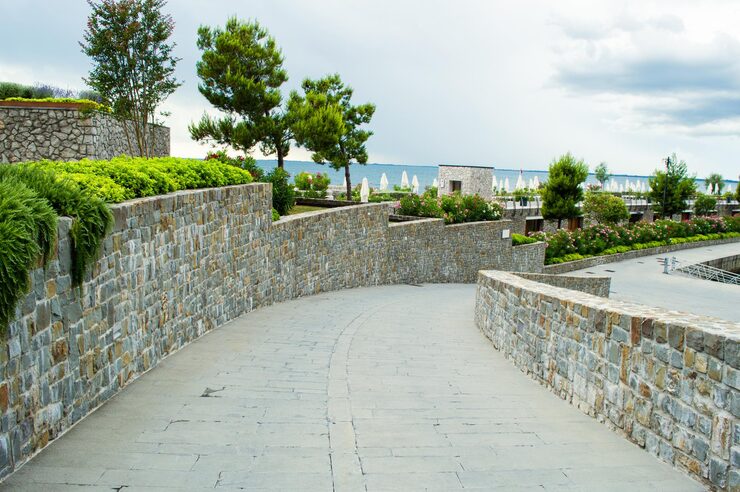
Where this suits Brookline properties
Tight street-facing frontages
Short lots where the apron meets the sidewalk almost immediately benefit most from cobblestone, since one small detail gets seen every time someone passes the house.
Homes with existing granite curbing
Where granite curb is already in place, a cobblestone apron matches the material and tone instead of butting asphalt against stone, which rarely looks settled.
Shared drives on attached lots
On closely built or attached Brookline houses sharing a drive, cobblestone edging gives both households one consistent line instead of two mismatched repairs over time.
So tar and chip suits a longer, gentler Brookline drive with some room around it. It is a poor match for a short, steep or shared one, or one that opens straight onto the walk.
Questions we hear
Does a cobblestone apron in Brookline need approval before work starts?
If the apron touches a public sidewalk, curb cut, or sits in a historic district, that relationship is reviewed before work begins. It's worth raising this during the initial site visit so it doesn't hold up the schedule later.
How is cobblestone different from a paver apron?
Cobblestone is typically quarried granite block, set individually in a bedding layer, while pavers are manufactured concrete units. Cobblestone generally holds its look longer and can be reset piece by piece, while pavers are easier to source in uniform batches and cost less upfront.
Can an existing cobblestone apron be repaired instead of replaced?
Often yes. If the base underneath is still sound and only the edge restraint or a section of stones has shifted, that area can be reset without redoing the whole apron. If the base has failed, resetting the surface alone won't hold.
Will cobblestone handle a plow blade in the winter?
A properly edged apron, with either a steel restraint or stone set and backed solidly, resists the edge-catching that plows cause. Without that restraint, the outer stones can walk outward season by season.
Next step
Call us at (413) 337-3772. Tell us about the lot, the slope and what you want the frontage to look like. We have been working in this area since 1988, and we will tell you plainly what suits your property.