
Cobblestone Aprons and Edging in Sudbury, MA
A long winding drive cutting through trees is one of the things that makes a Sudbury property feel like Sudbury. But the point where that drive meets the road, and the edges that hold it together for the quarter mile in between, are usually an afterthought from whenever the house was built. Cracked asphalt spreading into the lawn, a crumbling seam at the street, mulch beds losing their border every spring — these are small problems on paper and obvious ones in person. Cobblestone aprons and edging fix the transition points: the apron where you meet the road, the border along the drive itself, and the line between hardscape and whatever is growing next to it.
This is not a repair to a failed driveway surface. It’s a hardscape upgrade to the parts of the property that a plain asphalt edge never handled well in the first place — particularly where mature oaks and maples have been quietly working roots underneath the gravel shoulder for forty years. A cobblestone apron also does a practical job that asphalt alone can’t: it absorbs the wear from plow blades, delivery trucks, and the occasional wide turn without chipping or spalling the way a raw asphalt edge does within a season or two.
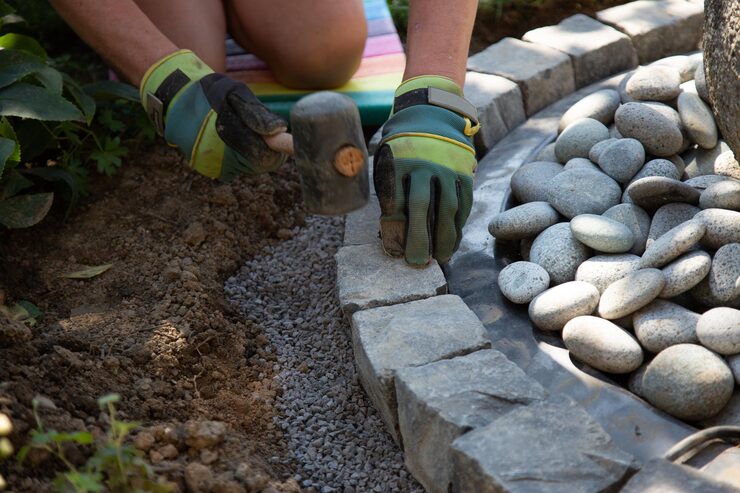
What’s actually happening underground matters more than the stone pattern on top. A cobblestone apron or border that stays flat and tight isn’t about the stone on top. It’s about what’s under it. We excavate to a depth that gets below the zone frost disturbs each winter, lay and compact a crushed stone base, set a bedding layer, and then install edge restraint behind the stones so freeze-thaw can’t walk them sideways year after year. Skip the restraint, or skimp on compaction, and you get the wavy, gap-toothed cobble border that’s common on older Sudbury properties where someone set stones straight into loam decades ago and never touched it again.
Massachusetts frost doesn’t ask permission. It gets under anything that isn’t contained, lifts it, and drops it back slightly out of place. Over several winters that’s the difference between a border that still looks hand-set and tidy, and one that looks like it’s slowly sliding downhill.
Choosing stone size and laying pattern is where the apron actually earns its keep over time. A running bond of larger granite cobbles reads as substantial and holds up well under plow traffic at the street, while a smaller, tumbled cobble along a planting bed softens the line between hardscape and lawn without looking out of place next to an older farmhouse or a newer build. On a Sudbury lot, we’ll often recommend something different at the street than along the drive itself, since the two sections take very different abuse.
A few details we look at before any stone goes down:


What Our Clients Say
What the work involves below the surface
The stone is the last and smallest part of the job. A cobblestone apron stays flat or goes wavy depending on what is underneath it.
Granite cobbles hold their edge and their color for decades and can be reset individually if one shifts. Concrete pavers cost less up front but wear and fade as a batch, so repairs are harder to match later.
Reclaimed granite cobbles bring real weathering and irregular faces — a good fit against an older farmhouse or stone wall already on the property.
New-cut granite cobbles give Sudbury driveways a cleaner, more uniform line than reclaimed stone.
Belgian block is the traditional choice for a Sudbury drive apron meeting the road — tall enough to take a plow blade without chipping at the top edge, while framing the driveway with a durable, handsome transition that holds up through harsh New England winters.
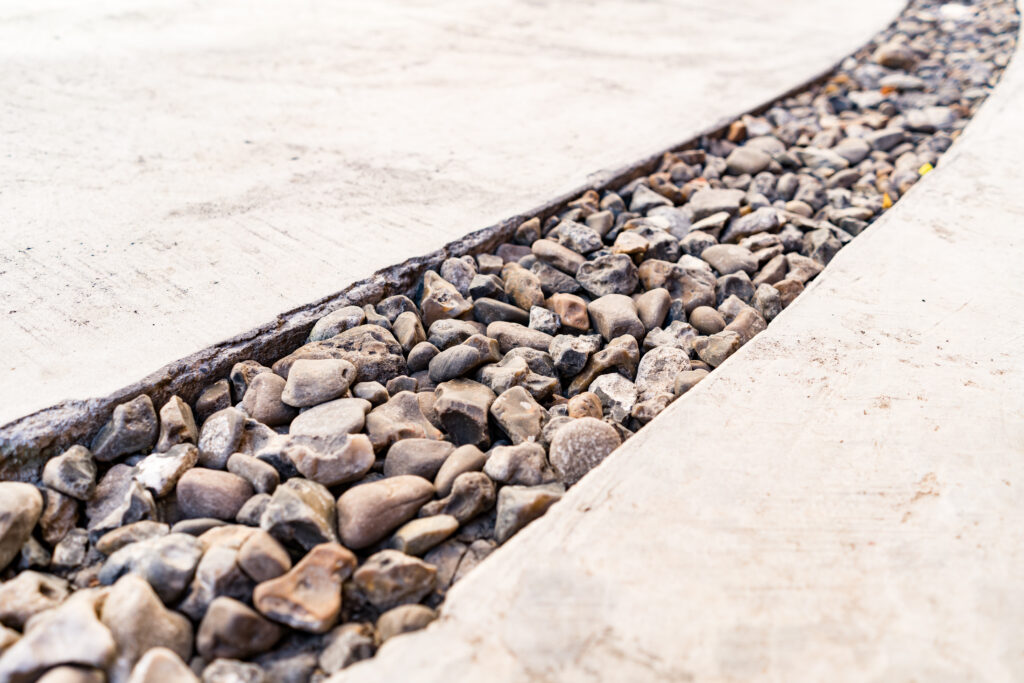
Every hard surface needs somewhere for water to go. Cobble edging without proper pitch just builds a dam along the drive instead of a border.
Materials and the trade-offs
Grade matters as much as material. A Sudbury drive dropping through the trees toward a garage door is already moving water with every storm, and a cobblestone edge set without attention to that slope becomes a small dam rather than a border. Water that should sheet off into the woods instead pools against the stone, softens the base underneath, and undoes the compaction work within a season or two. The fix is pitching the apron and the bedding beneath the edging away from the house and toward existing drainage, not fighting the water with more stone. On properties bordering conservation land, where runoff has somewhere specific it’s meant to go and nowhere it isn’t, getting this pitch right the first time matters more than it does on a flat suburban lot.

How it ties into what's already there
Few Sudbury drives are being built from scratch. Most of this work happens around an existing asphalt or gravel drive, an existing entry, and often an old stone wall or granite post that’s been part of the property longer than the current house. The job is to match that material language rather than compete with it — reclaimed granite against a fieldstone wall, a tighter new-cut cobble against a Colonial-era front door that’s had newer additions put on it. Edging also has to resolve cleanly against whatever planting beds, tree roots, or drainage swales already exist along the drive, which usually means hand-fitting rather than running a straight line and hoping the landscape cooperates. Done well, the apron and edging read as though they were always part of the property. Done without that attention, they look like a strip of pavers dropped on top of an older lot, which is the look most owners are trying to avoid when they call in the first place.
Where this fits a Sudbury lot
Large, tree-shaded lots with a long private drive are exactly where cobblestone aprons and edging earn their keep. The apron at the street gives you a clean, durable transition that won’t crack the way a thin asphalt lip does under plow pressure, and it stands up to the sand and salt that Sudbury’s winter maintenance crews put down season after season. Edging along the length of the drive holds a gravel or asphalt surface in shape through root heave and frost without the periodic re-grading long gravel drives otherwise need, which matters on properties with mature trees close to the pavement. Where a property borders conservation land, defined edges also keep the drive surface from migrating into the buffer over time, which matters more here than on a standard subdivision lot. Cobblestone edging also gives a long rural driveway a finished, intentional look where the drive meets lawn or planting beds, rather than a ragged transition that invites weeds and erosion. If you’re ready to talk through aprons and edging for your own drive, call Driveway Specialists at (413) 337-3772.
Where this suits Sudbury properties
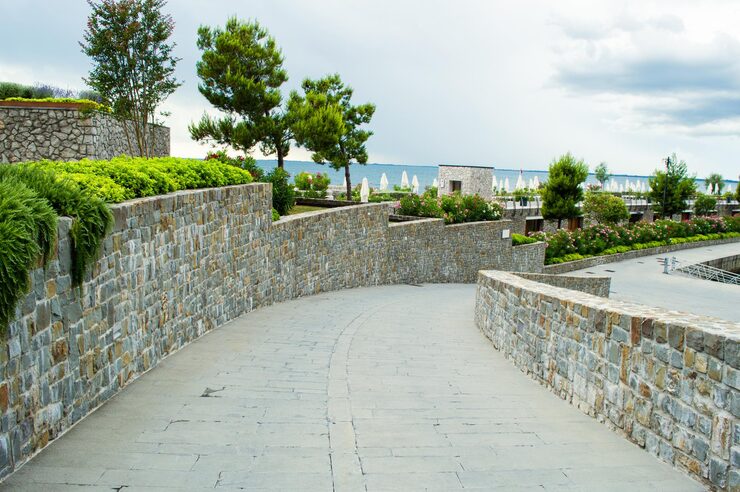
Long wooded drives
A winding private drive through mature trees needs edging that holds its line through root heave and shade-driven dampness, not just a stone border laid straight into loam.
Conservation-abutting lots
Where a property borders conservation land, a defined cobblestone edge keeps the drive surface contained and keeps runoff moving where it's meant to go instead of spreading into the buffer.
Older farmhouse entries
Reclaimed granite cobbles and a hand-fitted apron suit a pre-war house better than a uniform paver line, matching stone walls and plantings that are already decades old.
So tar and chip suits a longer, gentler Sudbury drive with some room around it. It is a poor match for a short, steep or shared one, or one that opens straight onto the walk.
Questions we hear
Do you handle the apron where the drive meets the town road?
Yes. Where the drive meets a town-accepted road, the curb cut and apron sit partly in the town's domain, so we work within what's allowed at that connection. On a private way, the whole apron is the owner's decision to make.
Will tree roots eventually lift a cobblestone border?
A properly excavated base and compaction depth reduce this substantially compared with stones set directly into soil, but mature oaks and maples near the drive edge are still worth noting before installation so we can route or set the border to work around major roots rather than over them.
Can cobblestone edging be repaired if a section shifts?
Granite cobbles can be lifted, the base corrected, and the stones reset individually, which is one of the real advantages over a poured or asphalt edge. Concrete paver edging can also be reset, though color matching gets harder as pavers weather and older runs are discontinued.
How does this work differ from a regular driveway paving job?
This is hardscape detailing rather than driveway construction or repair. The drive surface itself can stay asphalt, gravel, or existing pavers. We're addressing the apron at the street and the edge restraint along the length, which is a different scope, base depth, and material set than resurfacing the drive.
Next step
Call us at (413) 337-3772. Tell us about the lot, the slope and what you want the frontage to look like. We have been working in this area since 1988, and we will tell you plainly what suits your property.