
Foundation Work in Milton, MA
Water coming through a basement wall after a heavy rain. A damp corner that never quite dries out, even in August. A section of foundation that bows inward or has started to crumble at the mortar joints. If that sounds like what is happening at your house, the problem usually is not the basement. It is what is happening outside it, against the wall, below grade, where you cannot see it.
Milton has a lot of older homes built into sloping lots around the Blue Hills, and that combination of age and grade is exactly where this kind of problem shows up. Many of these houses sit on fieldstone or rubble foundations poured or stacked well before anyone built a drainage system into the design. There is no membrane keeping water out and no perimeter drain carrying it away. Water does not go under the wall and find a sump pit. It moves straight through the stone and mortar, because that is the easiest path available to it.
Grade matters just as much as the wall itself. On a sloped Milton lot, water runoff from the upper part of the property naturally travels downhill and collects against whatever foundation sits in its way. If the soil around the house has settled over the decades, or if downspouts discharge too close to the wall, that runoff gets funneled directly into the problem rather than away from it. Fixing the foundation without addressing the grading around it usually means the same damp patch comes back within a season or two.
A lot of homeowners try sealing the inside first, because it is cheaper and does not involve digging up the yard. Interior coatings and sealants can slow the visible damp, but they are treating where the water ends up, not where it is getting in. The wall keeps absorbing moisture from the soil side, and over time that moisture is what drives the mortar failure and the bowing. The actual fix is on the exterior: excavate down to the footing, deal with the wall itself, and give the water somewhere else to go before it ever reaches the stone. That typically means:
- Excavating along the affected section to expose the footing
- Repairing or repointing deteriorated stone and mortar
- Installing a proper exterior membrane and drainage layer
- Regrading and redirecting downspouts away from the wall


What Our Clients Say
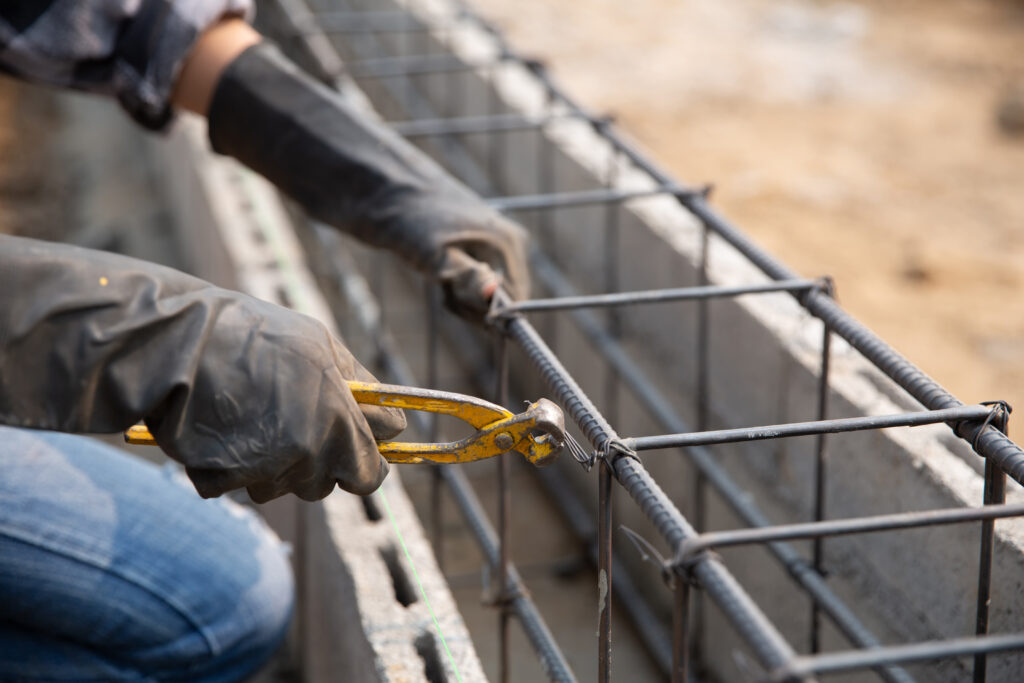
What's actually happening at the wall
Fieldstone and early poured foundations were built to hold the house up, not to manage water. There is no waterproof membrane on the outside face and nothing to intercept groundwater before it reaches the stone. Soil against the wall holds moisture after rain, and hydrostatic pressure pushes that moisture through any gap in the mortar, widening cracks and washing out jointing over time.
On a sloped Milton lot, grading often makes this worse rather than better. If the ground around the foundation pitches toward the house instead of away from it, every storm sends more water straight at the wall that is already struggling with it. Older properties near the escarpment frequently show this pattern, where decades of settling have flattened the original slope or reversed it entirely.
Left alone, the cycle repeats every season: water intrudes, pressure builds, mortar erodes, and the gap gets a little wider each time. What starts as a damp patch in the basement is usually a sign of this slower structural process, not a one-off leak. Addressing the wall itself, not just the symptom inside, is what actually stops it.
Excavation and access
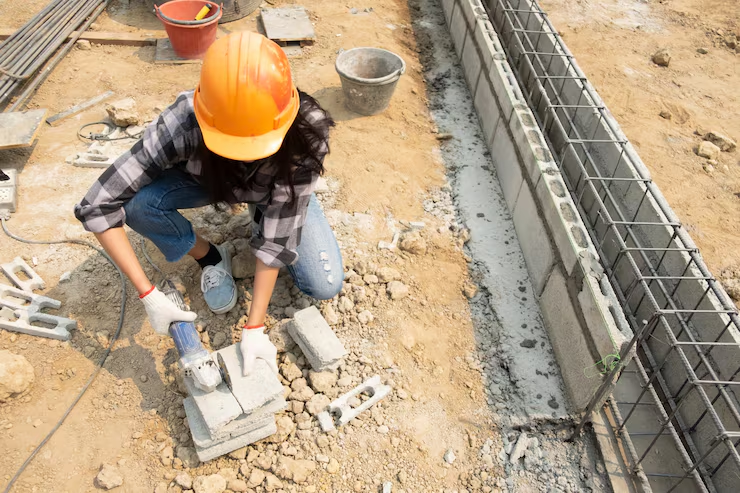
The work starts with digging down along the problem wall, exposing it from grade to footing so the crew can see exactly what the foundation is doing before any repair begins. On flat suburban lots around Milton that is straightforward: a mini-excavator sets up, spoil goes into a truck or a contained pile, and the trench is open within a day. On the kind of sloping, tree-lined lot common near the Blue Hills, getting a machine to the correct side of the house, around existing hardscape, retaining walls, septic lines and established trees, is often the first real planning decision, and sometimes dictates which equipment can be used at all.
Where a machine genuinely cannot reach, more of the excavation has to happen by hand, which changes both the timeline and the approach, since hand digging near a footing has to be done carefully to avoid undermining it. Underground utilities, sprinkler lines and old landscaping features also get marked and worked around before any digging starts, so access planning is really the first step in the whole job.
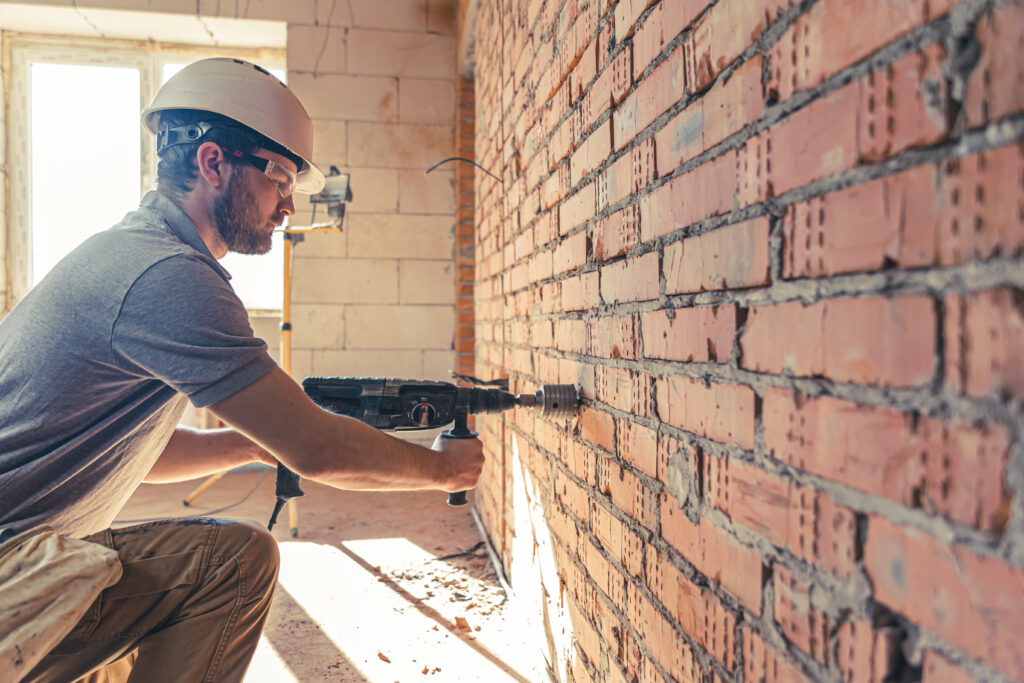
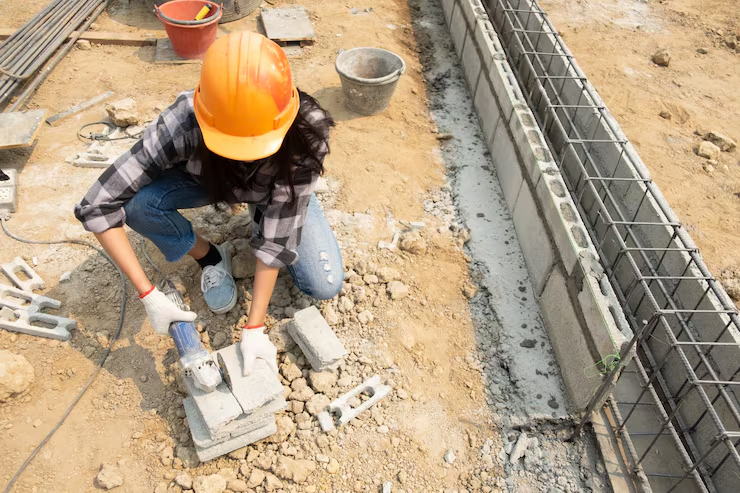
The work, in order
Planting and hardscape
Shrubs, garden beds, patios or walkways against the affected wall have to come out before excavation starts. On older Milton properties with established plantings close to the foundation, that’s often the first real loss to plan around.
Treating the wall
With the wall exposed, the surface gets cleaned and any damaged mortar or stone addressed before a drainage membrane goes on. This is the step that actually stops water moving through the wall itself, rather than just managing it afterward.
Drainage and backfill
A perimeter drain at the footing gives water a path away from the wall instead of through it. Backfill then goes back in with material that drains, not the dense clay-heavy soil that caused the problem in the first place.
Reinstating the ground
The final grade needs to pitch away from the house, not toward it. On a sloped Milton lot this sometimes means re-grading a wider area than just the trench itself to get the water actually moving in the right direction.
If the drive or walk is in the way
Sometimes a section of driveway or walkway sits directly over the excavation path. It has to come up before the dig and gets reinstated after backfill, treated as its own piece of work rather than folded into the foundation job.
Grading and the slope of the lot
On the Blue Hills side of Milton especially, the lot’s natural fall matters as much as the foundation wall itself. A house set into a hillside collects more runoff from the uphill side than a flat-lot house ever will, and that runoff has to be intercepted and redirected before it reaches the foundation, not after. Re-grading around the excavated area is often necessary even when the original problem looked like it was confined to one wall. Surface water that used to pool against the stone needs a new route, usually a shallow swale or a re-pitched section of lawn, carrying it toward a lower point on the property instead of letting it sit at the base of the house.

What to check before anyone comes out
Before scheduling a visit, it helps to note when the water or damp shows up: after heavy rain, after snowmelt, or more or less constantly. Photograph the affected wall, inside and out, and note which side of the house it is on relative to the slope of the yard. If there is a visible crack, measure its width now so any change over the following weeks is obvious. That information speeds up the first visit considerably.
If you are seeing water, damp, or a wall that has started to move at your Milton home, the next step is a look at the exterior and the grade around it. Call Driveway Specialists at (413) 337-3772 to talk through what you are seeing and arrange a visit.
What to check and write down first
These are the pointers that help most before anyone visits.
- Note where and when. Which wall, which corner, and whether it follows heavy rain, snowmelt or a particular season.
- Photograph it dry and wet. Take pictures of the same spot on a dry day and again after rain.
- Look at the outside. Check whether the ground beside that wall slopes toward the house, whether a downspout empties near it, and whether anything piles water against it.
- Check for movement. Look for horizontal cracks, a wall that leans in, or stones that have shifted. Mark the ends of a crack with a pencil and date it, so changes can be seen.
- Check the stonework. Press on the mortar. If it crumbles or sands away, say so.
- Think about access. Where could a machine stand, and what is in its way? Tell us who shares the drive or boundary.
- Leave it as you found it. Do not seal or patch the wall before we see it. It hides what we need to look at.
Questions we get asked
Why does water come through the wall instead of under it?
Older fieldstone and rubble foundations have no waterproof membrane and no perimeter drain. Water sitting in the soil against the wall finds the path of least resistance, which is through the stone and mortar joints, not underneath the footing.
Can this be fixed from inside the basement?
Interior sealants and coatings can reduce visible dampness, but they don't stop water moving through the wall from the soil side. The wall keeps absorbing moisture, which is what drives ongoing mortar failure. Lasting repair happens from the exterior.
How much does grading matter compared to the wall itself?
On sloped Milton lots it can matter more. If the ground pitches toward the house, every storm sends more water at the wall. Re-grading to carry water away is often as important as the drainage work at the footing.
What if a machine can't reach the affected wall?
On tight, tree-lined, or steeply sloped lots, excavation sometimes has to be done partly or entirely by hand where equipment access isn't possible. That changes the timeline but not the basic approach.
Is this the same service as driveway paving?
No. Foundation work is excavation, drainage, and structural repair around the house. It's a separate trade from paving, even though a driveway or walk sometimes has to be removed and replaced if it sits over the excavation path.
Next step
Call us on (413) 337-3772. Tell us which wall, what you have seen, and how the lot slopes around it. We have worked across Middlesex County since 1988, and we will tell you plainly what is likely going on and whether outside work is the right answer.