
Patios in Milton, MA
A lot of Milton properties sit on ground that slopes somewhere, whether that’s the long climb up toward the Blue Hills reservation or the shorter pitches you get on the streets below Canton Avenue and around Milton Hill. That matters more for a patio than almost anything else about the project. You’re not just picking stone and laying it flat in a yard. You’re building a surface on a grade that already moves water somewhere, usually toward or around the house, and the patio either fixes that or makes it worse.
Older Milton homes add another layer. Many were built well before anyone thought about managing stormwater on a half-acre lot, so the existing grade around the foundation is often doing the minimum it needs to and no more. Put a new hard surface in without thinking about where it sheds water, and you can turn a dry basement into a damp one. Get the grading and base right, and a patio can actually improve drainage that was marginal to begin with.
What happens below the stone
Everything visible – the bluestone, the paver, the fieldstone edge – sits on work you’ll never see again once it’s buried. Excavation removes the organic topsoil that would otherwise rot and settle under the surface. A compacted base layer underneath distributes weight and lets water pass through rather than pooling. Edge restraint keeps the whole field from creeping outward under frost and foot traffic. Skip any one of these steps and the patio looks fine for a season or two, then starts to show it: units rock underfoot, joints open, low spots collect water that used to run off.
Massachusetts frost is the part people underestimate. Ground freezes, water in the soil expands, and anything resting on an inconsistent base gets pushed unevenly. Come spring, you get a patio that’s gone wavy in exactly the spots where the base was thin or uneven. A properly built base doesn’t stop frost from happening – it just lets the whole surface move together instead of in pieces.
On a sloping Milton lot, the base work usually also means managing a change in grade across the patio itself, sometimes with a low retaining edge or a shift in paver coursing. This is also where the patio should be tied into whatever drainage already exists on the property, rather than built as an isolated surface that ignores it.


What Our Clients Say
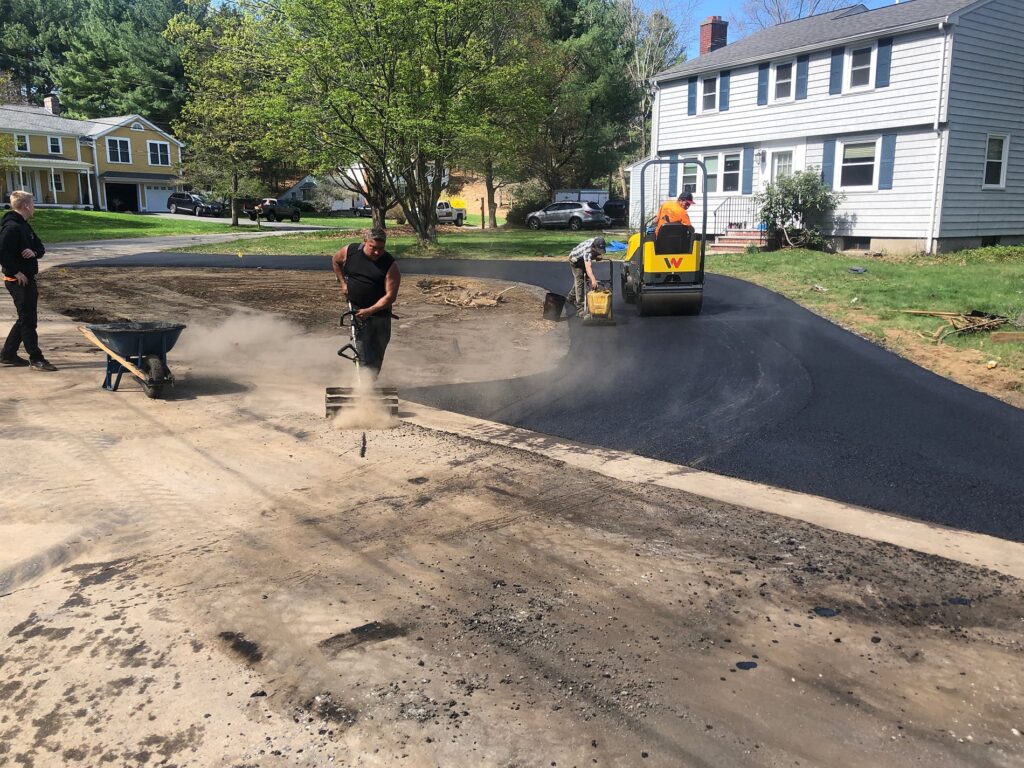
What happens below the surface
A patio is a thin finished layer sitting on a structure you never see. That structure decides whether the surface is flat in ten years or wavy in two.
Natural stone ages well and sits comfortably against an older Milton house, but it costs more and repairs are harder to match later.
Concrete pavers cost less than natural stone, lift cleanly for repairs or utility access, and stand up well to Milton's freeze-thaw winters.
Poured concrete handles a flat, low-slope patio area in Milton well, but it cracks independently of control joints as the ground shifts through freeze-thaw cycles, and repairs rarely blend invisibly, often leaving patchy, mismatched colour and texture behind.
Fieldstone and irregular bluestone read as traditional against Milton’s older housing stock, complementing stone facades and mature landscaping, though the hand-fitting required for these irregular shapes means more labor-intensive, pricier installation than uniform pavers or poured concrete.
Whatever the material, the joints and bedding layer need to shed water downward and outward, not hold it against the base.
Every patio on a sloped Milton lot needs a deliberate pitch carrying water away from the foundation, not toward it, even on a near-flat looking surface.
Materials and the trade-offs
Where a patio sits at the base of a slope, a drain line or dry well may need to intercept water before it reaches the surface at all.
A patio next to the driveway should share a sightline and, where possible, a material logic, so the two don’t read as separate projects bolted together.
Matching a stone patio to an existing retaining wall or foundation stone keeps an older Milton property looking considered rather than patched.
Mature trees near many Milton patio sites mean careful root protection during excavation, plus a base and jointing that cope with shade, leaf litter and extra moisture.
A patio built off the back of a Milton house should connect logically to the door, the steps, and the path to the yard beyond it.
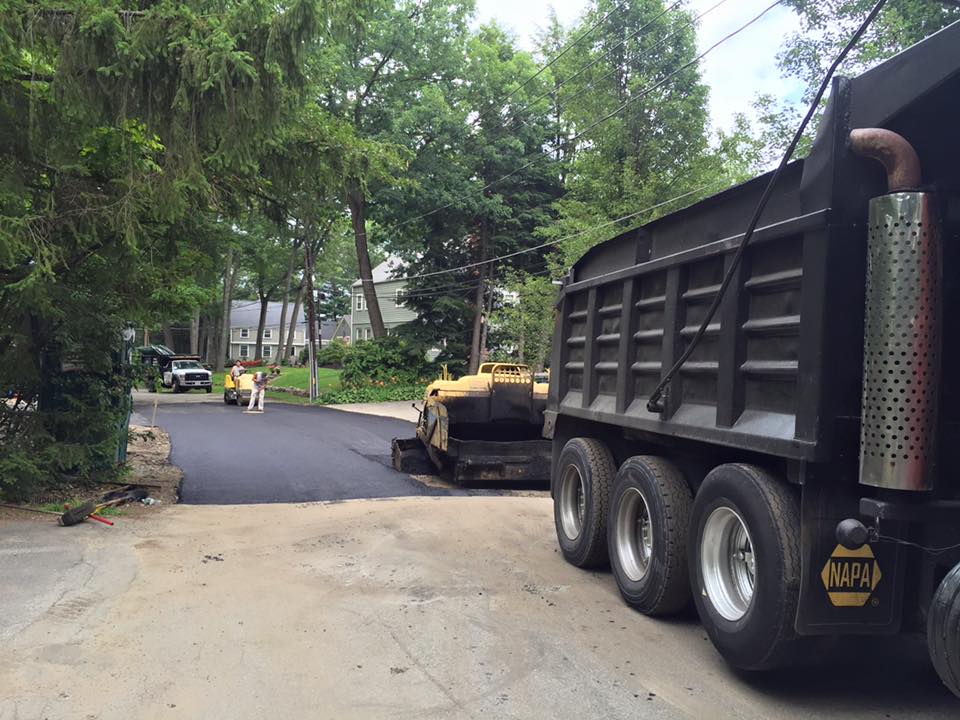
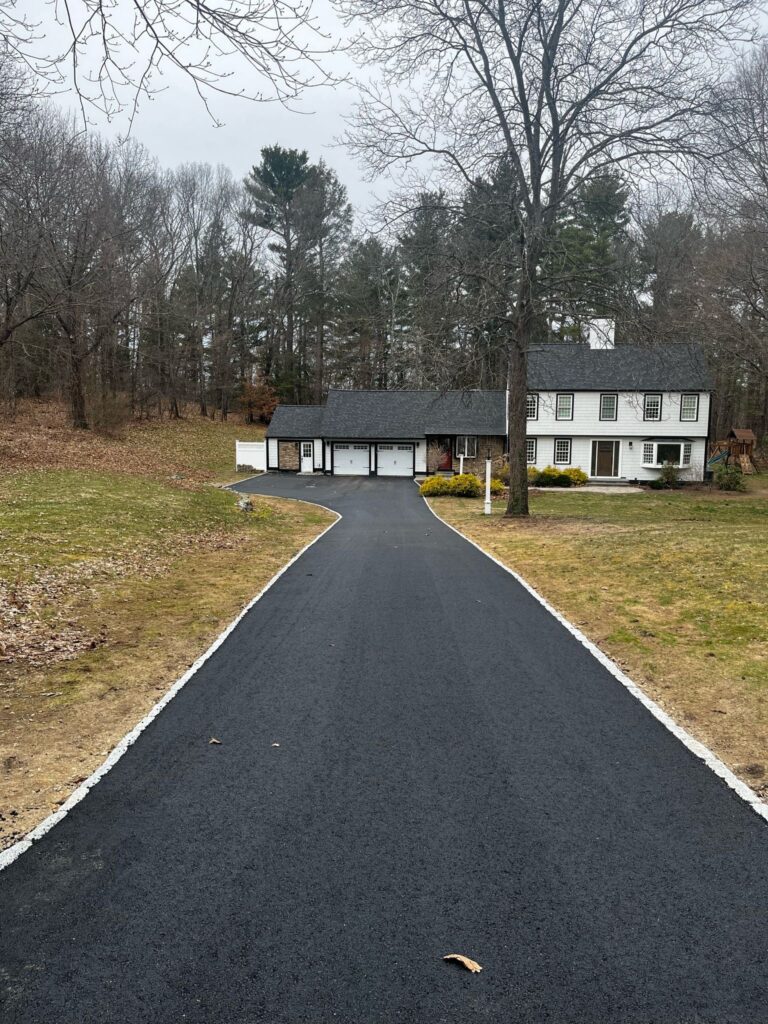
Working around slope and access
On steeper Milton lots, getting equipment and material to the build site is part of the plan from day one. A patio tucked behind a house on a hillside may need material staged and moved by hand once a truck can’t get close, which affects both the schedule and the practical layout of the space. We walk the access route before quoting, because a patio that looks straightforward on a flat drawing can turn into a hand-carried job once the grade and the fence lines are accounted for.
A patio that works with an older Milton property usually does a few things at once: it manages water that the original grading never had to deal with, it sits comfortably next to a driveway or walkway that’s already there, and it uses a material that won’t look out of place against the house in ten years.
That’s a different job than fixing a cracked driveway, and it’s worth treating as one. Milton’s hillier lots, especially around the Blue Hills side of town, often shed water toward the house unless the patio’s base and slope are planned correctly from the start. We’ve been doing hardscape and paving work across Norfolk and Middlesex counties since 1988, and the properties that hold up best are the ones where the drainage and base got as much attention as the stone or paver chosen on top.
- Proper base prep to prevent heaving through New England winters
- Grading that moves water away from foundations, not toward them
- Material choices that match the age and style of the house
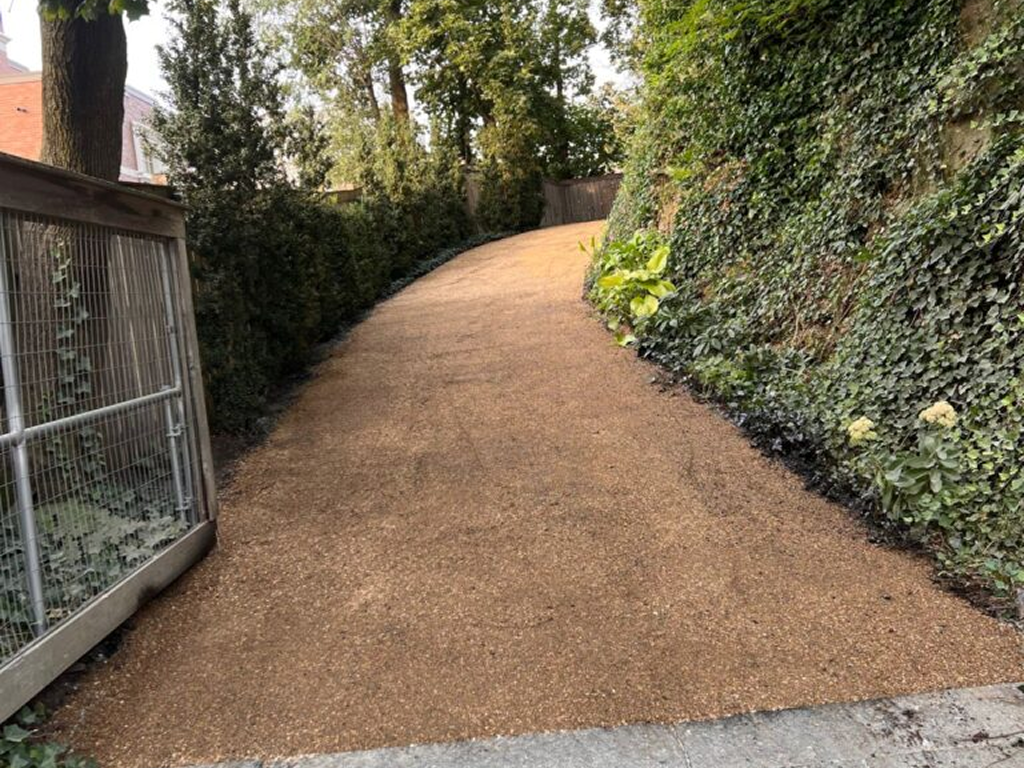
Where this suits Milton properties
Steep lots
Properties on the climb toward the Blue Hills often need a patio built with a retaining element and a deliberate drainage plan, since the slope won't manage water on its own.
Older homes on sloping frontage
Houses built before modern grading standards benefit from a patio that corrects drainage rather than ignoring it, pulling water away from a foundation that was never properly pitched.
Lots near mature trees
Shaded yards with established oaks and maples need root-aware excavation and a base that accounts for the moisture and debris that tree cover brings to a patio surface.
Questions about patios in Milton
Will a patio make drainage worse on a sloped Milton lot?
Only if it's built without a grading plan. A patio with no pitch, or pitched toward the house, can push water where it shouldn't go. Built correctly, with the right base and a deliberate slope away from the foundation, a patio can improve drainage that was already marginal on an older property.
What's under a patio that actually determines how long it lasts?
The excavation depth, the compacted base, and the edge restraint matter more than the surface material. Massachusetts frost moves the ground every winter, and a consistent, well-compacted base is what keeps the whole surface moving together instead of heaving unevenly in spots.
Can a patio be built around an existing retaining wall or stone foundation?
Yes, and on older Milton properties it usually should be. Matching material and tying the new work into what's already there, rather than treating the patio as a separate project, keeps the property looking coherent instead of patched together.
Does a sloped lot limit material choices for a patio?
It limits layout more than material. Steeper sites often need a retaining element and staged access for equipment, which affects the build sequence, but stone, pavers, or concrete can all work depending on the look and maintenance trade-offs you want.
Next step
Tell us what you have: the slope, the house, how the space gets used. We will look at the lot and talk through what will work on it. Call Driveway Specialists at (413) 337-3772. We are family-run and have been working in Massachusetts since 1988.