
Retaining Walls in Milton, MA
Milton sits against the Blue Hills, and a lot of the property here was built on whatever grade the glacier left behind. That usually means a slope somewhere on the lot: a front yard that drops toward the street, a side yard that falls away from the house, a driveway cut into a hill with a bank on one side. On a lot like that, a retaining wall isn’t decoration. It’s what lets you actually use the ground – a flat terrace instead of a slope you can’t mow, a level run beside the driveway instead of a bank that sheds mulch and soil onto the pavement every spring.
The older housing stock in Milton adds another layer. Many of these homes were built before anyone thought much about managing water on a slope, and whatever grading exists was often done by hand, decades ago, with no drainage plan behind it. When we build a wall here, we’re usually solving two problems at once: holding the soil, and giving the water somewhere to go that isn’t against the foundation or across the driveway. That’s especially true on the streets closer to the Blue Hills Reservation, where ledge sits close to the surface and runoff has nowhere to soak in – it just moves downhill until something stops it.
What’s actually holding the wall up
A retaining wall that looks good for a few years and then leans, bulges, or drops at one end almost always failed below grade, not at the face. The visible stone or block is the easy part. What holds it is the excavation depth, the base of compacted crushed stone beneath the first course, and – critically in Massachusetts – the drainage behind the wall. Frost is not gentle with hardscape. Water that gets trapped behind a wall and freezes expands with enough force to push block out of line, course by course, until the wall is visibly failing. A wall built with a gravel backfill zone and a perforated drain pipe at the base gives that water somewhere to go instead of somewhere to push.
Height matters too. Once a wall gets much past three or four feet, or it’s holding back a slope that feeds a driveway or sits near a foundation, the engineering gets less forgiving – tiered walls with a planted setback between levels often hold up better over time than a single tall face, and they’re usually easier to tie into the surrounding grade without the whole thing looming over a patio or walkway.
We also pay attention to how the new wall reads against what’s already there. Milton has a lot of mature plantings and older stonework, and a new wall in the wrong material or the wrong scale sits awkwardly next to a house that’s been there for sixty or eighty years. Matching tone and proportion matters as much as the engineering does. Common choices we work with here include:


What Our Clients Say
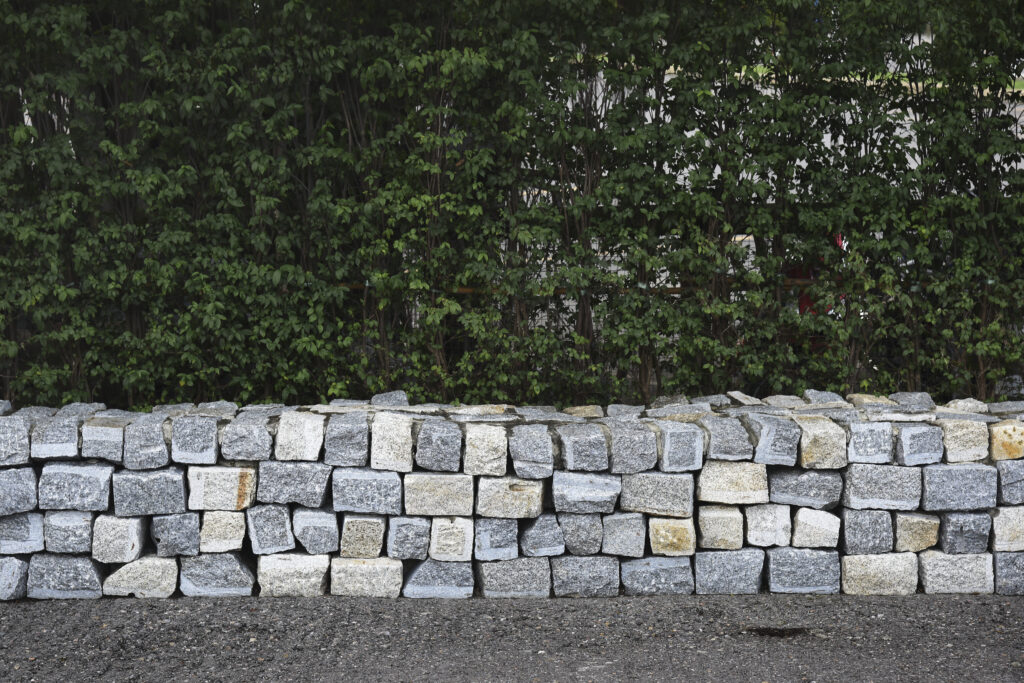
What holds a wall up is underground
The part you see is the smaller part of the job. Below it, the work runs in a fixed order.
Base work first
Excavation depth and a compacted gravel base decide whether a wall stays true or starts to lean within a few seasons. In Milton's clay-heavy ground, proper drainage behind the base layer matters too.
Segmental block
Interlocking concrete block is the practical choice for most Milton slopes – it handles freeze-thaw cycling well and is straightforward to repair if a section shifts.
Natural stone
Fieldstone or cut stone suits Milton's older homes and ages the way the neighborhood already looks, weathering gracefully alongside mature trees and brick facades.
Timber walls
Timber offers the lowest upfront cost but the shortest lifespan against Milton's New England moisture and freeze-thaw cycles. Rot and heaving are common within a decade.
Drainage behind the face
Every retaining wall we build in Milton includes a compacted gravel drainage zone, filter fabric, and a clear outlet behind the face.
Drainage behind the wall
Where the water goes
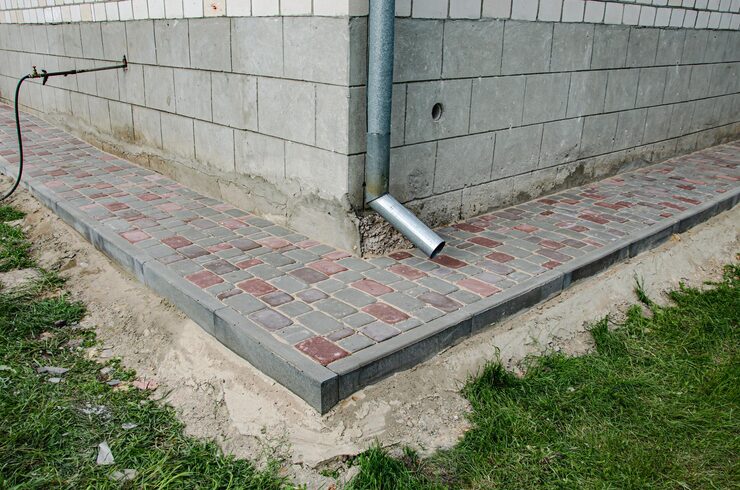
A retaining wall changes where water moves on a property, not whether it moves. Once a slope is held back, runoff that used to spread downhill concentrates behind the wall and needs somewhere intentional to go. On a Milton lot that usually means routing it around the wall’s end, through a drain line to daylight, or into a dry well – not letting it pool against the back of the wall or creep under a driveway edge. Grade at the top should pitch away from the structure, not toward it, a detail that’s easy to get backwards when the natural slope runs the other way.

Choosing the material
Tying into what's already there
Few retaining walls in Milton stand alone. Most sit near an existing driveway, a front walk, an older stone wall at the property line, or foundation plantings established for years. New work has to step down sensibly, line up with existing grade breaks, and use a material and color that doesn’t look dropped in from elsewhere. A segmental block wall painted to resemble stone next to original 1920s fieldstone usually looks exactly like what it is. Matching proportion and texture, even without the exact material, keeps a property looking considered rather than patched. We also look at how the top of the wall will be used – planting bed, seat wall, or mowing edge – since that decides cap detail and finished height as much as slope does.
Where walls make sense on a Milton lot
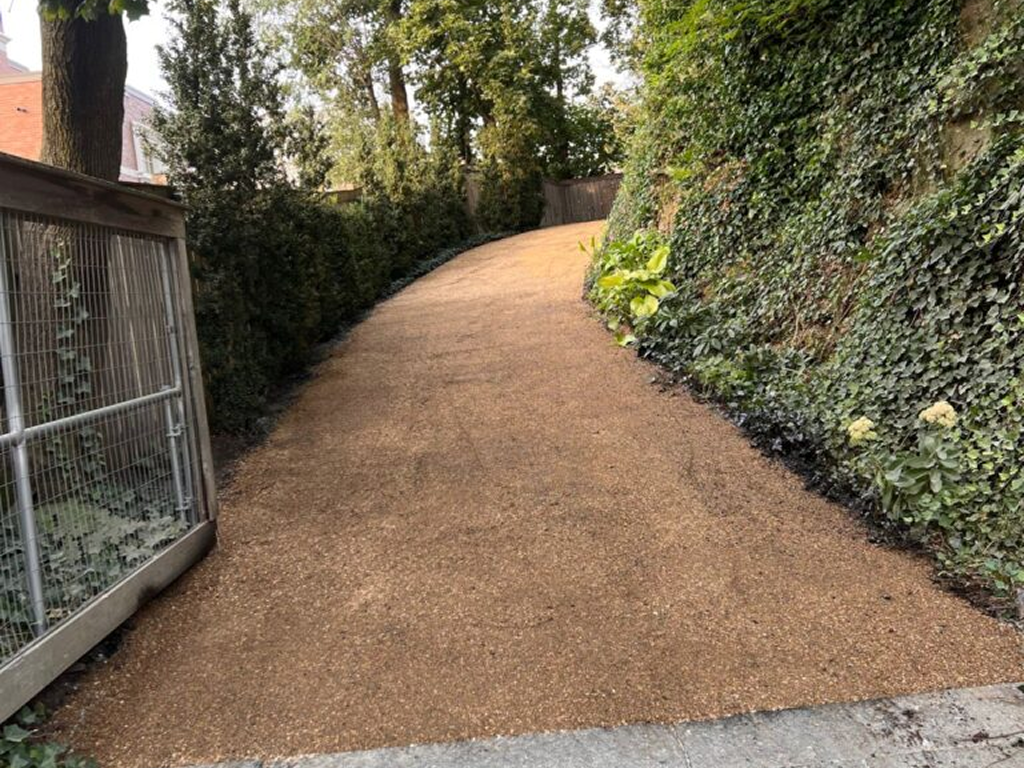
This work pays off on properties with real grade change: a sloped front yard near the Blue Hills side of town, a driveway cut into a bank, a backyard that drops off sharply enough to be unusable. A short decorative wall on a flat lot is a different job entirely – lower, simpler, and far less dependent on engineering. The taller or more structural the wall, the more excavation, base, and drainage decisions matter, and the more it’s worth having someone look at the actual slope before any block goes in. Older Milton lots in particular often have fill, ledge, or old foundation material a few feet down that changes how a wall needs to be built – and that’s only found by digging, not by looking at the surface.

Next step
Call Driveway Specialists at (413) 337-3772 to set up a site visit anywhere in the Milton area. Retaining walls are one of those projects where guesswork costs you later, so we start by walking the actual slope with you, not just looking at photos or guessing from the street. We’ll talk through what the grade is doing, where water wants to go during a heavy rain, and what the soil looks like once we get a shovel into it.
From there, we give you a straightforward plan that covers:
- Wall height, batter, and footing depth needed for the slope you’ve got
- Drainage work behind the wall, including gravel backfill and pipe where it’s needed
- Material options that fit the look of your property and your budget
- A realistic timeline, including any excavation or grading before wall work starts
Nothing gets dug until you’ve seen the plan and agree it makes sense. No pressure, no surprises once the crew shows up.
Questions we get asked
Does a retaining wall in Milton need an engineer?
Taller or structurally loaded walls often benefit from engineering input, particularly on steep Blue Hills-adjacent slopes or where the wall supports a driveway or structure above it. Lower garden walls generally don't need it. We'll tell you honestly which category your project falls into during the site visit.
What's the most durable wall material for Massachusetts winters?
Segmental concrete block generally holds up best against repeated freeze-thaw cycling and is the easiest to repair if a section ever shifts. Natural stone ages well too but repairs require more skill to match. Timber is the least durable long-term choice in this climate.
Can a retaining wall help with a wet or eroding yard?
Yes, when it's built with proper drainage behind it. The wall itself holds the soil; a gravel drainage zone and outlet pipe behind the face is what keeps water from building up and eventually pushing the wall out of line.
Will a new wall match my older Milton home?
It can, with the right material and proportions. We look at existing stonework, plantings, and the house's age before recommending a material, rather than defaulting to whatever is easiest to install.
Next step
Call us and we will come look at the slope, the access and the water. We will tell you what the wall needs and what it will cost to do properly.