
Walkway Installation in Southborough, MA
Southborough lots tend to be large and wooded, with a long run from the road to the front door and real grade change along the way. A lot of houses here have a drive that handles the cars fine but no real path from the drive to the entry, or an old slab path that has shifted under a stand of mature trees. The question is rarely whether to add a walkway. It is what to build it from, how to get it to sit flat through a New England winter, and how to make it look like it belongs with the house rather than an add-on.
A front walk is a small footprint compared to a driveway, but it fails for the same underlying reason: what happens below ground, not what is laid on top. Southborough’s rolling terrain means a path from drive to door is almost never flat. It climbs, it crosses a slope, or it has to step around an established tree. Each of those changes how the base is built and where water is sent, and ignoring that at the planning stage is where most walkway problems actually start.
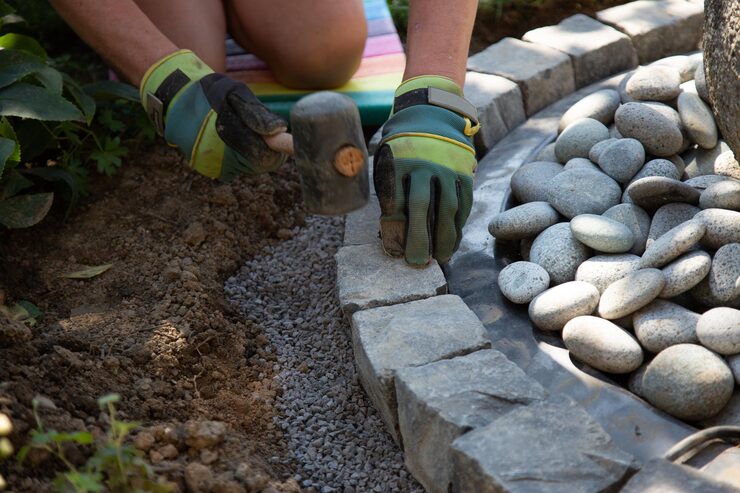
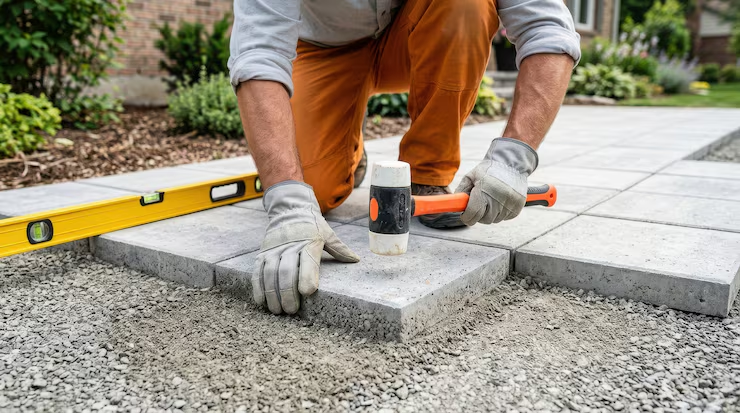
Excavation depth, a compacted base course, and edge restraint are what keep a walkway flat once frost starts working on it. Skip any one of those steps and the surface will move independently of the base, unevenly, which is how you get the heaved, wavy walkway that’s common on older Southborough properties where the original path was laid straight onto soil without real prep underneath.
Frost doesn’t move a walkway evenly, which is the real problem. One section sits on compacted base, the next crosses a root or a softer pocket of soil, and each responds differently to a freeze-thaw cycle. The result over time is a path that rises and dips instead of staying flat, and once that starts, patch repairs rarely hold for long since the underlying movement is still there.
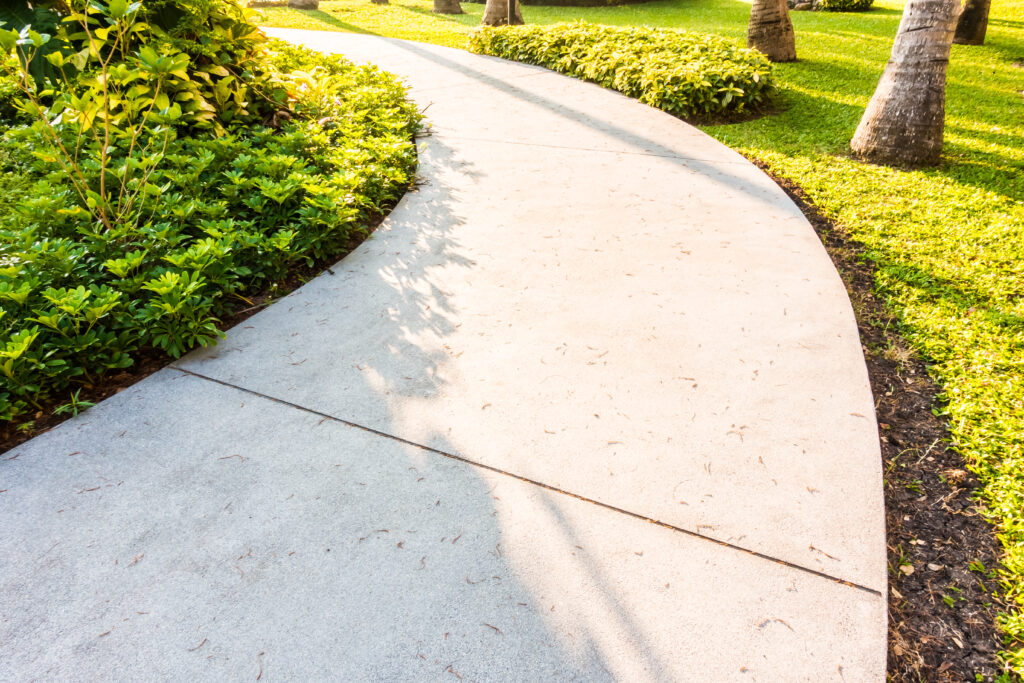
Material choice interacts with all of this. A rigid material bridges minor base movement differently than individual units do, and that difference matters more over root systems and grade change than it would on a short, flat section of path. On a wooded lot, that often points toward options that can flex slightly and be reset section by section rather than a single poured surface that cracks where a root pushes against it. A few things worth weighing before material is picked:
- How close mature roots run to the planned path, and whether the base can be built without cutting major roots
- Where runoff needs to go at each grade change, so water sheds off the path instead of pooling at the door
- Whether steps or a landing are needed partway along, rather than forcing a steep continuous slope
- How the walkway material will read against existing stone, brick, or siding on the house


What Our Clients Say
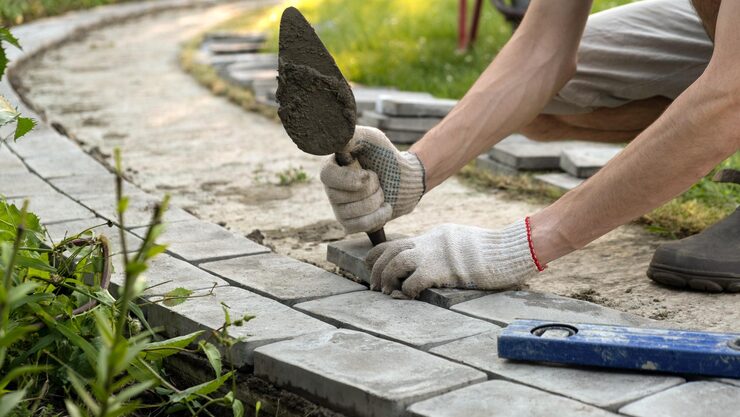
Full excavation, a compacted gravel base, and proper edge restraint hold a Southborough walkway flat through frost heave. We grade for drainage away from the house, too. Skip any of those steps and movement starts within a few seasons.
Materials: the real trade-offs
Natural stone, concrete pavers, and poured concrete each handle Southborough's freeze-thaw cycles and clay-heavy soil differently. Stone offers character, pavers balance cost with durability, and poured concrete suits budget-conscious projects.
Natural stone (bluestone, fieldstone) ages beautifully and suits Southborough’s historic homes and wooded lots, but it costs more, and an individual flag can heave or settle if the gravel base beneath it isn’t properly compacted before installation.
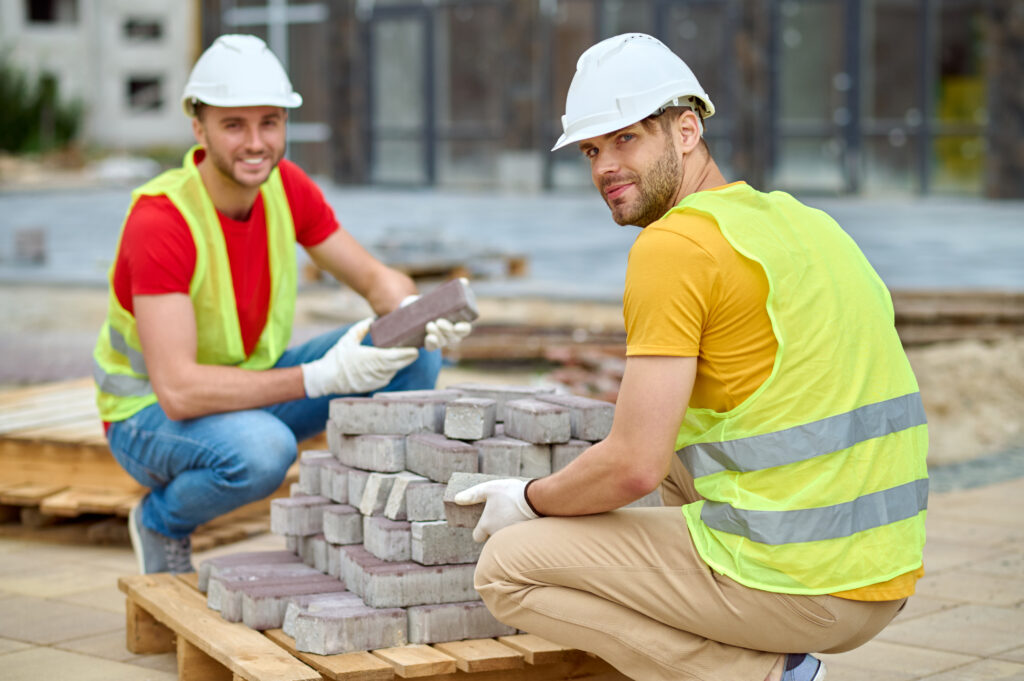
Concrete pavers give Southborough walkways a consistent surface and, critically, repairability.
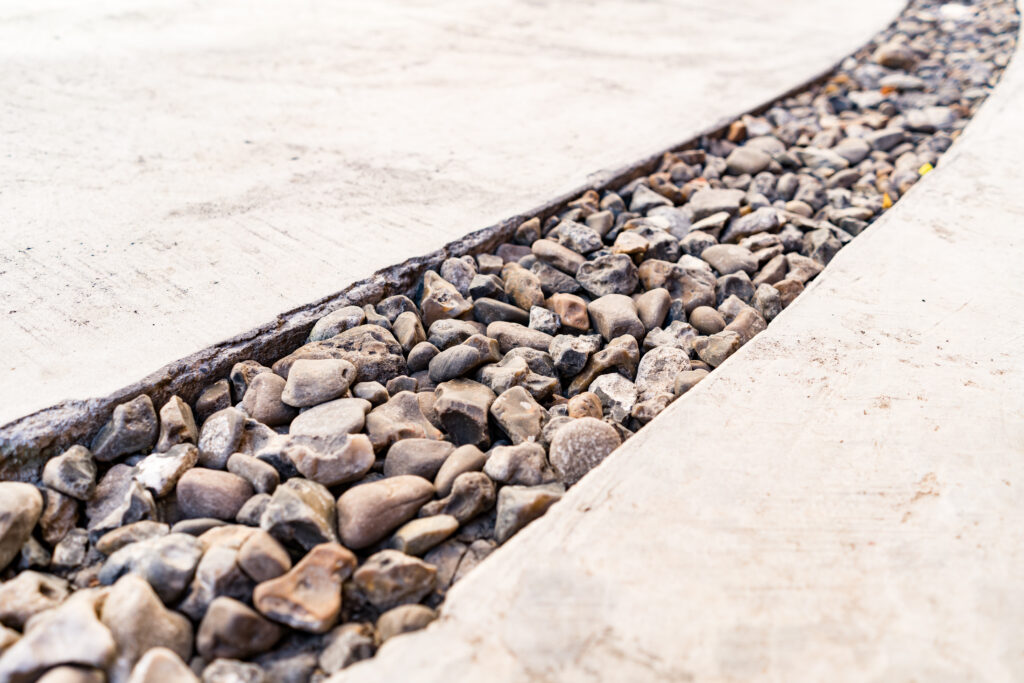
For Southborough walkways, poured concrete is the lowest cost per square foot up front but the hardest to repair selectively.
In Southborough, freeze-thaw cycles are the deciding factor more than looks. Pavers and set stone shift slightly with frost heave and settle back level, while a poured concrete slab resists bending and eventually cracks.
Choosing a material
The materials are not equal. Each suits some properties and not others.
Drainage and grade
Water has to go somewhere once a hard surface replaces soil, and on a sloped Southborough lot that somewhere is usually toward the house unless the grade is built to stop it.
Pitching the walkway away from the foundation, and tying that pitch into existing yard drainage, is not optional on Southborough's sloped lots.
A walkway that climbs or crosses a hillside needs more than a flat gravel bed. It may need a cross-slope pitch, or a step or two, to move water off the surface instead of down it toward the door.
Tying into what's already there
A new walkway has to meet the driveway, the entry, and whatever walls or planting beds already exist, and on an older Southborough house that often means matching a material or tone that’s decades old.
Where the walkway meets the drive and the entry step matters as much as the path itself. A clean transition, matched height and a consistent edge, is what makes the whole thing read as one project.
Where this work fits in Southborough
Southborough’s large wooded lots, sloped drives, and historic centre with period-sensitive frontage mean a walkway project here is rarely a straight run of pavers from curb to door.
On properties with mature trees, the path has to account for root zones now and root growth later, both in excavation and in choosing a material that can be reset if a root eventually lifts a section. On sloped lots, the walkway’s grading is part of the same conversation as drainage for the drive and surrounding yard, not a separate decision. Near the historic centre, matching an existing stone wall, an old granite step, or a period facade often points toward natural stone or a stone-look paver rather than poured concrete, even with the added cost.
None of that changes the mechanics underneath: the base still has to be excavated and compacted properly, edges still need restraint, and grade still has to move water away from the house. What changes in Southborough is how much those details are shaped by trees, slope, and an older house’s existing materials, rather than by the shortest line between two points.
What drives the price
A new walk has to meet several existing things cleanly.
- The entry : The walk must arrive at the door at a sensible height. The threshold sets the finished level, so the work starts at the door and runs outward.
- The drive : Where a walk meets a drive, the levels and the drainage have to agree. A mismatch becomes a trip edge or a puddle.
- Walls and planting : Existing stone walls, foundation beds and mature trees constrain the route. Roots under a path are worked around, not cut through without thought.
- An older house : Scale, colour and pattern should follow the architecture. A narrow, dark stone walk suits an old house differently than a broad paver field does.
Getting started
A walkway project starts with a look at the actual ground: the slope between drive and door, any trees in the way, and what material already exists on the house and drive that a new path needs to sit well against. Southborough’s older neighborhoods often mean mature trees close to the front walk, so root interference and heaving are part of the conversation from day one, not an afterthought once the path starts buckling.
Driveway Specialists has worked across Worcester, Middlesex, and Norfolk counties since 1988, as a family-run business, and that’s long enough to have seen how a Southborough front walk behaves ten and twenty years after it’s installed, which is the timeframe that actually matters when choosing a base and a material. We’ll walk the site, check drainage and grade, talk through what natural stone, pavers, or concrete would mean for your specific soil and tree cover, and give you a plan before any excavation starts. That plan covers base depth, edge restraints, and how the new walkway ties into existing steps or a driveway already in place.
Before you call
It helps to know:
- Where the walk starts and where it needs to end
- Whether the route crosses a slope or a shared area
- Which material you lean towards, and whether the house is older
- Where water currently runs on the property
Questions people ask
What's the best walkway material for a wooded Southborough lot?
It depends on how close mature trees are to the path. Concrete pavers are easiest to reset if a root eventually lifts a section, since you can lift and relevel individual units without redoing the whole walk. Natural stone looks right on an older, wooded property but costs more to adjust later. Poured concrete is the least forgiving option near root zones, since a lifted section usually means replacing the whole panel.
Why does a walkway heave in some spots and not others?
Uneven heave almost always traces back to inconsistent base preparation or variable ground conditions underneath, not the surface material. A walkway crossing a root, a soil transition, or a poorly compacted patch will move differently in each section once frost sets in, which is why the base work matters more than what's laid on top.
Can a new walkway tie into an existing driveway or patio?
Yes, and the transition point is one of the more important design decisions. Matching height, edge detail, and material tone where the walkway meets the drive or an existing patio is what makes a new path look original to the property instead of added on afterward.
Does a sloped lot need special drainage planning for a walkway?
Yes. On a sloped lot, a walkway can't just be laid flat and level; it needs a pitch that moves water away from the house and ties into how the rest of the yard already drains. Ignoring that is how a new hard surface ends up sending water toward a foundation instead of away from it.
Next step
Call Driveway Specialists on (413) 337-3772. We are a family-run company in business since 1988, and we will walk the route with you and talk through material, grade and drainage before anything is priced.