
Walkway Installation in Wayland, MA
A lot of Wayland properties share the same layout problem: a long driveway winding through trees, a front door that sits well back from the street, and no real path connecting the two. You park, cross the lawn or a strip of mulch, and hope it’s not raining. A proper walkway solves that, but on a wooded lot with grade changes it has to be built right, not just laid down.
Wayland’s larger parcels, many with wetland buffers or conservation land nearby, mean the work often has to respect existing root systems, natural drainage patterns, and setbacks that a tighter suburban lot wouldn’t have. None of that makes a walkway harder to build well. It just means the planning matters as much as the materials, and it’s worth sorting out the route and material before any digging starts.
What’s Under the Surface Decides Everything
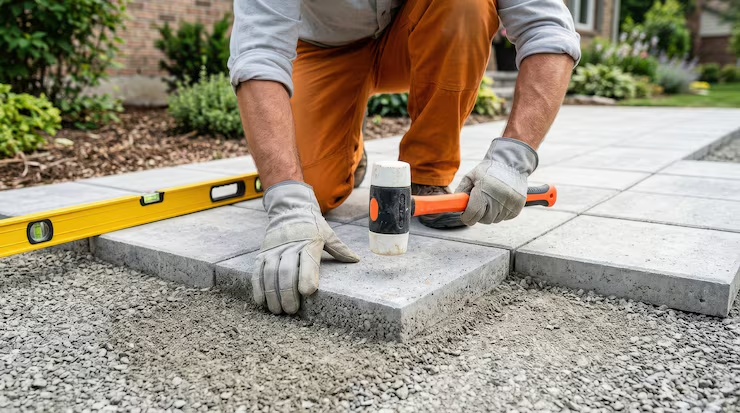
A walkway that stays flat for years and one that heaves and cracks after its first winter are built the same way on top. The difference is underneath. Proper excavation removes topsoil and organic material down to a stable subgrade, because topsoil holds water and compresses unevenly under freeze-thaw cycles. A compacted gravel base replaces it, giving water somewhere to go instead of pooling under the pavers or slab. Edge restraint, whether it’s a buried paver edging, a steel strip, or a mortared border, keeps the whole assembly from creeping outward as the ground shifts each winter.
Skip any one of these steps and the walkway still looks fine the day it’s finished. The problems show up a year or two later, once the ground has gone through its first real freeze-thaw cycle. In a town like Wayland, with mature oaks and maples shading much of the yard, the soil under a walkway also stays damper longer into spring, which makes a well-draining base even more important than it would be on an open, sunny lot.
Tree roots are the other constant. A path that crosses near a mature oak or maple needs either enough clearance to avoid major roots or a design, such as a floating paver system over a geotextile layer, that can tolerate some movement without cracking. Pouring a rigid concrete slab directly over an active root zone is asking for a lift within a few seasons.
Material choice matters too, and it’s worth matching it to how the path will actually be used:
- Natural fieldstone or bluestone fits the wooded, established look common on older Wayland lots and tends to handle minor ground movement gracefully.
- Concrete pavers give more consistent sizing and are easier to reset individually if a root or frost heave ever nudges one out of place.
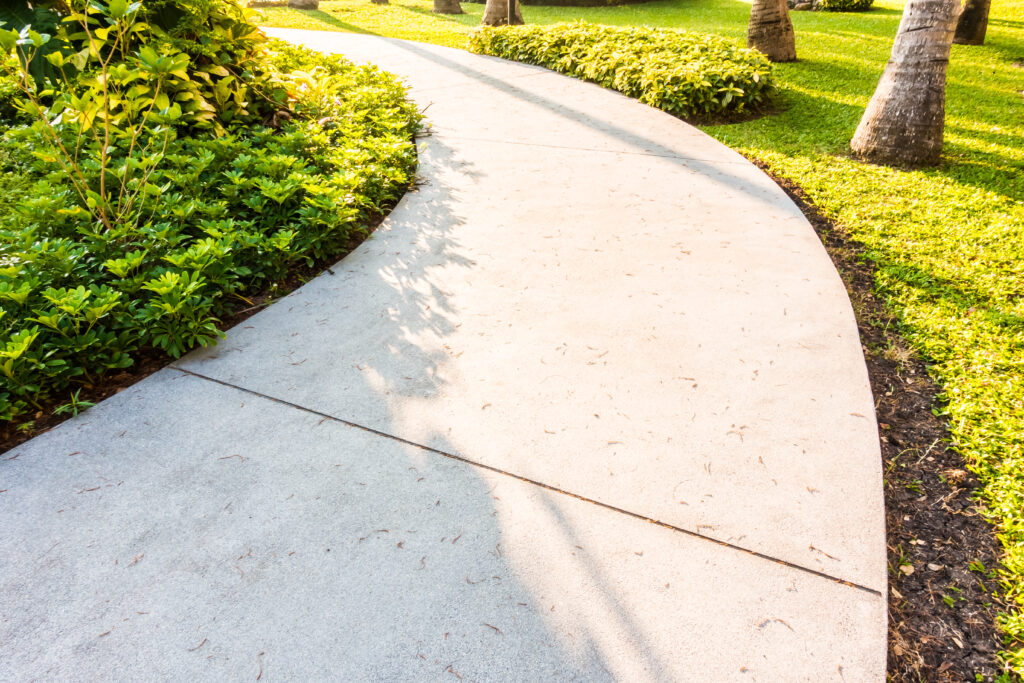
- Poured concrete works best on shorter, straighter runs away from major root zones, where movement is less of a concern.


What Our Clients Say
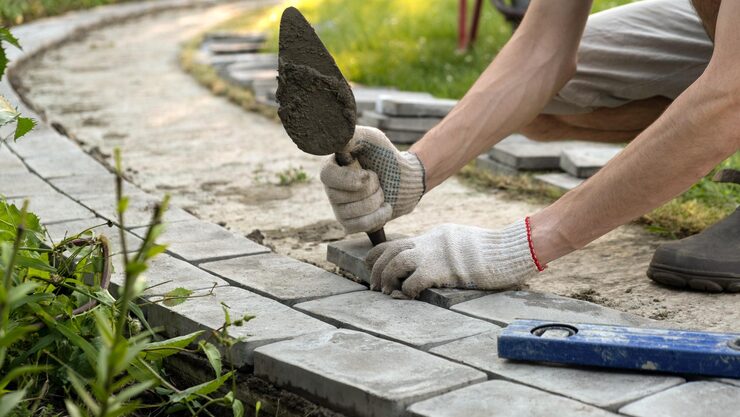
Material choice changes everything from first cost to how the path looks in twenty years. Pavers, natural stone, and concrete all handle Wayland’s freeze-thaw winters differently, and none of them is the right answer for every house.
Concrete is the most affordable walkway option for Wayland homes, giving a clean, uniform surface that suits most front entries.
Pavers cost more initially but age differently: individual units can be lifted and reset if frost heave shifts one section, without redoing the whole path.
Natural stone, fieldstone or bluestone especially, suits Wayland’s older colonial and farmhouse-style homes. It costs more than concrete or pavers, but it weathers into the property rather than sitting on top of it, gaining character as seasons pass.
Gravel or stepping-stone paths suit secondary routes through gardens or to a shed, where a formal hard surface isn't needed.
Whatever the surface, the bedding layer underneath, sand or stone dust, has to be consistent in depth. An uneven bedding layer telegraphs through as a wavy, uneven surface within a season or two, especially through Wayland’s freeze-thaw winters.
Choosing a material
The materials are not equal. Each suits some properties and not others.
Grading the walkway itself matters too. A path that’s dead flat along its width will hold water after rain. A slight cross-slope moves water off the surface before it has a chance to freeze.
Where a walkway crosses a low point in the yard, a channel drain or a widened gravel bed underneath can intercept water before it reaches the surface, instead of letting the path itself become the drainage problem.
On sloped Wayland lots, a walkway that runs downhill toward the house needs grading away from the foundation, not just along its own length, or it becomes a channel feeding water straight at the basement.
Steps built into a sloped path need a consistent rise and run. An uneven step height is the single most common tripping hazard on older hardscape, and it’s avoidable with careful layout at the start.
A walkway rarely stands alone. It should connect logically to the driveway, the front entry, and any existing walls or planting beds, using a material and edge detail that reads as one project rather than three unrelated ones.


Tying Into What's Already There
Most Wayland walkway projects aren’t built in isolation. They connect an existing driveway to a front door, run alongside a stone wall that’s been there for decades, or need to match a fieldstone foundation on an older colonial. Matching old and new is less about finding an identical stone and more about matching scale, joint pattern, and color tone so the new work reads as an extension rather than a patch.
Where a walkway meets the driveway, the transition needs a clean, deliberate edge rather than an abrupt material change that collects debris and water. Where it meets the house, the first step or landing has to account for the home’s own settling over the decades, which on an older Wayland property can mean the foundation grade isn’t quite what it was when the house was built. Getting that transition right takes a site visit, not a catalog measurement. We look at the existing materials, the slope between points, and how the path will actually get used before suggesting a design.
What drives the price
A new walk has to meet several existing things cleanly.
- The entry : The walk must arrive at the door at a sensible height. The threshold sets the finished level, so the work starts at the door and runs outward.
- The drive : Where a walk meets a drive, the levels and the drainage have to agree. A mismatch becomes a trip edge or a puddle.
- Walls and planting : Existing stone walls, foundation beds and mature trees constrain the route. Roots under a path are worked around, not cut through without thought.
- An older house : Scale, colour and pattern should follow the architecture. A narrow, dark stone walk suits an old house differently than a broad paver field does.

Where This Work Fits in Wayland
Wayland’s mix of large wooded parcels, conservation-adjacent land, and older homes with real character makes walkway work here different from a standard subdivision job. Long driveways need a path that bridges distance without looking like an afterthought, especially on the kind of sprawling lots common off Old Connecticut Path and near Dudley Pond. Tree cover means root-tolerant construction and attention to shaded, slow-drying ground that stays damp long after the rest of the yard has dried out. Wetland and conservation buffers near some properties mean a careful approach to excavation and runoff, built around what’s actually on the site rather than a generic plan pulled off a shelf. Grade changes on older lots also factor in, since many homes here were built well before modern walkway standards existed.
Before you call
It helps to know:
- Where the walk starts and where it needs to end
- Whether the route crosses a slope or a shared area
- Which material you lean towards, and whether the house is older
- Where water currently runs on the property
Questions people ask
Will tree roots near my driveway or yard damage a new walkway in Wayland?
They can, if the path is built as a rigid slab directly over an active root zone. A flexible paver system set over a geotextile layer tolerates minor root movement far better, and keeping some clearance from major roots during layout avoids the problem at the source.
What walkway material holds up best to Massachusetts winters?
Pavers generally handle freeze-thaw cycles best because individual units can be reset if one section shifts. Natural stone looks the part on older homes but costs more. Poured concrete is the most budget-friendly but is harder to repair invisibly once it cracks.
Do I need a permit for a walkway on my Wayland property?
That depends on your lot's proximity to wetlands or conservation land, which varies property to property. It's worth checking with the town before work starts, especially on larger parcels near conservation buffers.
Can a walkway be built to handle a sloped yard?
Yes. The key is grading the path itself with a slight cross-slope so water sheds off the surface, plus grading the surrounding ground so runoff moves away from the house rather than toward it. Steps may be needed where the slope is steeper.
How does a new walkway connect to an existing driveway or entry?
The transition should use a clean, deliberate edge detail rather than an abrupt material change, and the materials should be chosen to complement what's already on the property, including the driveway surface, entry steps, and any existing stonework.
Next step
Call Driveway Specialists on (413) 337-3772. We are a family-run company in business since 1988, and we will walk the route with you and talk through material, grade and drainage before anything is priced.