
Patios in Sudbury, MA
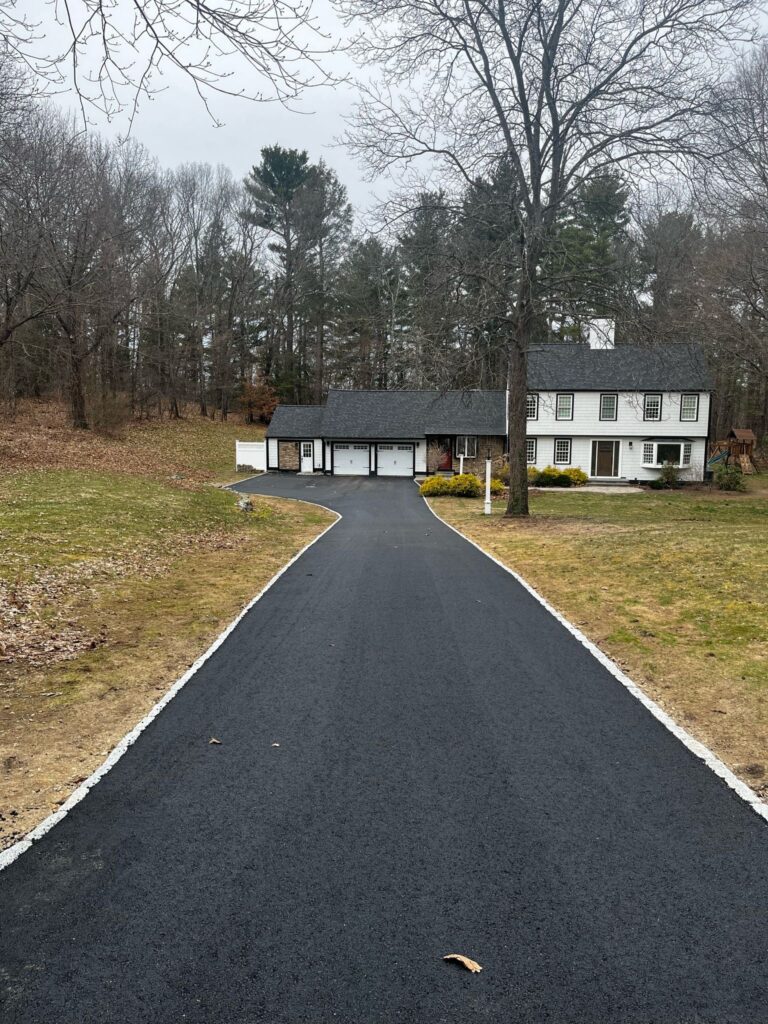
A lot of Sudbury properties share the same shape: a long driveway winding back through trees to a house that is hard to see from the road, and a backyard that borders conservation land or simply disappears into woods. That setting is an asset, but it also means the usable outdoor space right off the house often hasn’t been built out to match it. A patio is usually the answer, not because the yard is small, but because the ground near the house is uneven, shaded, or holds water longer than it should under a canopy of oaks and maples.
Building a patio on a lot like this is a different job from paving a driveway. The driveway has to carry vehicle weight and survive plow blades. A patio has to sit flat, drain correctly, and look right next to a house that may be decades old with its own stone walls, planting beds, and established grade. Getting it wrong shows immediately, because you’re standing on it and looking at it up close every day, not driving over it at speed.
What holds a patio flat for years
Everything that matters on a patio is underneath it. The surface materials get the attention, but the excavation depth, the base material, how well it’s compacted, and the edge restraint around the perimeter are what decide whether the patio stays flat or starts to heave and separate. New England frost pushes up on anything that holds water beneath it. A base that’s been properly excavated and compacted, with drainage built in rather than assumed, resists that movement. A shortcut base looks fine the first summer and starts showing waves and gaps by the second or third winter, especially under the deep shade and damp ground common on wooded Sudbury lots.
Edge restraint matters just as much here as the base itself. Without a solid edge, pavers or stone units migrate outward over successive freeze-thaw cycles, and the whole field loosens from the perimeter in. On a property with mature trees nearby, root growth adds another variable. Roots can lift sections of base over time, which is one more reason the excavation and compaction work underneath has to be done right the first time rather than patched later.
Shade is another factor that’s easy to underestimate. A patio tucked under a mature canopy dries more slowly after rain, stays damp longer in spring and fall, and can develop moss or algae on certain surfaces if drainage isn’t generous. Choosing a material and joint type that handle that moisture, and pitching the surface away from the house with enough slope to actually move water, matters more here than it would on an open, sunny lot. It’s worth discussing with whoever designs the layout before any excavation starts, not after the surface is down.


What Our Clients Say
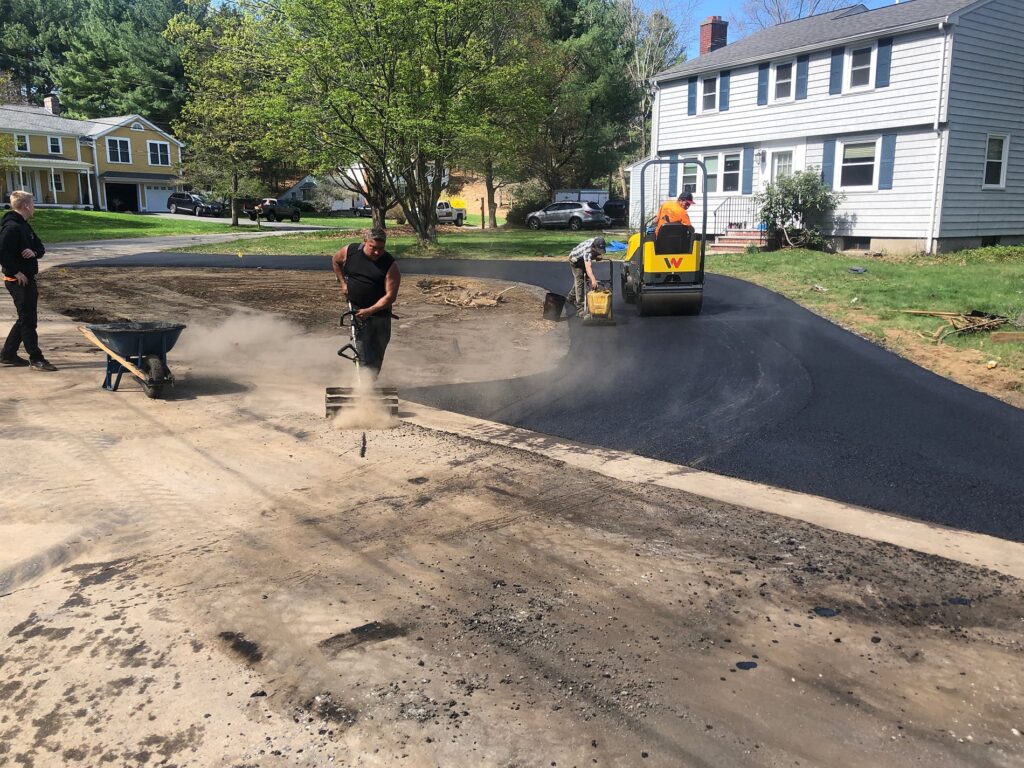
What happens below the surface
A patio is a thin finished layer sitting on a structure you never see. That structure decides whether the surface is flat in ten years or wavy in two.
Materials and how they age
Natural stone, concrete pavers and poured concrete all handle Sudbury’s freeze-thaw winters differently, and they age differently too. Stone weathers gracefully and hides scuffs, pavers lift and reset easily, while poured concrete is harder to patch invisibly once it cracks.
Natural stone, like bluestone or fieldstone, weathers well and tends to look better as it ages, settling into the landscape. It costs more up front and individual stones can be harder to source for a later repair.
Concrete pavers hold a more uniform look and are generally easier to repair, since a damaged unit can be lifted and swapped without disturbing the whole patio.
Poured concrete is the least flexible patio option for Sudbury’s freeze-thaw climate. It can crack under frost heave or tree root pressure, and repairing a crack rarely blends in seamlessly the way swapping out a single damaged paver does.
Drainage comes before the surface
Once a hard surface goes down, water that used to soak into the ground has to go somewhere else. Pitching the patio away from the house, not toward it, is the starting point for every layout.
On wooded lots where the ground near the foundation is already shaded and slow to dry, a patio built without proper pitch can send water straight back toward the house, turning a landscaping project into a moisture problem.
Materials and the trade-offs
Grading has to account for where the water currently goes naturally. A patio installed without reading that first grade often fights the land instead of working with it.
Tying into what's already there
Few Sudbury patios get built on a blank slate.
Matching material tone and scale to an older Sudbury house takes judgment, not just a catalog choice. We weigh brick colour, stone texture and proportion against your home’s period details, so the patio looks built in rather than bolted on.
Transitions between the patio and an existing walkway or driveway need the same base-and-edge attention as the patio itself, or the seam between old and new becomes the first place that fails, especially through Sudbury's freeze-thaw winters and shifting clay soils.
Access on a wooded lot
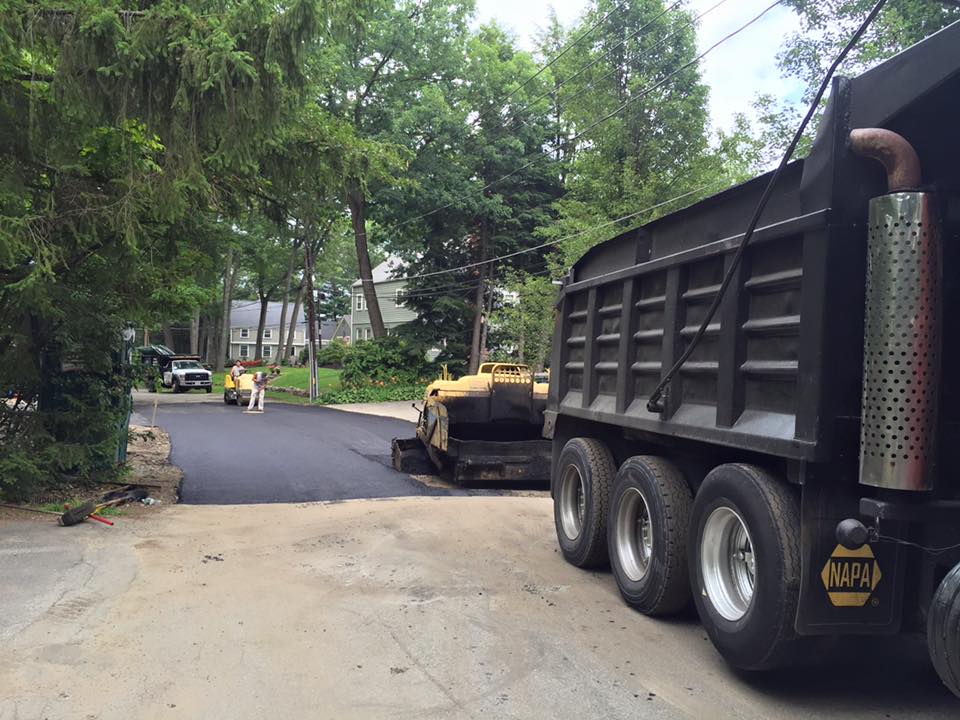
Long, winding Sudbury driveways mean equipment and material have to travel further to reach the build site than on a typical in-town lot, and tree canopy can limit where a delivery truck can actually get close.
Planning around roots and shade
Working near mature trees means planning the excavation to avoid major root damage, since cutting through large roots can destabilize the tree and still leave the patio vulnerable to future heave. It takes more care, not more guesswork.
Shade from dense canopy also keeps the ground beneath it damp longer after rain, which affects how fast a new base drains and settles. A site that stays wet a day or two longer than an open lot needs that accounted for in the drainage plan, not discovered afterward. None of this is a reason to avoid building a patio in a wooded setting. It’s a reason to plan the excavation and base work around the trees that are already there instead of around a generic layout. Properties bordering conservation land in particular benefit from a patio design that reads as part of the landscape rather than a slab dropped into a clearing, which usually means working with the existing grade and tree line rather than flattening everything first.
Next step
If you’re working with a wooded lot, a long driveway, or a backyard that borders conservation land, the layout and the ground conditions should drive the patio design, not the other way around. Sudbury’s mix of ledge, clay pockets, and root systems from mature trees means a patio base that works a few streets over might not hold up on your property. That’s why every project starts with a walk-through, not a generic quote pulled from a catalog of standard sizes.
Driveway Specialists has been doing hardscape and paving work across Middlesex County since 1988, as a family-run crew that still shows up to look at drainage, grading, and how the space will actually get used before anything is priced. We’ll talk through:
- Material options that handle New England freeze-thaw cycles without heaving or cracking
- How the patio ties into existing walkways, decks, or plantings on site
- Drainage planning so water moves away from the house and any nearby wetlands
Call (413) 337-3772 to talk through what your lot actually needs and get a plan built around it, not a one-size-fits-all package.
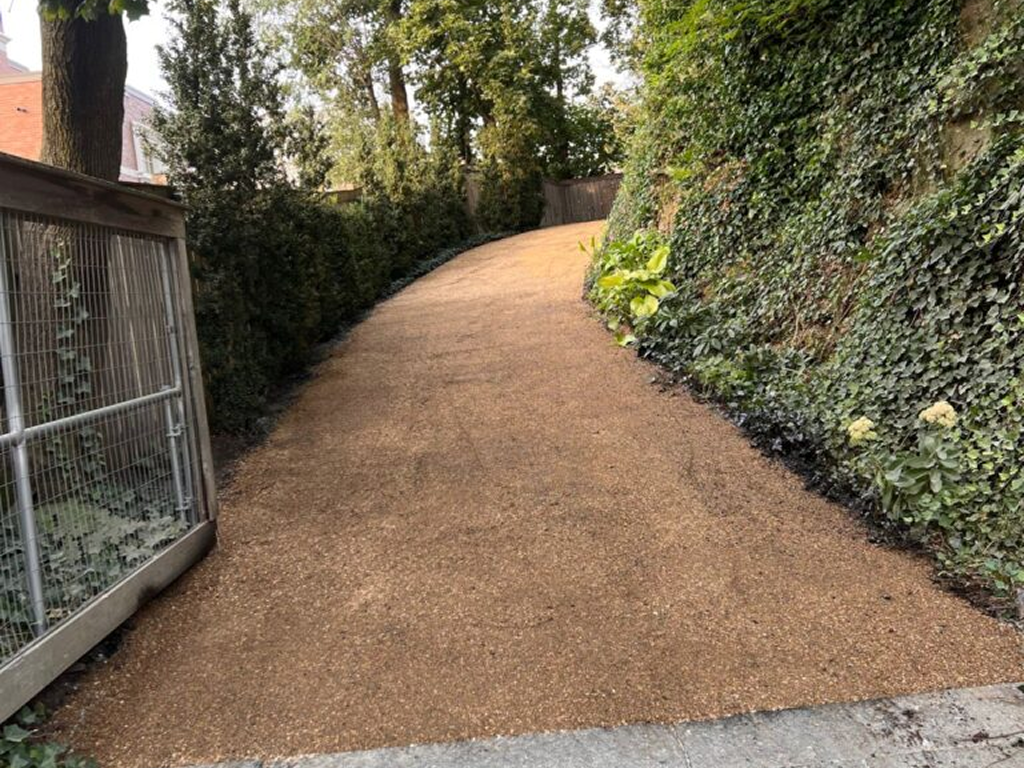
Where this suits Sudbury properties
Wooded lots with deep shade
Patios set back under tree canopy need base and drainage work planned around root growth and slower-drying ground, which suits Sudbury's heavily treed properties well.
Long, winding driveways
Where the house sits far back from the road, a patio becomes the real outdoor living space, since the front yard rarely offers much usable area near the street.
Properties bordering conservation land
Patios designed to work with existing grade and tree lines, rather than clearing and flattening, suit homes backing onto conservation land and natural buffers.
Questions about patios in Sudbury
Can a patio be built close to mature trees without harming them?
Yes, with care. Excavation depth and placement need to work around major root systems rather than cutting through them, which protects both the tree and the long-term stability of the patio base.
Does a wooded, shaded site need a different base than an open lot?
The base principles are the same, but shaded ground holds moisture longer, so drainage and compaction need closer attention to avoid a base that stays soft after rain.
What patio material holds up best under tree cover?
Natural stone and concrete pavers both perform well; the better choice usually comes down to how much maintenance you want and how you'd prefer a future repair to look.
Will a patio affect drainage near my house?
It can, which is why pitch and grading are planned before any surface goes down. The goal is always to move water away from the foundation, not toward it.
Next step
Tell us what you have: the slope, the house, how the space gets used. We will look at the lot and talk through what will work on it. Call Driveway Specialists at (413) 337-3772. We are family-run and have been working in Massachusetts since 1988.