
Cobblestone Aprons and Edging in Wellesley, MA
A new driveway or a rebuilt one changes how the whole front of a Wellesley property reads, and the apron is the part everyone actually sees first. It is the handshake between the public road and a private lot, and on the kind of established, well-kept frontages common around Wellesley, a plain asphalt edge butting straight into the street looks unfinished against a house that has had real money put into it. Cobblestone aprons and matching edge restraint are how that transition gets handled properly – a defined band of granite or cobble at the street, carried along the drive edges, that frames the surface instead of just ending it.
This is not a driveway repair job. It is a finish detail, usually done alongside a full driveway rebuild, a teardown-rebuild landscape plan, or a standalone upgrade to an existing asphalt or gravel drive that otherwise works fine but looks unfinished at the edges. Many Wellesley streets have town-maintained curbing or a strip of town right-of-way at the sidewalk, so the apron also has to meet that line cleanly without creating a trip hazard or a low spot where runoff collects. Getting that transition right – matching grade, pitch, and the existing curb reveal – is as much a part of the job as laying the stone itself.
Why the edge is the hard part
Everything that fails on a cobblestone border happens below the stone, not at it. Each cobble or granite unit needs a compacted base under it and a bed of setting material it sits into, plus something holding the outer line – either a concrete haunch poured behind the stones or a buried edge restraint – so the row cannot creep outward once frost starts working on it. Skip any of those steps and the border looks fine for a season or two, then starts to wander: stones tip, gaps open, snow and salt get underneath and the whole line degrades from the back.
Massachusetts frost is the reason this matters more here than in milder climates. Water gets into the joints between stones, freezes, and expands. Without a restrained edge and proper drainage behind it, that expansion pushes stones apart a little each winter. A well-built border is designed to move slightly as a unit and settle back, rather than fight the frost and crack.
Material choice also affects how a border reads against a specific house. Granite cobbles – whether reclaimed Belgian block or new-cut units – give a tighter, more formal line that suits Colonial and center-entrance homes. A slightly irregular fieldstone-edged cobble softens that look for Shingle-style or older farmhouse-era properties. Either way, matching the stone tone to existing stonework on the house or walkways usually matters more to the finished look than matching it to the asphalt or concrete field of the driveway itself.
Typical work includes:


What Our Clients Say

What the work involves below the surface
The stone is the last and smallest part of the job. A cobblestone apron stays flat or goes wavy depending on what is underneath it.
Granite cobble holds its edge longest and repairs cleanly, stone by stone, without disturbing the rest of the run – a real advantage on an older Wellesley lot where the border may need touching up around an entry years later.
Concrete pavers cost less to install and come in tighter, more uniform lines, but they chip and fade with age in a way cut granite does not, and matching an older run later can be difficult.
Reclaimed or antique cobble suits a period house and an established Wellesley landscape, giving the apron a weathered, settled look that new-cut stone cannot fake on day one.
Drainage decides whether any of this lasts. Water has to move away from the foundation and off the apron, not pool against the border where repeated freezing does the most damage to the joints.
On a lot with mature trees close to the drive, roots can lift a rigid border over time. A flexible, restrained edge tolerates small ground movement far better than one poured solid against the trunk line.
Materials and the trade-offs
Tying it into what's already there
Most Wellesley projects aren’t a blank slope. There’s usually an existing drive surface, a front walk, stone or brick walls, and planting beds that were put in deliberately. The apron and edge detail have to read as part of that, not sit next to it as something separate. That means matching stone tone to an existing wall or chimney where there is one, lining the border up with the walkway edge rather than an arbitrary offset, and picking a cobble size that suits the scale of the house – a wide Georgian façade and a low ranch call for different proportions at the street.
Teardown-rebuild lots are their own case: new construction or a major renovation lets you set the drive, walk and apron out together from scratch, rather than inheriting an old layout. Where the main drive is being repaved anyway, adding the apron and edging at the same time is far more cost-effective than doing it afterward, since the base work overlaps.


Grade, access and the street side of the job
Where the apron meets the paved road is usually the town’s business rather than the homeowner’s, since that curb cut sits in the public right-of-way. Everything behind that line – the border, the bedding, how it steps up to meet the drive – is the owner’s call, which is where the design decisions actually sit.
Grade matters just as much here as anywhere else. An apron that’s flat or pitched slightly toward the street sheds water cleanly; one that’s level with a drive sloping down from the house becomes the collection point for everything running off the property. On the longer, gently graded drives common on larger Wellesley lots, that grading has to be worked out before a single stone goes down, not adjusted afterward.
Access for the work itself is rarely the obstacle it is on a tight city street. Most Wellesley lots have the room for equipment and material delivery without the choreography a narrow urban driveway demands, which keeps the excavation and base phases moving at a normal pace.
Next step
If you’re planning a new drive, a rebuild, or simply want the street-facing edge of the property to match the level of detail already invested in a Wellesley home, Driveway Specialists can walk the site and assess what’s there now: the existing apron, the condition of the curb cut, drainage at the base of the driveway, and how the border ties into walkways, planting beds, or a front walk. From that visit, we lay out what a cobblestone apron and edging would actually involve on your lot specifically, not a generic estimate, but a plan based on your driveway’s width, slope, and the way it meets the street.
Cobblestone aprons hold up well against snowplow blades and winter salt, which matters for a New England driveway, and a well-set border keeps gravel or asphalt from migrating onto the lawn over time. We’ll talk through pattern options, how the stone should relate to your home’s existing stonework or brick, and a realistic timeline for the work.
Call (413) 337-3772 to arrange a visit and start the conversation.
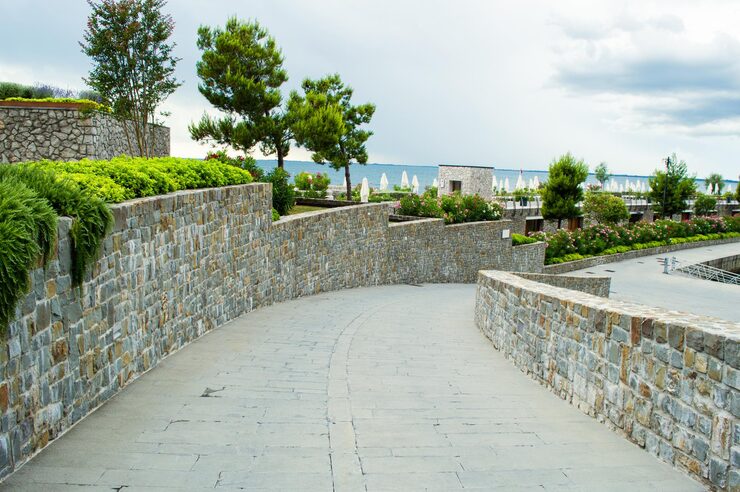
Where this suits Wellesley properties
Teardown-rebuild lots
New construction and major renovations let the drive, walk and apron get designed together from the start, instead of fitting new stone around an old layout.
Period and established homes
Granite cobble and reclaimed stone suit older Wellesley houses where a plain asphalt edge would look out of place against existing walls and mature planting.
Long graded drives
Larger lots with drives sloping down from the house need the apron and edge grading worked out before installation, so water sheds toward the street instead of pooling at the border.
So tar and chip suits a longer, gentler Wellesley drive with some room around it. It is a poor match for a short, steep or shared one, or one that opens straight onto the walk.
Questions we hear
Does the town get involved in apron work in Wellesley?
Where the apron meets the paved road, that curb cut is within the public right-of-way, so the town has an interest in that section. Everything behind that line, including the border and bedding, is the property owner's decision.
Will cobblestone edging crack or shift over a Massachusetts winter?
Only if it's built without a compacted base and a restrained edge. Properly installed, the border is designed to move slightly with freeze-thaw cycles and settle back, rather than crack under the pressure.
Can edging be added to a driveway that already exists?
Yes, though it's more cost-effective when done alongside a full driveway rebuild since the excavation and base work overlap. Adding it to an existing drive later means working around the current edge.
What's the real difference between granite cobble and concrete pavers?
Granite costs more up front but holds its edge longer, ages better, and repairs cleanly stone by stone. Concrete pavers install for less and come in uniform sizes, but chip and fade faster and are harder to match years later.
Do tree roots cause problems for stone borders?
On lots with mature trees near the drive, roots can lift a rigid, solidly poured edge over time. A flexible, properly restrained border tolerates that ground movement far better.
Next step
Call us at (413) 337-3772. Tell us about the lot, the slope and what you want the frontage to look like. We have been working in this area since 1988, and we will tell you plainly what suits your property.