
Cobblestone Aprons and Edging in Needham, MA
A lot of Needham properties right now are either mid-rebuild or sitting next to one. When a house comes down and goes back up, the driveway, the front walk and the street-facing edge of the property usually get redone at the same time as everything else. That is a different job from fixing a cracked driveway. It is about how the entrance reads when someone pulls in, and whether the new work looks like it belongs with an older street or like it was dropped in from elsewhere.
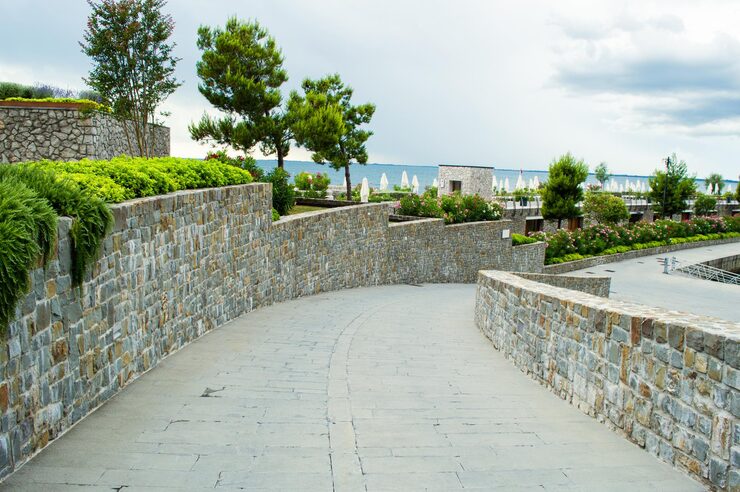
Cobblestone aprons and edging sit at exactly that transition point: where the street meets the drive, and where the drive meets the lawn, the walk or a planting bed. Done well, the stone is the first thing that tells a visitor this is a cared-for property before they have even reached the door. It also does practical work the plain asphalt it borders cannot do on its own – defining where plows and tires should stop, protecting lawn edges from tire wear, and giving a clean line for snow removal crews to follow without chewing up turf.
What is actually happening underground
The visible stone is the easy part to picture. What determines whether it still looks right in five years is what goes in before it. Massachusetts frost moves ground every winter, and anything set shallow or left without a proper edge restraint will shift. The sequence is excavation to a consistent depth, a compacted base that can drain, a bedding layer the stone sits into, and then a restraint at the edges holding the whole field so individual units cannot walk sideways as the ground freezes and thaws underneath them. A driveway that goes wavy at the edges after a winter or two almost always failed below the surface, not at the surface.
Materials vary more than people expect. Granite cobblestone is dense, expensive, and essentially permanent – it does not wear through, and reclaimed granite units carry an aged look from day one, which matters on streets where the surrounding houses are themselves fifty or a hundred years old. Concrete cobble pavers cost less, come in a tighter range of consistent shapes, and are easier to source for future repairs, but they age differently than stone and can chip at exposed corners over time. Each individual unit can also be lifted and reset if one settles, which is the real advantage of a unit-laid edge over a poured curb: a poured edge that cracks has to be cut out and replaced, where a cobblestone section can be reset piece by piece.
Apron width and the curve radius at the street also deserve more thought than they usually get. Too narrow, and regular vehicles clip the edging turning in; too wide, and the apron competes with the walkway instead of framing it. A good layout takes the actual turning path of the cars using the driveway into account before any stone goes down, not after.


What Our Clients Say

What the work involves below the surface
The stone is the last and smallest part of the job. A cobblestone apron stays flat or goes wavy depending on what is underneath it.
Water has to go somewhere once the ground is covered.
New work has to sit against what is already there. On an older Needham lot that often means matching a stone wall, a brick walk, or a mature planting bed the new edge now has to border cleanly.
On a full rebuild, the apron and edging are usually planned alongside the new driveway surface itself, so the transition from street to drive to walkway reads as one finished job, not three separate patches around a typical Needham property.
Where a Needham house sits among older neighbours, the stone pattern and joint width matter.
Edging also earns its keep in winter. A plow blade catches an unprotected shoulder year after year. A properly set stone edge gives the plow something solid to run against instead of chewing up asphalt or turf.
Materials and the trade-offs
Grade matters as much as material choice. A driveway apron sitting dead flat against the street invites water to sheet back toward the garage; one with even a slight fall toward the street edge or a side drain clears itself after rain without anyone noticing it was designed that way. On sloped Needham lots, the apron is often the one section of the whole drive doing real drainage work, because it is the low point everything else feeds into. Getting that pitch right at the base stage is far cheaper than correcting it after the stone is set, which is part of why excavation depth and compaction get more attention on this kind of job than the stone selection itself.


Needham’s building stock runs from early twentieth-century colonials to newer construction going up where older houses have come down. Cobblestone reads differently against each. Against an older house, a weathered or reclaimed stone with tighter joints and some irregularity in size tends to sit more comfortably than a crisp, uniform edge; it echoes the fieldstone walls and granite curbing already common around town. Against new construction, a cleaner-cut stone in a consistent size can look intentional rather than mismatched, provided the proportions relative to the house and drive width are right. Color matters too: warm granite tones generally suit brick and clapboard colonials, while grayer stone can complement stucco or contemporary facades.
Either way, the goal is an edge that looks like it was part of the original plan for the property, not an afterthought added once the driveway paving was already down. That is as much a design decision as a structural one, and it is worth settling on stone type, pattern, and border width before excavation starts rather than after, since changing course midway adds cost and delay.
Cobblestone aprons and edging add a defined, finished look to a Needham driveway without the cost of a full cobblestone surface. The apron sits at the street or garage transition, where wear and water exposure are highest, while edging frames the length of the drive and separates it cleanly from lawn or planting beds. Both hold up well against New England winters, snow plow blades, and the freeze-thaw cycles that crack unedged asphalt and loosen gravel over time.
If you are planning this alongside a rebuild, or adding it to a driveway that already exists, it helps to get the base and grading decided before any stone is ordered. A shallow or uneven base is the most common reason edging shifts or an apron settles unevenly after a season or two. Driveway Specialists has worked across Norfolk County since 1988, including plenty of jobs in Needham and neighbouring Wellesley and Dedham, so we know the soil conditions and drainage quirks common to older Needham lots. Call (413) 337-3772 to talk through what your lot and your house actually need, and to get a straightforward assessment before any work begins.
Where this suits Needham properties
Teardown-rebuild lots
New construction and major renovations often regrade the whole frontage. Cobblestone aprons and edging tie the new drive and walkway into a lot where every other surface is also being redone.
Established street frontages
Older Needham streets with mature plantings and existing stone walls suit cobblestone edging that reads as original to the house, rather than an obvious addition bolted onto an asphalt drive.
Side-by-side old and new
Where a rebuilt house sits next to decades-old neighbours, a cobblestone apron softens the transition and avoids a driveway that looks like it belongs to a different, newer street.
So tar and chip suits a longer, gentler Needham drive with some room around it. It is a poor match for a short, steep or shared one, or one that opens straight onto the walk.
Questions we hear
What is a cobblestone apron, exactly?
It is the section of hard surface where a driveway meets the street or sidewalk, built from individual stone units rather than poured or paved as one continuous surface. In Needham it is usually tied into either a new asphalt or paved drive, giving the entrance a different texture and a defined edge where the private property starts.
Does cobblestone edging work with an existing asphalt driveway?
Yes. Edging is often added to a drive that already exists, cutting back the shoulder, excavating a strip, and setting stone against a proper base and restraint. The asphalt field does not need to be replaced for the edge detail to work.
How does this hold up through a Massachusetts winter?
The stone itself tolerates freeze-thaw well. What fails is a shallow or unrestrained installation, where frost heave lifts units unevenly over a season or two. A compacted base and a proper edge restraint are what keep a cobblestone apron flat after repeated winters, not the stone.
Can this be matched to an older Needham house during a teardown-rebuild?
Often, yes. Reclaimed or weathered-finish cobblestone can be set to read as original rather than new, which matters on streets where a rebuilt house sits among older neighbours. The pattern, joint width and stone size all affect how new or old the result looks.
Next step
Call us at (413) 337-3772. Tell us about the lot, the slope and what you want the frontage to look like. We have been working in this area since 1988, and we will tell you plainly what suits your property.