
Stone Foundation Waterproofing in Milton, MA
Water coming through a basement wall after a heavy rain. A damp patch in the same corner every spring that never fully dries. A section of fieldstone that bulges slightly or sheds mortar when you touch it. These are not cosmetic problems, and they are not plumbing problems either. On the older houses built into the slopes around the Blue Hills, this is almost always the foundation wall itself doing exactly what an unprotected fieldstone or rubble wall does over enough decades: letting water through.
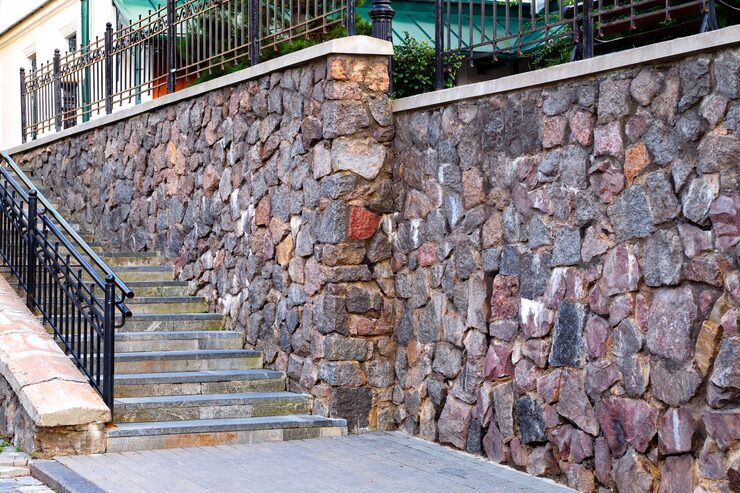
Houses built before the mid-20th century in Milton were commonly set on dry-laid or lightly mortared fieldstone and rubble. There is no membrane on the outside face, and there is usually no working perimeter drain at the footing. Water does not need a crack to get in. It moves through the gaps between stones and through the mortar itself, pushed by hydrostatic pressure every time the ground around the house saturates. On the sloping lots common in Milton, that pressure is worse on the uphill side of the house, where runoff from the grade above is driving straight at the wall instead of running past it.
Why this is exterior work, not interior work. Interior sealants, paint-on coatings, and interior drain channels manage where the water goes once it is already inside. They do not stop it from entering the wall. The only way to actually address the cause is from the outside: excavate down along the affected section, expose the stone, treat the wall, install drainage at the footing, and backfill properly so water is carried away before it ever reaches the masonry. That is more disruptive and more expensive than an interior fix, and it is worth saying plainly rather than pretending otherwise. It is also the only approach that deals with the actual mechanism instead of masking it.
The decision on how much of the wall to open up usually comes down to where the water is actually entering and whether the grade above that point can be corrected at the same time. A wall that is wet along its full length because the whole yard slopes into it is a different job than a single damp corner fed by one bad downspout or a low spot in the lawn. We look at the wall and the grade together before deciding how much excavation the problem actually needs. A proper assessment includes probing the mortar joints for soft spots, checking the footing depth where it is accessible, and tracing surface water paths across the lot during or right after rain, since that tells us far more than a dry-day inspection ever could.
Once the excavation is open, the work generally includes:
- Cleaning loose mortar and soil from the exposed stone face and repointing any joints that have washed out
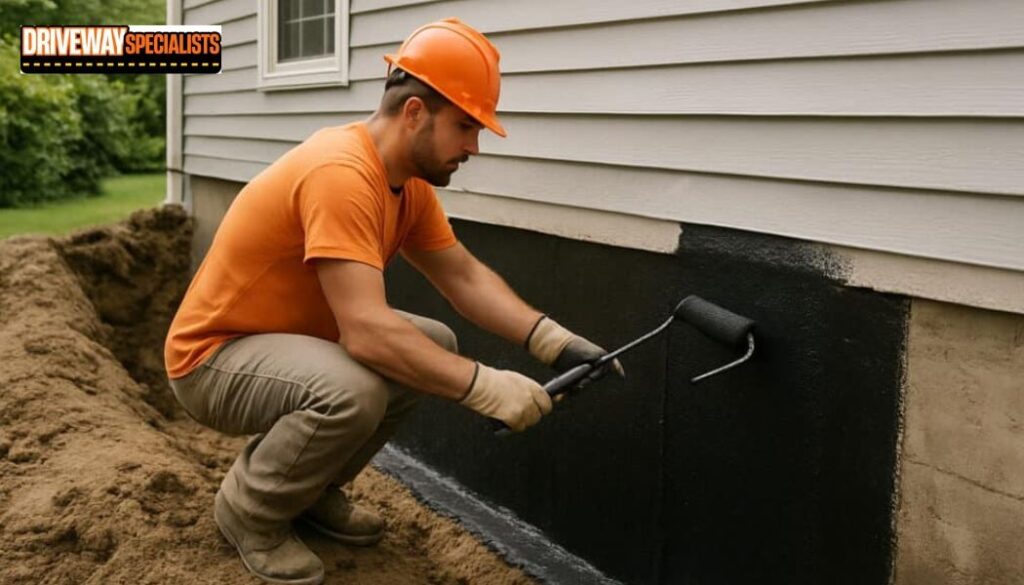
- Applying a waterproof coating or membrane suited to irregular fieldstone, not a smooth poured wall
- Installing a footing drain tied into daylight or a sump, so water is carried away rather than held against the wall
- Backfilling with free-draining material and re-grading the surface to shed water away from the house


What Our Clients Say

Access decides the approach
On many Milton lots, the side of the house with the water problem is also the side with the least room for a machine. Houses set close to a hillside, a retaining wall, a fence line, or a neighboring foundation often leave only a hand-dig margin on the affected elevation. Where a mini-excavator can get in along a side yard or back access, the work moves faster and the excavation can go deeper with less labor and less disruption to landscaping. Where it can't, more of the dig has to be done by hand, shovel by shovel, along the stone wall. That changes the timeline, the crew size, and the price before a single stone foundation surface is ever exposed, cleaned, or coated.
What happens to the ground around the wall
Excavating along a foundation means removing whatever sits in that strip first. On older Milton properties that is often mature plantings, a stone path, or a section of patio built right up against the house. Shrubs and small plants near the dig line usually don’t survive being moved twice, so we treat them as a loss rather than promise a replant that may not take. We note what’s in the way during the first look at the site, so there are no surprises about what comes out before the wall can be reached.


The wall, the drainage, and putting the ground back
Once the wall is exposed, loose or deteriorated mortar gets repaired before anything else happens, because a waterproofing treatment applied over a failing joint doesn’t hold. Gaps are repointed with a mortar suited to the original stone rather than a hard modern mix that traps moisture against it. The exterior face is then treated and a drainage path is built at the footing, usually gravel over a perforated pipe, so water moving down through the soil is intercepted and carried to a discharge point instead of sitting against the stone. Backfill goes back in graded material, not the dug-out soil as-is, because the backfill itself is part of how water is kept moving away from the wall rather than pooling beside it.
The work in sequence
Access and excavation
We locate the affected wall, clear a route to it and dig down to the footing. On a sloped lot the excavation also has to be supported so the ground above does not move. Digging exposes the real condition of the wall, which can differ from what the inside suggested.
Planting and hardscape
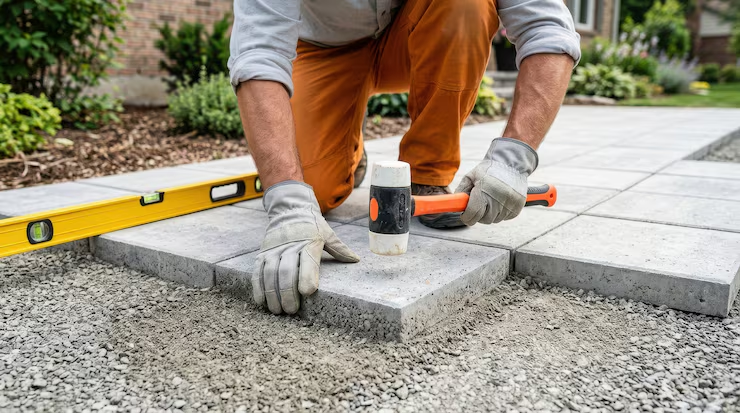
Shrubs, beds, steps and walks along the foundation are in the way of the trench. Some can be lifted and replanted. Some will not survive the move, and stone or paved surfaces are taken up and set aside or replaced. We will walk the area with you before any digging so you know what is staying and what is not.
Wall treatment
Once exposed, the wall is cleaned and assessed. Loose stone is reset and failed mortar is cut out and repointed. A membrane is applied to the outside face so water meets a barrier instead of an open joint. How much repair a wall needs depends on how much it has deteriorated, and that is rarely known until it is open.
Drainage and backfill
At the base of the wall, a drain carries water away from the footing to somewhere it can safely go. On a hillside lot, where that is can be the hardest question on the job. Backfill goes in with material that lets water pass down to the drain rather than pooling against the wall.
Reinstating the ground
The soil is graded back so that water runs away from the house. This is where the surface above the repair matters most.
What to check and document before calling
Before you call, take a few minutes to track down where the water actually enters the stone wall, not just where it pools on the basement floor—entry points on older Milton foundations are often feet away from the visible damp spot. Photograph the affected section, the grade and soil outside that area, nearby downspouts, window wells, and any low spots that collect runoff. Note whether dampness tracks with heavy rainfall, spring snowmelt, or both, and whether it's a steady seep or appears suddenly after storms. Check for white mineral staining, crumbling mortar joints, or a musty smell.
Pointers before anyone comes out
Most of this is observation, and it makes any visit more useful.
- Note when it happens. Is it after heavy rain, after snowmelt, or all the time? The pattern points to where the water is coming from.
- Photograph it. Take photos of the wall, the floor and the staining, with something for scale. Date them and repeat after the next rain.
- Mark the spot. Note which wall and which corner. Match it to the outside: which side of the house, and what is above it.
- Walk the outside. Look at where gutters discharge, which way the ground slopes at the foundation, and whether water pools after rain.
- Check the downspouts. Water dumped beside the wall adds to the load. Make sure they are not blocked or emptying near the foundation.
- Look at the stone and mortar. Powdery mortar, bulging or gaps are worth recording. Do not poke at a bowing section.
- Clear what you can. Move stored items away from affected walls so they can be seen and reached.
- Think about access. Where could a machine come in? Is anything shared with a neighbour?
Questions we get asked
Can this be fixed from inside the basement instead?
An interior fix manages symptoms by redirecting water once it has already entered the wall. It does not stop water from moving through the stone in the first place. For a fieldstone or rubble wall with ongoing water entry, exterior excavation and drainage addresses the actual cause.
Will landscaping or a walkway near the foundation be damaged?
Anything sitting directly in the excavation path, including plantings, stone paths, or a section of patio or driveway edge, typically has to be removed to reach the wall. We identify what's affected during the initial look at the property, before work starts.
How do you decide how much of the wall needs to be excavated?
It depends on where water is actually entering and how much of the grade above the wall is contributing to the problem. A single wet corner fed by a bad downspout is a smaller job than a wall that's saturated along its full length from poor overall grading.
Does this affect the driveway or walkway too?
If the drive or walk sits tight against the affected section of foundation, part of it may need to come up to allow excavation and go back down afterward. This page covers the foundation work itself; driveway repair is handled separately.
Next step
If water is coming through an older stone foundation in Milton, we will come and look at the wall and the way in. We have worked on homes like yours for 35+ years, and the family has been doing it since 1988.