
Walkway Installation in Newton, MA
In Newton, the walkway is often the first thing anyone sees before they ever reach the door. Across the thirteen villages, lots tend to be older and smaller, with short front setbacks, mature trees close to the house, and a front walk that has usually settled, heaved, or been patched more than once since the house was built. Replacing it well is a different job than repairing a driveway. It is as much about matching an older house and a tight frontage as it is about getting a hard surface down.
Most of what decides whether a new walkway stays flat or starts to wave within a few winters happens before any material goes down. Excavation depth, what fills the hole, how well that fill is compacted, and what holds the edges in place all matter more than the surface material itself. In Massachusetts, frost is the variable that exposes shortcuts. Water in the soil beneath a walkway freezes and expands, and if the base underneath is not properly prepared, that movement pushes unevenly along the path. Thin or skipped base work shows up as lippage between pavers, as a sunken section near a downspout, or as a path that pitches toward the house instead of away from it.
A proper base means removing the organic topsoil, which holds water and compresses unevenly, and replacing it with a compactable aggregate that drains and locks together under pressure. The depth and the compaction effort matter more than most homeowners expect, because an under-compacted base settles later even if it looks fine the day it’s installed. Edge restraint, whether a buried plastic or aluminum edging, a mortared border, or a soldier course of the paving material itself, keeps the perimeter from spreading outward as the base shifts seasonally. Walkways without edge restraint are the ones you see with pavers migrating outward and gaps opening along the sides after a few freeze-thaw cycles.
On many Newton lots, that excavation also has to work around root systems from mature oaks and maples close to the foundation. Roots can be a reason to hand-dig sections instead of using heavier equipment, and they’re part of why access and machine size get decided before the quote, not after. Narrow side yards, shared driveways with neighbors, and fencing close to the property line can all limit how a skid steer or mini excavator gets to the work area, which affects both timeline and the sequence of excavation.
Material choice also has to answer to the house, not just the budget. A poured concrete walk reads differently against a 1920s Tudor in Newton Highlands than it does against a newer build in Newton Upper Falls, and many homeowners end up choosing clay or concrete pavers, natural stone such as bluestone, or a stamped concrete that echoes an existing patio or driveway. Pitch is worth discussing directly: a walkway should typically shed water away from the foundation and toward the lawn or street, at a slope gentle enough that it’s unnoticeable underfoot but still effective, generally in the range of one to two percent.
Other details worth raising before work starts include:


What Our Clients Say
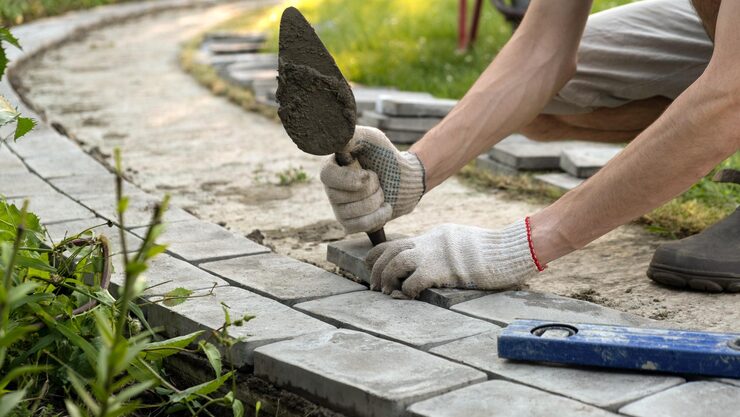
Choosing a Material That Suits the House
Concrete pavers, natural stone, brick, and poured concrete each age differently and each handle New England winters on their own terms, so for Newton homeowners the choice is a genuine trade-off between upkeep, cost, and curb appeal—not just a style preference.
Concrete Pavers
Interlocking pavers are the most repairable option: a heaved or stained unit lifts out and resets without disturbing the rest. They handle Newton’s freeze-thaw cycles well, since the sand joints flex slightly with ground movement rather than cracking under pressure.
Natural Stone
Bluestone or fieldstone suits the older homes common across Newton’s villages and weathers to a look that doesn’t date. It costs more up front and is harder to patch invisibly if a single piece cracks.
Brick
Brick pairs naturally with colonial and Victorian frontages found throughout Newton. It can spall in repeated freeze-thaw cycles if the units aren’t rated for it, so sourcing properly graded, clay-fired pavers matters more here than with other walkway materials.
Poured Concrete
Poured concrete is the lowest-cost option and the least forgiving. A crack doesn't stay a hairline; once Newton's freeze-thaw cycles get into it, the whole slab section usually needs replacing rather than patching.
Pitch Away From the Foundation
A walkway is a hard surface laid right next to a foundation.
Choosing a material
The materials are not equal. Each suits some properties and not others.
Where the Water Actually Goes
On flatter village lots, water that isn’t pitched off the walkway tends to pool at the base of steps or along the foundation itself. A slight cross-slope built into the base solves this before it becomes a wet-basement problem.
Tying Into an Existing Drive
Where a walkway meets the driveway, the two surfaces should share a sightline even if they’re different materials. A clean butt joint or a shared edging detail keeps the transition looking intentional rather than patched.
Matching Steps and Entries
Older Newton homes often have granite or brick entry steps original to the house. A new walkway should pick up a material or color note from those steps so the approach reads as one project, not two eras stitched together.
Working With Existing Walls and Planting
Low fieldstone walls and foundation plantings are common on older Newton lots. Good walkway work routes around root zones and existing walls rather than cutting through them, preserving what already works on the property.
Matching an Older House
A walkway installed decades after the house was built should still look like it belongs. That usually means choosing a material and a pattern that echo the period of the home rather than whatever’s currently trending.


Working on Newton's Tighter Lots
Short setbacks, narrow side yards, and on-street parking are the norm across Newton's villages, and they shape how this work gets planned before equipment ever shows up. Materials often need to be staged curbside or hand-carried rather than delivered directly to the work area, and compaction equipment has to be sized for access, not just for the job. In villages like Newton Centre or Nonantum, where driveways sit close together and front yards are often just a few feet deep, that might mean breaking a pallet of pavers into smaller loads or choosing a plate compactor that fits through a side gate. None of that changes the quality of the finished walkway, but it does change the sequencing: smaller equipment, more hand work around tree roots, mature plantings, and tight corners, and careful coordination so a delivery truck or a compactor isn't blocking a narrow street for longer than necessary. We also factor in trash and recycling pickup days and school drop-off traffic when scheduling the noisier parts of the job.
What drives the price
A new walk has to meet several existing things cleanly.
- The entry : The walk must arrive at the door at a sensible height. The threshold sets the finished level, so the work starts at the door and runs outward.
- The drive : Where a walk meets a drive, the levels and the drainage have to agree. A mismatch becomes a trip edge or a puddle.
- Walls and planting : Existing stone walls, foundation beds and mature trees constrain the route. Roots under a path are worked around, not cut through without thought.
- An older house : Scale, colour and pattern should follow the architecture. A narrow, dark stone walk suits an old house differently than a broad paver field does.

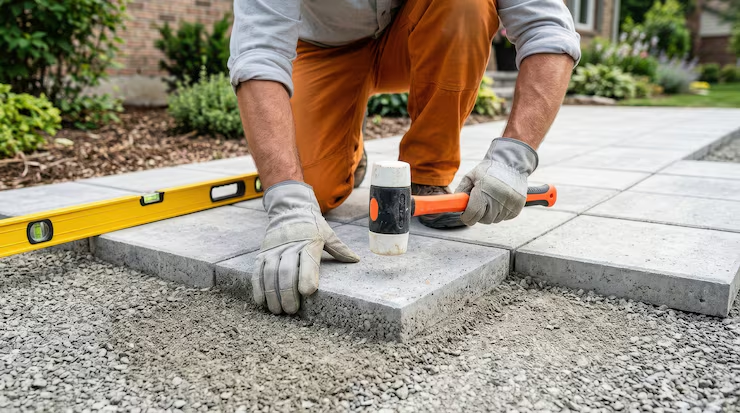
Getting Started on Your Walkway
A good walkway project starts with a look at what's actually happening underground and around the entry, not just a quote on square footage. We'll walk the property with you, checking drainage patterns, nearby root systems, grade changes, and how the path should tie into your driveway, steps, and front door. Newton's older neighborhoods often have mature trees close to the foundation and soil that holds water longer than you'd expect, both of which affect how a walkway is excavated, base-prepped, and sloped for proper runoff. We'll also talk through material options, whether that's poured concrete, pavers, natural stone, or brick, and how each holds up through New England winters, salt exposure, and freeze-thaw cycles. From there, we map out width, borders, lighting cutouts if you want them, and any steps or landings needed for elevation changes. You'll get a clear plan before any work begins, with no guessing about scope or timeline.
Before you call
It helps to know:
- Where the walk starts and where it needs to end
- Whether the route crosses a slope or a shared area
- Which material you lean towards, and whether the house is older
- Where water currently runs on the property
Questions people ask
Why does my walkway heave every winter even though it's only a few years old?
In almost every case this traces back to the base, not the surface material. If the original excavation wasn't deep enough, or the fill underneath wasn't compacted properly, water sits in the soil beneath the path and expands when it freezes. That movement pushes the surface unevenly, which is what shows up as heaving, lippage, or a section that's suddenly higher than the rest.
Can you work around mature trees and avoid damaging the roots?
Yes, and on many Newton properties it's part of the plan from the start. We adjust the excavation path and sometimes hand-dig sections close to root zones rather than running heavier equipment through them, which protects both the tree and the long-term stability of the walkway.
Which material holds up best to Massachusetts winters?
Concrete pavers are generally the easiest to maintain and repair, since a single unit can be lifted and reset without touching the rest of the walk. Natural stone and brick age well but cost more and are harder to patch invisibly. Poured concrete is the least forgiving once a crack lets frost in.
Will the new walkway match the rest of my property?
That's part of the design discussion before anything is installed. We look at your existing steps, driveway, and any stone walls or plantings so the material and pattern tie in rather than looking like a separate project bolted onto an older house.
How do you handle equipment access on a narrow Newton street?
We size the equipment and plan material staging around what the lot and street actually allow, including on-street parking and tight side yards. This gets worked out before the job starts so it doesn't slow down the work once we're on site.
Next step
Call Driveway Specialists on (413) 337-3772. We are a family-run company in business since 1988, and we will walk the route with you and talk through material, grade and drainage before anything is priced.