
Parking Lot Paving in Dover, MA
A parking lot in poor condition is not a cosmetic problem. It’s a trip hazard waiting for a claim, a complaint from whoever manages the property, and for a visitor or client pulling in, the first thing they see of the place. For a property manager, trustee, or facilities contact in Dover, that order matters more than how the pavement looks.
Dover doesn’t have much in the way of conventional commercial strips. Most of the paved lots here belong to large estate properties, schools, religious institutions, and private clubs set back on wooded acreage. These lots tend to be smaller than a typical retail lot but carry real complexity: long access drives feeding into them, conservation setbacks nearby, and parking that needs to handle an occasional surge of cars rather than steady daily turnover. A function venue or a school with an event calendar sees its lot go from nearly empty to completely full in a matter of hours a few times a year, and the pavement has to hold up under that kind of irregular load just as well as it does on an ordinary Tuesday.
The lot can’t just close
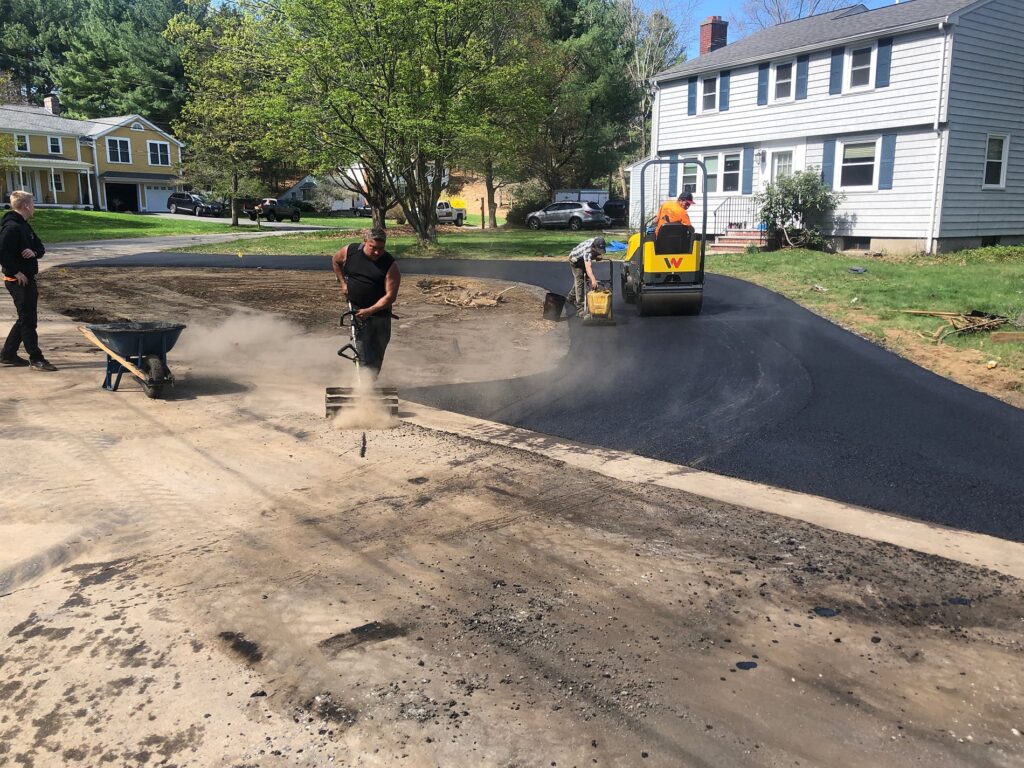
Repaving work gets planned around the fact that the lot still has to function. A section is closed while the rest stays open for parking, deliveries, or drop-off. Milling and paving get sequenced in halves, overnight, or over a weekend, depending on how the property is used day to day, so a school or a function venue isn’t left without usable parking mid-week. Access drives get particular attention in the scheduling, since on many Dover properties there’s only one way in and out, and that route has to stay passable for deliveries, buses, or emergency vehicles throughout the project.
A commercial scope covers more than resurfacing. It includes:
- Traffic flow and circulation across the lot
- Accessible spaces and access aisles sized and placed correctly
- Striping and signage
- Catch basins and other drainage structures
- Curbing and any islands
- The loading or drop-off area, which usually takes more punishment than the rest of the lot combined
Before any of that gets quoted, the lot gets assessed and mapped by area. Most lots aren’t failing uniformly. One section has base failure and needs full reconstruction. Another has surface cracking that an overlay will handle for a reasonable stretch. Treating the whole lot with one overlay because it’s simpler to quote is usually a short-term decision that costs more within a few seasons. The honest answer, most of the time, is a mix of treatments across the property, priced and scheduled by area.
Drainage deserves its own look on these properties. Wooded, low-lying sites around Dover tend to hold water longer than open commercial parcels, and a lot graded without enough pitch, or with catch basins that have settled out of line, will show the same cracking and potholing again within a couple of years no matter how well the asphalt itself was laid.


What Our Clients Say
Keeping the lot open while we work
A commercial lot cannot simply close. Tenants need to get home, staff need to get in, and deliveries arrive whether or not you are paving. The job is planned around that.
Half-and-half
We work the lot in sections, so one part is always usable while the other is down. Sections are cut off with clear barriers and signage, and we move the work across once the first section is ready for traffic. It takes more planning than closing everything, but it is usually the only workable approach for an occupied property.
Overnight and weekend work
Some lots have a busy period that cannot be disturbed, such as a retail or office frontage or a multi-unit building at the morning rush. We can schedule work outside those hours. We agree the sequence with you in advance so nobody finds a closed lot without warning.
Access and deliveries
Before work starts, we ask what has to keep moving:
- Which entrance and which bays do delivery vehicles use?
- Where do waste and recycling trucks stop, and when?
- Do any tenants or residents need guaranteed access for mobility reasons?
- Where can staff and visitors park while a section is closed?
The answers set the order of the work. A loading area that is busy at a known hour gets worked when it is quiet.
What a commercial scope includes
A commercial lot is not a large driveway. It carries different traffic and has different obligations, and the scope reflects that.
- Traffic flow and circulation: How vehicles enter, turn and leave decides where the surface wears out. We look at the lot as a circulation pattern, and we raise it if the layout is causing the damage.
- Accessible spaces and access aisles: These are part of the scope, not an afterthought, and they are laid out and marked as part of the work.
- Striping and signage: Fresh surface needs fresh markings, and the markings are what tell drivers where to go.
- Catch basins and drainage structures: A basin that is silted up or sitting at the wrong height will undo new paving. We check them and repair them as part of the job.
- Curbing and islands: Broken or displaced curbing channels water the wrong way and gives plows something to catch. It is dealt with before the surface goes down.
- The loading area: This is where the heaviest vehicles turn, stop and sit, and it takes the most punishment on any lot. It often needs different treatment from the rest.
Assessment before we quote
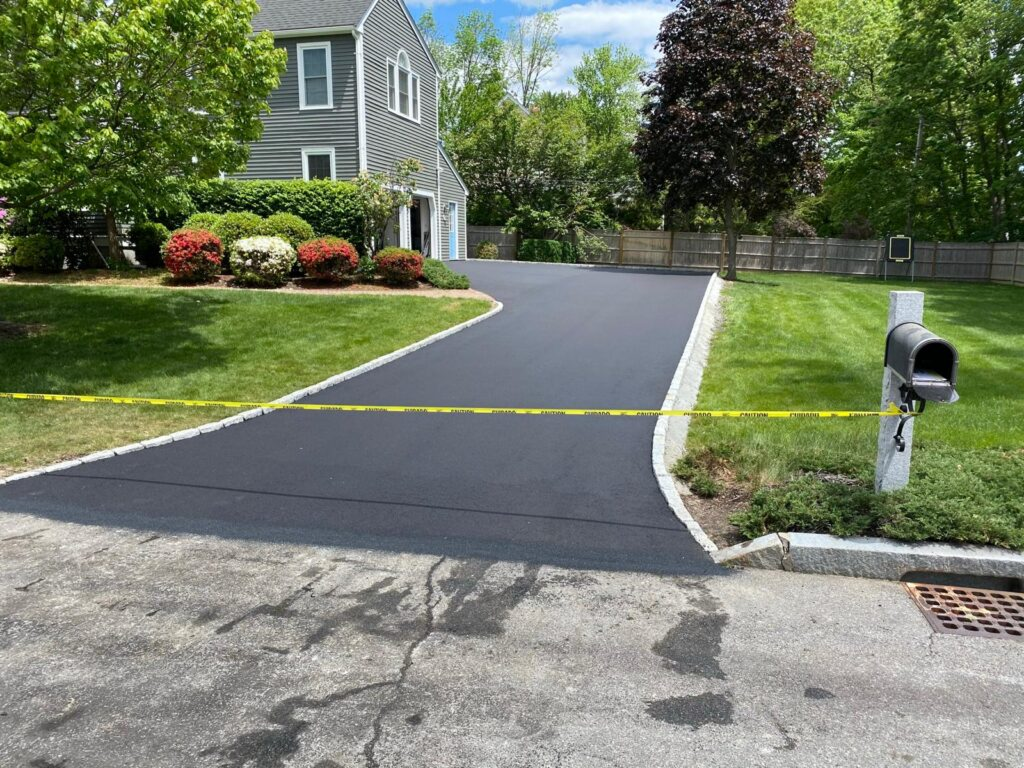
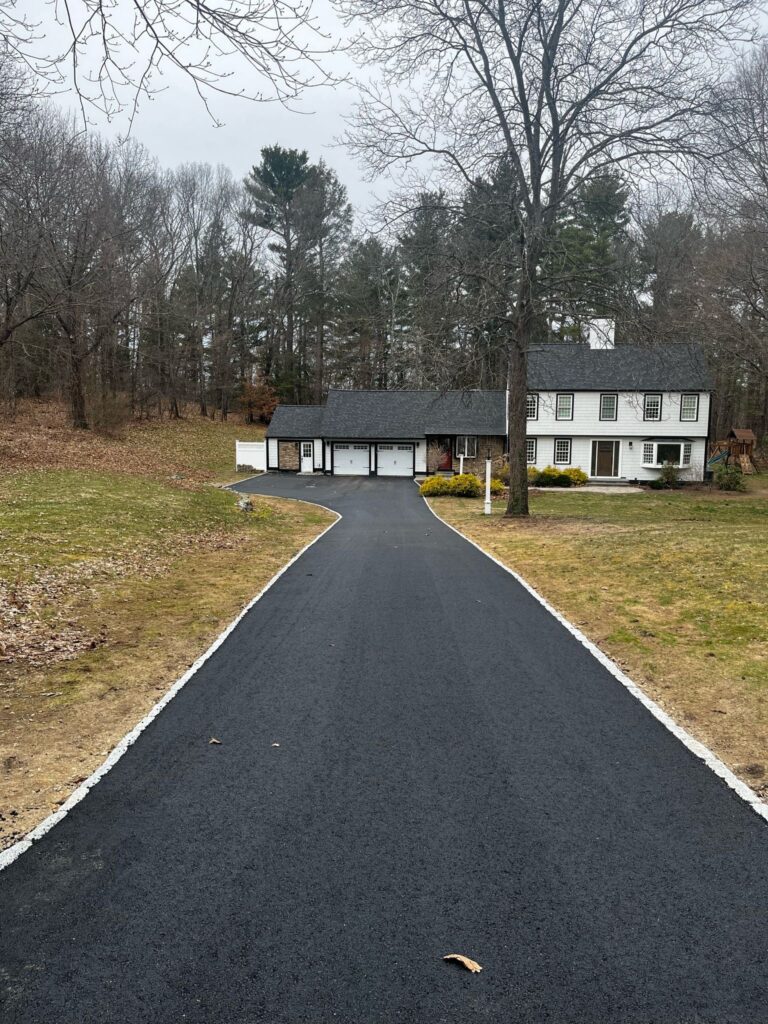
We do not price a lot from the road. We walk it, because the quote depends on what is actually wrong and where.
How failure is mapped
We mark the lot area by area: where the surface is cracked but sound, where it has been undermined from below, where water stands, and where edges have broken away. Each of those has a different cause and a different fix.
Why a lot is zoned
A lot is almost never one problem, so one price for the whole thing is usually wrong. Areas in good shape may only need repairs and a new coat. Areas that have failed underneath need to be taken out and rebuilt. Drainage trouble spots need to be fixed at the source. Most lots need a mix of these. We would rather tell you that plainly than quote a single figure that hides it.
One honest warning: a single overlay across sections that have failed underneath is a short-term decision. The overlay follows the surface below it, so the cracks and low spots come back through. It can be the right call when money is tight and the property will change hands or be redeveloped. It should be a choice you make knowingly, not one made for you by a flat quote.Most lots need a mix of these. We would rather tell you that plainly than quote a single figure that hides it.
Documentation you can put in front of others
A manager or trustee usually has to justify the spend to someone else. We give you something to show them:
- A written scope that lists each zone and what will be done to it
- A marked-up plan of the lot showing the zones, sections and phasing
- A clear sequence of work, so the board or owner can see how the lot stays in use
- Photographs of existing conditions before work starts, which are useful if a question comes up later
You can pass these to an owner, a board or an insurer without having to translate them.
Dover properties this applies to
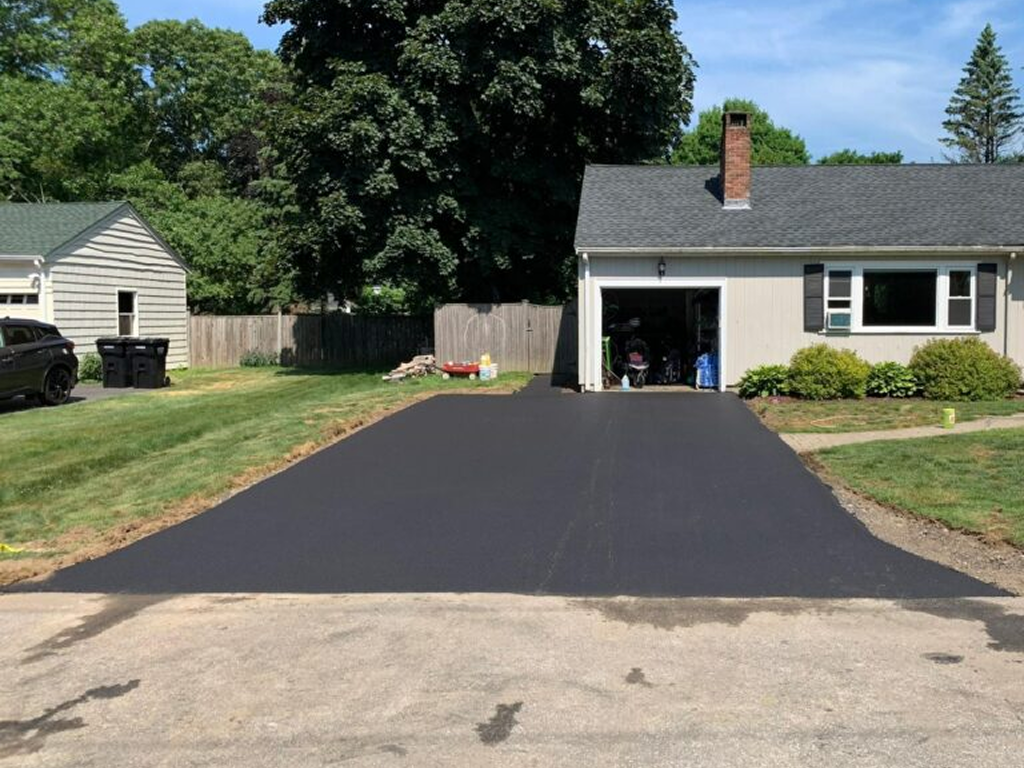
Dover is not a place of large, flat parking fields. The properties here have particular problems, and the work follows from them.
Estate parking courts
Dover's larger residential and institutional properties often need parking for events, staff, or guests on a lot that otherwise sees light daily use, which changes how it's built and striped.
Schools and religious properties
Lots with drop-off flow, bus access, and peak-hour surges need circulation planned for timed crowds, not steady traffic, plus clear pedestrian paths across the lot.
Conservation-adjacent sites
Lots bordering wetlands or conservation land need drainage structures and catch basins placed and maintained so runoff doesn't carry onto protected ground.
Frequently Asked Questions
Can a Dover parking lot be repaved without closing it completely?
In most cases yes. Lots are split into sections so one half stays open for parking and deliveries while the other is milled and repaved, with work sequenced overnight or over a weekend where the schedule allows it.
Does every section of a failing lot need the same treatment?
No. A lot is mapped area by area first. Some sections hold up with an overlay, others have base failure that needs full reconstruction, and treating everything the same way usually means paying twice.
What documentation can I give my board or insurer?
A written assessment showing where the lot is failing, what each section needs, and a phased scope with costs broken out by area. That's useful for budget approval and for showing an insurer the issue was addressed, not ignored.
Does this cover striping and accessible spaces, or just the asphalt?
A commercial scope covers striping, accessible spaces and access aisles, signage, curbing, and drainage structures alongside the paving itself, since a lot has to function and pass inspection as a whole, not just look new.
We treat it as one lot with two users. The written scope states what is done and where, and phasing keeps both sides able to get in and out. That gives you something concrete to agree on before anyone commits to the cost.
Next step
Call us on (413) 337-3772. Tell us about the lot, who uses it and what has to keep running. We will arrange a walk of the property and give you a zoned scope and quote you can take to your owner, board or insurer.