
Foundation Work in Medway, MA
Water coming through a basement wall after a heavy rain. A damp corner that never quite dries out between April and June. A section of fieldstone that bulges or sheds mortar a little more every year. These are foundation problems, not paving problems, and they need a different kind of work. If that is what you are looking at in Medway, this is the job we mean: excavation around the outside of the house, drainage correction, and getting the wall itself back to solid and dry.
A lot of the housing stock in Medway splits into two kinds of problem. Older homes along the rural roads often sit on fieldstone or rubble foundations that were never built with a membrane or a drain system behind them – water was simply expected to find its own way. Newer homes on the larger subdivision lots usually have poured concrete, but even those can fail at the grade line if the lot was never properly sloped away from the house, or if a paver or deck installed later changed how water moves across the yard.
Why water gets in
With a stone or rubble wall, water does not move under the foundation the way people assume. It moves through it – seeping between stones, tracking along old mortar joints, finding the path of least resistance until it reaches the inside face of the wall and the basement. There is no membrane to stop it and often no drain at the footing to carry it away before it gets that far. Painting or sealing the inside wall treats what you can see. It does nothing for the water still moving through the stone behind it.
That is why this is exterior work. The wall has to be exposed from the outside, treated on the face that actually meets the water, and paired with drainage that gives the water somewhere to go other than through your basement. It means digging. It means disruption to whatever sits against that wall – a bed of shrubs, a patio, sometimes a section of driveway. We will tell you plainly before we start what has to come out and what is likely to survive, because there is no version of this work that happens without disturbing the ground around the house.


What Our Clients Say
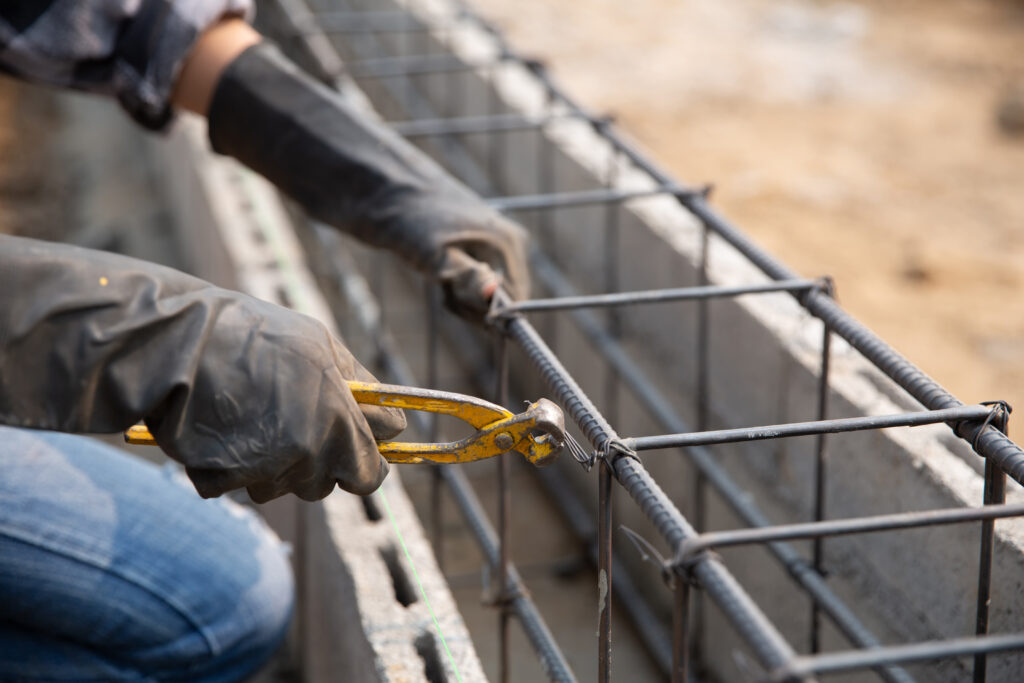
Excavation and access
On the wider lots common in Medway’s newer subdivisions, getting a mini excavator to the affected side of the house is usually straightforward – there is room to stage equipment and move spoil without squeezing past tight sideyards. On older rural properties the approach is less predictable. A mature tree close to the foundation, a well, a septic line, or simply a narrow gap between the house and a stone wall can change how we dig and how much has to be done by hand instead of machine. Before any machine touches the ground, we check for underground utilities and confirm the location of septic components, since a surprise here can stall a job for days.
What happens to plantings and hardscape
Anything within a few feet of the foundation on the working side generally has to come out before we dig – shrubs, small trees, a walkway, sometimes a patio slab. We flag what we expect to remove on the first visit so there are no surprises once the excavator is on site. Established plantings close to an old stone wall rarely survive root disturbance; we say so rather than guess, since Medway’s older lots often have fieldstone retaining walls and mature foundation plantings that predate the house’s last addition.
Hardscape is handled on a case-by-case basis. A newer paver patio or walkway can sometimes be lifted and reset once backfill is compacted, provided the base material underneath wasn’t damaged during excavation. Poured concrete slabs and anything mortared to the foundation itself usually have to be broken out and replaced, since there’s no clean way to free them without cracking. Mature trees get special attention: if roots run under the footing line, we’ll talk through options with you before work starts rather than cutting them blind.
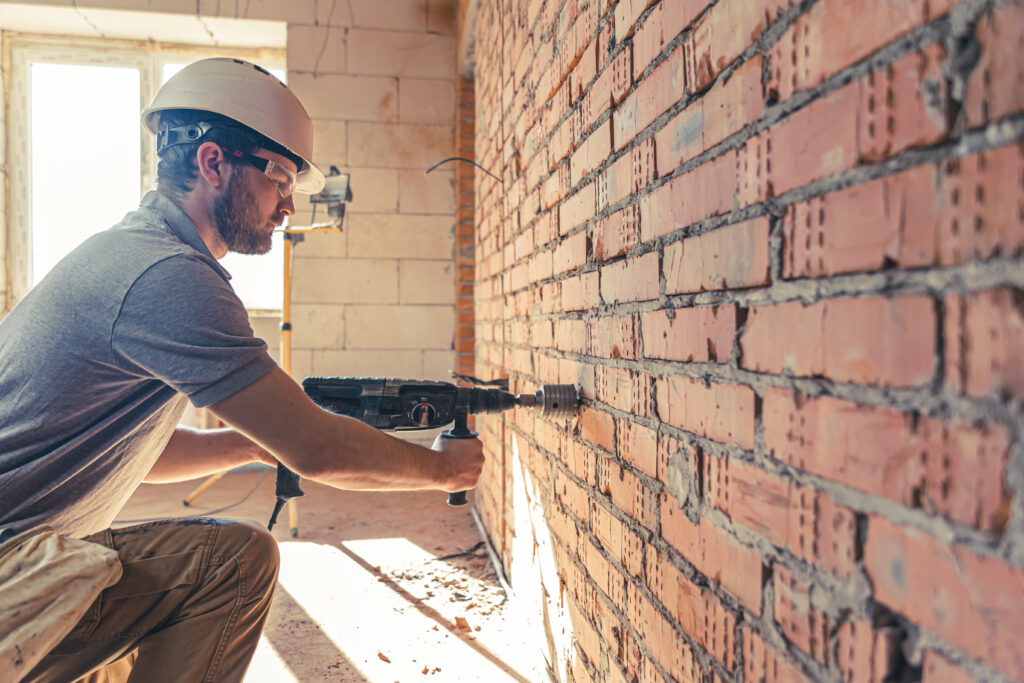
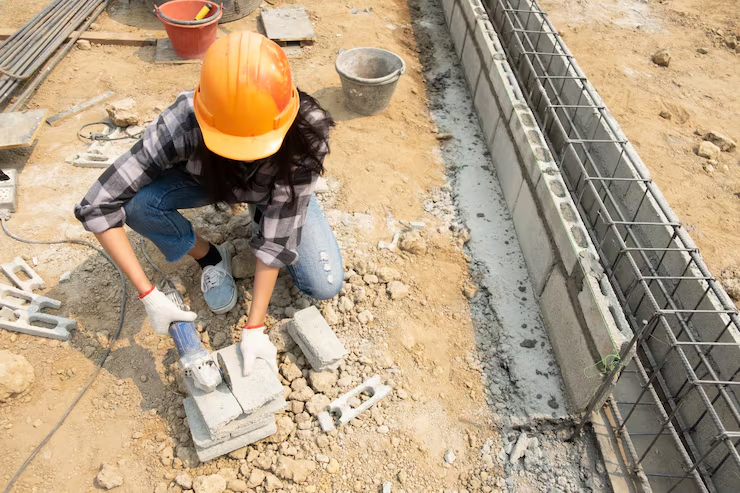
The work, in order
Treating the wall
With the footing exposed, we clean the wall face, repoint or rebuild deteriorated stone and mortar, then apply a waterproof coating or membrane. This stops water tracking through the wall itself, rather than just slowing it once inside.
Drainage at the footing
A perimeter drain at the footing gives groundwater a route away from the wall, not through it.
Backfill
Across Medway’s clay-heavy ground, we backfill foundations in careful lifts using free-draining material, never the heavy spoil dug out. Compacting each layer properly prevents a soft trench that settles unevenly, cracks paving, or shifts walls a season later.
Regrading the surface
Final grade must slope away from the foundation all the way around the repaired section. On flat Medway lots, that often means raising ground near the house slightly, rather than simply backfilling the hole we dug.
Reinstating what was disturbed
Lawn areas get topsoil and seed. A driveway or walkway section lifted for access becomes a separate repaving job once the ground has settled – we will tell you honestly if it needs time before doing it properly, Medway-wide.
Why this is a separate job from paving
We do both foundation work and paving, but we do not treat them as one job. A driveway or walkway near the foundation sometimes has to come up to get a machine in, or because the regrade changes the slope it sits on, but the foundation repair itself is excavation, masonry and drainage – nothing to do with asphalt or pavers. If your driveway happens to run close to the affected wall, we will tell you honestly whether it needs to come out for access, and we will quote that separately rather than bundle it into the foundation estimate. Keeping the two jobs distinct means you are not paying foundation-work rates for paving, or the reverse. It also means the sequencing is clearer: excavation and drainage first, any surface reinstatement after the ground has had time to settle. Rushing a driveway or patio back over freshly backfilled ground before it has settled is one of the more common reasons a repaired area looks uneven within a year or two. We would rather tell you to wait than install something we know is likely to settle poorly.

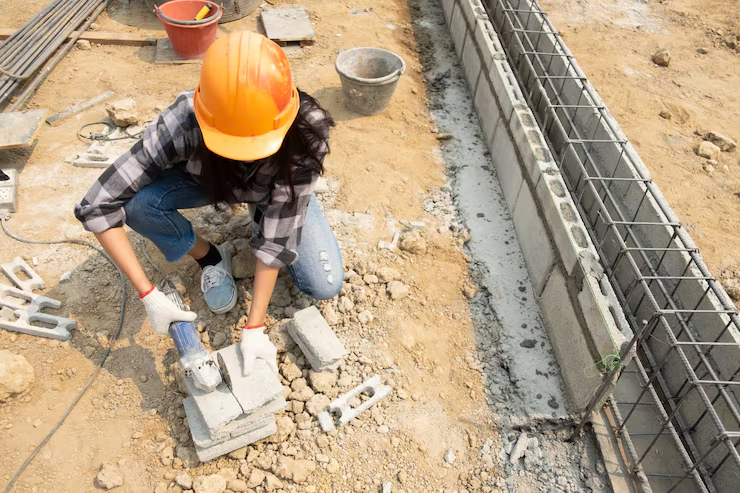
What to check before we come out
Before you call, a few things help us plan the visit. Note which wall and which corner the water or damage shows on, and whether it tracks with heavy rain, snowmelt, or both – Medway’s clay-heavy soil holds water and swells against foundation walls, so timing tells us a lot. Photograph any cracking, bulging or efflorescence on the inside wall, and note roughly how long the problem has been there and whether it has gotten worse since our last freeze-thaw cycle. Check a few practical things around the house:
- Whether downspouts near that corner discharge close to the foundation rather than away from it
- Whether grading along that side slopes toward the house instead of away
- Whether nearby trees or shrubs have roots that could be reaching the footing
What to check and write down first
These are the pointers that help most before anyone visits.
- Note where and when. Which wall, which corner, and whether it follows heavy rain, snowmelt or a particular season.
- Photograph it dry and wet. Take pictures of the same spot on a dry day and again after rain.
- Look at the outside. Check whether the ground beside that wall slopes toward the house, whether a downspout empties near it, and whether anything piles water against it.
- Check for movement. Look for horizontal cracks, a wall that leans in, or stones that have shifted. Mark the ends of a crack with a pencil and date it, so changes can be seen.
- Check the stonework. Press on the mortar. If it crumbles or sands away, say so.
- Think about access. Where could a machine stand, and what is in its way? Tell us who shares the drive or boundary.
- Leave it as you found it. Do not seal or patch the wall before we see it. It hides what we need to look at.
Questions we get asked
Can this be fixed from inside the basement?
Interior sealants and coatings can reduce visible dampness, but they do not stop water moving through an untreated stone or rubble wall from the outside. They treat the symptom you can see, not the path the water is taking to get there. Lasting repair on an older Medway foundation generally means working from the exterior.
Will my driveway or patio need to come up?
Only if it sits close enough to the affected wall to block machine access, or if the regrading needed for proper drainage changes the slope it sits on. We assess this on site and quote any paving work separately from the foundation repair.
How do you handle a tree close to the foundation?
If a mature tree sits near the wall we need to access, we work around its root zone by hand where possible rather than cutting roots with the excavator, and we will tell you upfront if the tree's position limits how much can be done by machine.
Does this work in winter?
Frozen or saturated ground changes what is practical. We will tell you honestly at the time of the visit whether conditions suit excavation or whether waiting for a better window makes more sense for the wall and the surrounding ground.
Next step
Call us on (413) 337-3772. Tell us which wall, what you have seen, and how the lot slopes around it. We have worked across Middlesex County since 1988, and we will tell you plainly what is likely going on and whether outside work is the right answer.