
Patios in Sharon, MA
A lot in Sharon rarely hands you a flat, open backyard. Most properties here sit among trees, with rolling ground that drops off toward the lake or a wooded lot line, and a driveway that winds in before you even reach the house. Building a patio on ground like that is not the same job as laying one on a flat suburban rectangle. The grade has to be read before anything else gets decided, and the trees around the site are not just scenery; their roots and their shade shape what the surface does for years afterward.
Most of the work that makes a patio last happens before a single stone is visible. The ground gets excavated below the finished grade, then rebuilt in compacted layers so the base doesn’t shift under freeze-thaw cycles. New England frost pushes up on anything with moisture trapped beneath it, and a patio built on undisturbed topsoil, or on a base that wasn’t compacted properly, will heave unevenly come spring. That’s what turns a flat patio wavy after a winter or two. The fix isn’t a thicker slab, it’s a base that drains instead of holding water, and an edge restraint that keeps the whole assembly from creeping outward as it freezes and thaws.
Shade is the other variable that gets underestimated. A patio tucked under mature trees, which describes a lot of backyards in Sharon, stays damp longer after rain and sees less direct sun to dry it out. That changes which surfaces make sense. A material that’s fine in full sun can turn slick with algae or moss in deep shade, so the choice of stone or paver, and the joint material between them, should account for how much light the spot actually gets rather than how it looks on a showroom sample.
Sharon’s sandy soil in many areas is actually an advantage for drainage, but it doesn’t remove the need for proper grading. A patio built close to the house still has to pitch water away from the foundation, not toward it, regardless of how well the soil underneath drains. Natural stone, concrete pavers, and poured concrete all behave differently once winter gets to them. Flagstone looks the part next to an older New England house and ages well, but it costs more and isn’t the easiest surface to level perfectly on uneven ground. Concrete pavers are more forgiving to install around tree roots and easier to lift and reset if a root grows underneath years later. That repairability matters more on a wooded lot than it does on open ground, because roots keep growing after the patio is finished.
A few questions tend to decide the layout before materials even come up:
- How far is the patio from mature trees whose roots could lift it later?
- Does the slope call for a retaining edge, steps, or a terraced layout instead of one level pad?
- Will the surface see full sun, dappled shade, or deep shade most of the day?


What Our Clients Say
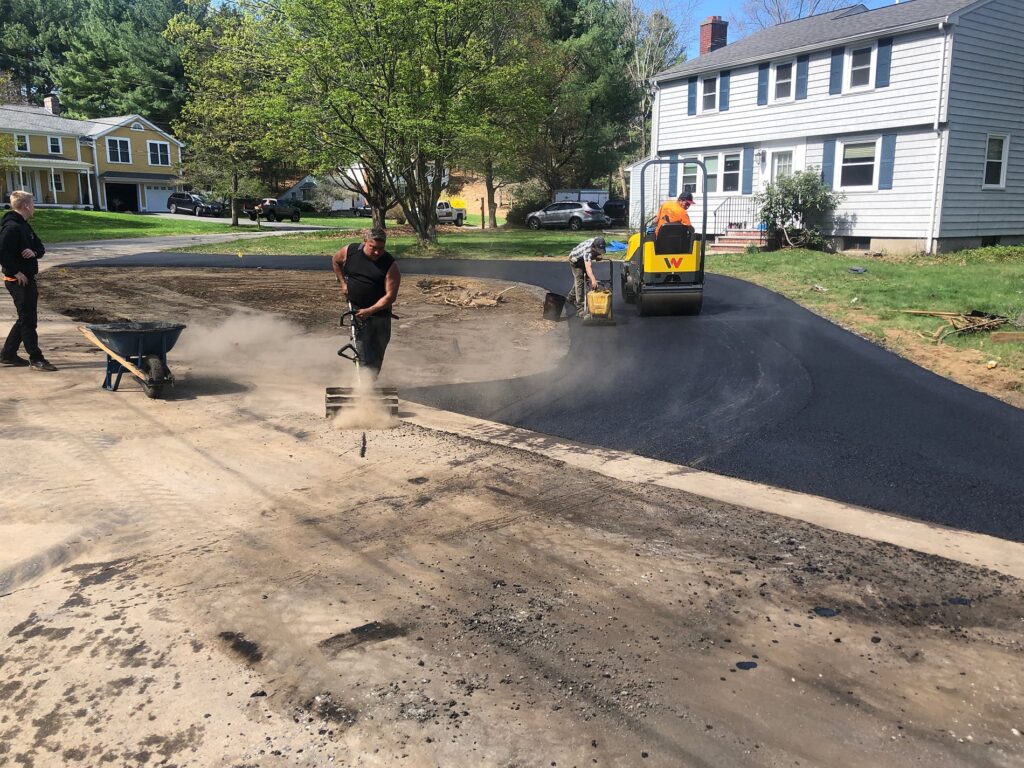
What happens below the surface
A patio is a thin finished layer sitting on a structure you never see. That structure decides whether the surface is flat in ten years or wavy in two.
Reading the grade before anything else
On a sloped Sharon lot, the patio location itself often depends on where the ground naturally levels out, or where it needs a retaining wall and proper drainage to create a usable flat, stable space at all.
Working around mature trees
Oaks and pines common on Sharon lots mean root systems extend well past the canopy, often beneath the planned patio footprint.
Base depth and compaction
Compacted gravel beneath the pavers carries the load and lets water pass through instead of pooling. In Sharon's clay-heavy soil, proper base depth and thorough compaction matter even more.
Edge restraint matters
Without a solid edge, pavers creep outward every freeze-thaw cycle.
Choosing flagstone
Flagstone suits older Sharon homes with stone foundations and mature landscaping, and it ages gracefully with weather and foot traffic. Irregular shapes mean longer layout time for tight, stable joints, so expect higher labor costs than a uniform paver patio.
Choosing concrete pavers
Concrete pavers install faster than poured slabs, allow individual repairs without matching old concrete, and flex better where Sharon's mature trees cause root heave.
Materials and the trade-offs
Pitching water away from the house
Any patio built near a Sharon foundation needs a deliberate slope away from it.
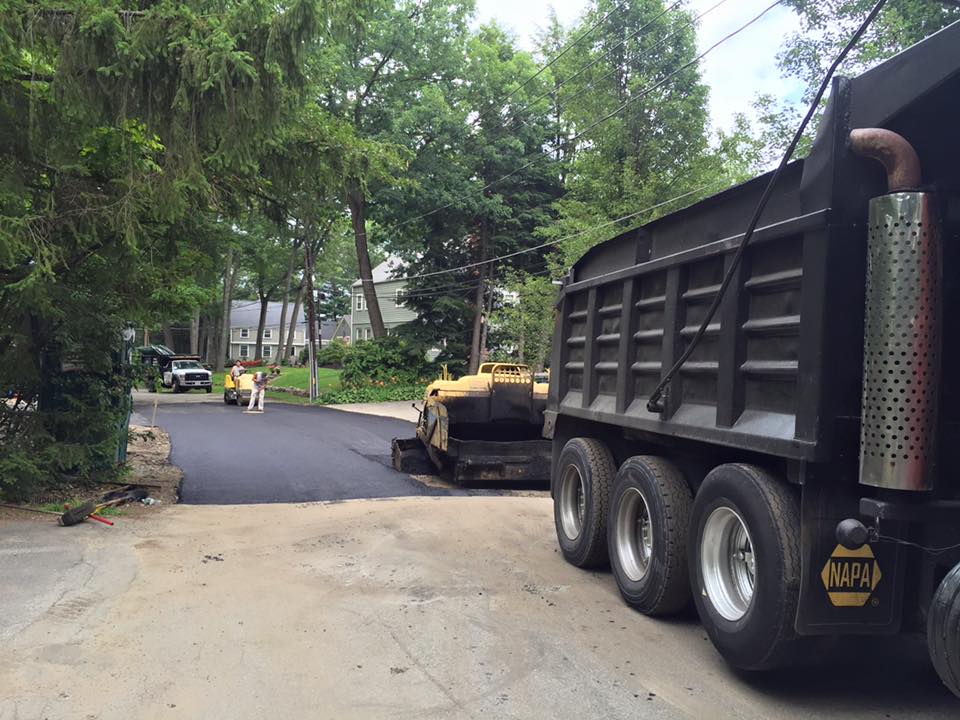
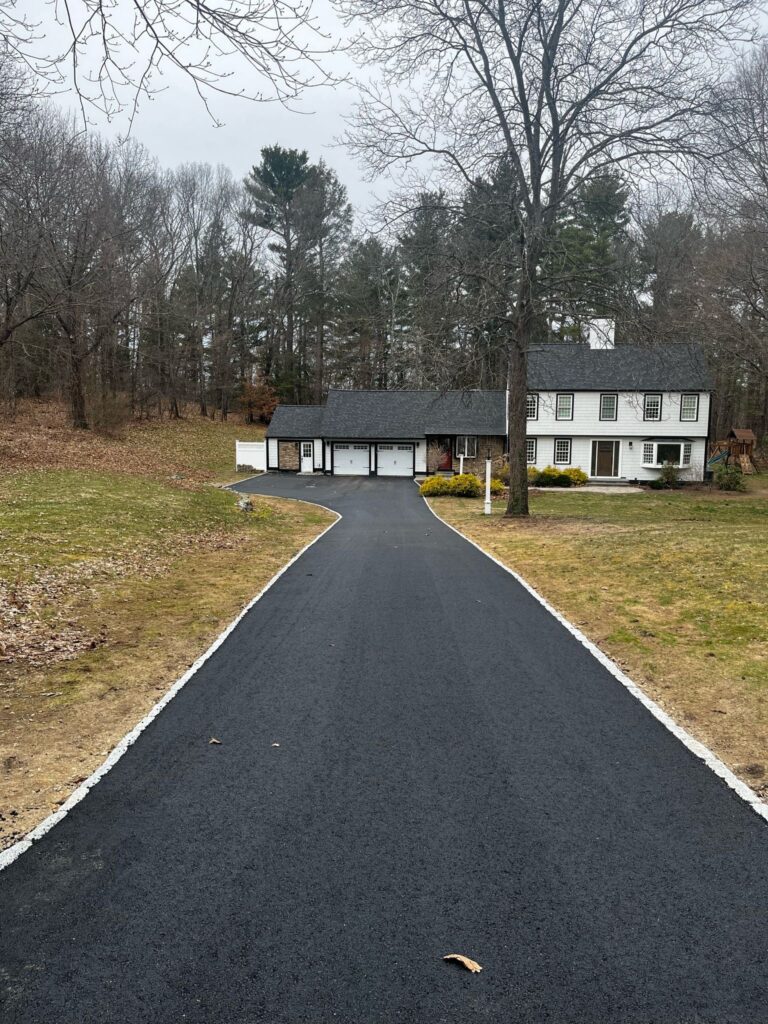
Tying into the driveway and entry
A patio that connects visually to the driveway surface and front entry reads as one property, not two separate projects.
Working with existing walls and planting
Many Sharon lots already have stone walls, hedges, or mature garden beds shaping the yard.
Access for equipment
Long, tree-lined driveways typical in Sharon can limit how equipment reaches the backyard.
Matching an older house
Many Sharon homes are older builds with brick, fieldstone, or clapboard character.
What determines how long it lasts
A patio’s lifespan comes down to what’s underneath it, not what’s on top. A well-compacted base that drains, a restrained edge, and a grade that moves water away from the house will keep a surface flat through repeated freeze-thaw cycles. Skip those steps and a patio can look identical on installation day yet settle unevenly within a few seasons once frost works underneath it. This matters especially on Sharon’s rolling lots, where water naturally wants to run downhill toward the house unless the grading directs it elsewhere on purpose.
The material on top then shapes maintenance and aging. Natural stone develops character over time and rarely looks dated, but a cracked piece is harder to match and replace than a single paver. Pavers are more uniform, less expensive per square foot, and simpler to lift if a root or a settled base section needs correcting later. Neither choice is wrong; it depends on the house, the budget, and how much upkeep the owner wants to take on. On lots with established trees, repairability tends to matter more than it looks like it will at the start.
Starting the project
Every lot in Sharon has its own slope, its own tree cover, and its own drainage pattern, which is why a patio here needs a site visit before any material gets chosen. What works on a flat, open yard a few towns over may not hold up on a wooded, rolling lot near the lake. Getting the grading and base right the first time costs less than correcting a wavy, settled patio two winters later.
A proper start means digging past topsoil to reach stable subgrade, compacting it in layers, and setting a crushed stone base deep enough to handle frost heave through a New England winter. Root systems from mature trees common on Sharon properties also need to be accounted for, since they can shift a patio base years after installation if they’re not addressed up front.
Where this suits Sharon properties
Wooded lots near the lake
Properties close to Lake Massapoag often have mature tree cover and uneven shade patterns. A paver patio handles root movement better here than a rigid slab does over time.
Sloped backyards
Rolling terrain common across Sharon often needs a retaining wall or terraced design to create a level, usable patio space instead of fighting the existing grade.
Long, tree-lined driveways
Homes set back behind winding, shaded drives benefit from a patio design that ties the entry sequence together, connecting driveway, walkway, and outdoor space as one approach.
Questions about patios in Sharon
Does Sharon's sandy soil make patio drainage easier?
Sandy soil drains well once water reaches it, which helps. But the patio still needs to be graded to direct water away from the house and off the surface; sandy soil alone doesn't replace proper pitch and base work.
Can a patio be built around mature trees without harming them?
Yes, with care. Keeping excavation shallow near root zones and choosing a flexible paver base rather than a poured slab reduces root damage and lets the patio tolerate future root growth.
How does a sloped lot affect patio design?
On a sloped lot, the patio location often depends on where a retaining wall can create a flat area, or where the natural grade already levels out. This gets decided during a site visit, not from a standard layout.
Is flagstone or paver better for an older Sharon home?
Flagstone often suits older homes visually and ages well, but it costs more and is harder to repair in sections. Pavers are more uniform and easier to reset if a root or settled base shifts a section later.
Next step
Tell us what you have: the slope, the house, how the space gets used. We will look at the lot and talk through what will work on it. Call Driveway Specialists at (413) 337-3772. We are family-run and have been working in Massachusetts since 1988.