
Foundation Work in Foxborough, MA
Water coming through a basement wall after a heavy rain. A corner of the yard that stays wet into June. A section of fieldstone foundation that bows inward or sheds grit every time you brush past it. None of that is a paving problem, and none of it gets fixed by patching the inside of the wall. It gets fixed outside, at the source.
Foxborough has a mix of housing that makes this call differently from one street to the next. Newer subdivision lots usually sit on built-up fill with modern footings and drainage already roughed in, so problems there tend to trace back to a clogged or crushed pipe, a downspout dumping right at the foundation, or grading that was never quite right from the day the house was built. Older houses, particularly on the rural roads and steeper grades toward the southern part of town, are more likely to be sitting on original fieldstone or rubble foundations with no membrane and no perimeter drain at all. That construction kept a house standing for a hundred years, but it was never built to manage water, and water always finds the gap.
On a fieldstone or rubble foundation, water does not need a crack to get in. It moves through the mortar joints and the stone itself, especially once the soil outside is saturated and pressing against the wall. That is why interior sealants and coatings only ever manage the symptom – they stop water from showing on the inside while it keeps moving through the wall and softening mortar you can’t see. The only way to stop water entering is to intercept it on the outside, before it reaches the wall, which means excavation down to the footing.
What that work usually involves, once we’ve confirmed the wall itself is the problem:
- Excavating along the affected section to expose the footing and wall from outside
- Repointing or rebuilding any mortar and stone that’s deteriorated
- Applying a waterproof membrane or coating rated for below-grade use
- Installing or replacing a perimeter drain that actually carries water away rather than letting it pool against the wall
- Backfilling with material that drains instead of holding water against the repair
This is slower and more disruptive than people expect going in – a trench along one wall can take a yard out of commission for days, not hours. It is also the only approach that changes the actual cause instead of relocating the evidence of it. Before any digging starts, we walk the site to work out whether this is genuinely a foundation issue or a drainage and grading fix that’s cheaper and faster to correct. Not every damp basement in Foxborough needs excavation; plenty just need the water redirected before it ever reaches the wall.


What Our Clients Say
Excavation, access and what happens to the yard
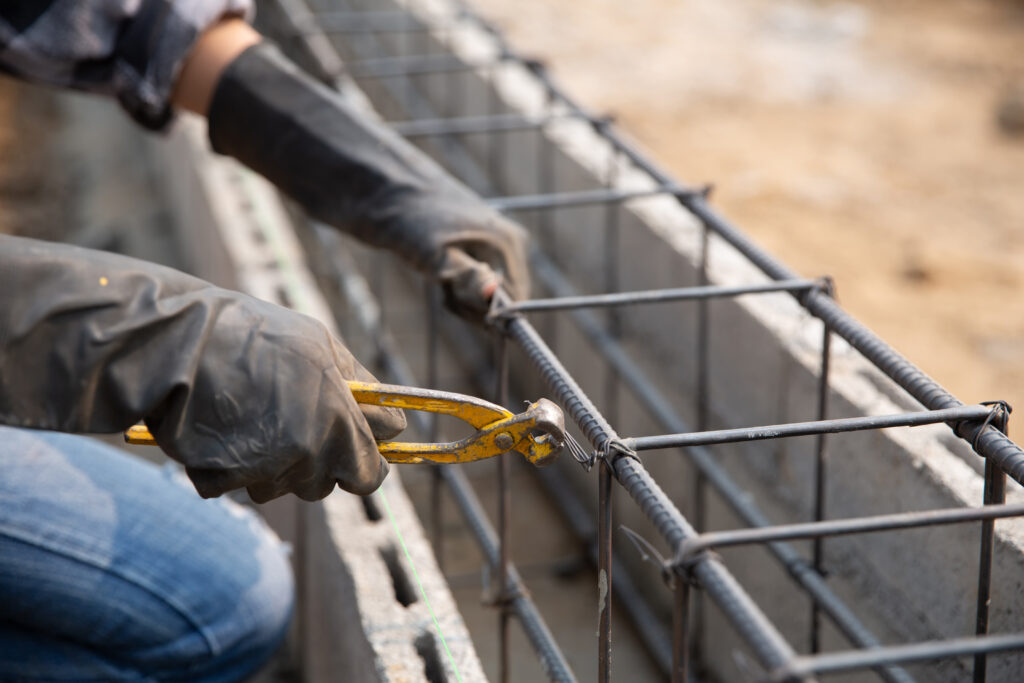
The work starts with digging down along the affected section of foundation, usually to the footing, so the wall is exposed from outside rather than treated blind. On a steep southern Foxborough lot that often means working on a slope, with the excavated soil and the machine itself needing somewhere stable to sit – sometimes the driveway or front lawn, whichever can actually take the weight without churning up.
Planting beds, shrubs and any hardscape close to the wall – a walkway, a patio edge, a short retaining wall – usually have to come out or be protected before digging starts. On older in-town lots where the house sits close to the property line, that strip of ground can be narrow, and what gets disturbed is decided by what’s actually there, not by preference. Underground utilities, septic lines and well connections common on Foxborough’s larger lots also need locating and marking before anyone breaks ground.
Expect some disruption to the yard for the duration of the job:
Treating the wall and rebuilding the drainage path
With the wall exposed, any failing mortar or stone gets raked out and repointed, cracked sections are stitched or parged, and the exterior face is treated with a water-resistant coating designed to shed moisture rather than absorb it over the seasons. A drainage path is then rebuilt at the footing level, typically a perforated pipe bedded in washed stone and wrapped in filter fabric, pitched to carry water away from the house instead of letting it pool against the new work or seep back through the wall. Backfill goes back in stages rather than all at once, with each lift lightly compacted so the soil settles evenly and doesn’t leave voids that invite water to collect against the foundation.

The work, in order
Backfill matters as much as the wall
Loose, well-draining backfill lets water move down and away from the wall. Dense clay packed back in tight creates the same pressure that caused the original problem, just on new work.
Access on sloped southern lots
Many Foxborough lots slope sharply toward wooded rear yards, so excavators often can’t reach every side of a foundation directly. We bring in smaller machines or hand-dig tricky sections, keeping grading accurate and site disruption minimal despite the terrain.
Subdivision lots, different cause
Newer Foxborough subdivision homes rarely have a bare foundation problem.
What regrading actually fixes
Across Foxborough properties, soil settles toward the house over years. Rebuilding the slope so ground falls away from the foundation, even a modest grade change, removes a surprising share of the hydrostatic pressure driving water into basements and crawlspaces.
When the driveway is in the way
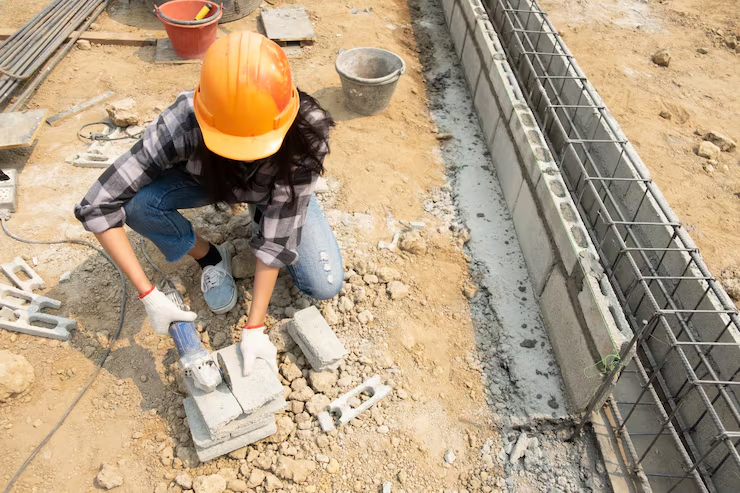
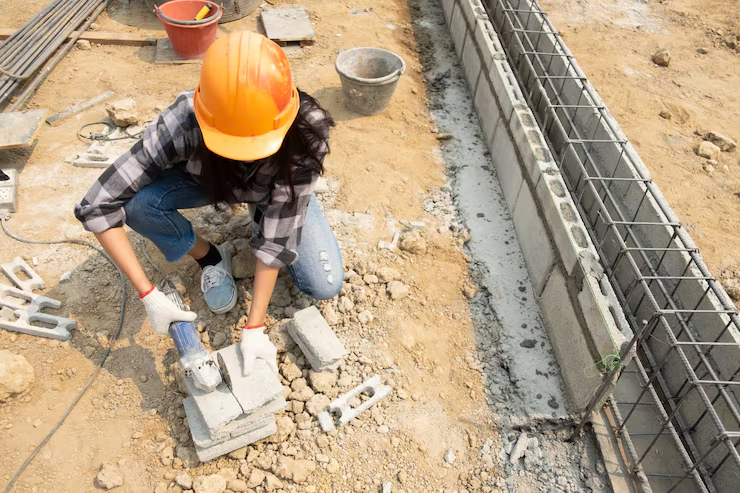
If a Foxborough driveway, patio, or walkway sits over the work area, it has to be saw-cut and removed before excavation begins, then properly reinstated once backfill, compaction, and grading are finished, leaving a clean, solid surface behind.
Reinstating the ground after backfill
Once the drainage and wall work is finished and backfill has gone back in compacted layers, the surface gets regraded so water sheds away from the house rather than settling back toward it over the following seasons. On Foxborough lots with a meaningful slope, or where clay soils are common, this is where a lot of the long-term value of the job actually sits – a wall can be repaired correctly and still take on water again if the grading above it pitches the wrong way or if backfill is left loose enough to settle into a low spot.

Before anyone comes out to look
A few things are worth checking and writing down ahead of a visit: where exactly water appears on the inside wall and whether it follows heavy rain, snowmelt, or both; whether the problem is worse on one side of the house, which often points to the slope or a downspout nearby; and whether any exterior work – grading, a patio, a new driveway – happened near that wall in recent years. That history narrows down the cause faster than guessing on site.
If you’re dealing with a damp basement, a failing wall, or a wet corner that won’t dry out, call Driveway Specialists at (413) 337-3772 to talk through what’s actually happening at your foundation and what it would take to fix it from the outside.
What to check and write down first
These are the pointers that help most before anyone visits.
- Note where and when. Which wall, which corner, and whether it follows heavy rain, snowmelt or a particular season.
- Photograph it dry and wet. Take pictures of the same spot on a dry day and again after rain.
- Look at the outside. Check whether the ground beside that wall slopes toward the house, whether a downspout empties near it, and whether anything piles water against it.
- Check for movement. Look for horizontal cracks, a wall that leans in, or stones that have shifted. Mark the ends of a crack with a pencil and date it, so changes can be seen.
- Check the stonework. Press on the mortar. If it crumbles or sands away, say so.
- Think about access. Where could a machine stand, and what is in its way? Tell us who shares the drive or boundary.
- Leave it as you found it. Do not seal or patch the wall before we see it. It hides what we need to look at.
Questions we get asked
Can this be fixed from inside the basement instead of digging up the yard?
Interior coatings and sealants can reduce visible moisture for a while, but they don't stop water moving through the wall itself. On a fieldstone or rubble foundation with no membrane, the only way to actually stop water entering is to intercept it outside, which means excavation.
How do I know if my Foxborough home has an old rubble foundation or a modern footing?
Age and construction era are the main clue – older homes, especially on Foxborough's rural southern roads, are more likely to sit on original fieldstone or rubble. Newer subdivision houses typically have poured footings with drainage already built in, so problems there usually trace to a pipe or grading issue rather than the wall itself.
Will my driveway or patio need to come out for this work?
Only if it sits directly over or against the section of foundation being excavated. If so, it has to be cut back before digging starts and rebuilt once backfill and grading are finished.
What can I check before calling about a wet basement wall?
Note where water appears inside, whether it follows rain or snowmelt, whether one side of the house is worse than another, and whether any grading or hardscape work happened near that wall recently. That detail helps identify the cause faster.
Is this the same crew that does driveways?
Foundation excavation, drainage and regrading is a different scope of work from paving, even though it's sometimes needed alongside a driveway rebuild when pavement sits over the dig area.
Next step
Call us on (413) 337-3772. Tell us which wall, what you have seen, and how the lot slopes around it. We have worked across Middlesex County since 1988, and we will tell you plainly what is likely going on and whether outside work is the right answer.