
Patios in Franklin, MA
Franklin has two kinds of lots, and they call for different thinking before a single paver goes down. Out in the subdivisions built through the 1990s and 2000s, backyards tend to be large and flat, with wide drives and room to work with. A patio there is often a standalone project: a seating area off the back of the house, maybe a path connecting it to the driveway, built where there is nothing to fight. Closer to the older roads near the town center, lots are tighter and the grading around the house was set decades ago, often without much thought for where water goes once the ground is covered. Both situations can carry a good patio. Neither forgives a bad base.
What you are actually buying with a patio is not the surface you walk on. It is what happens to that surface after the first winter, and the second, once frost has worked on it a few times. Everything that matters is built before the stone or pavers go down.
What happens below ground
A patio that stays flat starts with excavation deep enough to remove the topsoil and any loose fill, because organic material compresses unevenly over time and takes the surface with it. Below that sits a compacted gravel base, built up in layers and mechanically compacted at each stage rather than dumped in all at once. The base is what resists frost heave: it drains water away from the surface instead of letting it sit and freeze. On top of that, a bedding layer of sand or stone dust gives the pavers or flagstone a uniform surface to set into, and edge restraint locks the whole field in place so the outer rows cannot creep outward under freeze-thaw cycling or foot traffic. Skip any one of these steps and the patio still looks fine the day it is finished. The failure shows up eighteen months later as humps, dips, and gaps nobody can explain.
For Franklin specifically, where many subdivision lots have deep topsoil and some older lots sit on fill brought in decades ago, we test what is actually under the lawn before pricing the base depth. Guessing at that stage is where most of the long-term problems start.
Choosing materials for how the yard actually gets used
The right material depends on how the space will be lived in, not just how it photographs. A few things worth weighing before committing:


What Our Clients Say
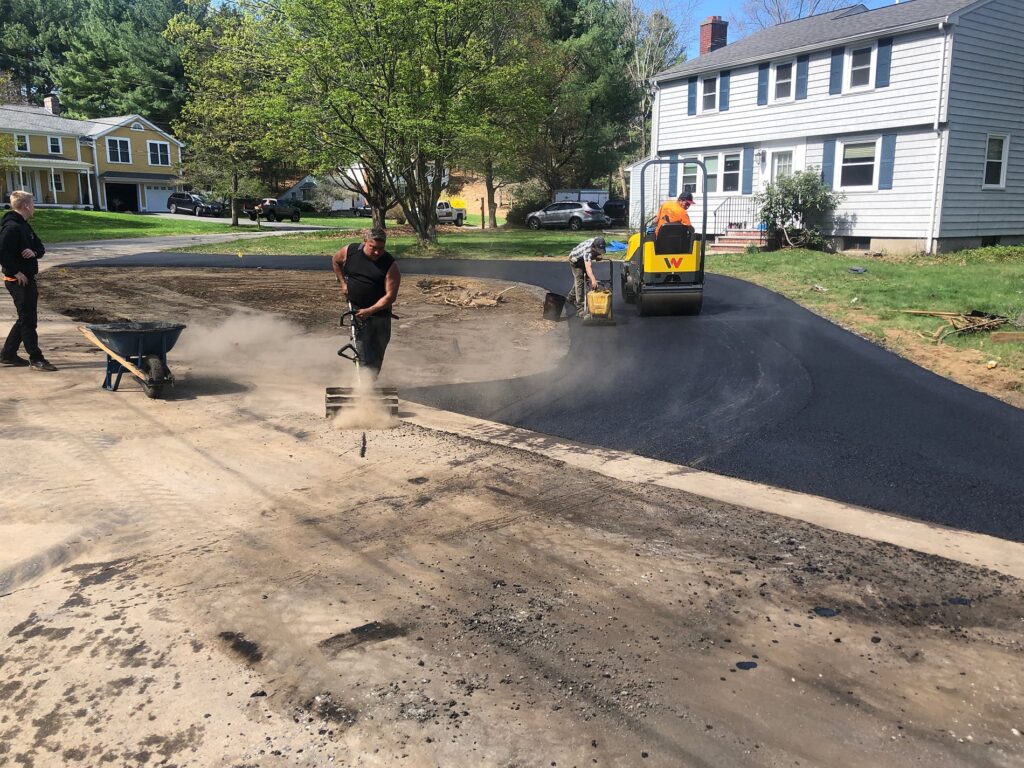
What happens below the surface
A patio is a thin finished layer sitting on a structure you never see. That structure decides whether the surface is flat in ten years or wavy in two.
Material choice
Pavers, natural stone, and poured concrete handle a Massachusetts winter differently. Pavers flex at the joints and individual units can be lifted and reset; stone ages beautifully but costs more to repair in one spot without the patch showing.
Pavers for most yards
Concrete pavers are the practical choice for most Franklin backyards. They are consistent, priced predictably, and if one unit cracks or sinks, it comes out and gets reset without disturbing the rest of the patio.
Natural stone character
Irregular flagstone or fieldstone reads as more established, especially against an older Franklin farmhouse near the town center. It costs more, settles less predictably, and matching a repaired stone later is harder than simply resetting a paver.
Freeze-thaw and joints
Every joint in a patio is a place water can enter and freeze. Tight, properly swept joints with polymeric sand resist this far better than wide gaps packed loosely or left to erode over a few seasons.
Pitch away from the house
A patio built flat against the foundation without pitch sends water back toward the house instead of away from it. Grade has to fall away from the structure, even if the slope is barely visible to the eye.
Where the water goes next
Pitch alone won't help if runoff has nowhere to go once it leaves the patio edge.
Materials and the trade-offs
Tying into the driveway
Where a patio connects to an existing driveway, the transition has to be planned, not improvised. A mismatched edge or an abrupt step between surfaces becomes a trip hazard and a place water collects.
Working around existing walls and planting
Retaining walls, mature shrubs, and established beds already define a Franklin lot's shape.
Large lots, standalone patios
On the newer subdivision lots around Franklin with generous backyards, a patio can be designed as its own destination, set away from the house, without fighting existing grade, mature trees, drainage swales, or a tight footprint near the foundation.
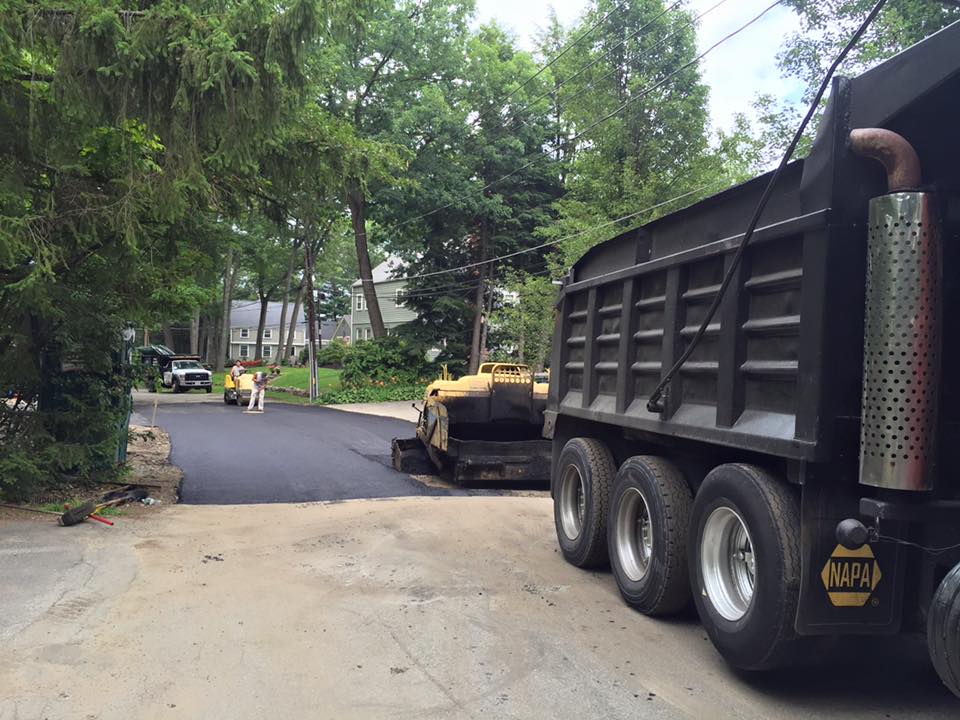
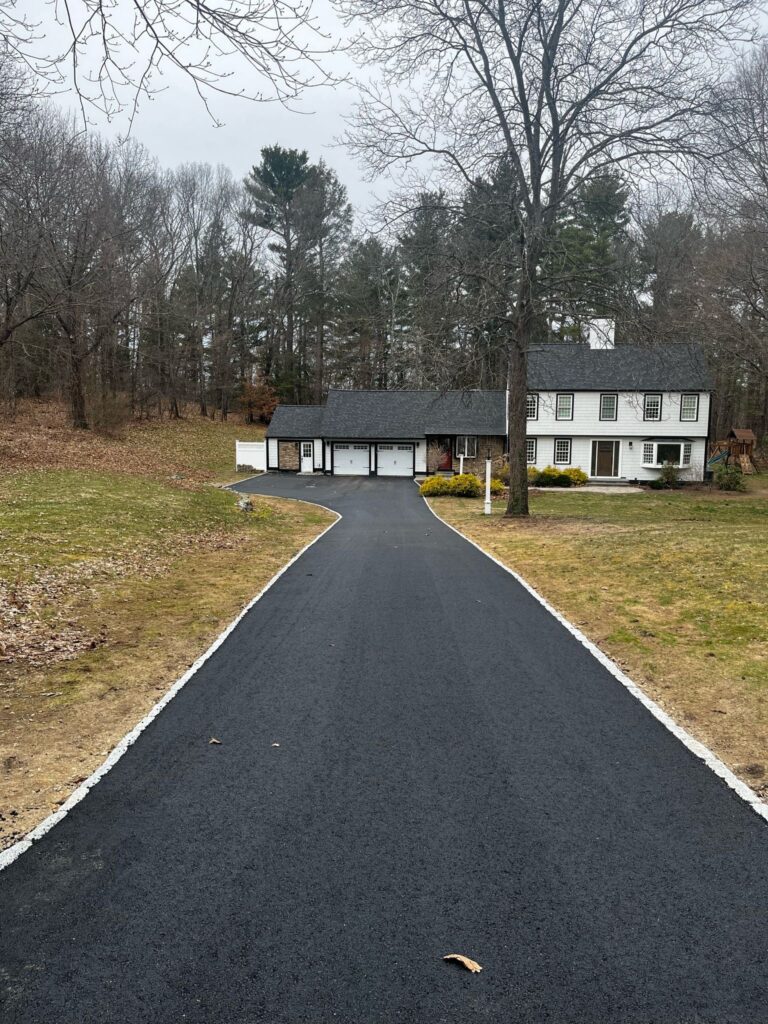
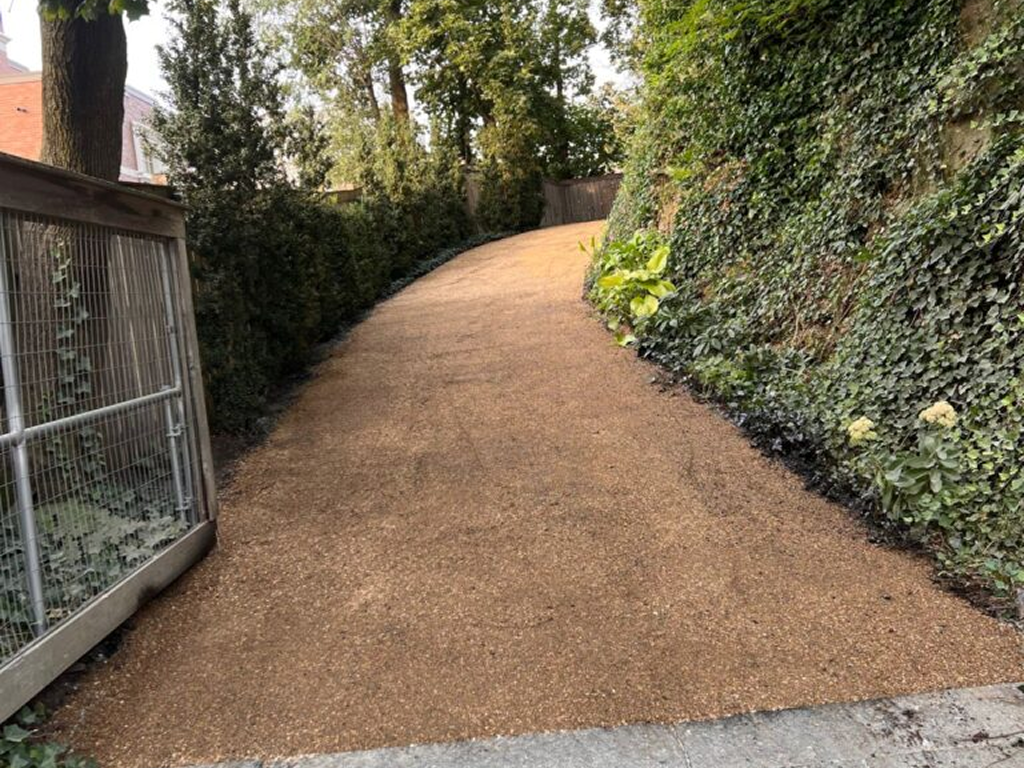
Where this suits Franklin properties
Large subdivision backyards
The 1990s and 2000s subdivisions around Franklin left many homes with wide, flat backyards and few existing obstacles. These lots suit a standalone patio built on its own footing, without having to work around old grading or mature trees.
Older lots near the town center
Homes on Franklin's original roads often sit on smaller lots with grading set decades ago. A patio here has to be planned around existing drainage patterns, foundations, and whatever slope already exists toward the street.
Properties tying new work to old
Where a patio has to connect to an existing driveway, walkway, or retaining wall, material and grade choices matter more. Matching what is already on the property keeps the new work from looking like an afterthought.
Questions about patios in Franklin
How is a patio different from the driveway work you also do?
A driveway is engineered for vehicle loads and daily traffic; a patio is built for foot traffic and standing water management around the house. The base still matters enormously, but the design priorities, materials, and grading goals are different.
Can a patio be added to a yard with an existing retaining wall or mature trees?
Yes, and on many Franklin lots that is the normal situation rather than the exception. The patio gets designed around what is already there, with excavation and drainage planned so roots and existing structures are not disturbed.
Do you handle the drainage, or just the patio surface?
Drainage is part of the patio design, not an extra. Grade, pitch, and where water exits the site are worked out before any base material goes down, because a patio that traps water against the house is not a finished job.
What happens if a paver cracks or settles after a few years?
With a paver patio, the affected units come out, the base underneath gets corrected, and the pavers are reset. That kind of spot repair is harder with poured concrete and more visible with natural stone.
Do you work on both the newer subdivision homes and the older houses near downtown Franklin?
Yes. The approach differs: subdivision lots usually give more room to build a standalone patio, while older in-town lots need more attention paid to existing grade and drainage before design starts.
Next step
Tell us what you have: the slope, the house, how the space gets used. We will look at the lot and talk through what will work on it. Call Driveway Specialists at (413) 337-3772. We are family-run and have been working in Massachusetts since 1988.