
Foundation Work in Sudbury, MA
Water coming through a basement wall after heavy rain. A damp corner that never quite dries out, even in July. A section of fieldstone or block that bows inward or sheds grit when you touch it. These are not cosmetic problems, and they do not come from the driveway or the yard. They come from how the house meets the ground, and on older Sudbury properties that connection was often never built to keep water out in the first place.
Many homes in this part of Middlesex County sit on fieldstone or rubble foundations, sometimes with a later concrete parge coat added over the top. These walls were not built with a membrane or a perimeter drain. They were built to hold the house up, not to manage groundwater. Water does not go under a wall like this. It goes through it, working along mortar joints and gaps between stones until it finds the inside face of your basement. On properties closer to the Thames River or low-lying streets where the water table sits high for much of the year, that pressure against the wall is near constant, not just something that shows up after a storm.
Why the inside fix doesn’t last
A coating or sealant applied to the interior face of the wall treats the symptom, not the cause. It may hold back dampness for a season, then fail at the first hard freeze-thaw cycle or the next heavy storm, because the water is still arriving on the far side of the wall under pressure. The only way to stop that is to go outside: excavate down to the footing, deal with the wall itself, and put drainage back in the ground where it should have been from the start.
That is a different trade from paving, and it is not a weekend job. It means a trench along the affected side of the foundation, a machine working close to the house, and a few days where that part of the property is a construction site rather than a lawn. On the large, wooded lots common around Sudbury, the first question is usually not what the wall needs. It’s whether a machine can reach it at all, given mature trees, narrow side yards, and in some cases a septic bed or well that limits where equipment can safely travel.
Work typically covers:
- Excavation down to the footing along the affected wall
- Repair or rebuilding of damaged stone, block, or mortar joints
- A proper exterior membrane and new weeping tile tied into drainage
- Backfill with appropriate granular material, not just the original soil
- Reinstating grading and the yard once the wall is dealt with


What Our Clients Say
What's Actually Happening at the Wall
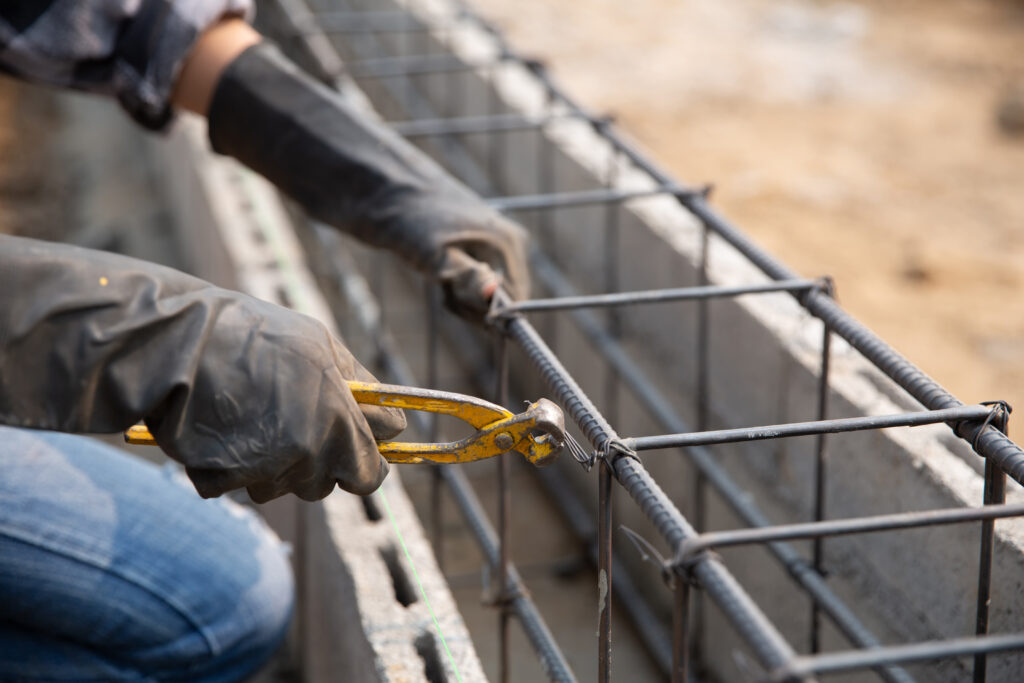
A rubble or fieldstone foundation is a stack of stone and mortar, not a sealed barrier. Over decades, mortar joints shrink, crack, and lose their grip. Groundwater sitting against the outside of the wall finds those gaps and migrates through, sometimes slowly as damp, sometimes as a visible trickle after a storm.
Hydrostatic pressure makes this worse. When soil around the foundation stays saturated, it pushes water through every weak point, and in a hard Sudbury winter the same water can freeze inside a crack and widen it. That freeze-thaw cycle is relentless here: clay-heavy soils common around Sudbury hold moisture close to the wall, and repeated freezing turns a hairline crack into a structural problem faster than homeowners expect. That is why a wall that seeped last spring can be bowing or spalling a few years later. The movement is gradual, but it does not reverse on its own.
Why This Has to Be Dug From Outside
Fixing it from inside the basement only manages the water once it has already gotten through. Doing the work from outside means removing the soil pressing against the wall, correcting what’s happening at the wall face, and giving water a path away from the house instead of into it. In Sudbury, that outside soil is often a mix of clay and rock fill that holds moisture against the foundation far longer than sandier ground would, which is a big part of why the problem keeps coming back no matter how many times the inside gets patched.
It’s more disruptive and more expensive than a bucket of sealant, and we won’t pretend otherwise. Planting near the foundation may need to come out. A section of walkway, deck, or patio against the house may need to be lifted and reset, and depending on grade, some excavation near the driveway edge may be unavoidable too. The trade-off is that the work addresses the cause of the water, rather than papering over where it shows up, so you’re not redoing the same fix again in a few years.
The work, in order
Access and Excavation
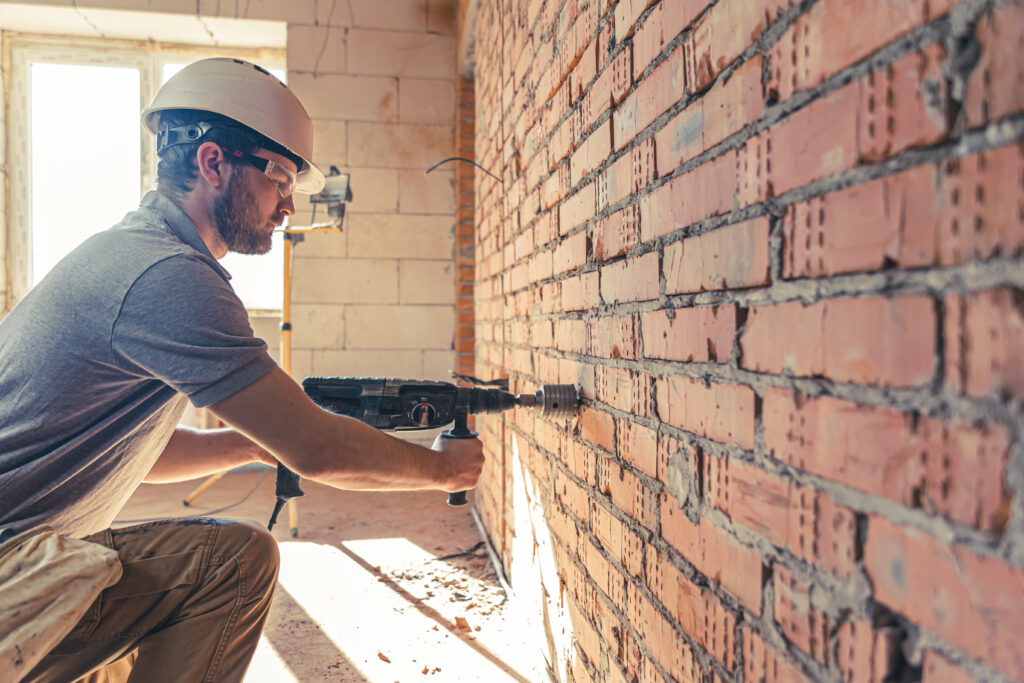
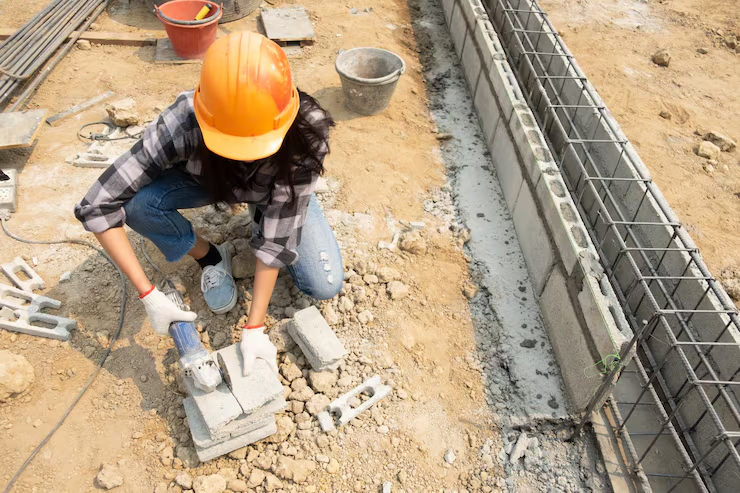
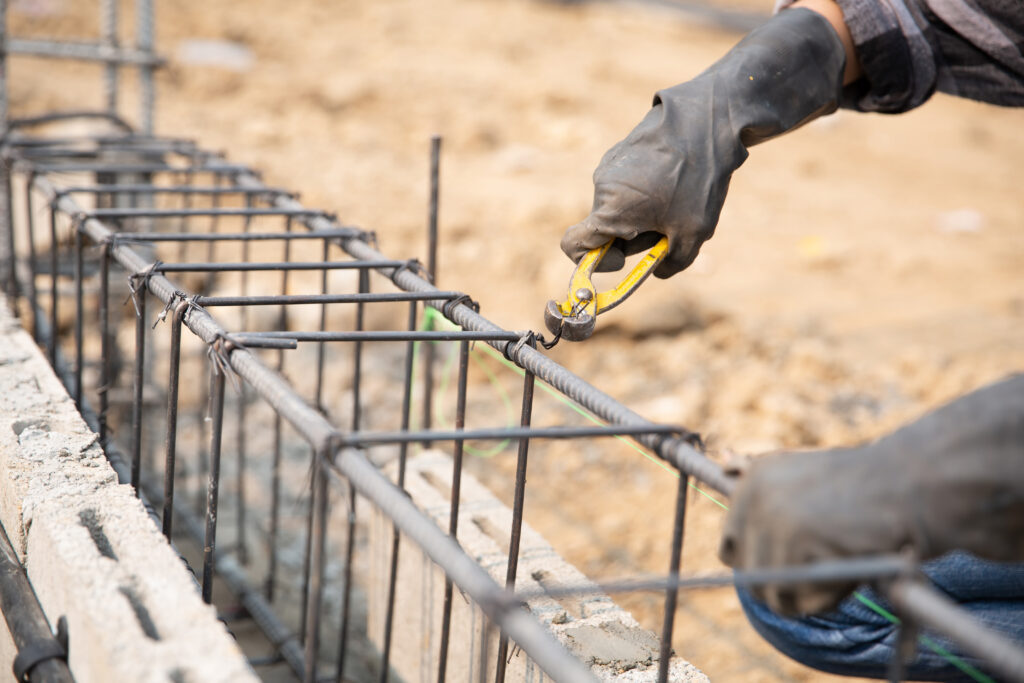
Work starts with a machine excavating along the affected side of the foundation down to the footing.
Protecting What's Already There
Shrubs, hardscape and lawn near the wall often sit directly in the way. Where possible we work around established plantings; where we can’t, we flag it upfront so nothing is a surprise once the trench is open.
Treating the Wall
Once the footing is exposed, the wall face is cleaned and repaired where mortar or stone has failed, cracks are sealed, then a waterproofing membrane goes on before backfilling, helping Sudbury foundations resist groundwater and seasonal freeze-thaw cycles.
Drainage and Backfill
A drain line is set at the footing to carry water away from the wall instead of letting it pool, then clean stone and soil are backfilled in stages so the drain stays clear and functional.
Reinstating the Ground
Once backfill is complete, the surface is regraded so water sheds away from the house. Any walkway, patio or planting bed that was disturbed is rebuilt last, once the ground around it has settled.
Why Sudbury Lots Make Access the First Problem
Large wooded parcels, long winding drives and mature trees close to the house are typical here, and conservation land borders many of these properties on at least one side. That changes how a crew plans the job before anyone breaks ground.
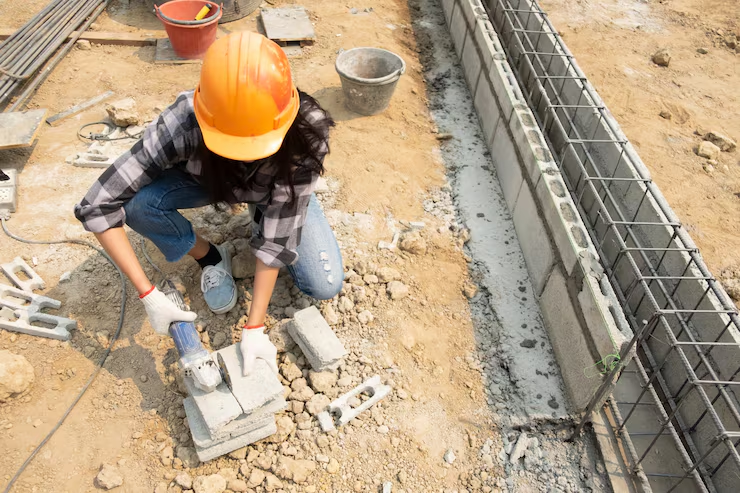
A mini-excavator still needs a clear path to the affected wall, and on a lot with a narrow drive curling between oaks and maples, that path isn’t always obvious. Stone walls, septic fields and well lines add more obstacles to route around, and a drive that looked wide enough on paper can prove too tight once a machine and a dump trailer are both on site. Tree roots near the foundation complicate excavation on that side specifically, since cutting through major roots can destabilize a tree we’d rather not lose, so we often hand-dig closer to trunks. Where a property backs onto conservation land, we also stay mindful of how close work gets to that boundary, and of runoff direction once excavation opens a trench.

What to Check Before You Call
A few things are worth noting before anyone comes out. Where in the basement does water show up, and does it track to one wall or several? Does it happen with every rain or only after heavy, prolonged storms? Is there a visible crack, bulge or crumbling patch on the outside of the foundation that lines up with where the water appears inside?
Photos of both the interior damp or leak point and the matching exterior wall section are genuinely useful. So is a rough sense of when the problem started, since a wall that’s been dry for decades and suddenly isn’t tells a different story than one that’s always been a little damp.
If that’s where things stand at your place, call (413) 337-3772 and walk us through what you’re seeing. We’ll talk through what’s likely happening and what it would take to deal with it properly.
What to check and write down first
These are the pointers that help most before anyone visits.
- Note where and when. Which wall, which corner, and whether it follows heavy rain, snowmelt or a particular season.
- Photograph it dry and wet. Take pictures of the same spot on a dry day and again after rain.
- Look at the outside. Check whether the ground beside that wall slopes toward the house, whether a downspout empties near it, and whether anything piles water against it.
- Check for movement. Look for horizontal cracks, a wall that leans in, or stones that have shifted. Mark the ends of a crack with a pencil and date it, so changes can be seen.
- Check the stonework. Press on the mortar. If it crumbles or sands away, say so.
- Think about access. Where could a machine stand, and what is in its way? Tell us who shares the drive or boundary.
- Leave it as you found it. Do not seal or patch the wall before we see it. It hides what we need to look at.
Questions we get asked
Is this the same crew that does driveway paving?
Foundation excavation and drainage work is a separate trade from paving. We treat it as its own project with its own process, even though it's the same company doing the work.
Will my landscaping be ruined?
Plantings and hardscape close to the affected wall usually have to come out or be worked around. Where that's necessary, we flag it before digging starts so there are no surprises.
How do you get equipment to a wall with trees and a long drive in the way?
We look at access as part of planning the job, not after the fact. On wooded lots with winding drives, that sometimes means a smaller machine or more hand digging on the tight side of the house.
Does this guarantee a dry basement?
We don't make guarantees about outcomes. What exterior excavation and drainage do is address the cause of water migration through the wall, rather than just managing it from inside.
What if the problem is near conservation land?
Where a property borders conservation land, we're mindful of how close the work gets to that boundary when planning excavation and access.
Next step
Call us on (413) 337-3772. Tell us which wall, what you have seen, and how the lot slopes around it. We have worked across Middlesex County since 1988, and we will tell you plainly what is likely going on and whether outside work is the right answer.