
Cobblestone Aprons and Edging in Canton, MA
A lot of driveways in Canton end the way they started: asphalt meeting asphalt at the street, no transition, no definition, nothing to stop the edge from spreading into the lawn after a few winters. If your house sits on one of the sloping lots common on the Blue Hills side of town, or in one of the post-war subdivisions where the driveway was poured once and never revisited, a cobblestone apron and edge border is usually what turns a plain drive into something that looks like it belongs to the house rather than something that was just laid down.
This is not a repair job and it is not about fixing a failing surface. It is about the transition at the street, the border along the drive, and the junction where the driveway meets the walkway or the garage slab. Done properly, it also happens to solve a drainage problem that a lot of Canton properties have simply because of the grade.
Why the base matters more than the stone
Everyone looks at the cobblestone. Nobody looks at what is underneath it, which is the part that decides whether it still looks right in ten years. Frost in Massachusetts does not stay still. It heaves unevenly under anything that is not properly excavated, compacted and bedded, and an apron is particularly exposed because it carries vehicle weight right at the point where the base is thinnest and the drainage is worst – the low point by the street.
The work involves cutting out the area to a real depth, not skimming the surface, building a compacted aggregate base that can take the freeze-thaw cycle without shifting, then bedding the cobblestones in sand or a setting bed depending on the pattern, and finishing with edge restraint that actually holds the border line against plow blades and frost push alike. Skip the edge restraint and the whole apron migrates a little every winter until the pattern is visibly crooked.
On a sloping Canton lot this base work is doing double duty. It is also managing where water goes once it hits a hard surface instead of soaking into the lawn. Pitching the apron and the border away from the foundation and toward a drain or the street is not a finishing touch – it is the reason the base holds at all. Water sitting against an edge restraint in winter is water that will heave it.


What Our Clients Say
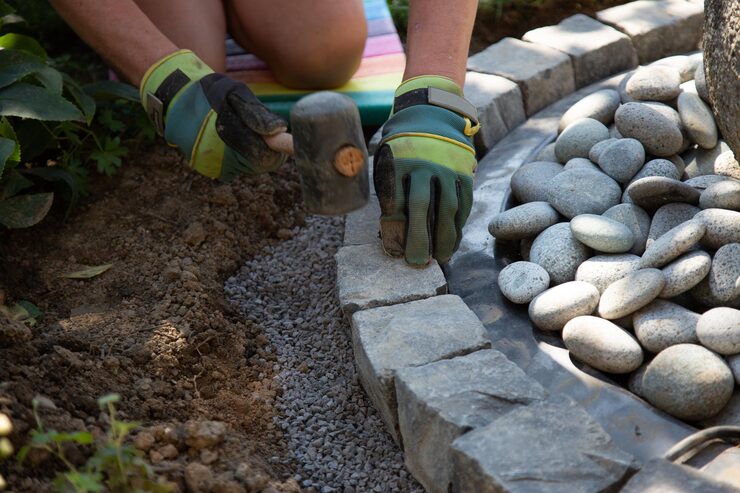
What the work involves below the surface
The stone is the last and smallest part of the job. A cobblestone apron stays flat or goes wavy depending on what is underneath it.
Granite cobblestone holds its edge and color for decades with almost no maintenance, but it costs more up front and is heavier to move and set than concrete pavers.
Concrete cobble-look pavers cost less than true stone and come in more colors, but they can fade and chip over the years.
Belgian block edging reads as traditional against older Canton homes and takes plow contact better than a poured concrete lip ever does.
Mismatched materials between the apron and the existing drive surface look deliberate when planned, accidental when they are not.
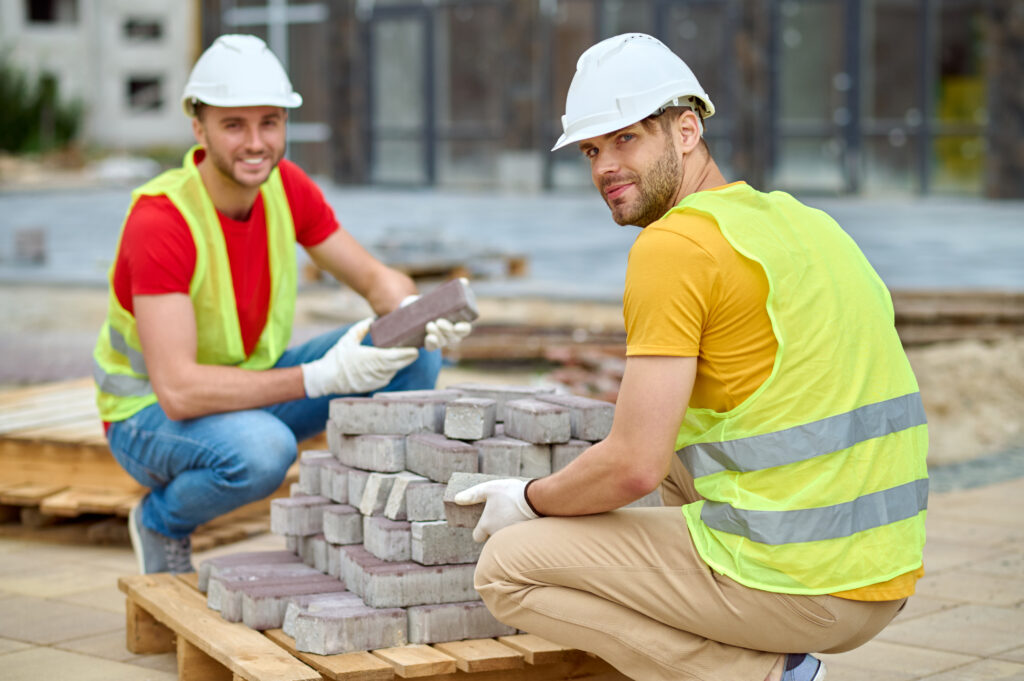
A soldier course along a curving Canton drive needs tighter, hand-cut joints than a straight run, which affects labor time and the finished price more than the stone itself does.
Materials and the trade-offs
Matching what's already there
Canton has a real mix of older homes near the center and newer construction on the subdivided hillside lots, which means there is rarely a single right answer for materials. An apron and edge border has to sit next to whatever is already there – the driveway surface, the front walk, a retaining wall holding back a sloped yard, existing plantings along the property line. Grade matters too: a lot of Canton’s newer lots have a noticeable slope from street to garage, and the edging has to step or follow that pitch cleanly rather than fighting it.
Getting the grade right first
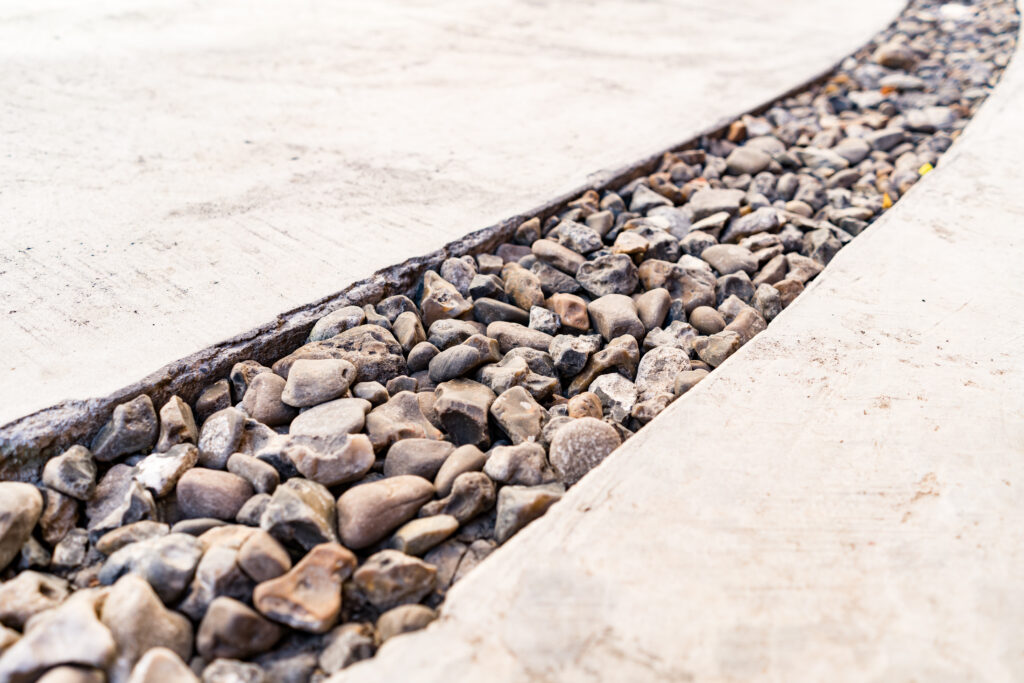
Before any stone goes down, the grade gets worked out. On the hillside lots around the Blue Hills side of Canton, water moving downslope toward the street or toward a garage is already a factor before you add a hard surface to the equation. An apron sitting at the wrong pitch becomes the collection point for every bit of runoff coming off the upper part of the driveway.
The fix is in the base, not the cobblestone. Proper excavation lets the installer set the correct slope away from the house and toward an acceptable discharge point, usually the street or a drain along the property line. Where the driveway meets a town-accepted road, the curb cut and the apron edge are generally the town’s concern; on a private way or a shared drive, it is the owners’ call how that transition is handled. Either way, getting the slope wrong at this stage is expensive to fix once the stone is set, so it is worth getting right the first time.
Where this adds the most value
Not every driveway needs this work, but certain properties in Canton get a disproportionate amount of value from it. A steep or curving entrance benefits from a defined edge simply because the eye needs a line to follow where the pavement does not naturally give one. A driveway that already has a nice surface but a ragged, unsupported edge is often better served by redoing just the border than by repaving the whole thing.
Properties with mature trees close to the drive also benefit, since root movement tends to show up first at an unsupported edge, and a properly bedded cobblestone border resists that disruption better than a poured concrete lip does. If your driveway has a reasonable surface but looks unfinished at the street or along its length, this is usually a smaller job than people expect, and it is the kind of improvement that holds its look for a long time when the base underneath is done right.
Call (413) 337-3772 to have someone look at your frontage and grade directly.
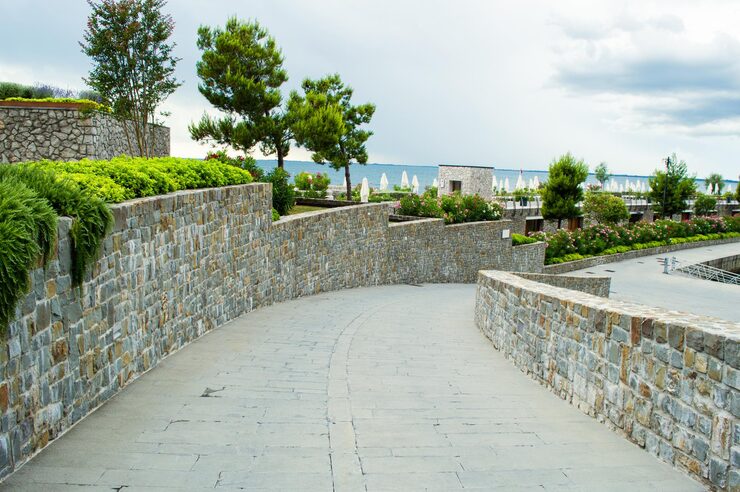
Where this suits Canton properties
Sloped hillside lots
Properties on the Blue Hills side of Canton deal with real grade, and a properly based apron manages runoff before it ever becomes a drainage complaint.
Older homes near the center
Granite or Belgian block edging suits the character of older Canton properties better than a plain poured concrete lip at the street.
Unfinished street transitions
A driveway with a decent surface but a ragged, unsupported edge is often a smaller fix than people assume – redo the border, not the whole drive.
So tar and chip suits a longer, gentler Canton drive with some room around it. It is a poor match for a short, steep or shared one, or one that opens straight onto the walk.
Questions we hear
Is a cobblestone apron the same thing as repaving the driveway?
No. The apron and edging address the transition at the street and the border along the drive. The rest of the driveway surface is untouched unless you ask for separate work on it.
Will the town have a say in the apron at the street?
If the driveway meets a town-accepted road, the curb cut and the apron edge are generally the town's business. On a private way or shared drive, that decision sits with the property owners.
How does frost affect cobblestone edging specifically?
Frost heave moves unevenly under anything without a properly compacted base. Edging is especially exposed because it sits at the perimeter, where plow contact and water pooling both concentrate. Correct excavation and edge restraint are what keep the line straight through winter.
Can this be done without repaving the whole driveway?
Usually yes. If the existing surface is in reasonable shape, redoing just the apron and border is a smaller job that still makes a real visual difference at the street.
Next step
Call us at (413) 337-3772. Tell us about the lot, the slope and what you want the frontage to look like. We have been working in this area since 1988, and we will tell you plainly what suits your property.