
Asphalt Repair in Dover, MA
You’re standing at the top of a long drive looking at a pothole that wasn’t there last spring, or a spidered patch near the garage apron, or an edge that’s started to crumble into the lawn. The question isn’t whether asphalt fails. It’s whether this particular failure is a patch job or the start of something bigger.
Dover driveways tend to be long, wooded, and private. Many run a few hundred feet from the road, cut through ledge or around it, and thread between mature trees under conservation setbacks that fixed the route decades ago. That length and that routing matter when something fails partway down. A problem a hundred feet from the road is a different job than one at the top near the street, both in access for equipment and in what’s likely causing the trouble underneath.
Reading the damage first
Before we talk about fixing anything, we look at what the damage is actually telling us. Different failures point to different causes underneath, and the repair has to match the cause, not just the hole.
A hairline crack network usually means the surface is aging and losing flexibility. Alligator cracking – a tight web of interconnected cracks, named for the pattern – means the base underneath has started to fail and the surface is flexing under load without support. Those are not the same problem, and they don’t get the same fix. Sealing a crack network buys time; alligatored pavement over a failed base needs the base rebuilt or the repair won’t hold past a season.
Edge failure, where the asphalt crumbles along the sides of the drive, is common on narrower private ways where there’s no curb and plow blades catch the lip every winter. Sinking is a base or drainage issue – water has found its way under the pavement and settled or washed out material below. Heaving is usually frost, root pressure, or both, pushing a section up from underneath.
On a Dover lot, root heave is worth taking seriously. Long drives cut through wooded parcels put asphalt within reach of root systems from oaks and maples that have been growing undisturbed for years. A heaved section near a tree line is often root-driven even if the surface cracking looks like ordinary frost damage. Cutting out and patching that section without addressing the root will usually mean the same heave reappears within a couple of years.
What we’re checking for on site:
- Whether cracking is surface-level or signals base failure underneath
- Drainage patterns along the drive – where water sheets, pools, or is diverted under the edge
- Proximity of trees and visible root systems to any heaved or cracked sections
- Condition of the base material where a test cut or existing failure exposes it
- Whether the damaged section can be isolated or if it signals wider pavement fatigue


What Our Clients Say
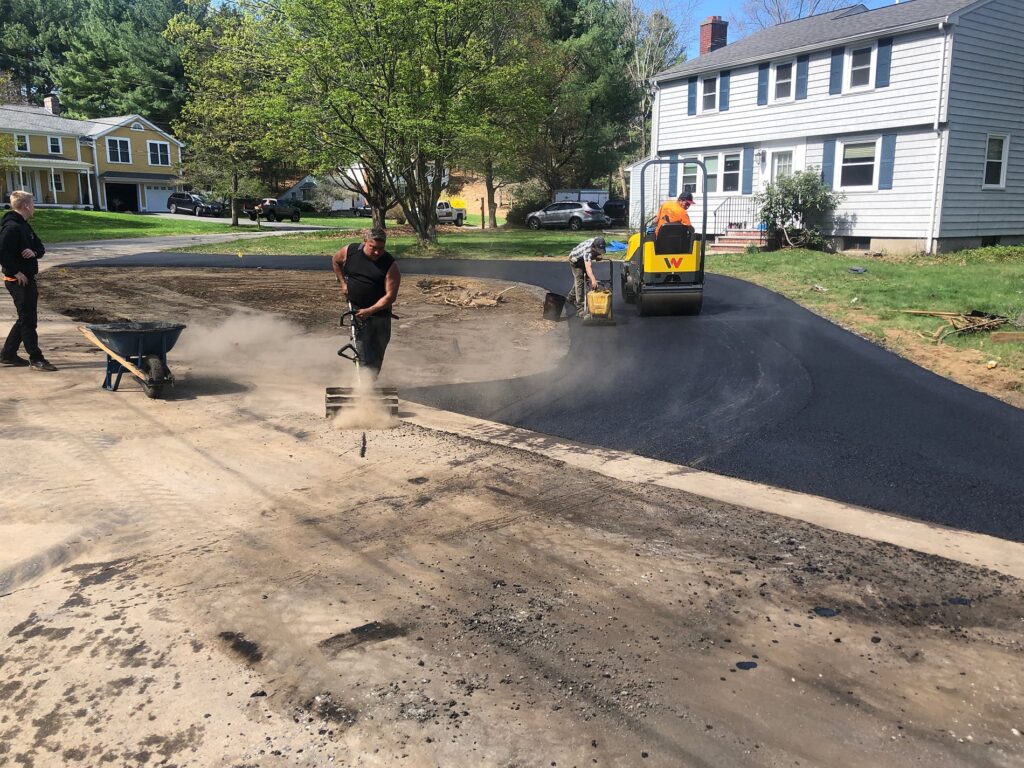
How to read the damage
Asphalt rarely fails for the reason it appears to. The surface shows a symptom, and the cause is usually underneath.
A pothole near the garage and a web of cracks under a maple canopy are not the same repair. One is surface and base. The other involves a root system that hasn’t finished growing.
Repair or Replace
Patching makes sense when the base underneath is still sound and the damage is localized. We’d rather tell a Dover homeowner their drive has a few good years left than sell a full replacement it doesn’t need yet.
When failures are scattered across the whole surface rather than isolated, patching becomes money spent twice. That's the point where replacement starts making more financial sense than another round of repairs.
Infrared Patching
Infrared heat softens the existing Dover driveway asphalt in place, letting us blend new material into old without a visible seam or cold joint.
Saw-Cut and Replace
For damage that goes deeper than the surface, we cut a clean rectangle around the failed area, remove it, and replace the base and asphalt together. It holds up better than patching over a bad spot.
Crack Filling and Edge Work
Crack filling keeps water from working its way into the base through surface cracks before they spread. Edge rebuilding restores the crumbled lip along the drive’s sides where plows and runoff have worn it away.
On Dover’s long private ways, edges take a beating every winter from plow blades that don’t have a curb to ride against. An edge left to crumble lets water into the base from the side, which is a slower but steadier failure than a single pothole.
Regrading a sunken section means lifting the surface and rebuilding what’s underneath so water sheds away instead of pooling. On a sloped wooded drive, a sunken low point often collects runoff from the grade above it, which accelerates the very problem that caused it. Fixing the grade matters as much as fixing the asphalt on top of it.
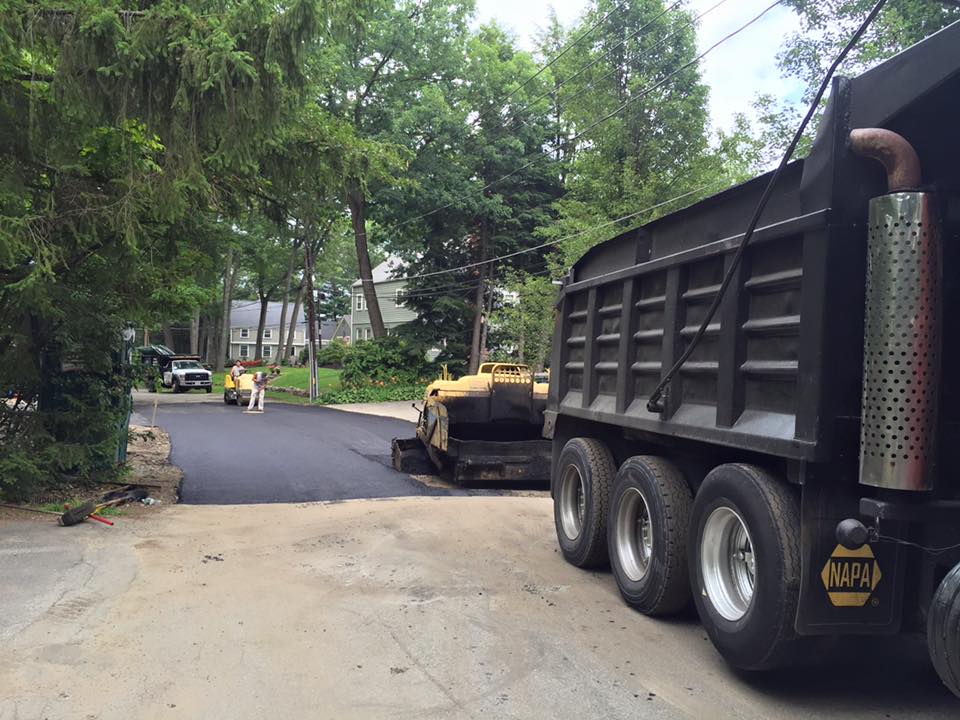
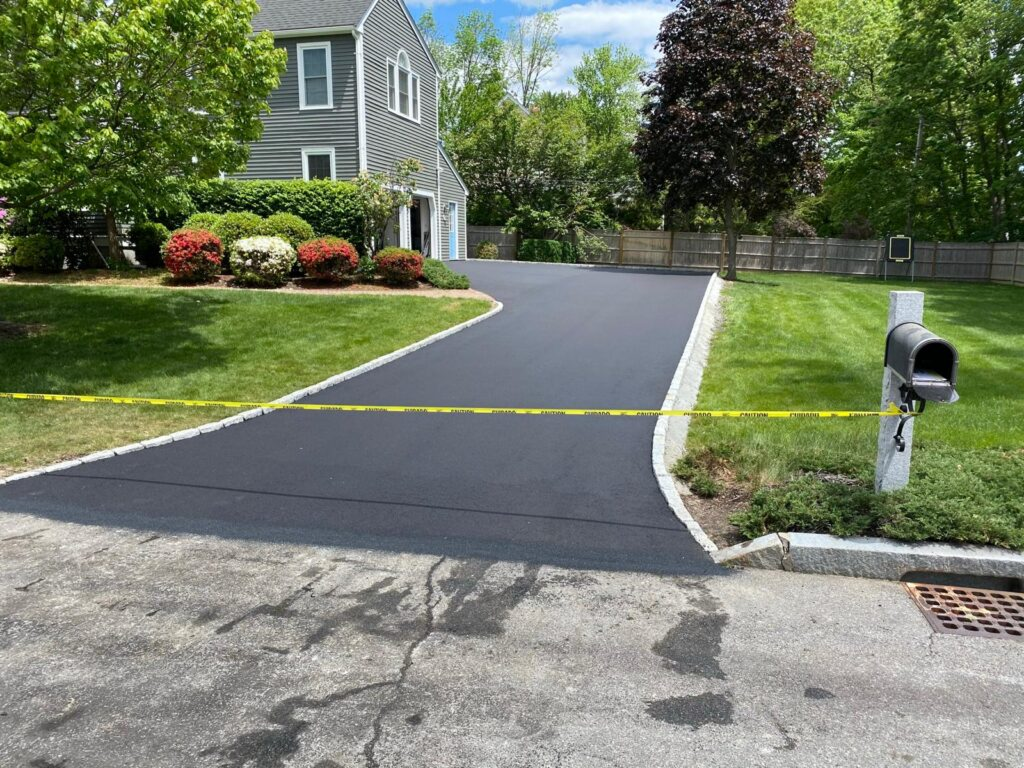
What the repairs are
Why Dover Driveways Fail
Ledge changes how a base drains. Where a drive was cut near rock, water can’t percolate down the way it would in open soil, so it moves sideways instead and finds the weakest point in the pavement above.
Conservation setbacks and tree cover leave shaded sections of a Dover driveway damp longer after rain or snowmelt. Moisture lingering in the base is a common reason shaded stretches crack and fail sooner than sunnier ones.
Frost and Freeze-Thaw
New England’s freeze-thaw cycle is the single biggest reason cracks widen and edges crumble over a Dover winter. Water gets into a crack, freezes, expands, and forces the crack wider. Each cycle repeats the damage.
The Cost of Waiting
A crack that gets sealed in fall is a small job. The same crack left through a winter lets water cycle through freeze and thaw repeatedly, turning a simple seal into a saw-cut repair by spring.
Start With a Look at the Damage
Pothole, cracked section, or sunken spot on your Dover driveway? Start by having it honestly assessed. Driveway Specialists has repaired long private drives across Norfolk County since 1988, including Dover's wooded, ledge-cut lots.
Why drives fail in Dover
Dover's ground is unforgiving in a few specific ways.
Steep hillside lots mean water arrives with speed. A sloped drive carries runoff downhill, and where that water meets a low corner, a garage door or the seam of an old patch, it goes down instead of away. Over years that washes out fine material from under the asphalt and leaves the hollows that later sink. On a hillside, drainage decides how long the work lasts.
Shared drives on two-family properties take more traffic than a single-family drive was built for. More vehicles, more turning, more weight on the same few feet. That is exactly where alligator cracking appears first, and where edges break down from vehicles clipping the sides.
Tight frontages put the apron directly against the sidewalk. Plows and shoveling push snow and meltwater straight onto that strip, and the edge there takes constant punishment. It is also the part of the drive most likely to involve the town, so if the damage reaches the apron or the sidewalk line, we will tell you before work begins what is yours to fix and what isn't.
And in every case, frost is the engine behind it. Water enters a small crack, freezes, expands and pries the crack wider. It thaws and drains into the opening, and the cycle repeats all winter. A hairline crack in October can be a pothole by March.
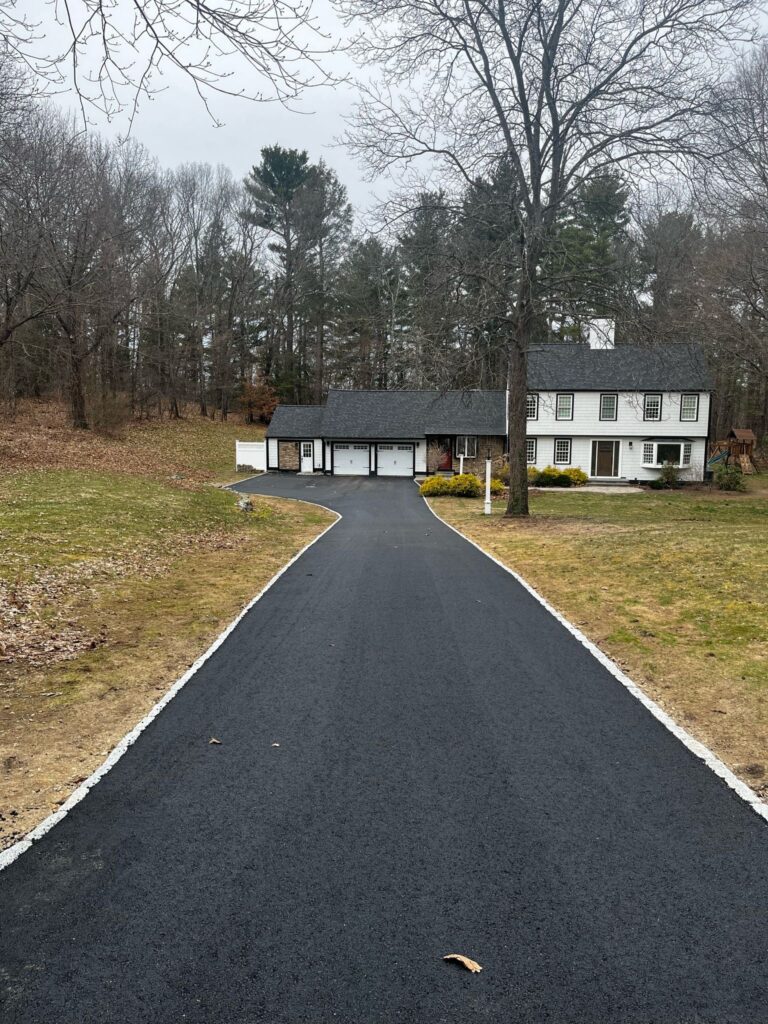
Why timing matters
A crack that is filled this fall is a small job. The same crack left through a winter lets water into the base, and the cost of the repair rises with every freeze. A pothole gets larger as vehicles break its edges away. An edge failure keeps retreating.
Spring is when the damage that has been hiding becomes obvious, and when everyone calls at once. The cheapest repairs happen before that, while the problem is still the size of a hand.
Asphalt repair questions in Dover
Can a sunken section of asphalt actually be fixed, or does it need full replacement?
It depends on what caused the sinking. If it's isolated and the surrounding base is sound, we can excavate the area, rebuild the base so water sheds properly, and repave just that section. If sinking shows up in multiple spots, it usually points to a broader base or drainage issue worth addressing together rather than one patch at a time.
How do I know if a crack is just cosmetic or a sign of a bigger problem?
A single hairline crack running in one direction is usually a surface issue from aging and shrinkage. A web of interconnected cracks in a tight pattern, known as alligator cracking, means the base underneath is flexing and failing. That one needs a saw-cut repair, not just a crack fill.
Do tree roots really cause driveway damage on a wooded lot like mine?
Yes. Roots from mature oaks and maples can grow under a driveway and slowly lift sections as they thicken over the years. If a heaved area lines up with a nearby tree, root pressure is the likely cause, and the repair needs to account for the root rather than just flattening the surface.
Is it worth repairing asphalt before winter or should I wait until spring?
Repairing before winter is almost always the better move. Water that gets into a crack or a soft edge will freeze and expand repeatedly over the season, turning a small, inexpensive fix into a larger repair by the time spring arrives.
Next step
Call us at (413) 337-3772. Tell us what you are looking at and where on the drive it is. We will come out, look at the damage and the ground around it, and tell you honestly whether it can be repaired and what that involves.