
Cobblestone Aprons and Edging in Wrentham, MA
A lot of Wrentham properties share the same shape: a long drive running back from the road through trees, a house set well off the street, and a gravel or asphalt surface that just stops at the pavement with no real transition. That gap between public road and private drive is where cobblestone aprons and edging earn their place. Done well, the apron reads as a deliberate entrance rather than an afterthought, and the edging holds the line of the drive against frost, plow blades, and the slow creep of lawn and root into the surface year after year.
This is not about fixing a failed driveway surface. It is about the detail at the street, along the edges, and anywhere a hard surface meets a soft one – lawn, planting bed, stone wall, or the foot of a long gravel run. On a property with real frontage, that detail is often what a visitor notices first, and it is usually the first thing to look tired if it was never built properly in the first place.
What holds it together is underneath
Cobblestone looks like a surface treatment, but it behaves like a structure. Each unit is excavated into, bedded on a compacted base, and locked in place with an edge restraint that stops the whole assembly from spreading outward under traffic and frost. Massachusetts frost is the real adversary here: ground freezes, heaves, and drops again every winter, and anything not properly based and restrained will walk out of line within a few seasons. An apron with no real base might look fine in October and show open joints and rocking stones by March. The fix is boring compared to the finished look – excavate deep enough, compact in lifts, bed the stone correctly, and set a restraint that can actually resist lateral movement rather than one that is just decorative.
Wrentham’s wooded and lakeside lots add another layer. Root systems from mature trees run under drives and shift sections unevenly rather than all at once, so a rigid, continuously poured edge can crack where a jointed cobble edge can flex slightly and still hold its line. Shaded, damp ground near tree cover and pond frontage also stays wetter longer, which matters for how the base drains and how quickly moss and algae take hold on the stone itself. On drives that sit close to Lake Pearl or back up to conservation land, that dampness is close to constant through spring and fall, and it should factor into how the base is built, not just how the stone looks on day one.
Edging also does quiet, practical work that’s easy to overlook:
- Keeps plow blades from catching and chipping the edge of asphalt or gravel drives
- Stops grass and weeds from creeping into the driveway surface along the border
- Defines where a long gravel run should actually end, so it stops migrating onto lawn
- Gives a wide, tree-lined drive a clear, finished edge instead of a ragged transition


What Our Clients Say
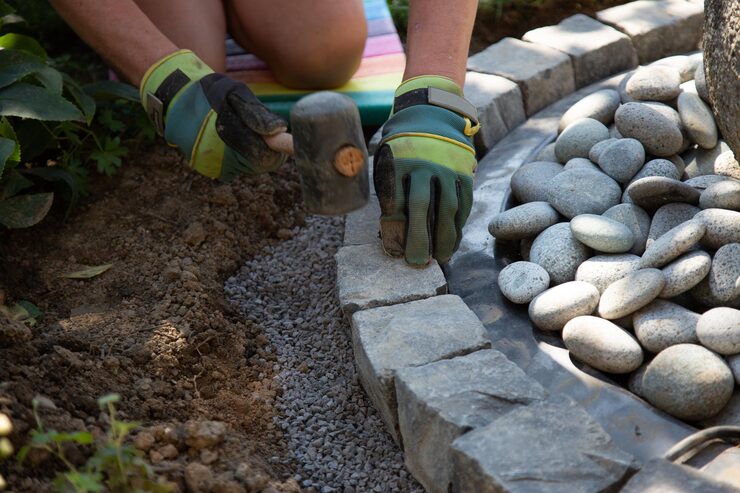
What the work involves below the surface
The stone is the last and smallest part of the job. A cobblestone apron stays flat or goes wavy depending on what is underneath it.
Granite cobble holds its edge and color for decades and can be lifted and reset if a section shifts. Concrete paver cobble costs less upfront but fades and chips with repeated freeze-thaw cycling over time.
Reclaimed or antique cobblestone suits an older Wrentham farmhouse or colonial, carrying a weathered, settled look that new-cut stone cannot fake convincingly for years.
Edge restraint choice matters as much as the stone itself. A buried steel or concrete edge resists plow blades far better than shallow plastic, especially on long rural Wrentham driveways where cobblestone aprons meet frost-prone soil and heavy winter traffic.
Grade dictates everything downhill of the apron. Water has to be pitched away from the Wrentham house and off the drive surface, not just left to find its own way across gravel toward the foundation or street.
On a long Wrentham drive, a standalone cobblestone apron near the road can anchor the whole run even if the rest of the surface stays gravel or asphalt further back.
Materials and the trade-offs
Drainage and grade decide the layout
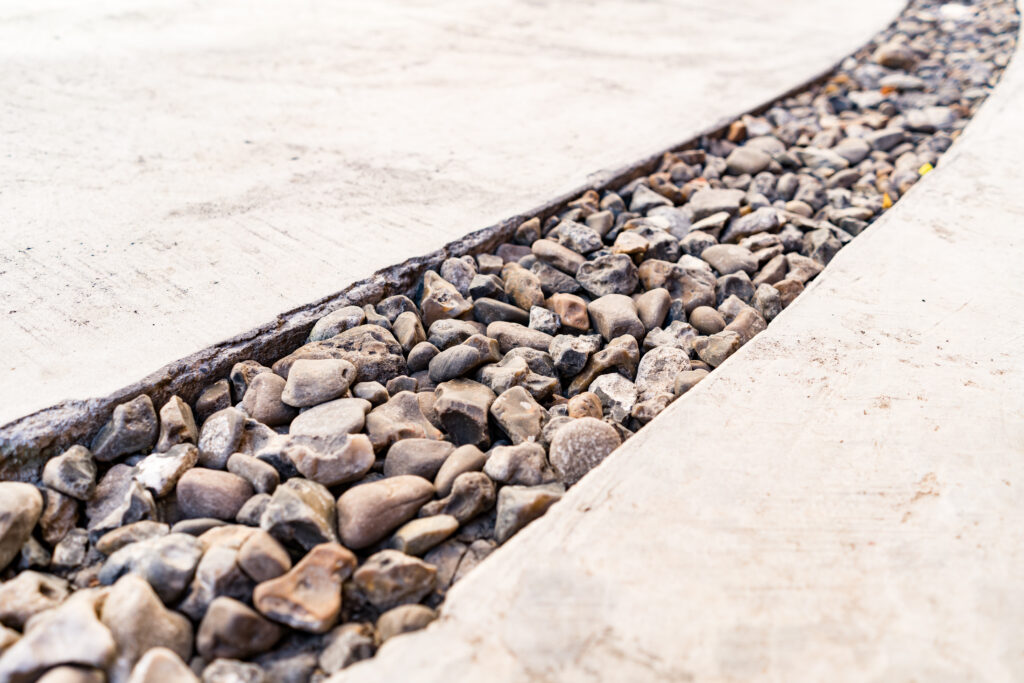
Water, not style, is the real constraint on a cobble apron or edge run. Once you add a hard, compacted surface, rainwater that used to soak into gravel or lawn has to go somewhere else. On a sloped Wrentham lot, that means pitching the apron and any adjoining edging away from the foundation and toward a swale, an absorbing bed, or the roadside ditch where town drainage takes over. Getting this wrong does not just mean a puddle – it pushes water under the base, which is exactly what causes frost heave and stone movement the following winter.
Long gravel drives common on these properties usually already have a crown or cross-slope doing some of this work. A new apron or edge section needs to match that existing grade rather than fight it, or you end up with a low point right where new meets old. It’s why a site walk, not a phone estimate, is what actually determines the layout.

Tying new work into what is already there
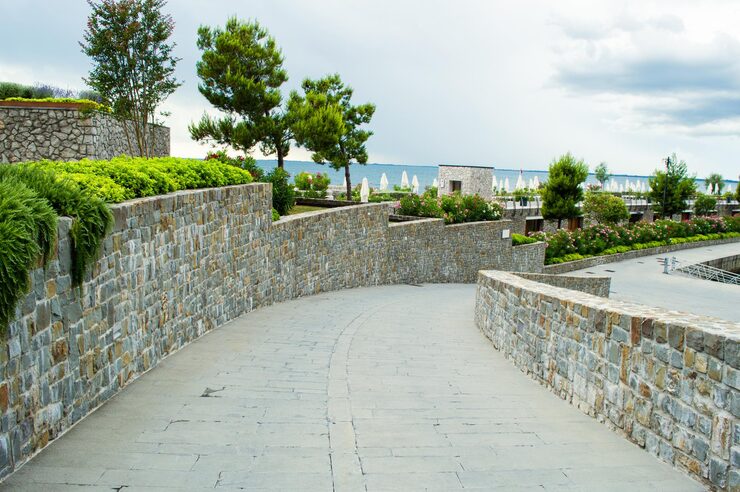
Most Wrentham properties asking about cobblestone already have something established: a gravel or asphalt drive, a fieldstone or granite wall along the frontage, mature plantings, maybe a flagstone walk to the front door. New apron and edging work has to read as part of that, not bolted onto it. That usually means matching stone tone to existing walls rather than introducing a brand-new material with no relationship to anything else on site, and setting the apron width and curve to suit how a car or delivery truck actually approaches a long drive rather than an arbitrary straight line.
Older homes set well back from the road also tend to have mature trees close to the drive edge, which means root flare has to be worked around rather than cut through. Cutting a major root to fit a straight edge line is a short-term fix that risks the tree and the new stonework together. A curved or stepped edge that respects where the roots actually run holds up better and looks like it belongs there rather than like it was imposed on the site.
Call for a site visit
Every one of these decisions – stone choice, edge restraint, drainage path, how it ties into an existing wall or drive – depends on seeing the actual grade, the actual trees, and the actual approach on your property. Wrentham lots vary widely, from older stone-wall frontages near the center to newer subdivisions with simple curb cuts, and the right cobblestone detail for an apron or edging run looks different in each case. A quick site visit lets us check slope toward the garage, note where runoff tends to pool after a storm, and measure the actual radius a plow truck or delivery vehicle needs to clear without clipping the stone. We will also look at what is already there: granite curbing, a concrete apron showing its age, or bare asphalt that simply needs a defined edge. Call Driveway Specialists at (413) 337-3772 to arrange a visit and talk through what suits your Wrentham frontage, whether that is a single apron at the street, edging along a long drive, or a border that wraps a walkway and planting bed.
Where this suits Wrentham properties
Long rural drives
A cobblestone apron at the street gives a strong, deliberate entrance even when the rest of a long gravel or asphalt drive stays untouched further back from the road.
Wooded and lakeside frontage
Jointed cobble edging flexes around root flare and shifting shaded ground better than a rigid poured edge, which matters on tree-lined and pond-adjacent lots.
Older homes set back from the road
Reclaimed or weathered cobblestone ties a new apron into an established colonial or farmhouse frontage without looking like a modern addition.
So tar and chip suits a longer, gentler Wrentham drive with some room around it. It is a poor match for a short, steep or shared one, or one that opens straight onto the walk.
Questions we hear
Does a cobblestone apron replace the need to repave the whole drive?
No. An apron treats the transition at the street and can stand on its own even if the rest of the drive stays gravel or asphalt. Many Wrentham properties do exactly this rather than repaving a long drive in full.
Will tree roots damage a cobblestone edge over time?
Roots cause less disruption to a jointed cobble edge than to a poured concrete curb, since individual stones can be lifted and reset if a section shifts, rather than requiring the whole run to be broken out.
How does frost affect cobblestone aprons in Massachusetts?
Freeze-thaw cycling is the main cause of movement in poorly based stonework. A properly compacted base and a real edge restraint resist that movement; shallow bedding without restraint will shift and open up within a few winters.
Can new cobblestone match an existing stone wall or walkway?
Yes, matching stone tone and texture to existing walls or walkways on the property is standard practice, and it's usually what separates work that looks intentional from work that looks added on.
Next step
Call us at (413) 337-3772. Tell us about the lot, the slope and what you want the frontage to look like. We have been working in this area since 1988, and we will tell you plainly what suits your property.