
Patios in Weston, MA
Weston lots are different from almost anywhere else in MetroWest. A long private drive winds through trees before you ever see the house. The grade drops and rises across the property instead of sitting flat. In some spots ledge sits close enough to the surface that a shovel hits rock before it hits two feet. If you are planning a patio off the back of the house, or a terrace stepped into a slope, the property itself sets the terms before a single stone is chosen.
This is not a driveway repair job and it is not treated like one. A patio is an outdoor room. It has to handle water the way the rest of the landscape does, it has to sit level and stay level through New England winters, and it has to look like it belongs next to a house that may be decades older than the patio itself. The decisions that matter happen below the surface and at the edges, not in the catalog of paver colors.
What actually holds a patio flat
A patio fails the same way a driveway fails: frost gets underneath it and moves it unevenly. The fix is the same principle, applied more carefully because a patio has no traffic to hide small irregularities. Excavation needs to go deep enough to remove the organic topsoil that holds moisture and swells when it freezes. A compacted gravel base replaces it, built in layers rather than dumped and tamped once, so there are no voids for water to collect in. Bedding sand sits on top, thin and screeded level, with the pavers or stone set into it and compacted together so the joints lock the whole surface into one unit.
Edge restraint is the part that gets skipped on cheap jobs and shows up as the first failure. Without a rigid edge, paver patios creep outward over a few seasons and the border opens up. On a property with mature trees nearby, root growth adds another reason the edge has to be solid rather than relying on soil alone to hold the line.
Grading around a patio on a sloped Weston lot is not a finishing touch, it is the design brief. Water has to leave the patio and leave the area around the house. On a lot with real elevation change that often means directing runoff toward a planted slope or a drainage line rather than letting it sheet toward a foundation or pool downhill into a neighbor’s yard.


What Our Clients Say
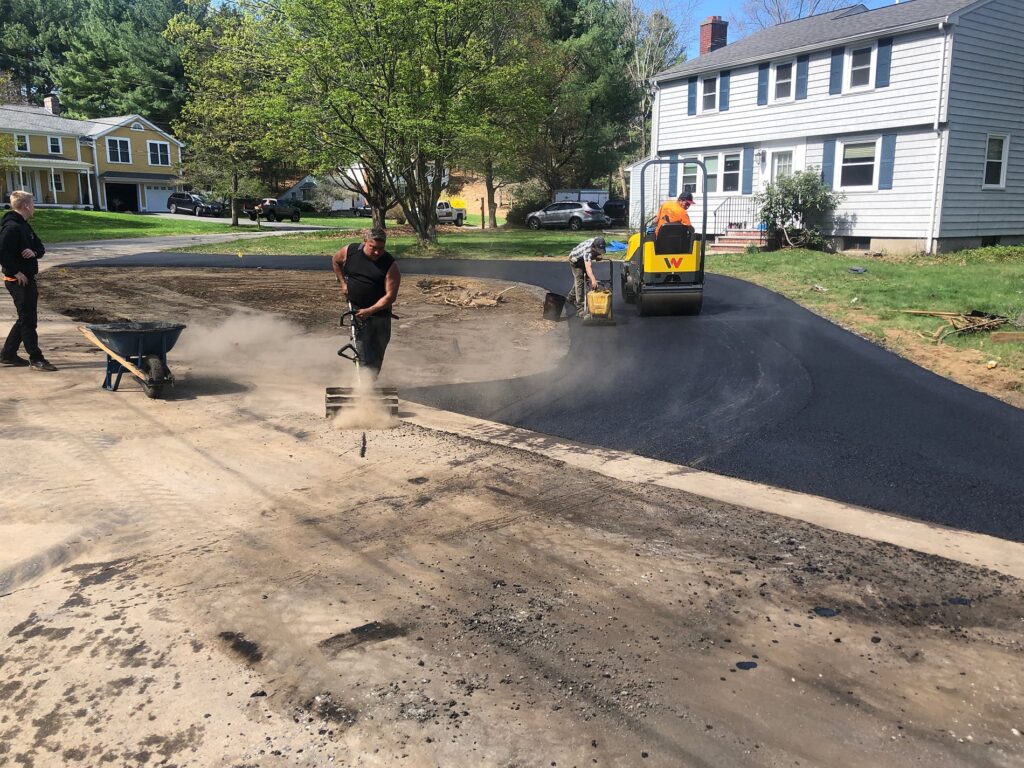
What happens below the surface
A patio is a thin finished layer sitting on a structure you never see. That structure decides whether the surface is flat in ten years or wavy in two.
Bluestone, granite, and natural fieldstone all weather differently on a wooded lot. The right choice depends on how much shade the space gets and how it should look in twenty years, not just on day one.
Clay pavers hold their color and repair cleanly if one shifts or cracks, making them a practical choice for Weston patios exposed to seasonal freeze-thaw.
Concrete pavers cost less upfront and come in consistent sizes, which speeds installation around Weston gardens. They fade over the years under sun and rain, where natural stone simply weathers, gaining character while holding its value for your patio.
Freeze-thaw is the real test of any material choice in Weston. Dense stone and well-made pavers shrug off repeated freezing; softer or porous stone can flake and crack at the surface after a few hard winters.
A Weston patio under oak or maple canopy stays damp and shaded longer than open ground.
Weston's leafy gardens mean shade and more leaf litter and organic buildup settling into patio joints over time.
Materials and the trade-offs
Tying a new patio into an existing Weston drive or entry walk means matching grade transitions, not just color and jointing.
Older Weston houses often have fieldstone walls or foundations already on the property. A patio that echoes that material, even in a different cut, reads as part of the house rather than an addition.
Existing plantings and mature trees across Weston gardens constrain where excavation can happen without damaging root systems.
On Weston's estate-scale lots, access for equipment is rarely the problem it is on a tight urban street.
Snow and plowing matter less for a patio than a driveway, since patios are not usually plowed. But ice management near steps and entries still depends on the same solid edge and proper pitch.
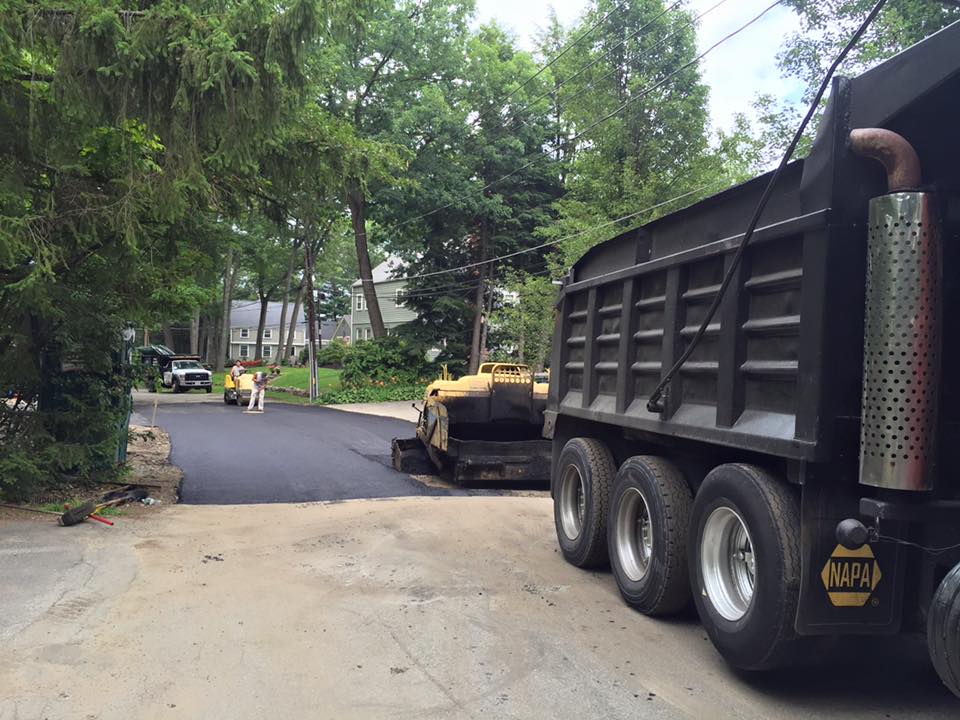
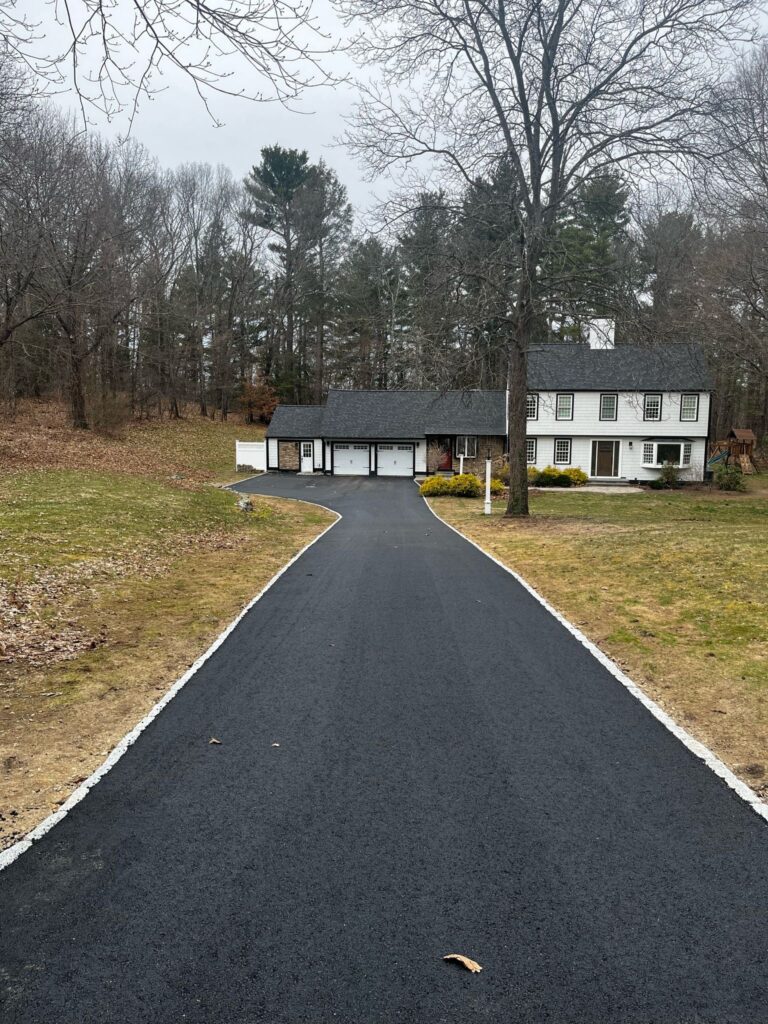
A long wooded drive on a Weston lot often has one spot where the grade flattens near the house. That flat area is frequently the natural site for a patio, since the drainage work is already partly solved by the existing grading. Where the land falls away behind the house instead, a patio built into the slope needs its own retaining structure, which is a different scope of work and a different budget than a flat terrace off a walkout level.
Ledge close to the surface changes excavation plans on some Weston properties. Where rock sits within normal digging depth, the base design has to account for it rather than assume a full gravel depth is achievable everywhere. This is a site-specific finding, not something to plan around from a brochure description of the property.
Weston’s largest lots mean patios here are often sized and positioned as a destination rather than an afterthought off a back door. A terrace set back in the trees, connected by a stone path from the house, works with the privacy the lot already provides instead of fighting it. Deciding where that terrace sits usually comes down to sun exposure through the afternoon, sightlines back to the house, and which mature trees are worth building around rather than removing.
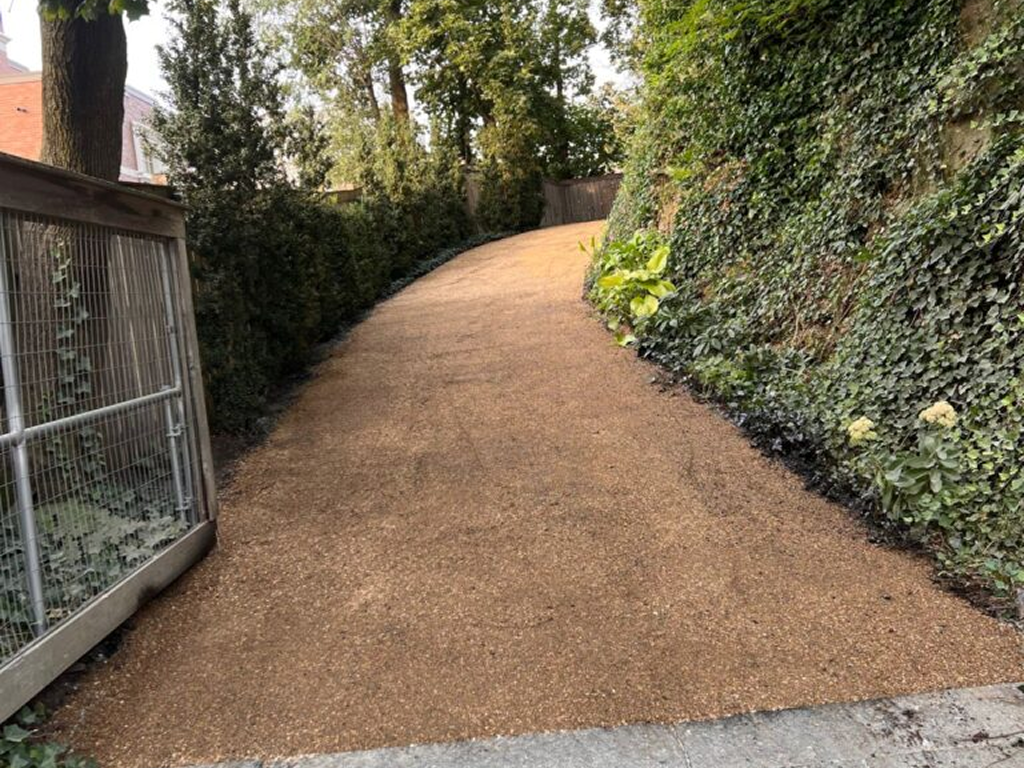
Matching an existing stone wall, an older fieldstone foundation, or a gravel drive already on the property gives the new work a starting material and color to build from. That consistency matters more on estate properties than on smaller lots where the patio is the only hardscape visible from the street. A base course built to handle New England’s freeze-thaw cycles keeps that surface flat for years rather than heaving by the second winter.
Where this suits Weston properties
Flat landings along a long drive
Where a wooded drive levels out near the house, that natural flat spot often becomes the patio site, since drainage is already partly worked out by the existing grade.
Walkout slopes needing retaining work
Where the land drops away behind the house, a patio built into the slope needs its own retaining structure, a different scope than a flat terrace off level ground.
Lots with ledge near the surface
Properties where bedrock sits close to grade need base plans adjusted on site rather than assumed from a standard layout, so excavation findings shape the final design.
Questions about patios in Weston
Does a patio in Weston need the same base depth as a driveway?
No. A patio carries foot traffic rather than vehicle loads, so the base is built lighter than a driveway base. It still needs full excavation below the frost-affected topsoil and a properly compacted gravel layer, just not the depth required to support a car or plow truck.
Can a patio be built near mature trees without harming them?
It depends on how close the work falls to the root zone. Hand excavation near roots and keeping disturbance to a minimum protects established trees, but a patio planned too close to a trunk may require adjusting the layout rather than cutting roots to fit a fixed design.
What happens if ledge is found during excavation?
On Weston lots where bedrock sits close to the surface, the base design gets adjusted on site rather than assuming a standard depth everywhere. This is common enough on this type of lot that it is worth discussing before work starts, not after equipment is already on the ground.
How does a patio handle water on a sloped lot?
The patio surface and the base beneath it are pitched to move water away from the house and off the usable area, typically toward a planted slope or existing drainage line. On a lot with real elevation change, this grading decision is made before materials are chosen, not after.
Can a new patio match an older Weston house?
Yes, by drawing on materials already present on the property, such as fieldstone walls, foundation stone, or an existing gravel drive. Matching texture and tone rather than searching for an identical product gives new work a connection to the house instead of looking added on.
Next step
Tell us what you have: the slope, the house, how the space gets used. We will look at the lot and talk through what will work on it. Call Driveway Specialists at (413) 337-3772. We are family-run and have been working in Massachusetts since 1988.