
Driveway Paving in Acton, MA
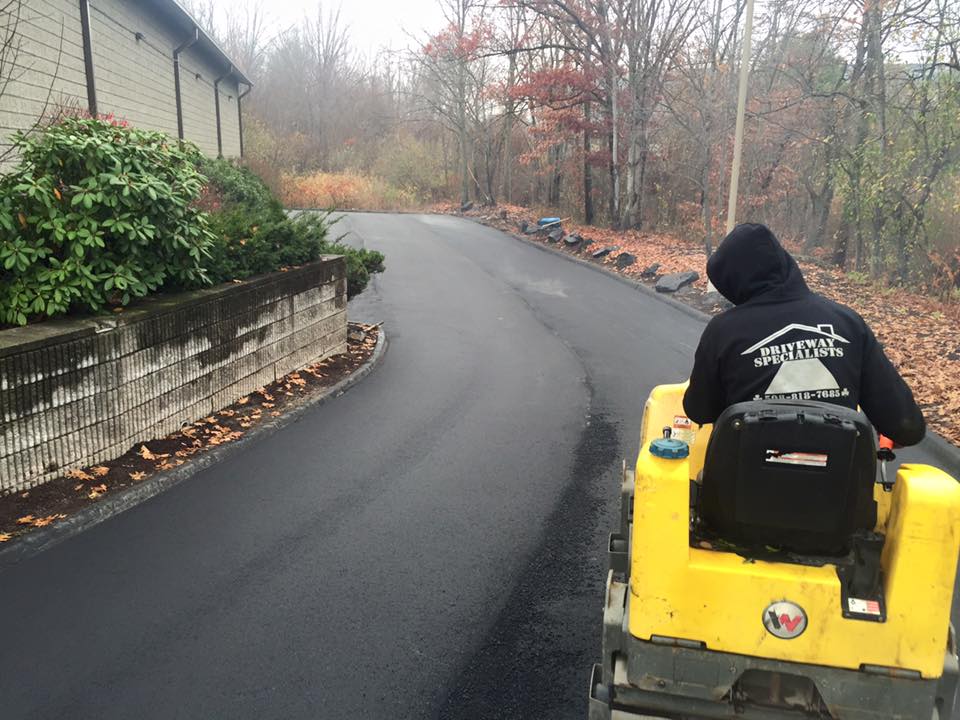
If you’re looking at a driveway in Acton that’s cracked, rutted, or breaking up at the edges, there’s a good chance it’s original to a subdivision built in the 1960s through 80s, and it has simply run its course. Some of these drives are long, winding back through trees to a garage set well off the road, which changes what a repaving job actually involves. Others are new builds on cleared or wooded lots with no driveway at all yet. Either way, the question is the same: who do you call, and what should they actually do when they get there?
When we come out for a site visit, we’re not just measuring square footage. We’re looking at what the ground is doing under the existing surface, how the drive is graded, where water goes when it rains, and whether trees along the edge have started pushing roots under the asphalt. In Acton, that last part matters more than in a lot of towns. Long wooded drives mean mature trees close to the pavement, and roots don’t stop for asphalt. A drive that looks fine on the surface can have heave starting a few feet in from where the canopy begins, and it only gets worse once you pave over it without addressing what’s pushing up from below.
Why the base is the real job
The surface is the part everyone sees, but the base is what decides whether that surface lasts. Acton generally sits on sandy, glacial soil, which is good news here. Sand drains. It doesn’t hold water against the base the way clay does, and it doesn’t heave the same way under a hard freeze. That means a properly built base in Acton has a real chance of holding up for decades, provided it was built right in the first place and the grading moves water away from the house rather than toward it or pooling along the edges where the pavement meets the lawn.
A lot of what we see failing in these older subdivision driveways isn’t a soil problem at all. It’s a base that was too thin, or never properly compacted, laid down decades ago when standards and expectations were different than they are now. The asphalt on top can look reasonable for years before it starts to alligator and sink, because the real failure started underneath long before any cracking showed. That’s the distinction that separates a full repaving job, where we excavate and rebuild the base, from a quick resurfacing that papers over a problem and fails again within a season or two.
For long or winding drives, access and staging matter as much as the paving itself. We plan equipment movement, drainage culverts where a drive crosses a low spot, and edge restraint where the asphalt meets lawn or woods, so roots and runoff don’t undermine the work a few years down the road. For new builds on wooded or cleared lots, we’ll talk through:


What Our Clients Say
Full replacement or overlay
An overlay only makes sense when the base below is still solid and the surface problems are cosmetic. Laid over a broken or waterlogged base, a fresh overlay just cracks again in the same spots, often within a season or two. A sound base holds its shape, drains properly, and shows no soft spots when you walk it after rain. We check this properly before recommending anything, because Acton’s older driveways often hide base damage under a tidy-looking surface, especially where tree roots or clay soil movement have been at work over the years. If your base checks out, an overlay saves time and disruption. If it doesn’t, full replacement is the only option that lasts, and we’ll say so plainly before we quote.
What drives the price
Every Acton driveway we quote is different, and that’s the reality of the work, not a dodge. Square footage is obvious, but rarely decisive. What matters more:
- Excavation depth, especially on older lots with a thin or compromised base
- How much material must come out and get hauled away
- Access for a paver, roller, and delivery truck without tearing up the lawn or clipping branches on a tree-lined drive
- Grade and drainage, which determine how much regrading happens before paving starts
- Whether the apron ties into a town-accepted road, since that section has to meet the town’s expectations for cut and transition
A long wooded drive means more material, more time, and more care around roots than a short flat one. Anyone who quotes a firm number over the phone, without seeing any of this, is guessing. We’d rather walk the site first.
Scheduling around the season
Paving in Massachusetts is seasonal work, and Acton is no exception. Asphalt plants and base compaction both depend on steady warmth, so the practical paving window runs from spring thaw through mid-autumn, before hard frost sets back into the ground. Cold weather and wet ground both work against a proper base and a surface that compacts correctly, so the busy stretch of the year books up fast, and driveways needing full excavation or drainage correction take longer than a simple resurface over an existing base. Acton's mix of older gravel driveways and clay-heavy soil often means extra grading time that's worth planning for ahead of booking. Once we're on site, you'll need to keep vehicles off the new surface for the time we specify, and the first season is when a new driveway settles in, so care around the edges and against sharp turns matters most early on.
What drives the price
Several things set the cost of a driveway, and each one is visible only on site.
- Square footage : The area to be paved, plus any widening, turnaround or parking pad you want added.
- Depth of excavation : How far down the old material has to come out, and how much of the base has to be rebuilt.
- Material removed : The old asphalt has to be hauled away, and the amount depends on what is there.
- Access: A paver, a roller and delivery trucks all need to get in and turn around. Tight Acton frontages can limit what equipment fits, which changes how the work is staged.
- Grade: A steep drive is harder to prepare, harder to compact and harder to drain correctly.
- Drainage: If water needs to be moved off the drive and away from the house, that work is part of the job.
- The apron: On many Acton lots the apron meets the sidewalk with very little room between the street and the house. How that transition is built affects both the drive and the walk, and we look at it closely.
Anyone who gives you a firm figure without having stood on your driveway is guessing. When the guess is wrong, the extra cost shows up later as shortcuts in the base.
FAQs
How do I know if my Acton driveway needs full replacement or just an overlay?
It comes down to what's under the surface. If the base is still compacted, well-drained, and free of soft spots after rain, an overlay can work. If the base has broken down or water sits underneath, an overlay will crack again quickly and full replacement is the better investment.
Does the sandy soil in Acton make paving easier?
It helps. Sandy, glacial soil drains well and doesn't hold water against the base the way clay does, which reduces frost heave risk. But a good base still has to be built and compacted correctly. The soil helps the work hold up; it doesn't replace doing the work right.
Will tree roots be a problem on my driveway?
On long wooded Acton drives, yes, often more than homeowners expect. Mature roots can heave asphalt well before it's visible as cracking on the surface. We check for this during the site visit, since it changes the excavation plan near the tree line.
When can you start the work?
Paving is seasonal in Massachusetts, and scheduling depends on weather and how much excavation your project needs. Call us at (413) 337-3772 and we'll give you a realistic timeline once we've seen the site.
Can you quote a price over the phone?
Not accurately. Price depends on depth of excavation, material removal, access, grading, and drainage, all of which vary driveway to driveway. We quote after a site visit, not before.
Call us
If your Acton driveway has reached the end of its life, or you are putting one in for the first time, call (413) 337-3772. We will arrange a time to see the site, measure it, and tell you what it needs.