
Foundation Work in Hudson, MA
Water coming through a basement wall after a heavy rain. A damp patch in the corner that never fully dries out, even in summer. A section of foundation that bows inward or sheds crumbs of mortar when you run a hand over it. These are not cosmetic problems and they do not fix themselves. If you own one of the older houses near Hudson’s mill district, or a house on the outskirts with a foundation that has been in the ground for decades, this is likely why you are reading this page.
This is a different trade from paving or a driveway rebuild, even though we do both kinds of work. Foundation work means getting to the outside of the wall, finding out why water is getting in, and fixing that side of the problem rather than papering over it from inside the basement.
Why old Hudson foundations leak
A lot of the housing stock close to the old mill streets was built on fieldstone or rubble foundations, sometimes with a parged coating added later and nothing else. There was no membrane against the outside of the wall and no perimeter drain at the footing to carry water away. Water does not need a crack to get in. It moves through the stone and mortar itself, following the path of least resistance, and it shows up on the inside wherever that path ends. A wet corner every spring usually means the grade outside is pushing water toward that exact spot, year after year.
Newer subdivision houses outside the old village center are usually poured concrete with a drain system installed at the time of construction, so the failures look different. There it is more often a clogged or crushed drain line, a downspout dumping too close to the wall, or grading that has settled toward the house over time rather than away from it.
Interior sealants and coatings treat the symptom you can see, not the cause. They can hold back moisture for a while, but they do not stop water from reaching the wall in the first place, and they do nothing for a wall that is physically failing. Dealing with the cause means going outside: excavating down to the footing, addressing the wall itself, and rebuilding the drainage so water moves away from the house instead of into it.
If you are dealing with any of this, the next step is getting someone to look at the actual wall and the ground around it, not another description of what might be wrong. Call Driveway Specialists at (413) 337-3772 and we will talk through what you are seeing before anyone sets foot on the property.


What Our Clients Say
Why This Has To Be An Outside Job
A wall that is actively bowing, cracking, or shedding material is a structural issue, not a moisture issue. Interior waterproofing paint or an interior drain channel can manage water that has already gotten in, but it does not relieve the pressure outside the wall or stop the wall from continuing to move. Hudson’s clay-heavy soil expands when wet and contracts when dry, and that constant swelling is often what pushed the wall out of alignment in the first place.
Fixing it properly means excavating along the affected section, exposing the footing, and dealing with both the wall and the soil and water against it. That typically includes correcting grading, repairing or replacing drain tile, and backfilling with material that won’t hold water against the foundation again. That is more disruptive and more involved than an interior fix, and it is worth being honest about that upfront rather than after the hole is dug.
What Happens To Your Yard
Excavating along a foundation wall means digging a trench that can run the full length of the affected section and down to the footing. Anything planted close to the house in that path, shrubs, foundation plantings, a flower bed, has to come out before work starts, and it is usually not replaceable in its original spot once the trench is backfilled and the grade is rebuilt. On many Hudson properties, mature landscaping has grown right up against the foundation over the years, so it pays to walk the perimeter with us ahead of time and flag anything you want to try to save or transplant elsewhere on the lot.
The work, in order
The Wall Treatment
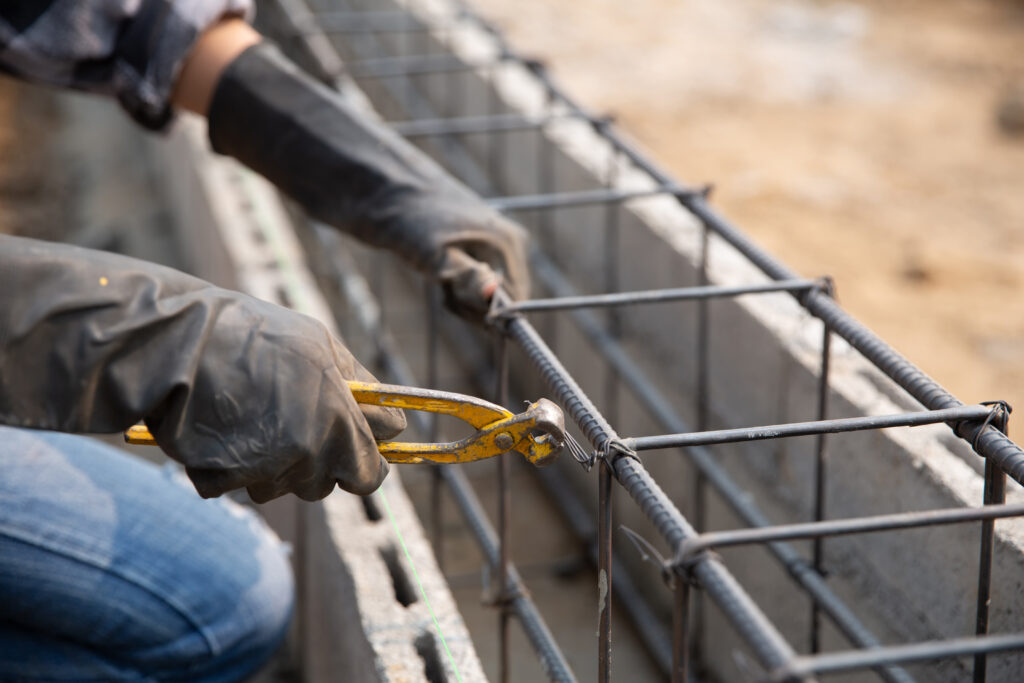
Once the wall is exposed, the approach depends on what we find. A fieldstone wall with failing mortar needs different treatment than a poured concrete wall with a surface crack. We assess before deciding, and explain what’s there.
Drainage And Backfill
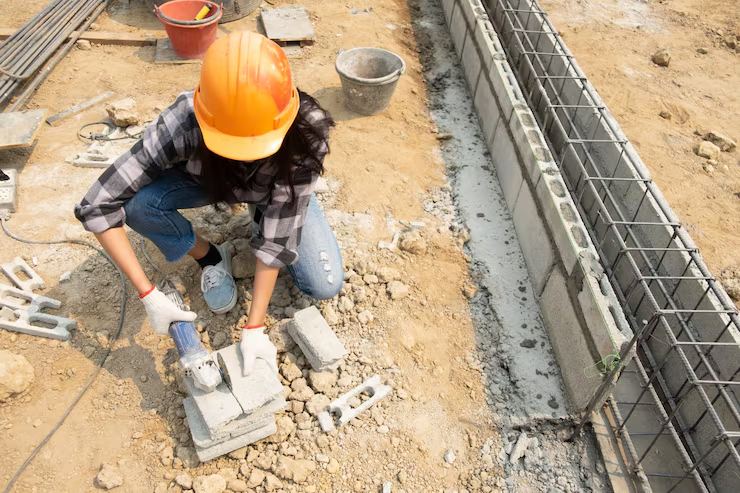
A drain line along the footing carries water away from the Hudson home’s foundation wall instead of letting it pool there. Backfill choice and placement matter just as much, since poor fill can trap water right back against the wall.
Reinstating The Ground
Once the trench is backfilled, the surface grade gets rebuilt to slope away from the house rather than toward it. This is often the step that actually stops water reaching the wall, even more than the drain line underneath it.
Access Decides The Approach
On a narrow lot near Hudson’s old mill streets, whether a machine can reach the affected wall at all shapes the whole plan, sometimes forcing hand digging over part of the run, slowing work and changing the quoted approach.
Wider Lots, Different Constraints
Newer subdivision lots outside the village center usually give a machine room to work, but a drain line installed at construction may be clogged, crushed, or simply undersized for how the lot actually sheds water now.
What To Check Before You Call
Before anyone comes out, a homeowner can gather information that makes the first visit more useful. Note when the water or dampness shows up: after every rain, only after heavy or prolonged rain, or on a schedule tied to snowmelt in spring. Photograph the affected area, including any crack, bulge, or efflorescence (the white chalky residue left by water moving through masonry), and note whether it has changed over recent months.
Walk the outside of the house and look at where downspouts discharge, whether the ground near the foundation slopes toward or away from the wall, and whether there are visible low spots that hold water after rain. If there is a sump pump, note how often it runs. None of this replaces an on-site look at the actual wall, but it gives us a clearer picture of the pattern before we dig, and it often points to whether the problem is coming from a downspout, the grade, or the wall itself.

Getting Started
If you are seeing water, damp, or movement around your foundation in Hudson, the next useful step is a conversation about what you are seeing and a look at the wall itself, not another list of possible causes. Foundation issues in Hudson’s older neighborhoods often trace back to grading that has shifted over decades, downspouts discharging too close to the house, or masonry that was never meant to handle today’s water table. We have been doing excavation, drainage and foundation-adjacent work across Middlesex County communities including Hudson, Marlborough and Stow since 1988, as part of a family-run business that has stayed small enough to look at each property on its own terms. Before we visit, it helps to know:
- Where you notice water, dampness, or cracking, and whether it changes with weather
- Roughly how old the foundation is and what it’s built from
- Whether there’s been any recent grading, paving, or landscaping nearby
What to check and write down first
These are the pointers that help most before anyone visits.
- Note where and when. Which wall, which corner, and whether it follows heavy rain, snowmelt or a particular season.
- Photograph it dry and wet. Take pictures of the same spot on a dry day and again after rain.
- Look at the outside. Check whether the ground beside that wall slopes toward the house, whether a downspout empties near it, and whether anything piles water against it.
- Check for movement. Look for horizontal cracks, a wall that leans in, or stones that have shifted. Mark the ends of a crack with a pencil and date it, so changes can be seen.
- Check the stonework. Press on the mortar. If it crumbles or sands away, say so.
- Think about access. Where could a machine stand, and what is in its way? Tell us who shares the drive or boundary.
- Leave it as you found it. Do not seal or patch the wall before we see it. It hides what we need to look at.
Questions we get asked
Is this the same crew that does driveway paving?
We handle both, but foundation excavation and drainage work is treated as its own job with its own approach. The equipment, sequencing and what we are solving for are different from a driveway rebuild.
Will fixing the outside guarantee a dry basement?
No contractor can promise that, and we will not tell you otherwise. What outside excavation and drainage work does is address the actual path water is taking to reach the wall, which is the part an interior coating cannot touch.
How do you deal with a narrow lot near the old mill streets?
We look at access before anything else. On tight older lots, part of the dig is sometimes done by hand where a machine cannot reach, which affects both the timeline and the plan for the work.
What happens to my landscaping during the work?
Anything planted directly against the affected wall in the excavation path has to be removed before digging starts. We talk through what is in the way during the initial visit so there are no surprises once work begins.
Do you also fix the driveway or walkway if it has to come up for access?
If hardscape sits in the excavation path, we remove and reinstate it as part of the same job. Rebuilding it to a higher standard afterward, if that is something you want, is a separate conversation and a separate scope.
Next step
Call us on (413) 337-3772. Tell us which wall, what you have seen, and how the lot slopes around it. We have worked across Middlesex County since 1988, and we will tell you plainly what is likely going on and whether outside work is the right answer.