
Walkway Installation in Weston, MA
Weston lots tend to be large, wooded, and set well back from the road. The walkway problem here is rarely about fixing something broken. It is usually about building the path that should have connected the driveway to the front door in the first place, or replacing one that was never more than a strip of cracked concrete poured decades ago. On an estate-scale property, the walkway is one of the few hardscape elements a visitor actually walks on, so it carries more weight, visually, than its size suggests.
A long private drive through trees sets up a specific kind of approach. By the time someone reaches the door, they have already passed significant grade changes, mature plantings, and in many cases exposed ledge. The walkway has to read as part of that same property, not as an afterthought tacked onto the entry. That means thinking about material, width, and line before anything gets dug. A walk that is too narrow for two people to pass comfortably, or that cuts a straight line across a slope rather than working with it, undercuts a property that has otherwise been laid out with care.
What sits under the surface
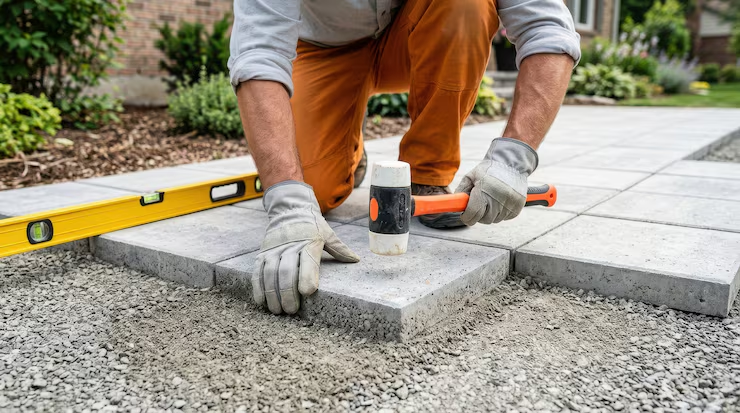
Everything that makes a walkway stay flat happens before the visible surface goes down. Excavation removes the existing soil and any organic material that would otherwise decompose and settle unevenly. A compacted gravel base replaces it, graded to shed water rather than hold it. On a property with clay pockets or ledge close to the surface, the base depth and drainage path matter more than on open, well-drained ground, because water that cannot get away will sit under the walk and push on it through every freeze-thaw cycle.
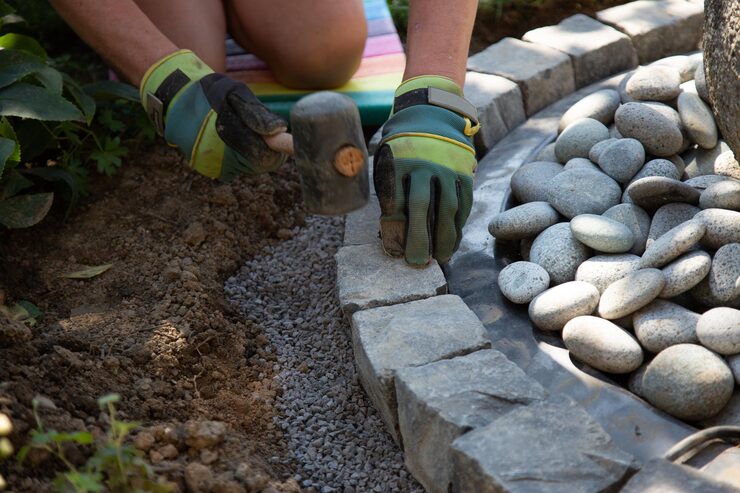
Edge restraint is the detail most homeowners never see and most contractors skip. Without it, the outer rows of pavers or the edge of a poured path drift outward over a few winters as frost pushes and settles the ground unevenly. A buried edge restraint holds the line. It is cheap at install and expensive to retrofit once a walkway has already started to spread.
Frost is the constant in every Massachusetts hardscape job. Ground that freezes unevenly lifts unevenly, and a walkway with inconsistent base compaction will show it within a few winters as dips, ridges, and open joints. Consistent compaction under the entire length of the path, not just the sections that look load-bearing, is what keeps the surface flat for the long run.
Tree roots add another layer specific to wooded Weston lots. A walkway routed near mature trees needs a base that can tolerate some root growth without heaving, and in some cases a path that steps around a root zone rather than through it. Cutting through major roots to force a straight line can stress the tree and still end up with a buckled walk a few years later, so the route itself is worth planning around what is already growing there.


What Our Clients Say
Materials and real trade-offs
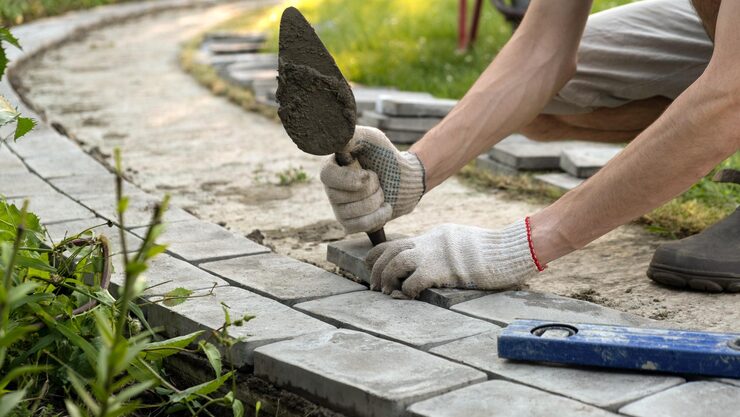
Natural stone, concrete pavers, and poured concrete each suit Weston properties differently, with no single winner.
Concrete pavers cost less than natural stone and come in enough shapes to suit a formal or informal entry. Individual units can be replaced if one cracks or settles, which matters on a lot with active root movement nearby.
Poured concrete is the least expensive option and the fastest to install. It cracks as one piece, though, and a crack from root heave or frost usually means replacing a full section rather than a single unit.
Where water goes
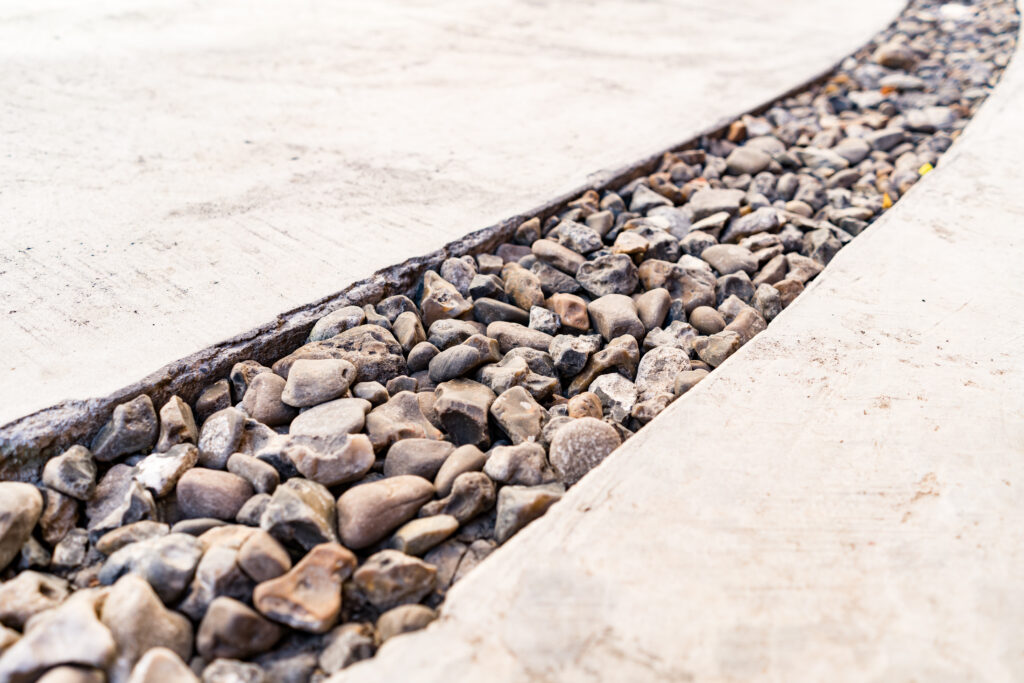
Any hard surface changes where rain goes. A walkway pitched toward the foundation sends water where you don’t want it. In Weston, grading away from the house and tying drainage into the drive and beds matters most on sloped lots.
On the long, graded drives common in Weston, water already moves fast downhill.
Tying into the driveway
A walkway rarely stands alone.
Choosing a material
The materials are not equal. Each suits some properties and not others.
Where an asphalt or paved drive meets a stone or paver walk in Weston, the joint needs a clean edge restraint and matched base depth so plows, shovels, and foot traffic don't catch it, shift pavers, or lift the transition over time.
Matching an older house
Many Weston homes are set back far enough, and old enough, that a new walkway needs to read as though it belongs.
In Weston, fieldstone and irregular bluestone sit naturally near older stone walls, fieldstone foundations, and mature plantings.
Existing walls and planting
A walkway that cuts through an established bed or runs flush against a retaining wall needs its base and edge worked out around what is already there, not against it.
We look at mature plantings, existing walls, and root lines on site before digging, so the new path does not undercut something that took decades to establish.

Where this fits in Weston
Weston’s lots tend to be long, wooded, and set well back from the road, so the approach from driveway to door is long enough, and the property grand enough, that a cracked or undersized path stands out. Exposed ledge and heavy tree cover mean the base plan has to account for what’s actually under that specific lot, not a standard spec. Estate-scale entries also tend to call for a wider, more deliberate path than a typical suburban front walk, both for how it reads from the drive and for how two people walking side by side actually use it.
Grade matters as much here as anywhere we work in MetroWest. A walkway dropping toward a lower entry, or climbing from a driveway turnaround up to the front door, needs steps or a graded transition designed in from the start rather than added after the fact. Getting that sequencing right, along with the drainage and base work beneath it, is what separates a walkway that still looks right after a decade of New England winters from one that needs attention every spring.
What drives the price
A new walk has to meet several existing things cleanly.
- The entry : The walk must arrive at the door at a sensible height. The threshold sets the finished level, so the work starts at the door and runs outward.
- The drive : Where a walk meets a drive, the levels and the drainage have to agree. A mismatch becomes a trip edge or a puddle.
- Walls and planting : Existing stone walls, foundation beds and mature trees constrain the route. Roots under a path are worked around, not cut through without thought.
- An older house : Scale, colour and pattern should follow the architecture. A narrow, dark stone walk suits an old house differently than a broad paver field does.
Next step
If you are planning a new walkway for a Weston property, or replacing one that has heaved, cracked, or simply never matched the house, the right starting point is a look at the actual lot: the grade, the mature trees and their roots, the drive or front steps it needs to connect to, and what is already built in brick, bluestone, or concrete nearby. Weston’s older neighborhoods often have established plantings and stone walls close to the path line, so a site visit matters more here than a phone estimate ever could. During that visit, we walk the route with you, check drainage and slope so water sheds away from the house rather than pooling on the surface, and talk through material options — pavers, natural stone, stamped or exposed-aggregate concrete — that suit both the home’s style and the town’s look. We also flag any grading or edging work a tree root or slope might require before installation starts. Call Driveway Specialists at (413) 337-3772 to schedule that walk-through and get a clear plan, with materials and sequencing, before anything is priced.
Before you call
It helps to know:
- Where the walk starts and where it needs to end
- Whether the route crosses a slope or a shared area
- Which material you lean towards, and whether the house is older
- Where water currently runs on the property
Questions people ask
What is the best walkway material for a wooded Weston lot?
Natural stone and concrete pavers both hold up well under tree cover, but they fail differently. Stone can be reset piece by piece as roots shift it over the years, which suits a mature, shaded lot where disturbance is ongoing rather than a one-time event. Poured concrete is more affordable up front and reads as more formal, but a root heave under a slab usually means breaking and replacing that section rather than lifting and relaying it.
Do you need to involve the town for a front walkway in Weston?
A walkway confined to private property is generally the owner's business, not the town's. The one exception is where the path crosses the strip between the property line and the road, which can fall under town jurisdiction depending on the specific frontage. We look at where your walk starts and ends before pricing the job.
How does frost affect a walkway differently than a driveway?
A walkway is narrower and often runs closer to the house, foundation, and planting beds, so it sees more shade, more moisture, and slower drying than an open driveway. That combination makes consistent compaction and a built-in edge restraint more important on a walk than on a wider paved surface, because there is less width to mask any settling.
Can a new walkway be matched to an older Weston house?
Yes, within the limits of the material. Fieldstone and irregular bluestone sit naturally against older stone walls and foundations. Cut granite or clean-edged pavers suit a more formal colonial entry. We look at the existing house and hardscape before recommending a material rather than defaulting to one option.
Next step
Call Driveway Specialists on (413) 337-3772. We are a family-run company in business since 1988, and we will walk the route with you and talk through material, grade and drainage before anything is priced.