
Asphalt Repair in Milton, MA
You’re standing over a pothole by the garage, or looking at a patch of pavement that’s gone spidery and soft underfoot, or watching water pool in the same low spot after every rain. The question isn’t whether your driveway looks bad. It’s whether this is a problem you can fix, or the first sign of something bigger underneath.
On a lot like most of what sits around the Blue Hills, that question usually comes down to grade and water. Milton has a lot of older homes built into sloping ground, with driveways that were cut into a hillside decades ago and have been handling runoff ever since, whether they were built to or not. When asphalt fails here, it’s rarely random. It’s usually water finding the weak point in the base, then frost finishing the job over a winter or two, widening whatever gap the water found the season before.
Reading the damage correctly
Different failures mean different things, and guessing wrong means paying twice.
- Hairline cracking across the surface is often just the asphalt aging and shrinking in the cold – a maintenance item, not a structural one, if it’s caught early and sealed before water gets a foothold.
- Alligator cracking, where the surface breaks into a web of small interlocking pieces, is a different story: that’s the base failing underneath, usually from water getting in and softening what’s supposed to be solid support.
- Edge failure, where the border of the driveway is crumbling or breaking away in chunks, is almost always a drainage and support issue. It’s common on Milton driveways where the shoulder isn’t holding its shape against runoff coming down a slope, especially where there’s no curb or edging to take the load.
- Sinking is base or sub-base settling, often from water working underneath the pavement toward the lowest point on the property, which on a hillside lot is frequently right at the garage apron where every bit of runoff ends up.
- Heaving, where a section has pushed up rather than down, usually points to frost or a root working beneath the surface, and tends to recur each winter until whatever’s underneath is dealt with.
Knowing which one you’ve got tells you what the fix actually is, and whether it’s worth doing at all. A driveway with isolated surface cracking might only need sealing and a patch at the worst spots. One with alligatoring across a third of the surface, or sinking that keeps creeping toward the garage, is usually past the point where patching buys you more than a season or two. The honest answer sometimes is that a full mill-and-overlay, or even a base rebuild in the worst section, costs less over five years than another round of patches that fail again the next freeze-thaw cycle.


What Our Clients Say
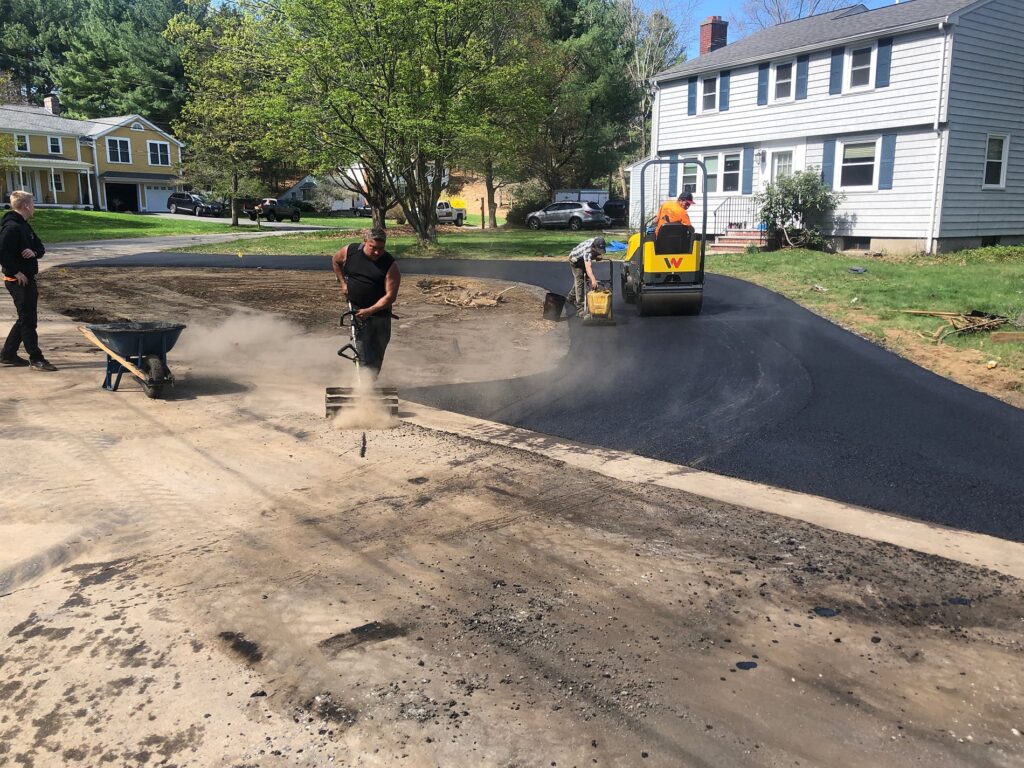
How to read the damage
Asphalt rarely fails for the reason it appears to. The surface shows a symptom, and the cause is usually underneath.
Where the water goes next
On a sloped Milton lot, the real question is always where the water is headed next. A patch that ignores the grade above it, or the drain below it, cracks and heaves again within a season or two.
Older base, newer problems
Many Milton driveways sit on a base laid decades ago. It may have shifted, thinned, or never drained well to begin with, long before the surface started showing it.
Repair or replace
A contractor who tells you a Milton driveway has a few good years left, rather than pushing a full tear-out, is giving you the more useful answer – and usually the more honest one.
When patching makes sense
If the base underneath is sound and the damage is isolated – a cracked corner, one sunken panel, a pothole near the kerb – a targeted repair can buy real years before Milton’s freeze-thaw cycles force a full replacement.
When it doesn't
Widespread alligator cracking, repeated sinking in the same spot, or a base that's clearly saturated after Milton's wet seasons are signs the whole section needs rebuilding, not another patch on top.
The actual repair methods
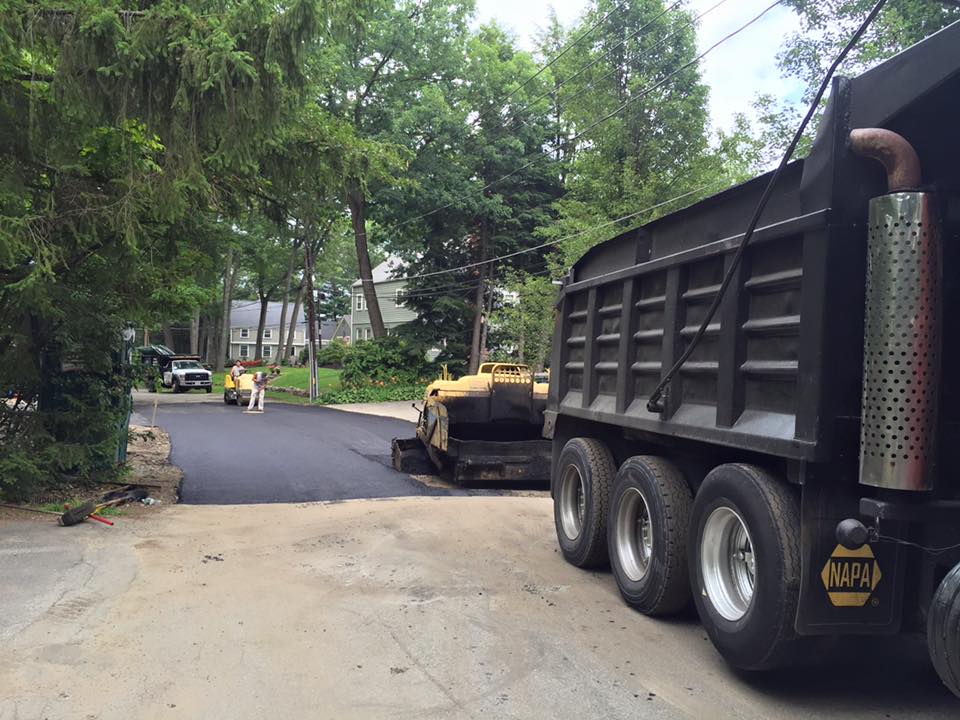
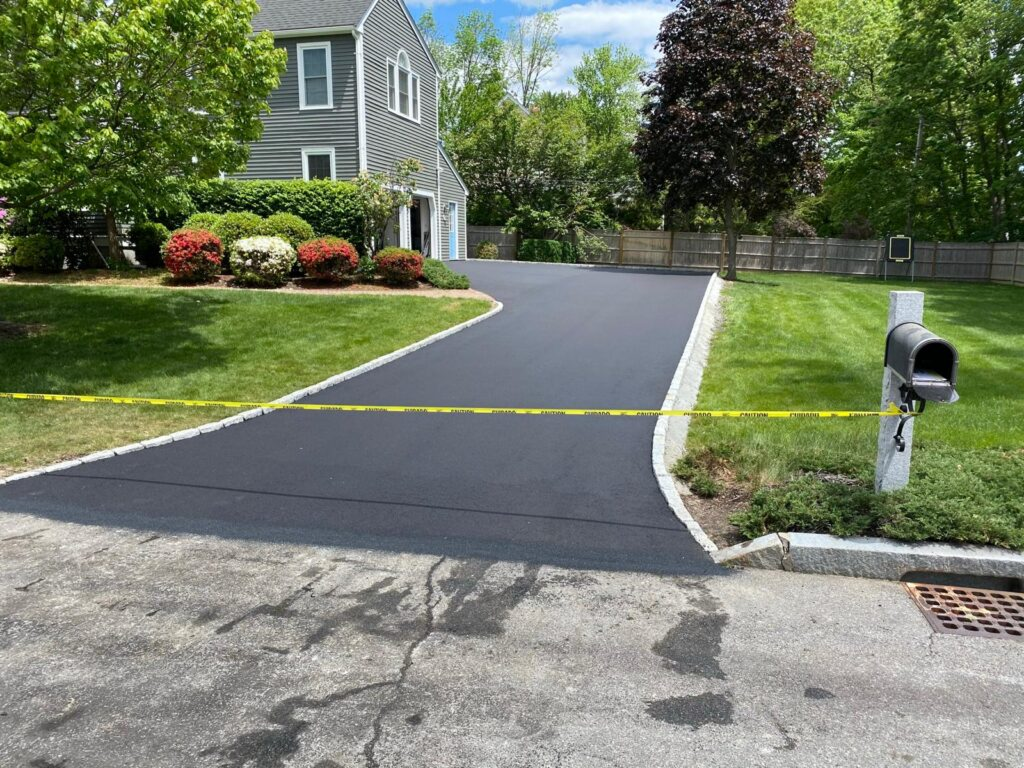
Infrared patching heats the existing asphalt in place, blends in new material, and fuses the patch to the surrounding surface without a cold seam – a good option for surface-level cracking and shallow depressions where the base below is still sound. Saw-cut and replace is more invasive: we cut out a clean rectangle around the failed area, dig out the compromised base, rebuild it properly, and repave the section. It’s the right call for alligator cracking, sinking, or any spot where water has clearly gotten into the base. Crack filling is the smallest intervention, sealing hairline and linear cracks before winter water can get into them and widen them through freeze-thaw. Edge rebuilding restores the shoulder where runoff or plow pressure has broken it away, re-establishing support along the border rather than just patching the visible chip. Regrading a sunken section means lifting and rebuilding the base under a low spot so water sheds away instead of collecting there – common at the base of Milton’s sloped driveways, right where they meet the garage or a low pad.
What the repairs are
Why Milton driveways fail where they do
Grade concentrates water at specific points.
Frost widens what water starts
Water gets into a crack in November. Through a Milton winter, repeated freeze-thaw cycles pry it wider, lifting edges and crumbling the surrounding asphalt.
Roots and shade
Mature trees on older Milton lots shade the pavement and send roots beneath the edge, softening the base while heaving sections from below. Shaded asphalt also stays damp longer, accelerating cracking, so we address root intrusion before repairing or resurfacing.
The cost of waiting
A small patch now is contained work.
Getting it looked at
If you’re not sure which category your driveway falls into, that’s a reasonable thing to have someone look at rather than guess. Call (413) 337-3772 and we’ll tell you straight what’s going on and what it would take to fix it.
Why drives fail in Milton
Milton's ground is unforgiving in a few specific ways.
Steep hillside lots mean water arrives with speed. A sloped drive carries runoff downhill, and where that water meets a low corner, a garage door or the seam of an old patch, it goes down instead of away. Over years that washes out fine material from under the asphalt and leaves the hollows that later sink. On a hillside, drainage decides how long the work lasts.
Shared drives on two-family properties take more traffic than a single-family drive was built for. More vehicles, more turning, more weight on the same few feet. That is exactly where alligator cracking appears first, and where edges break down from vehicles clipping the sides.
Tight frontages put the apron directly against the sidewalk. Plows and shoveling push snow and meltwater straight onto that strip, and the edge there takes constant punishment. It is also the part of the drive most likely to involve the town, so if the damage reaches the apron or the sidewalk line, we will tell you before work begins what is yours to fix and what isn't.
And in every case, frost is the engine behind it. Water enters a small crack, freezes, expands and pries the crack wider. It thaws and drains into the opening, and the cycle repeats all winter. A hairline crack in October can be a pothole by March.
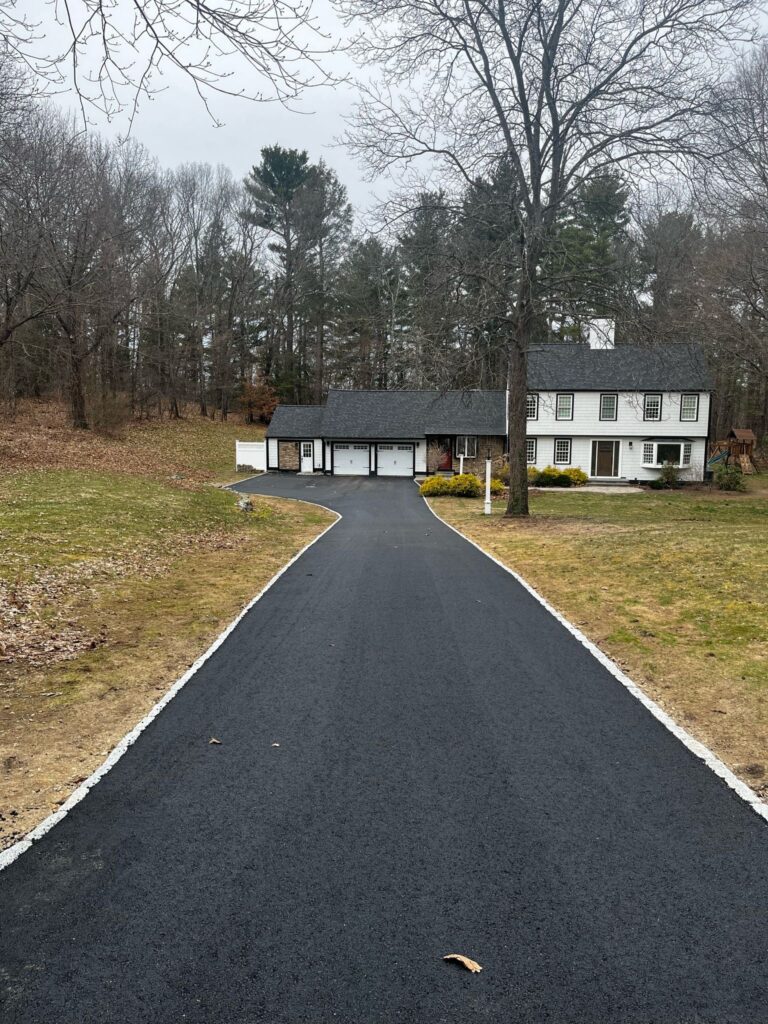
Why timing matters
A crack that is filled this fall is a small job. The same crack left through a winter lets water into the base, and the cost of the repair rises with every freeze. A pothole gets larger as vehicles break its edges away. An edge failure keeps retreating.
Spring is when the damage that has been hiding becomes obvious, and when everyone calls at once. The cheapest repairs happen before that, while the problem is still the size of a hand.
Asphalt repair questions in Milton
Can a cracked driveway in Milton be repaired instead of replaced?
Often, yes. If the cracking is surface-level and limited in area, and the base underneath hasn't failed, targeted repair methods like infrared patching or crack filling can add years to the driveway without a full replacement.
Why do driveways near the Blue Hills fail at the edges first?
Sloped lots send runoff down the length of the driveway, and the edges and low points take the brunt of it. Without solid support at the border, the shoulder breaks down before the rest of the surface shows damage.
Is a sunken spot near my garage a big repair?
It depends on the cause. If it's a localized base settlement, regrading that one section can fix it. If water has been draining there for years, more of the base around it may need rebuilding.
How urgent is a small crack really?
More urgent than it looks. Once water gets into a crack, freeze-thaw cycles over a Massachusetts winter will widen it well beyond its current size. Filling it now is cheaper than patching it in spring.
Do you repair asphalt driveways on steep or sloped Milton lots?
Yes. Sloped driveways are common in Milton, and the repair approach usually has to account for where water is moving across the property, not just the damaged spot itself.
Next step
Call us at (413) 337-3772. Tell us what you are looking at and where on the drive it is. We will come out, look at the damage and the ground around it, and tell you honestly whether it can be repaired and what that involves.