
Parking Lot Paving in Wayland, MA
A deteriorating parking lot in Wayland is not a cosmetic problem. It’s a trip-and-fall risk, it’s a complaint from a tenant or resident, it’s a line item an insurer will eventually ask about, and it’s the first thing a customer or visitor sees before they reach the door. For a property manager, business owner, or condo trustee, the order of concerns is exactly that: liability first, then operations, then appearance.
Wayland’s commercial and institutional properties tend to sit on larger wooded parcels, often with a long access drive leading into the main lot, grade changes along the way, and mature tree cover that shades sections of pavement and keeps them damp well after the rest of the lot has dried. Some of these properties border wetland or conservation land, which means any work has to stay within the lot’s existing footprint and existing drainage structures rather than proposing a redesign that would trigger a longer approval process. We work with that constraint as a given, not an obstacle to negotiate around.
The lot stays open
A commercial lot rarely has the option of closing for a few days. We phase the work instead, splitting the lot into sections so half stays available for parking and deliveries while the other half is out of service. For many properties this means overnight or weekend paving on the busiest sections, with less time-sensitive areas handled during normal hours. The goal is that staff, residents, or customers always have a way in and a place to park.
A commercial scope covers more than surface and base. It includes traffic flow and circulation through the lot, accessible spaces and the access aisles that serve them, striping and signage, catch basins and other drainage structures, curbing and islands, and the loading area, which absorbs more weight and more turning stress than anywhere else in the lot and usually fails first.
Assessment comes before price
Before any quote, we map where and why the lot is failing. Most lots in Wayland don’t fail evenly. One section holds up fine, another is alligator-cracked down to the base, another has standing water after every storm because a catch basin sits lower than it should relative to the surrounding grade. Pricing one blanket overlay across all of that is a short-term decision that ages unevenly, since the overlay goes down smooth everywhere but the underlying problems in the worst sections are still there underneath it.
That assessment also gives a trustee, board, or facilities contact something to work with. A written breakdown of what’s failing, why, and what each section needs is the kind of documentation that holds up in a board meeting or an insurance review, rather than a single number with no explanation behind it.


What Our Clients Say
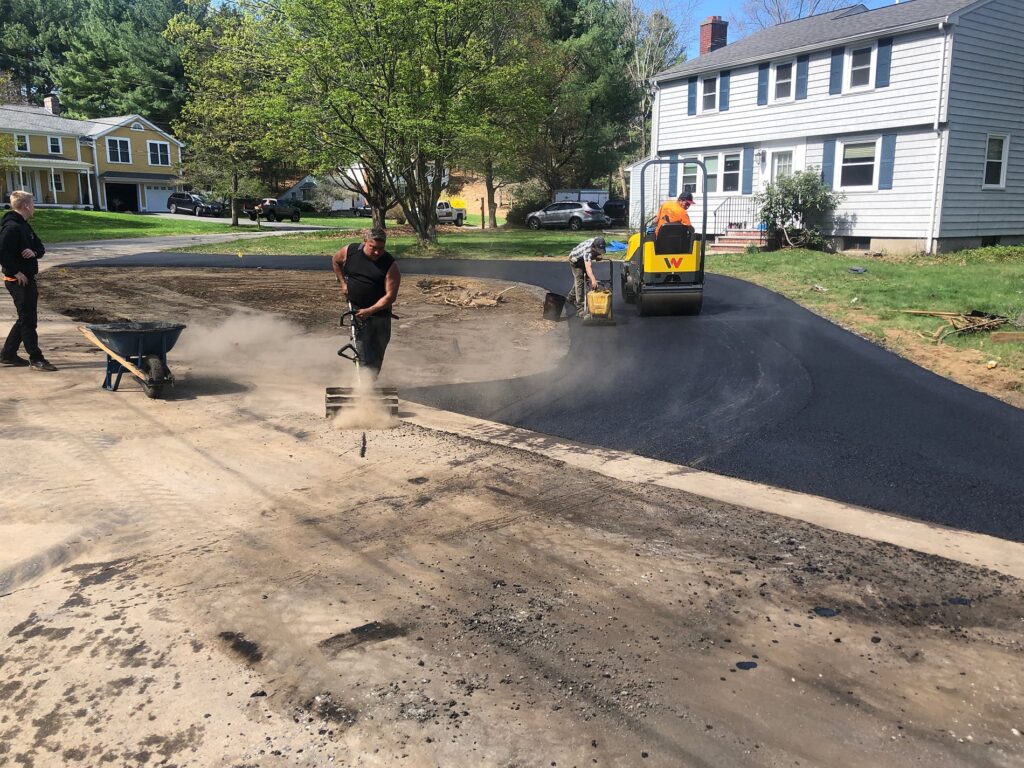
Keeping the lot open while we work
A commercial lot cannot simply close. Tenants need to get home, staff need to get in, and deliveries arrive whether or not you are paving. The job is planned around that.
Half-and-half
We work the lot in sections, so one part is always usable while the other is down. Sections are cut off with clear barriers and signage, and we move the work across once the first section is ready for traffic. It takes more planning than closing everything, but it is usually the only workable approach for an occupied property.
Overnight and weekend work
Some lots have a busy period that cannot be disturbed, such as a retail or office frontage or a multi-unit building at the morning rush. We can schedule work outside those hours. We agree the sequence with you in advance so nobody finds a closed lot without warning.
Access and deliveries
Before work starts, we ask what has to keep moving:
- Which entrance and which bays do delivery vehicles use?
- Where do waste and recycling trucks stop, and when?
- Do any tenants or residents need guaranteed access for mobility reasons?
- Where can staff and visitors park while a section is closed?
The answers set the order of the work. A loading area that is busy at a known hour gets worked when it is quiet.
What a commercial scope includes
A commercial lot is not a large driveway. It carries different traffic and has different obligations, and the scope reflects that.
- Traffic flow and circulation: How vehicles enter, turn and leave decides where the surface wears out. We look at the lot as a circulation pattern, and we raise it if the layout is causing the damage.
- Accessible spaces and access aisles: These are part of the scope, not an afterthought, and they are laid out and marked as part of the work.
- Striping and signage: Fresh surface needs fresh markings, and the markings are what tell drivers where to go.
- Catch basins and drainage structures: A basin that is silted up or sitting at the wrong height will undo new paving. We check them and repair them as part of the job.
- Curbing and islands: Broken or displaced curbing channels water the wrong way and gives plows something to catch. It is dealt with before the surface goes down.
- The loading area: This is where the heaviest vehicles turn, stop and sit, and it takes the most punishment on any lot. It often needs different treatment from the rest.
Assessment before we quote
We do not price a lot from the road. We walk it, because the quote depends on what is actually wrong and where.
How failure is mapped
We mark the lot area by area: where the surface is cracked but sound, where it has been undermined from below, where water stands, and where edges have broken away. Each of those has a different cause and a different fix.
Why a lot is zoned
A lot is almost never one problem, so one price for the whole thing is usually wrong. Areas in good shape may only need repairs and a new coat. Areas that have failed underneath need to be taken out and rebuilt. Drainage trouble spots need to be fixed at the source. Most lots need a mix of these. We would rather tell you that plainly than quote a single figure that hides it.
One honest warning: a single overlay across sections that have failed underneath is a short-term decision. The overlay follows the surface below it, so the cracks and low spots come back through. It can be the right call when money is tight and the property will change hands or be redeveloped. It should be a choice you make knowingly, not one made for you by a flat quote.Most lots need a mix of these. We would rather tell you that plainly than quote a single figure that hides it.
Documentation you can put in front of others
A manager or trustee usually has to justify the spend to someone else. We give you something to show them:
- A written scope that lists each zone and what will be done to it
- A marked-up plan of the lot showing the zones, sections and phasing
- A clear sequence of work, so the board or owner can see how the lot stays in use
- Photographs of existing conditions before work starts, which are useful if a question comes up later
You can pass these to an owner, a board or an insurer without having to translate them.
Wayland properties this applies to
Wayland is not a place of large, flat parking fields. The properties here have particular problems, and the work follows from them.
Large institutional and school lots
Wooded campus and institutional properties in Wayland often have long access drives feeding a main lot, with grade changes and tree cover affecting drainage and shaded areas that stay wet longer after rain or snow.
Conservation-adjacent commercial sites
Lots bordering wetland or conservation land have limited room to regrade or expand drainage structures, so repairs have to work within the existing footprint and existing catch basin locations.
Condo and HOA association lots
Shared parking fields serving condo associations see uneven use across sections, with resident spaces holding up differently than visitor rows or loading points near entrances.
Frequently Asked Questions
Can a Wayland parking lot be repaved without closing it?
In almost every case, yes. The lot is divided into sections and work moves through them in sequence, so one area is always open for parking and deliveries while another is being paved.
How do you handle a lot near wetland or conservation land?
The scope stays within the lot's existing footprint and existing drainage structures. We map how water currently moves across the surface and work with that pattern rather than proposing changes that would require broader approval.
Does every section of a lot need the same repair?
No. A lot assessment typically finds different areas in different condition. One section may need full reconstruction, another a mill-and-overlay, and another just crack and joint work. Pricing follows the assessment, not a single blanket rate.
What documentation do you provide for a board or insurer?
A written assessment showing where the lot is failing, why, and what's recommended for each area, along with photos. This gives a trustee or facilities manager something concrete to bring to a board meeting or an insurance review.
We treat it as one lot with two users. The written scope states what is done and where, and phasing keeps both sides able to get in and out. That gives you something concrete to agree on before anyone commits to the cost.
Next step
Call us on (413) 337-3772. Tell us about the lot, who uses it and what has to keep running. We will arrange a walk of the property and give you a zoned scope and quote you can take to your owner, board or insurer.