
Cobblestone Aprons and Edging in Harvard, MA
Most driveways in Harvard aren’t short, flat, and close to the road. They run long, cross open grade, and end well back from the street at a house that’s often older than the car parked in front of it. A lot of that run is gravel, and it probably should stay that way. What usually needs attention is the point where the private drive meets the public road, and the edges that hold the gravel where it belongs instead of letting it wander into the travel lane or wash down the slope after a storm.
A cobblestone apron solves the first problem. It gives you a defined, durable transition at the road without paving a quarter-mile of driveway you don’t need paved. Towns like Harvard often expect some kind of hard transition at the road edge so gravel doesn’t migrate onto the shoulder or get dragged into a catch basin, and a cobblestone apron satisfies that without changing the character of a rural drive. Cobblestone or granite edging solves the second problem. Set correctly, it holds the line between gravel and lawn, or gravel and pavement, through freeze-thaw cycles and snowplow season without heaving or drifting out of place.
Both details matter more on properties with real grade. A drive that drops from the house toward the road moves water every time it rains, and loose gravel migrates downhill with it unless something physically stops it. Edging set on a proper base does that job season after season. Left alone, you get a widening channel at the low edge, bare patches where stone has washed away, and a buildup of gravel in the ditch or on the neighbor’s lawn that nobody wants to keep raking back.
Why this is hardscape, not driveway repair:
- It’s not about fixing a failed surface, but about building a transition and an edge detail that work with a property that was never meant to be fully paved
- Materials, base prep, and layout decisions differ from a standard driveway job and depend on the specific grade and soil at your property
- Done properly, cobblestone is a decades-long fixture rather than a surface that needs resurfacing on a schedule
- The apron and edging work together as one system, not two unrelated patches of stone
The work below ground decides whether that fixture stays flat and tight or starts rocking and gapping within a few winters. That means excavating deeper than looks necessary, laying a compacted base that actually drains, and setting each stone so it’s locked against its neighbors rather than just sitting in place. Skip any of that and the first hard frost will find the weak spot for you, usually at the exact point where water collects.
Frost doesn’t care how good the stone looks on day one. Harvard’s clay-heavy soil in spots, combined with a real New England freeze-thaw cycle, punishes shortcuts fast. Stone set shallow or bedded in the wrong material will heave, rock loose, or gap within a winter or two, and once one stone moves, the ones next to it follow. Getting the base right the first time is what separates an apron and edge that still look sharp in ten years from one that needs resetting every spring.


What Our Clients Say
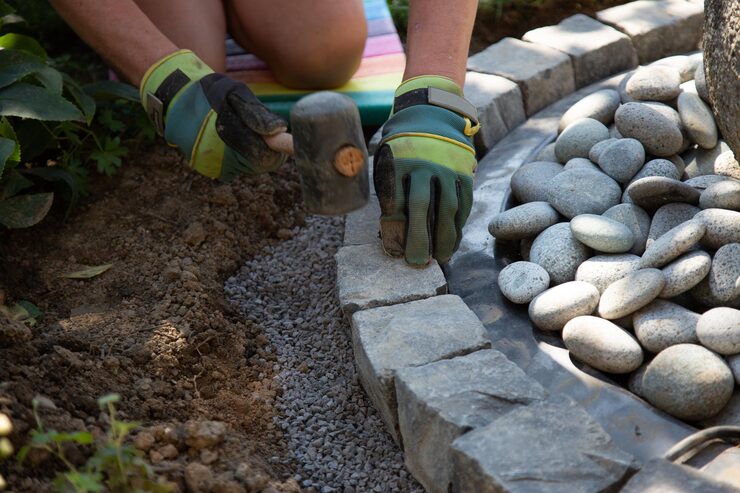
What the work involves below the surface
The stone is the last and smallest part of the job. A cobblestone apron stays flat or goes wavy depending on what is underneath it.
What's under the stone
Excavation depth, a compacted gravel base, and a bedding layer carry the load and let water drain through rather than pool under the stones and freeze.
Edge restraint matters most
Cobblestone without a buried, compacted edge restraint will walk over time. The restraint is what keeps the pattern tight through years of Harvard frost heave, freeze-thaw cycles, and plow blades scraping along driveway and apron edges each winter.
Granite vs. concrete cobble
Granite cobble costs more but barely weathers and can be reset indefinitely. Concrete cobble is cheaper upfront but fades and chips faster under freeze-thaw.
Grade sets the apron's job
On a sloped Harvard frontage, the apron isn’t decorative. It has to shed water away from the road and the drive base, not channel it toward either.
Matching an older house
Cobble reads differently against a Harvard colonial farmhouse than against a newer build.
Materials and the trade-offs
Below the surface: what actually holds it flat
Cobblestone that stays flat and tight for the long haul is built, not just laid. Excavation has to go deep enough to clear the organic topsoil that holds moisture and shifts with the seasons. Under that, a compacted gravel base gives the stones something stable to sit on and a path for water to drain through, instead of pooling and freezing beneath the surface.
A thin bedding layer of sand or stone dust goes on top of the base, and the cobbles are set into that, then compacted again so they lock together. A buried concrete or granite curb at the edges restrains the field so it can’t spread outward under traffic and plow pressure. Skip any one of those layers and the stones start to rock, gaps open, and weeds or washed-in sediment follow. On a long Harvard driveway where the apron takes the brunt of turning trucks and trailers, that base work matters more than the stone pattern on top.

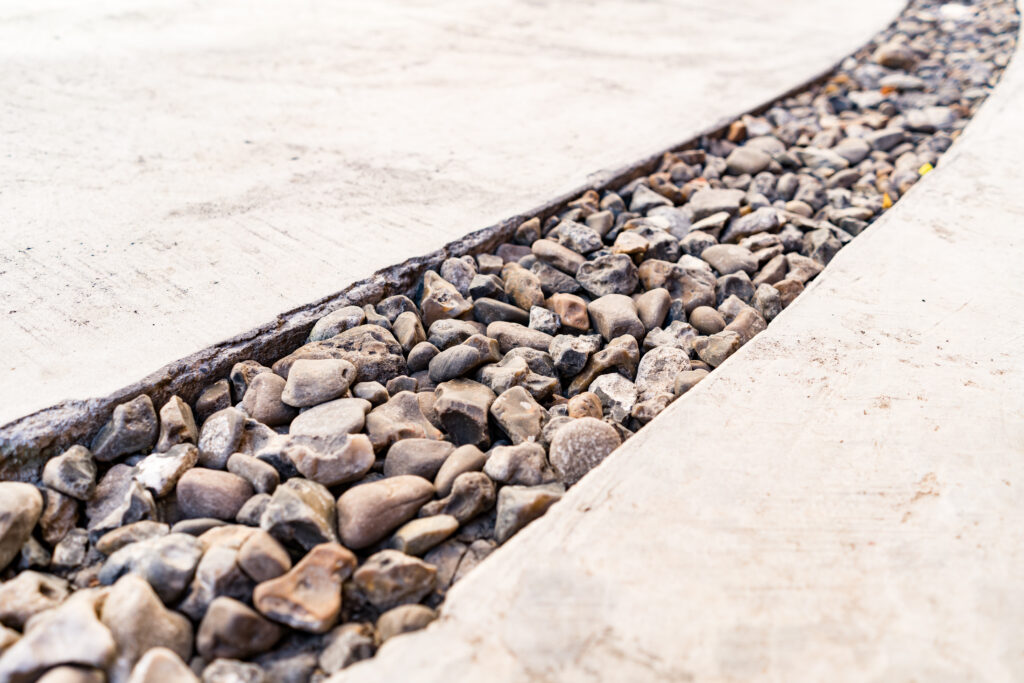
Materials: granite, concrete cobble, and the trade-offs
Granite cobblestone, often reclaimed from old New England roadwork, is the most durable option and the one that ages best around Harvard’s older farmhouses and stone-wall lined lots. It doesn’t fade, doesn’t chip easily, and can be lifted and reset if the base ever needs rework after a hard winter’s frost heave, which makes it the better long-term choice for a property you’re not planning to redo. It costs more to buy and install because the stones are irregular, vary in thickness, and take longer to lay by hand.
Drainage, grade, and tying it into what's already there
Harvard’s orchard-country terrain means a lot of properties sit on real grade, not a flat half-acre. Once a hard, compacted surface goes down, water that used to soak into gravel or lawn has to go somewhere else. The apron and edging need to pitch away from the house foundation and the gravel drive’s base, toward existing swales, a ditch line, or lower ground that was already handling runoff before the work went in. Get the pitch wrong and you’ve built a channel that erodes your own driveway base or sends water somewhere a neighbor or the road didn’t have it before.
The other half of the job is matching what’s already there. An apron and edging should read as part of the same property as the stone walls, the plantings, and the house, not as an unrelated add-on. That means choosing a stone color and laying pattern that work with an older farmhouse’s fieldstone or granite features, and keeping the apron in proportion to a long, modest gravel drive rather than making it look like the entrance to something larger than the house behind it.
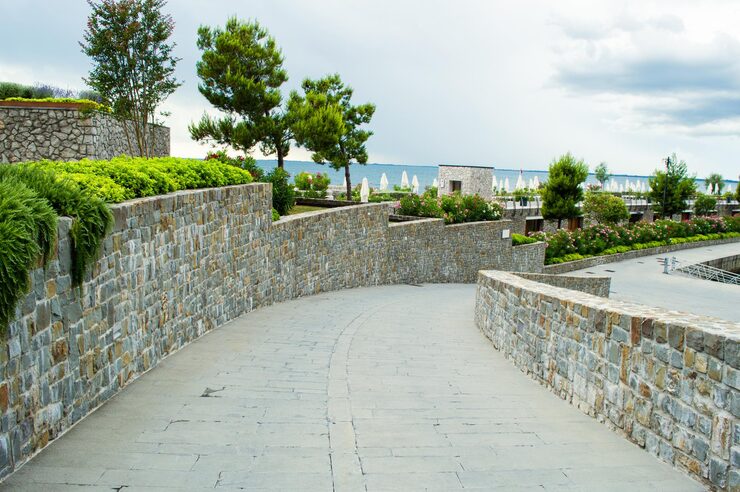
Where this suits Harvard properties
Long gravel entries
A cobblestone apron at the road end of a long gravel drive gives a firm, defined transition without paving the whole run, keeping the rural feel while stopping gravel migration onto the road.
Orchard and farm frontages
Sloped orchard-country lots shed water fast. Cobble edging along the drive's low side holds gravel in place and keeps runoff from cutting channels down the grade after heavy rain.
Houses set well back
A longer approach gives the apron room to do real work: slowing cars off the road, marking the start of private property, and setting the tone before the house ever comes into view.
So tar and chip suits a longer, gentler Harvard drive with some room around it. It is a poor match for a short, steep or shared one, or one that opens straight onto the walk.
Questions we hear
Can cobblestone edging work with a gravel driveway, or does the whole drive need to be paved?
It can stand on its own. A cobblestone apron at the street and edging along the first section of drive gives you a solid, defined entrance while the rest of the drive stays gravel. Plenty of Harvard properties use exactly this split.
Will cobblestone edging stop gravel from spreading onto the road?
A properly set edge restraint, bedded and backed below grade, holds the line between gravel and pavement far better than gravel alone against an open edge. It won't stop every stray stone, but it stops the slow creep that widens a cut over the years.
Does frost affect cobblestone the same way it affects asphalt?
Cobble moves with frost too if the base underneath isn't built to drain and compact properly. The stones themselves don't crack like asphalt, but a poorly prepared base will still heave and leave the joints uneven.
How does cobblestone edging handle snow plowing on a long rural drive?
Set low and tight to grade, cobble edging takes a plow blade better than loose gravel edges or raised curbing. The main risk is a blade catching stone that sits proud of the surrounding surface, which comes down to how it was set.
Next step
Call us at (413) 337-3772. Tell us about the lot, the slope and what you want the frontage to look like. We have been working in this area since 1988, and we will tell you plainly what suits your property.