
Walkway Installation in Sharon, MA
Most Sharon properties are not flat. Lots near Lake Massapoag and through the wooded sections of town roll with the land, and a lot of driveways arrive at the front door at an angle, through trees, with no clear path from the parking area to the entry. A front walk in Sharon has to do real work: carry someone safely from a car to a door across a grade change, around root systems, and through soil that is often sandy but uneven under tree cover. This is not a driveway repair job. It is a built surface that has to be planned from the ground up, and the planning matters more here than the material you pick on top.
What holds a walkway flat
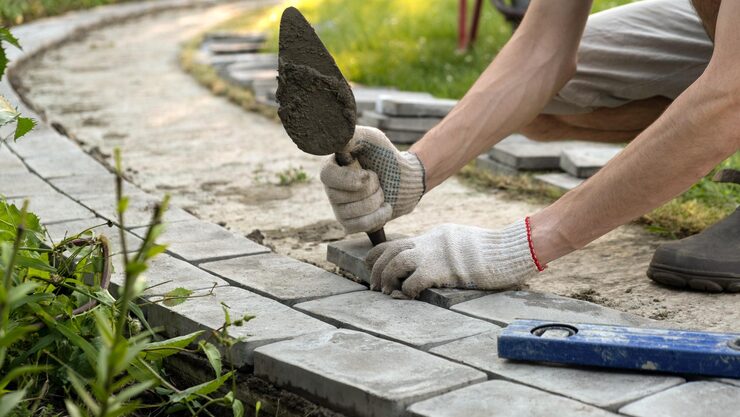
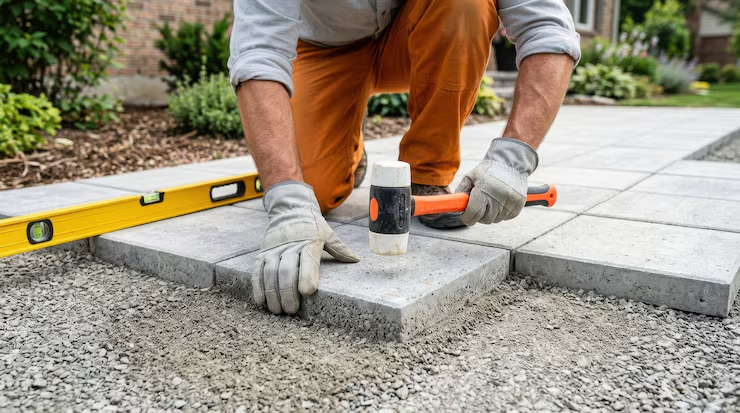
Everything that matters on a walkway happens before the surface goes down. Excavation depth, the base material, how well it is compacted, the bedding layer under the pavers or slab, and the edge restraint holding the whole assembly in place. Massachusetts frost moves water-saturated soil upward in winter and lets it drop back in spring. A walkway built on a thin, poorly compacted base rides that movement unevenly, paver by paver, until the surface humps and dips. One built on a properly compacted base, with bedding that drains, moves as a unit or does not move at all. In Sharon’s sandier soil pockets this works in your favor, since sand drains fast and resists frost heave better than clay. But sandy soil only holds its shape if it is compacted correctly first. Loose sand under a walkway is as big a problem as waterlogged clay.
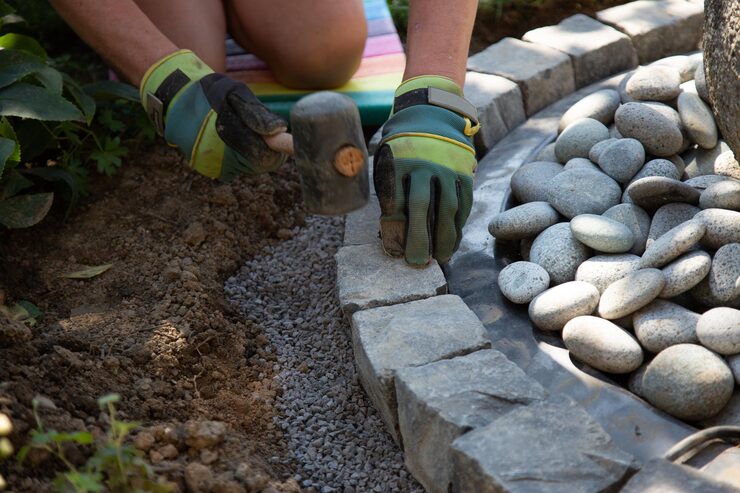
Edge restraint deserves particular attention on a property with mature trees. Roots searching for moisture will find the soft, uncompacted soil along an unrestrained walkway edge before they find much else, and once a root gets under an edge, it lifts pavers from below in a way that is hard to fix without pulling up the section. A proper edge restraint, set below grade and anchored into the base, keeps that edge locked down regardless of what the roots do a few feet away.


What Our Clients Say
Materials and real trade-offs
Pavers, natural stone, and poured concrete behave differently on a Sharon walkway. Pavers flex and reset easily after frost or roots shift them. Stone ages beautifully but costs more and patches poorly.
Bluestone fits a wooded Sharon lot visually, especially near stone walls or an older farmhouse, but it’s heavier to set and repair than paver units if one stone cracks. Discuss base prep, drainage, and matching existing stonework before installation begins.
Brick holds color and pattern well on a traditional Sharon property but can become slick under tree shade, where moss and algae take hold on a damp, shaded surface year-round.
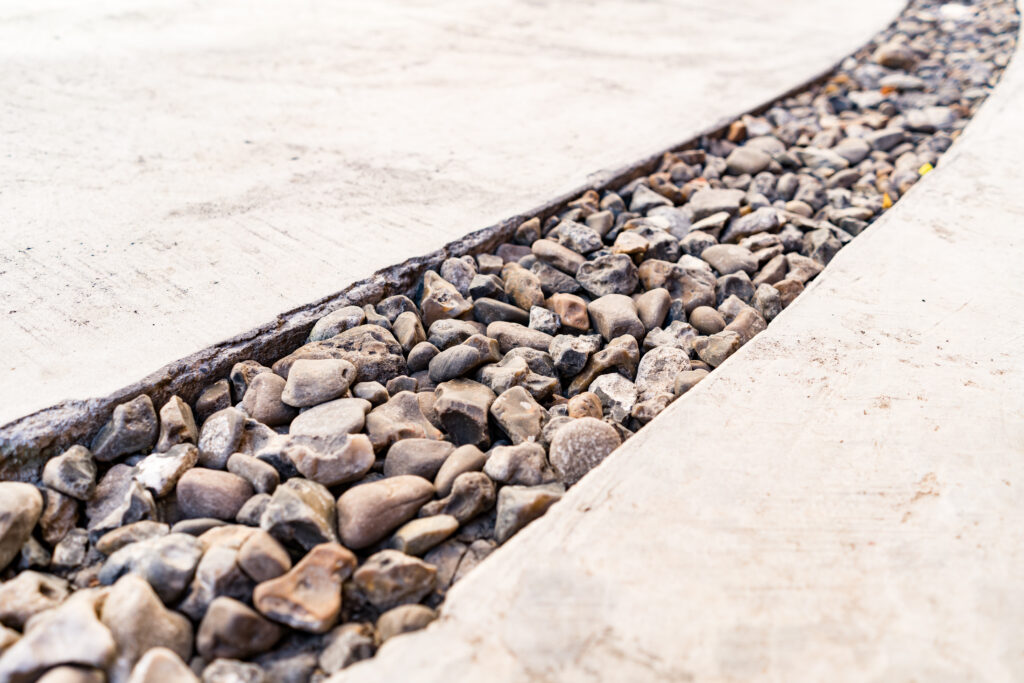
Gravel or stepping-stone paths cost less and drain well in Sharon’s sandy soil, but they’re harder to keep level over time and shift with frost heave, making them less ideal where someone needs a firm, even surface underfoot year-round.
Grade change and routing
Where a Sharon lot drops from driveway to door, the walkway route can absorb the slope gradually, or a single step or low retaining edge can handle the grade change at one point instead of a long sloped run.
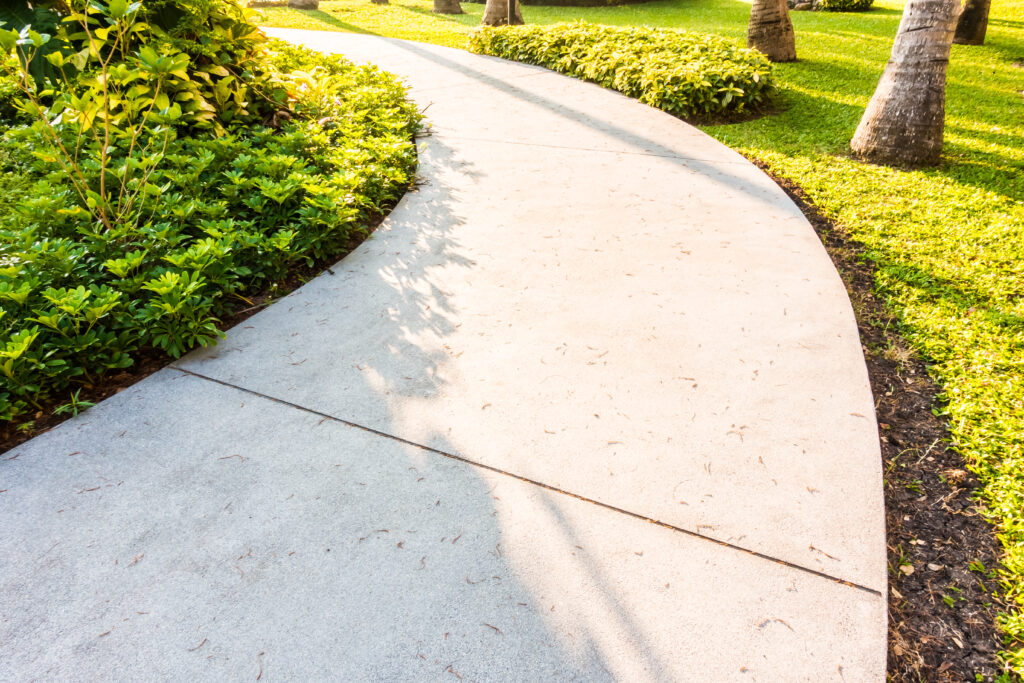
In Sharon, a walkway route that curves slightly around an established tree instead of cutting straight toward it avoids root damage during excavation, preserves a mature canopy over the new surface, and settles more evenly through seasonal freeze-thaw cycles.
Choosing a material
The materials are not equal. Each suits some properties and not others.
Tying into the drive and entry
A walkway that meets an asphalt or gravel driveway needs a clean transition where two different materials and edge heights meet, so the joint does not become a trip point or a spot where water collects.
Where a front entry sits above grade, the top step or landing has to be built to the same base standard as the rest of the walk, not treated as an afterthought once the path is finished.
Matching what is already there
Many Sharon homes already have stone walls, foundation plantings, or an existing stoop. A new walkway reads as part of the property when its material and joint pattern echo what is already on site, rather than introducing something unrelated.
On an older Sharon house, a simpler running-bond paver or natural stone laid with tight, irregular joints usually sits better than a busy modern pattern that competes with existing stonework, fieldstone walls, and mature plantings common throughout the neighborhood.
Where this suits Sharon properties
Wooded lots with a long approach from driveway to door are exactly where a well-built walkway earns its keep, turning an awkward walk across roots and slope into a surface that holds up through a New England winter.

Planning the work for your lot
Every walkway on a wooded or sloped Sharon property starts with reading the site before anything is designed. We walk the route from driveway to door, note where mature trees sit close enough to affect root paths, and check where the land already drops or rises so the base and drainage plan works with the grade instead of fighting it later. Sandy soil pockets common around Sharon drain well once compacted properly, but they still need real attention to base depth and edge restraint, because a shortcut at the base shows up as a wavy or heaving surface within a few winters, not immediately. We also look at what's already there, stone walls, an existing stoop, foundation beds, so the new walkway ties into the house instead of looking added on. Material choice comes after that groundwork, matched to how the path will be used, how much upkeep the owner wants, and how the surface needs to perform through freeze-thaw cycles on that lot.
What drives the price
A new walk has to meet several existing things cleanly.
- The entry : The walk must arrive at the door at a sensible height. The threshold sets the finished level, so the work starts at the door and runs outward.
- The drive : Where a walk meets a drive, the levels and the drainage have to agree. A mismatch becomes a trip edge or a puddle.
- Walls and planting : Existing stone walls, foundation beds and mature trees constrain the route. Roots under a path are worked around, not cut through without thought.
- An older house : Scale, colour and pattern should follow the architecture. A narrow, dark stone walk suits an old house differently than a broad paver field does.
Get a walkway built for your lot
If you are dealing with a sloped approach to your front door, tree roots close to where a path needs to go, or an entry that does not connect cleanly to your driveway, this is a site visit worth having before any material gets chosen. Driveway Specialists has worked wooded and sloped Norfolk County lots since 1988, including properties in Sharon and nearby Walpole and Canton, and we look at the ground first and the design second. Grade, drainage, and root lines all factor into where a walkway actually belongs, not just where it looks good on paper, and getting that wrong is what leads to heaving, pooling, and cracked sections a few years down the road.
- Layout that ties cleanly into your existing driveway, steps, or porch
- Material options suited to Sharon’s terrain, from pavers to poured concrete
- Proper base prep and drainage planning to prevent frost heave and settling
- Attention to tree roots and slope so the path holds up long-term
Call (413) 337-3772 to set up a time to walk the route with us and talk through what will actually work on your lot.
Before you call
It helps to know:
- Where the walk starts and where it needs to end
- Whether the route crosses a slope or a shared area
- Which material you lean towards, and whether the house is older
- Where water currently runs on the property
Questions people ask
Can a walkway go around mature trees instead of removing them?
Yes, and on most wooded Sharon lots that is the better option. Routing the path with a slight curve around an established tree avoids cutting through its root zone during excavation and keeps the tree's canopy and root structure intact, which also protects the walkway from future root heave closer to the trunk.
Does sandy soil in Sharon mean the base work matters less?
No. Sandy soil drains well, which helps resist frost heave compared to clay, but it still has to be excavated to the right depth and compacted properly. Loose, uncompacted sand under a walkway will settle unevenly just like any other poorly prepared base.
What happens where the new walkway meets the driveway?
That transition needs a clean, level joint between the two materials so it does not become a trip hazard or a low point where water collects. We plan that junction as part of the walkway design rather than as an afterthought.
How does a sloped lot change the walkway design?
On a lot with real grade change between the driveway and the front door, the route can either rise gradually along its length or take up the change in one spot with a step or low retaining edge, depending on how steep the drop is and how the path is used.
Next step
Call Driveway Specialists on (413) 337-3772. We are a family-run company in business since 1988, and we will walk the route with you and talk through material, grade and drainage before anything is priced.