
Patios in Acton, MA
Acton lots tend to be wooded and set back, with long drives winding through trees before the house even comes into view. That same privacy is exactly what makes a patio worth building here – a space tucked under the canopy, off the back of the house or beside it, gets used because nobody can see in from the road. The question is whether the ground under that space is built to hold it.
Acton sits on sandy glacial soil for the most part, which is good news for anyone building a patio. Sand drains. Water that lands on the surface moves down and away instead of sitting against a base and freezing. That matters more than almost anything else in this trade, because freeze-thaw is what wrecks patios in Massachusetts – not the paver material itself, but what happens underneath it every winter.
What happens below the surface
A patio that stays flat for years and one that heaves and separates within a couple of winters are built the same way on top. The difference is underneath: excavation depth, the base material, how well it is compacted, and whether there is an edge restraint holding the perimeter in place. Skip any one of those steps and frost will find it. Water gets under the pavers, freezes, expands, and pushes. Do it properly and the base itself handles that movement instead of the surface.
Acton’s sandy soil is an advantage here because it does not hold water against the base the way clay does. A base built on sand drains through it rather than sitting saturated. That does not mean the excavation and compaction steps get skipped – they do not – but it means the work has less to fight against than it would on the heavier soils you find in some neighboring towns.
Wooded lots bring their own set of practical considerations that flat, open yards do not. Tree roots run wide, often well beyond the drip line, and cutting through a major root to set a base can leave a tree unstable for years before it shows. Part of laying out a patio on a treed Acton property is deciding where the excavation can go without compromising something that took fifty years to grow. Shade also means the patio surface stays damp longer after rain, which affects the choice of paver – some surfaces get slick under moss and leaf litter in a way that open, sunny patios never do, so material choice and drainage slope both deserve more attention here than on a bare lot.
A few things worth asking about before work starts:
- How root systems near the planned footprint will be handled during excavation
- Whether the base depth accounts for Acton’s frost line, not just a standard minimum
- How surface water will be directed away from the house foundation, especially on a sloped, wooded lot


What Our Clients Say
What happens below the surface
A patio is a thin finished layer sitting on a structure you never see. That structure decides whether the surface is flat in ten years or wavy in two.
Long wooded drives mean most Acton patios sit well back from the street, screened by trees. That privacy is the reason to build one – it gets used.
Mature oak and maple cover much of Acton. Roots can heave a patio edge over years, and shade keeps surfaces damp longer after rain or snow.
Materials and how they age
Concrete pavers are the most common choice for Acton patios. Manufactured to a consistent size, they keep joints tight, and individual units can be lifted and reset if one settles – something a poured slab simply can’t do.
Natural stone, usually bluestone or granite, costs more and ages better in one sense: it does not fade or wear the way manufactured pavers can. It is harder to source a matching replacement piece years later.
Poured concrete is the cheapest option up front. It cracks along frost lines as the ground moves, and once it cracks the whole slab shows it – there is no swapping a single section.
In Acton's older, tree-lined gardens, gravel or paver combinations work well for informal seating areas beneath established trees, where roots make a fully excavated base harder to guarantee long term.
Materials and the trade-offs
Drainage is not optional
Every patio changes where water goes. A hard surface sheds rain instead of letting it soak in, and that water has to be directed somewhere – away from Acton foundations, never toward them.
Pitching the patio away from the house, even a slight fall, keeps water from pooling against the foundation or the lowest exterior step. Get the grade wrong and a dry basement becomes a damp one.
On a sloped Acton lot, a patio built into a grade also needs a plan for where the uphill water goes once it hits the hard edge – a swale, a drain, or a planted buffer, not just hope.
Tying into what is already there
A patio rarely stands alone.
Matching material and joint style to an older Acton house takes judgment, not a catalog page.
Where this fits an Acton property
Wooded, set-back lots are common across Acton, and they create patio conditions that differ from a tight in-town yard. Tree cover means working around roots and accepting more shade and damp than an open lawn would give, which has implications for which materials resist moss and staining over time. Sandy soil means the base work has less resistance to fight, which is an advantage once excavation and compaction are done right, though it also drains quickly in a way that favours a patio over a lawn in the wetter months. And the scale of many Acton lots means there is often room to connect a patio to a walkway or a fire pit area without cramming everything against the house, rather than squeezing a single slab into whatever gap is left.
- Root-aware excavation that protects mature trees instead of cutting straight through them
- Base depths suited to sandy soil rather than a generic specification
- Layouts that link the patio to existing paths, fire pits, or a driveway due its own attention
Next step
A patio on a wooded Acton lot has to answer to roots, shade, and grade before it answers to style. Mature trees along streets near Nagog Hill, Pope Road, and the lots backing up to Town Forest mean root systems often run closer to the surface than homeowners expect, and a patio base laid without accounting for them will heave within a few seasons. Driveway Specialists has worked across Middlesex County’s sandy soils and older subdivision lots since 1988, and brings that history to every site visit: walking the property, checking where water actually collects and runs off after a storm, noting shade patterns that keep sections of a patio damp or icy longer than the rest of the yard, and looking at how the new space ties into existing walkways, decks, or foundation grading. From there we talk through base depth, drainage, and material choices suited to patios built to hold up through MetroWest winters of freeze-thaw cycles and heavy spring runoff. Call (413) 337-3772 to arrange a visit and start working out a layout that fits your lot’s particular conditions rather than a generic plan.
Where this suits Acton properties
Steep lots.
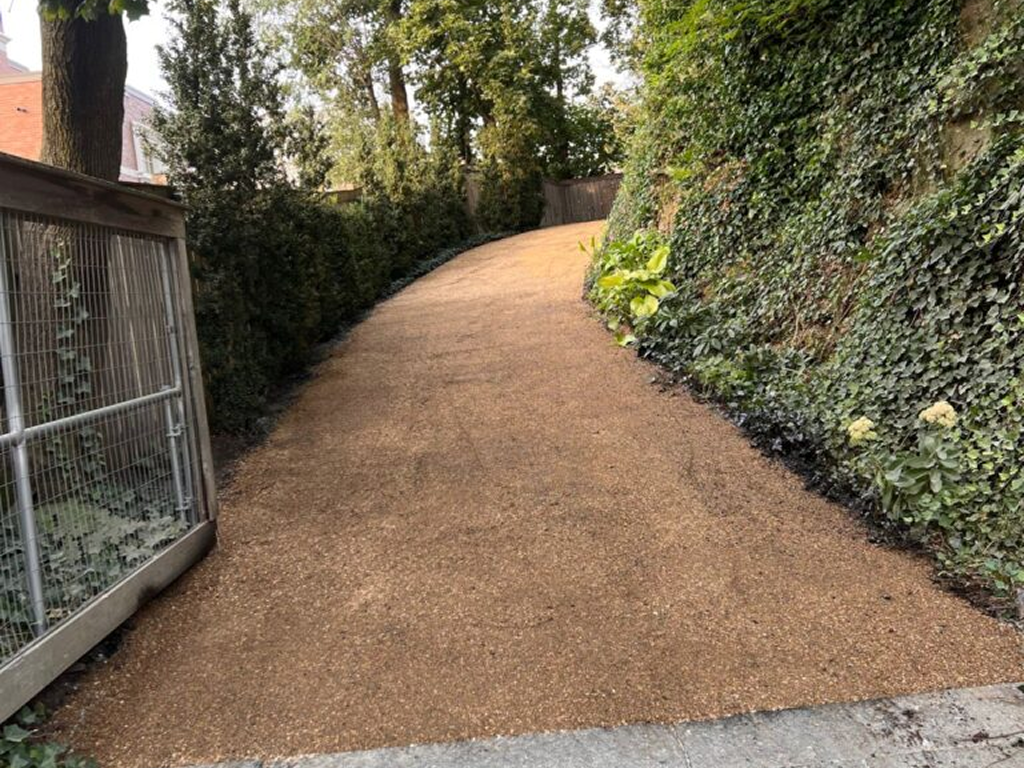
A patio built into a slope needs a plan for uphill water before the first paver goes down. On Acton's hillier parcels that means a swale or drain, not just a change in grade.
Wooded, set-back properties.
Long drives through trees give privacy that makes a hidden patio worth building, but roots and shade mean planning the base around what is already growing there.
Older subdivision houses.
Many Acton homes from the 1960s through 80s are reaching the point where drive, walkway, and patio all need attention together rather than one surface at a time.
Questions about patios in Acton
Does Acton's sandy soil actually make a difference for patio work?
Yes. Sandy glacial soil drains well, so a properly built base is not sitting in trapped water through the winter. That reduces the frost-heave risk compared with the heavier clay soils found in parts of the region, though excavation and compaction still have to be done correctly regardless of soil type.
Can a patio be built close to mature trees without harming the roots?
It depends on the tree and how close the work sits to the trunk. Full excavation near large roots can damage a tree, so in those spots a shallower gravel or paver system is often a better fit than a deep base build.
How does a patio handle drainage near the house foundation?
The patio surface should pitch gently away from the house so water runs off rather than pooling against the foundation. On sloped lots, water coming from uphill also needs a route around or through the patio edge.
What is the difference between pavers and poured concrete for a patio?
Pavers are individual units that can be lifted and reset if the ground shifts under one section. Poured concrete is a single slab, so when frost cracks it, the whole surface shows the damage and there is no partial fix.
Does a new patio affect an existing driveway or walkway?
It can, especially where grades and drainage overlap. If the patio sits near the drive or a walkway, the grading plan has to account for all of it together so water does not get redirected onto a surface that was not built to take it.
Next step
Tell us what you have: the slope, the house, how the space gets used. We will look at the lot and talk through what will work on it. Call Driveway Specialists at (413) 337-3772. We are family-run and have been working in Massachusetts since 1988.