
Walkway Installation in Bedford, MA
Bedford’s mid-century colonials and capes mostly sit on flat lots with wide frontages, which is exactly the kind of property where a front walk earns its keep. There’s no steep grade fighting you, no narrow side yard forcing an awkward path, just a straight run from driveway or street to front door that either looks like it belongs there or looks bolted on. Most homeowners calling about this aren’t fixing anything broken. They’re looking at a slab of cracked concrete, or no defined walk at all, and deciding the entry deserves better than a worn line in the grass.
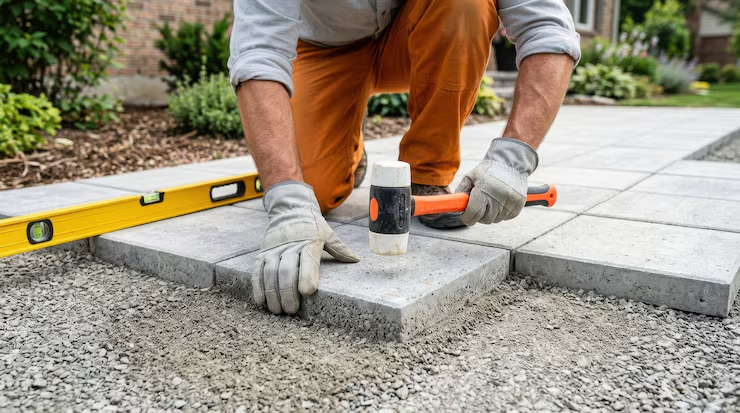
The work that actually matters happens before any stone or paver goes down. A walkway fails the same way a driveway fails: from underneath. Excavation depth, base material, compaction, and edge restraint decide whether the surface stays flat through a Massachusetts winter or starts heaving and gapping by the second freeze-thaw cycle. Frost doesn’t attack the surface, it attacks what’s under it, so skipping base prep to save a day of labor is the single most common reason a new walkway looks tired within a few years. A properly built base usually means digging well past topsoil into stable subgrade, laying a compacted gravel layer thick enough to let water drain instead of pool, and screeding a setting bed that’s consistent from one end of the path to the other. Rushing any one of those steps shows up later as a lip at a joint, a puddle after rain, or a paver that rocks underfoot.
Matching the house, not just the budget
Bedford’s housing stock skews older and more traditional than some of the newer construction further out in Middlesex County, which matters when picking a material. A poured concrete walk reads differently against a 1950s cape than a bluestone or brick path does, and getting that wrong is a visible mismatch every time someone pulls into the driveway. This isn’t about spending more. It’s about picking a surface, a joint pattern, and an edge that look like they were planned alongside the house instead of added after. A few things worth settling before work starts:
- Width: a single-file 3-foot path reads very differently than a 4- to 5-foot walk that lets two people pass comfortably.
- Material continuity with existing driveway, steps, or patio, so the property doesn’t end up with three competing looks.
- Edge detail, whether that’s a soldier course, a steel edge, or a simple clean cut, since it’s what the eye catches first.
Drainage is the other piece that’s easy to ignore and expensive to fix later. Any hard surface changes where water goes. A walk that’s pitched flat, or worse, pitched toward the foundation, turns every storm into a maintenance problem for the house itself. Pitching away from the structure isn’t a nice-to-have detail, it’s the difference between a dry basement and a wet one, and it’s worth confirming before the base is set, not after the surface is down and the pitch is locked in.


What Our Clients Say
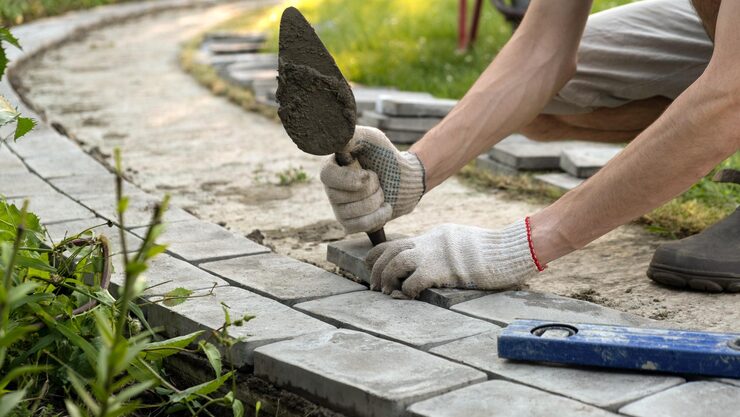
Below the surface, a walkway is excavation, compacted base, and edge restraint working together. Bedford winters move soil through repeated frost and thaw.
Concrete pours flat and holds its line well, but once it cracks, the repair is visible. Pavers settle and heave through Bedford winters too, though a single paver can be lifted, releveled and reset without leaving a noticeable patch behind.
Bluestone and natural stone age beautifully and suit an older Bedford cape or colonial, but they cost more upfront, and each irregular piece needs its own bedding depth, careful leveling, and skilled hands to keep the walkway stable through New England's freeze-thaw winters.
Brick holds color and pattern for decades but needs a firm, well-drained base underneath or individual units rock loose within a season or two.
Whatever the surface, a Bedford walkway has to shed water away from the house. A flat or reverse-pitched walk pushes runoff toward the foundation instead of the lawn, inviting cracks, erosion and soggy patches right where you walk every day.
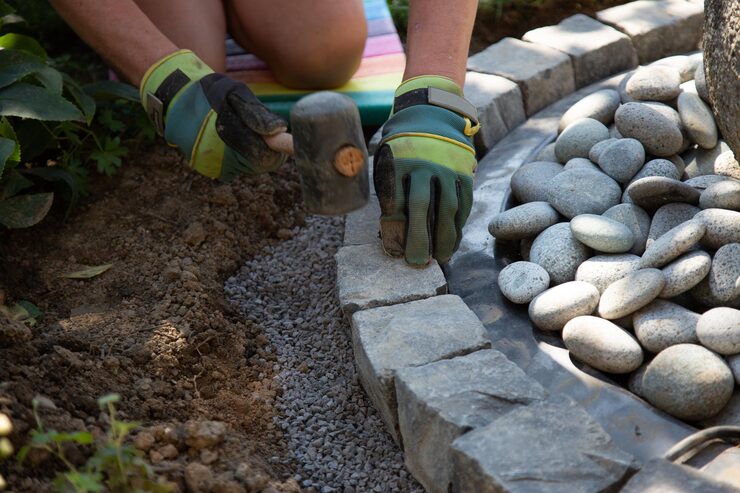
Edge restraint keeps a paver or brick walk from spreading sideways as frost pushes and pulls the base each winter. Without it, lines drift and joints widen.
Choosing a material
The materials are not equal. Each suits some properties and not others.
Where a new walkway meets the driveway apron or front steps, that transition needs careful planning. In Bedford, mismatched joints and freeze-thaw movement are where most walks start to crack, settle, or fail first.
Tying a new walk into existing stone walls, planting beds, or an older concrete stoop takes matching the material and the age, not just the width of the path.
On Bedford's flatter lots, there's usually enough room to excavate properly, lay a solid gravel base, and compact it in stages for a walkway that drains well and resists frost heave—harder to achieve on a tight urban lot nearby in Lexington or Concord.
A curved walk reads softer against a cape's informal front yard, while a straight run suits a symmetrical colonial facade better in Bedford neighborhoods.
Mature trees along older Bedford streets mean root intrusion is a real consideration for any new walkway.

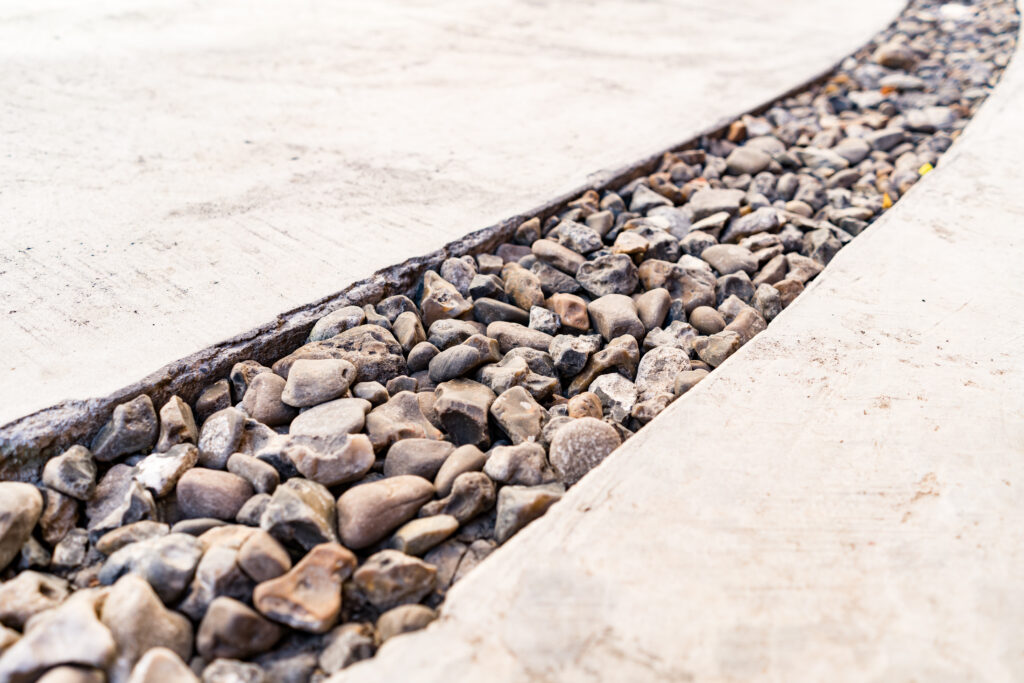
Why the base matters more than the material
Every material choice gets discussed first, but the base decides the outcome. Excavation needs to go below the zone where frost does most of its work, and the compacted base above it needs to be uniform, because soft spots settle unevenly while firm spots don’t move at all. That difference is what creates the wavy, tripping-hazard look on a walkway only a few years old.
Bedford’s soil and flat grading generally make this easier to get right than in towns with heavier clay or steep lots, but easier doesn’t mean automatic. A crew that compacts in thin lifts and checks grade as they go builds something that stays flat. A crew that dumps base material in one pass and runs a plate compactor over it once does not, no matter how good the surface looks on installation day.
Edge restraint ties directly into this. Pavers and brick need a hard edge, buried and anchored, to keep the field from spreading as frost cycles push outward each winter. Concrete needs control joints placed where cracking is least noticeable, because concrete will crack eventually either way.
What drives the price
A new walk has to meet several existing things cleanly.
- The entry : The walk must arrive at the door at a sensible height. The threshold sets the finished level, so the work starts at the door and runs outward.
- The drive : Where a walk meets a drive, the levels and the drainage have to agree. A mismatch becomes a trip edge or a puddle.
- Walls and planting : Existing stone walls, foundation beds and mature trees constrain the route. Roots under a path are worked around, not cut through without thought.
- An older house : Scale, colour and pattern should follow the architecture. A narrow, dark stone walk suits an old house differently than a broad paver field does.
Getting the design right for the property
A walkway in Bedford has to do two jobs at once: move people from the driveway or street to the front door, and look like it was designed with the house rather than dropped onto the lawn afterward. On the capes and colonials common here, that usually means a path width and material that reads as traditional rather than a modern paver pattern that clashes with a 1950s facade.
Where the walk meets the driveway apron and the front entry matters as much as the path itself. A clean transition at both ends, matched in material or at least in tone, reads as one connected project instead of three separate repairs stitched together. Existing stone walls, foundation plantings, and mature trees along the route all factor into layout, since root systems near older maples and oaks can affect where a rigid base can go versus where a more flexible paver bed makes more sense.
Before you call
It helps to know:
- Where the walk starts and where it needs to end
- Whether the route crosses a slope or a shared area
- Which material you lean towards, and whether the house is older
- Where water currently runs on the property
Questions people ask
How is a walkway installation different from driveway paving?
A walkway carries foot traffic, not vehicle loads, so the base and material choices differ. It's also a more visible, design-driven project tied closely to the house's entry and front landscaping, rather than a functional surface built mainly to hold up to car weight.
What walkway material suits a Bedford colonial or cape best?
Bluestone or brick generally reads more traditional against older colonials and capes, while concrete pavers offer more pattern options at a lower cost. The right choice depends on the house's age, the budget, and how much repair flexibility matters to you long term.
Why does the walkway need to pitch away from the house?
Any hard surface changes where rainwater goes. A walkway pitched flat or toward the foundation directs runoff at the house instead of away from it, which creates moisture problems at the foundation over time.
Can a new walkway be built around existing trees and root systems?
Yes, but it affects material choice and layout. A flexible paver or brick base tolerates minor root movement better than a rigid concrete slab, and the path may need to curve around root zones rather than run in a straight line.
Next step
Call Driveway Specialists on (413) 337-3772. We are a family-run company in business since 1988, and we will walk the route with you and talk through material, grade and drainage before anything is priced.