
Retaining Walls in Brookline, MA
Most lots in Brookline were cut and built on before anyone thought about modern drainage or off-street parking. The result is a lot of sloped side yards, raised front beds held up by a crumbling old wall, and driveways that drop sharply from the street to a garage set below grade. If you’re looking at a retaining wall, it’s usually because a slope is slowly losing dirt onto the walkway, an old fieldstone or mortared wall is leaning, or you want to carve a flat usable yard out of a lot that currently isn’t one.
A retaining wall is not a cosmetic add-on in this case. It’s doing structural work – holding soil at an angle it would not hold on its own, and managing the water that moves through that soil every time it rains or thaws. Done right, it also solves a problem particular to this town: with lots this small and setbacks this tight, a wall often has to do double duty as a planting edge, a seat wall, or the thing that finally makes a side yard usable at all.
What determines whether a wall stays straight for decades or starts bowing within a few winters isn’t the visible face – it’s what’s behind and under it: excavation depth, a compacted gravel base, and a drainage path for water that would otherwise build up behind the wall and push on it. Massachusetts frost moves water-saturated soil with real force. A wall without gravel backfill and a way for water to escape – usually perforated pipe tied into a drain – will take that force every freeze-thaw cycle until it fails. This is the part nobody sees and the part that decides everything.
Compaction matters just as much. Base material placed but not properly compacted settles unevenly later, and an unevenly settled base telegraphs straight up through the wall as a lean or a wave in the top course. On a short garden wall this is cosmetic. On a wall holding back a driveway or a slope above a walkway, it’s the start of a real problem – and in Brookline, where so many walls sit close to foundations, sidewalks, or a neighbor’s fence line, a failure rarely stays contained to just the wall itself.
Brookline’s older retaining walls are often mortared fieldstone or brick, built before anyone added drainage behind them at all. That’s frequently why they’re failing now – not bad stone, just decades of water with nowhere to go. Rebuilding one of these gives you a chance to keep the look the town is known for while finally giving the structure what it was missing: a proper base, hidden drainage, and a batter angle that leans slightly into the slope instead of standing perfectly vertical against it.
Material choice matters too, and it’s worth thinking through before work starts:
- Segmental concrete block – engineered for taller walls, straightforward drainage integration, consistent long-term performance
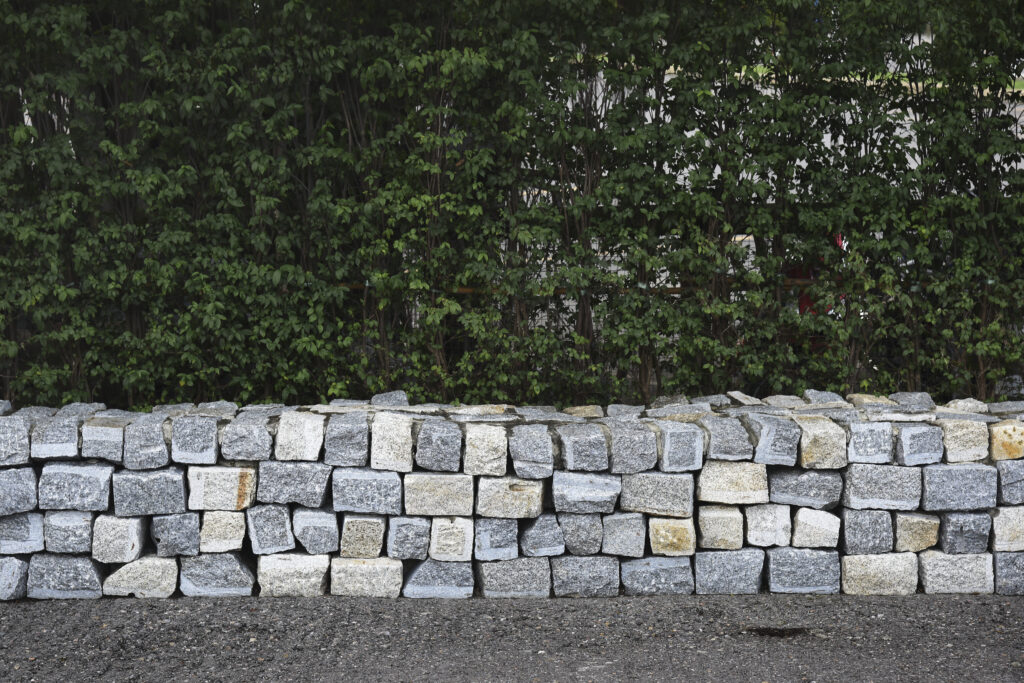
- Natural stone – fits Brookline’s older streetscapes, but needs a skilled hand to keep coursing tight and stable
- Poured concrete – best for walls under real structural load, like one supporting a driveway or a raised patio


What Our Clients Say
What holds a wall up is underground
The part you see is the smaller part of the job. Below it, the work runs in a fixed order.
Fieldstone and brick look right against a prewar Brookline house, but they're the hardest to repair cleanly later – matching stone decades on is genuinely difficult.
Concrete block systems hold freeze-thaw well and cost less installed, though the modular look reads more modern than a Brookline Victorian often wants.
Natural granite – fieldstone, boulder, or cut block – suits Brookline's older housing stock best and ages well, though it carries a higher material cost.
Segmental retaining wall block interlocks mechanically, needs no mortar to fail, and is the most repairable option if a section ever shifts.
None of these choices is automatically correct.
Drainage behind the wall
Drainage and grade decide where the water goes
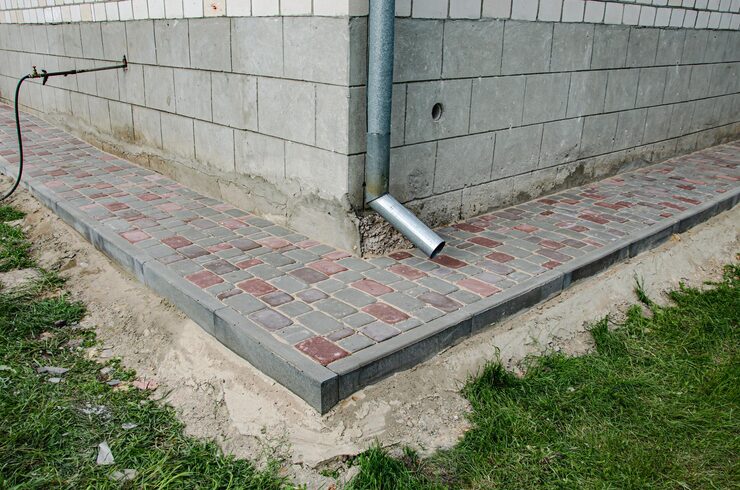
Once a slope is terraced and a wall goes in, water that used to spread across open ground now has one or two places to go. Getting that wrong means pooling against a foundation, runoff onto a neighbor’s lot, or pressure building up behind the wall itself. Every wall needs a slight pitch at its base and backfill of free-draining stone, not the clay-heavy native soil usually sitting right there in the excavation.
In Brookline, lots sit close together, so grading one yard affects the one next door. A wall built without a plan for where water exits often becomes a problem on someone else’s property, not just your own. Pitching away from the house and toward a real outlet – a dry well, a storm connection where one exists, or daylighting at a lower point on the lot – isn’t optional. It’s the difference between a wall that holds up and one that’s fighting water every spring.

Choosing the material
Tying new work into what's already there
Few retaining wall jobs in Brookline stand alone. There’s usually an existing driveway apron, a front walk, mature plantings, or an older wall somewhere on the property that the new work has to sit next to without looking bolted on. Matching material tone, cap detail, and wall height to the house’s age takes more judgment than following a catalog spec.
Where a new wall meets an existing driveway edge, the base work has to tie together too – two separate bases settling at different rates is exactly how you end up with a step or a gap opening up at the joint within a few seasons. On a lot with mature trees nearby, root growth is also a factor in how deep a footing needs to go and how close to the trunk line it’s safe to excavate.
Where this work fits in Brookline
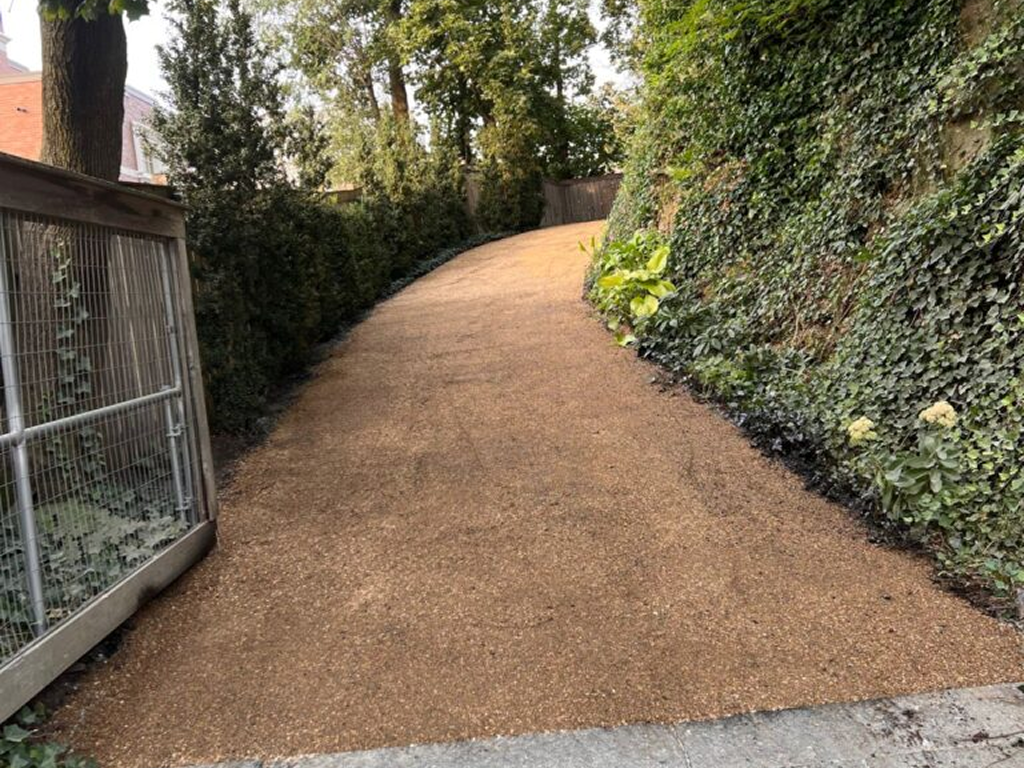
Brookline’s dense Victorian and prewar streets – narrow lots, short drives, steep little pitches down to below-grade garages – are exactly where retaining walls earn their keep. A wall that reclaims four feet of unusable slope into a flat side yard, or stops a front bed from washing onto the sidewalk every storm, solves a problem that’s specific to how these lots were originally graded, not a generic yard issue. The same logic applies to terracing a sloped backyard near Brookline Village or shoring up a cut along a driveway on the hillier streets toward Chestnut Hill.

Getting the wall right the first time
A retaining wall is not something to redo in five years. Once it’s backfilled and the yard is regraded around it, fixing a drainage mistake means tearing out finished work, not patching a crack. That’s the real argument for getting the excavation, base, and drainage plan right before a single visible stone or block goes in – the part of the job nobody admires is the part that determines whether the rest of it lasts.
For larger walls, taller sections, or anything holding back a slope near a structure, an engineer’s input on wall height and footing design is worth the conversation before work starts, not after a neighbor or the town asks for it.
If you’ve got a slope losing ground, an old wall leaning, or a side yard you’d like to actually use, call Driveway Specialists at (413) 337-3772. We’ve been working on properties across Norfolk and Middlesex counties since 1988, and we can walk the lot with you and talk through what a wall here actually needs before anything is dug.
Questions we get asked
Does a retaining wall in Brookline need engineering sign-off?
It depends on height and what it's holding back. Taller walls or anything near a structure or slope typically warrant an engineer's review of footing depth and wall design, and Brookline's historic district process may also weigh in on material and appearance before work starts.
Can an old mortared stone wall be repaired instead of rebuilt?
Sometimes, if the stone itself is sound and the problem is isolated. But if the original wall was built without drainage behind it – common in Brookline's older walls – repairing the face without addressing water behind it usually just delays the same failure.
How does a small lot affect how the work gets done?
With little or no driveway to stage from and street parking tight, materials and equipment often have to come in from the street in smaller loads, and the excavation sequence has to account for less room to stockpile soil or stone on site.
What material matches an older Brookline house best?
Natural stone – fieldstone, boulder, or cut granite – generally suits Victorian and prewar housing stock better than modular concrete block, though it comes at a higher material cost and is harder to repair invisibly years later.
Next step
Call us and we will come look at the slope, the access and the water. We will tell you what the wall needs and what it will cost to do properly.