
Foundation Work in Shrewsbury, MA
Water coming through a basement wall after heavy rain. A damp corner that never quite dries out, even in a dry summer. A section of foundation that bows inward, or mortar that crumbles when you touch it. These aren’t cosmetic problems and they don’t fix themselves. If this is what’s happening at your Shrewsbury house, the issue almost always starts outside, at the wall, not inside where you can see it.
Shrewsbury has two very different housing patterns, and they produce two different foundation problems. Around the lake, older homes sit on tight lots with short drives and little room between the house and the property line. Many of these foundations are fieldstone or old poured concrete, built long before anyone used a membrane or a drainage layer against the wall. Fieldstone in particular relies on mortar joints that were never meant to hold back decades of groundwater, and once that mortar starts to go, water finds a path through almost immediately. On the east side, the newer subdivisions have poured foundations that are younger and better detailed, but they still sit in clay-heavy ground that holds water against the wall far longer than sandy soil would. Clay swells when it’s wet and shrinks when it dries, and that constant movement works against even a well-poured wall over time. Different age, different construction, same basic failure: water finds a way in because nothing outside the wall is stopping it.
A lot of homeowners try interior coatings or a sealant on the inside face of the wall first, because it’s cheaper and faster. It can hold back moisture for a while, but it doesn’t address what’s pushing water against the wall in the first place. The ground outside keeps saturating, the hydrostatic pressure keeps building, and the water keeps finding the next weak point, a crack, a mortar joint, the base of the wall. Treating the inside face treats the symptom. The cause is outside, and reaching it means excavation.
Proper foundation work generally means digging down along the affected section, inspecting the wall itself for cracking or deterioration, and addressing drainage before anything gets backfilled. Depending on the wall and the site, that can involve:
- Repairing or repointing damaged masonry and sealing cracks from the outside, where it actually matters
- Installing or restoring a drainage layer and footing drain so water moves away from the wall instead of against it
- Correcting grading near the foundation so surface water isn’t funneled straight down to the problem spot


What Our Clients Say
What's actually happening at the wall
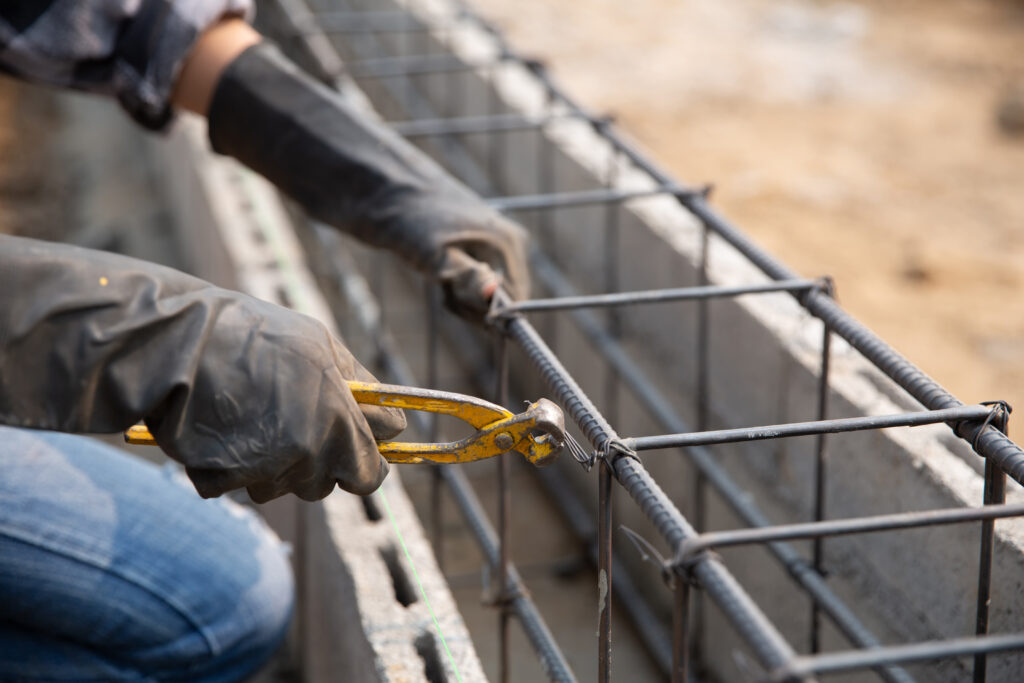
Most pre-1980s New England foundations were built on fieldstone or rubble, sometimes parged with a thin coat of mortar, with no waterproof membrane and no perimeter drain at the footing. Groundwater and surface runoff sit against that wall every time it rains, and over decades the wall absorbs it. Water doesn’t usually go under the footing and up through the slab. It moves laterally, through the stone and mortar itself, which is why you see damp patches or active seepage partway up a basement wall rather than just at the floor line.
Newer poured walls fail differently. They crack from settlement, shrinkage, or hydrostatic pressure, and without a working drain at the footing, that pressure has nowhere to release. It finds the path of least resistance: a cold joint, a tie-rod hole, a stair-step crack in a block wall.
In Shrewsbury’s clay-heavy pockets on the east side and around Lake Quinsigamond’s lower-lying streets, that pressure builds faster after a storm and drains away far more slowly than it would in sandy or well-graded soil. We check for these local patterns before recommending a fix:
Why this has to be an outside job
Fixing it properly means excavating along the affected section of wall, down to the footing, so the exterior face is fully exposed. That’s disruptive, it takes equipment and time, and it costs more than an interior coating. But it’s the only way to actually stop water at the source instead of chasing it once it’s already inside. Interior work is a stopgap. Exterior work is the repair.
Around Shrewsbury, that distinction matters more than most homeowners realise. The clay-heavy soils common across the area swell and contract with the seasons, putting constant pressure on footings and foundation walls. A sealant painted on from inside the basement does nothing to relieve that pressure or stop water migrating through cracks under load – it just hides the symptom until it resurfaces, often worse. Proper exterior work lets us inspect the actual condition of the footing, install drainage or waterproof membrane where it’s needed, and address the soil conditions pressing against the wall rather than reacting to the leak they’ve caused.
The work, in order
The work in sequence
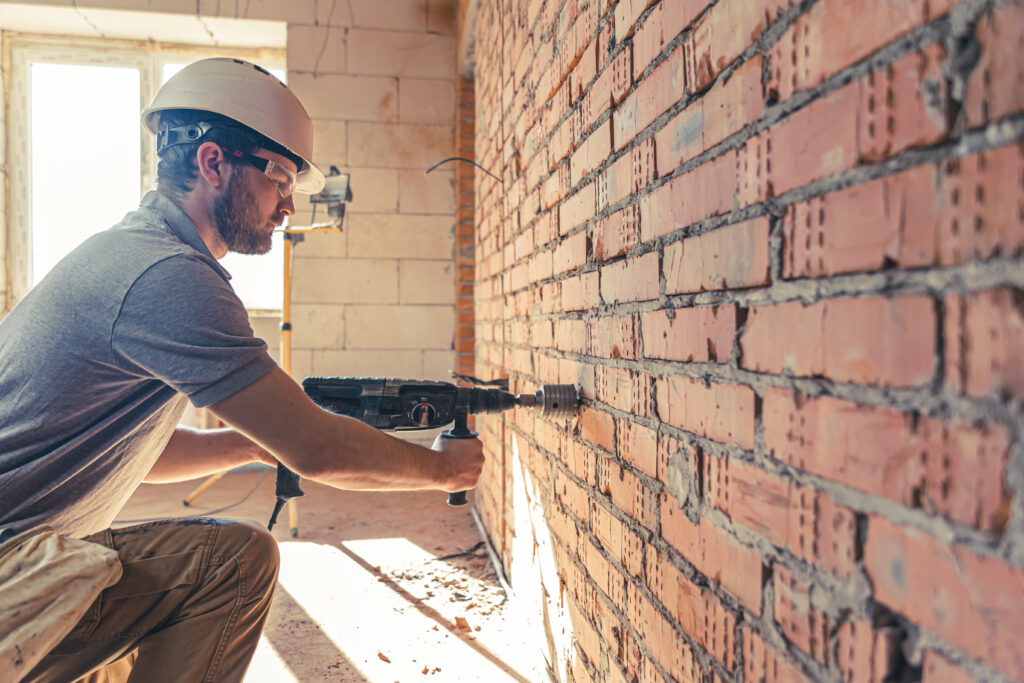
Work begins with clear access, then excavation down to the footing, usually after clearing beds, shrubs or hardscape close to the wall. Once exposed, the foundation is inspected and repaired section by section before anything goes back.
Drainage and backfill
With the wall treated, a drainage path goes in at the footing to carry water away instead of letting it collect against the foundation. Backfill then goes back in lifts, compacted as it’s placed, so it doesn’t settle unevenly later.
Reinstating the ground
Once backfill is compacted, the surface gets regraded so water sheds away from the house rather than pooling back against the wall. Any beds, walkways or drive sections disturbed during the dig get rebuilt last.
Lakeside lots and tight access
Around Lake Quinsigamond, lots are often narrow with the house close to a neighbor’s line. Reaching the affected wall can mean working by hand in sections where a machine simply can’t fit, which changes both the approach and the timeline.
Newer subdivisions, different ground
East-side homes typically have more room to work with, but the clay-heavy soil common in those subdivisions holds water against a wall longer after rain, which is often why newer foundations still see seepage sooner than expected.
If the drive or walk is in the way
On many Shrewsbury lots the driveway or a front walk sits directly against the section of foundation that needs attention. If so, that surface has to come up before excavation starts, and it gets rebuilt once the drainage and backfill work is finished, not before. Trying to work around it instead of through it usually compromises the repair, because the equipment needs a clear path to the footing and the excavation needs room to open up properly, especially on the tighter, older lots common closer to Shrewsbury town centre where setbacks leave little margin for error. It’s worth planning for this upfront rather than discovering it once digging has already begun, since it affects both the sequence of the job and how long the property is disturbed.
- Concrete or paving removed and set aside (or disposed of) before any digging begins
- Excavation and footing work completed with a clear, unobstructed path to the problem area
- Drainage corrected and backfill compacted properly before the surface goes back down
- Driveway or walk rebuilt last, once the ground beneath it has settled and been checked

What to check before anyone comes out
Before calling, take a few photos of the damp area or crack, and note whether it worsens after rain or stays constant year-round. Check whether downspouts, gutters, or the grading near that section of the house are directing water toward the foundation rather than away from it, since that’s one of the most common causes of trouble in older Shrewsbury homes. It also helps to know roughly how old the house is and what the foundation is built from, stone, block, or poured concrete, since each behaves differently and calls for a different repair approach. If there’s a sump pump nearby, note whether it’s running more than usual. None of this needs to be exact: rough notes and a handful of photos are enough to help shape the visit before anyone sets foot on site, and they often speed up the diagnosis once someone is there.
What to check and write down first
These are the pointers that help most before anyone visits.
- Note where and when. Which wall, which corner, and whether it follows heavy rain, snowmelt or a particular season.
- Photograph it dry and wet. Take pictures of the same spot on a dry day and again after rain.
- Look at the outside. Check whether the ground beside that wall slopes toward the house, whether a downspout empties near it, and whether anything piles water against it.
- Check for movement. Look for horizontal cracks, a wall that leans in, or stones that have shifted. Mark the ends of a crack with a pencil and date it, so changes can be seen.
- Check the stonework. Press on the mortar. If it crumbles or sands away, say so.
- Think about access. Where could a machine stand, and what is in its way? Tell us who shares the drive or boundary.
- Leave it as you found it. Do not seal or patch the wall before we see it. It hides what we need to look at.
Questions we get asked
Is this the same as waterproofing or sealing a basement from the inside?
No. Interior sealants and coatings are applied to the inside face of the wall and can slow moisture temporarily, but they don't stop water from reaching the wall in the first place. Foundation work in this sense means excavating outside the house to the footing, treating the wall, and installing drainage so water never builds up against it.
How do you know if my foundation is stone or poured concrete?
It usually comes down to the age of the house and what's visible from the basement interior. Many older Shrewsbury homes near the lake have fieldstone or rubble foundations, while houses built in the newer subdivisions are typically poured concrete. A site visit confirms it.
Will my landscaping or driveway be damaged during the work?
Anything close to the excavated section, plantings, beds, walkways, or a driveway edge, usually has to be moved or removed to allow access and will be reinstated once backfill and drainage are complete. The extent depends on how close it sits to the affected wall.
How long does foundation excavation and drainage work take?
It depends on the length of wall affected, how deep the footing sits, and how much access the lot allows. Tight lakeside lots with limited machine access generally take longer than open sites on larger east-side properties.
Can you tell what's wrong just from photos?
Photos and a description of when the water or damp appears are useful for an initial conversation, but confirming the cause and the right approach means seeing the foundation and the surrounding grade in person.
Next step
Call us on (413) 337-3772. Tell us which wall, what you have seen, and how the lot slopes around it. We have worked across Middlesex County since 1988, and we will tell you plainly what is likely going on and whether outside work is the right answer.