
Asphalt Repair in Shrewsbury, MA
You’re standing over it right now, maybe. A pothole that opened up after the last freeze. A patch of asphalt near the garage that’s gone soft and spidery. An edge along the lawn that’s crumbled away into gravel. The question isn’t whether it looks bad. It’s whether it’s actually failing underneath, or whether it’s a surface problem that a straightforward repair handles for a lot less than starting over.
That’s what this page is for. Not a pitch for a new driveway. A way to read what you’re looking at and figure out what it actually needs, especially if your drive has been through a few Shrewsbury winters already. Freeze-thaw cycles here do real damage over time – water gets into a hairline crack, freezes, expands, and widens that crack a little more each season. By year three or four, a problem that would have been a quick patch has turned into something bigger.
Reading the damage
Different failures point to different causes, and the type of crack or dip tells you most of what you need to know before anyone shows up with a truck.
- Hairline cracks in a rough grid are usually just the surface aging and shrinking – cosmetic at first, but they let water in and stop being cosmetic after a winter or two.
- Alligator cracking – tight, interconnected cracks like reptile skin – means the base has failed or the asphalt layer was too thin for what’s driving over it. Filling the cracks does nothing if the ground underneath keeps moving.
- Edge failure, where asphalt crumbles along the sides, usually comes from a lack of support at the perimeter. Nothing was holding that edge in place, and traffic plus frost finished the job.
- Sinking in a defined spot, often where a car sits or near a drainage path, means base material has washed out or compacted unevenly below it.
- Heaving is the opposite: something underneath – a root, sometimes frost – is pushing up.
Each of these has a different fix, and none of them is solved by guessing. The honest answer starts with looking at what the crack pattern is actually telling you, not just how big it is.
Drainage plays a bigger role than most people expect. A driveway that pools water near the house, or channels runoff toward one low corner, will keep failing in that same spot no matter how many times it’s patched. Fixing the slope or adding a drain alongside the repair is often what makes it last. Likewise, tree roots near older Shrewsbury properties are a common cause of heaving – and if the root is still growing, a patch over it is a temporary measure at best.


What Our Clients Say

How to read the damage
Asphalt rarely fails for the reason it appears to. The surface shows a symptom, and the cause is usually underneath.
Shrewsbury's lakeside streets run short, steep drives packed close together, while the eastern subdivisions favor newer, wider ones.
A drive with scattered hairline cracking and one soft spot is a repair candidate. One with alligator cracking across most of the surface and multiple low spots is telling you the base is gone.
We'd rather tell a Shrewsbury homeowner their asphalt has a few good years left than talk them into replacing something that didn't need it yet.
Infrared patching reheats the existing asphalt in place, blends in new material, and leaves a seamless repair.
Saw-cut and replace removes a defined section of driveway down to the base and rebuilds it fresh.
Repairs That Actually Match the Problem
Not every crack needs the same fix, and using the wrong one wastes money without solving anything.
Crack filling is for the hairline, surface-level cracks – sealing them against water before they widen. It’s cheap, fast, and only appropriate at that early stage.
Infrared patching works for isolated potholes or soft spots where the base underneath hasn’t given way. The existing asphalt is heated, loosened, blended with new material, and compacted, leaving a repair that bonds to the surrounding surface rather than sitting as a patch on top of it.
Saw-cut and replace is for damage that goes past the surface – a section with alligator cracking, or a sunken area where the base has clearly failed. The damaged section is cut out cleanly, the base underneath is corrected, and new asphalt is laid in the opening.
Edge rebuilding addresses crumbled perimeters by re-establishing support along the side of the drive, where plows and tire traffic have worn it away.
Regrading a sunken area corrects the slope so water moves off the surface instead of pooling and re-softening the base.

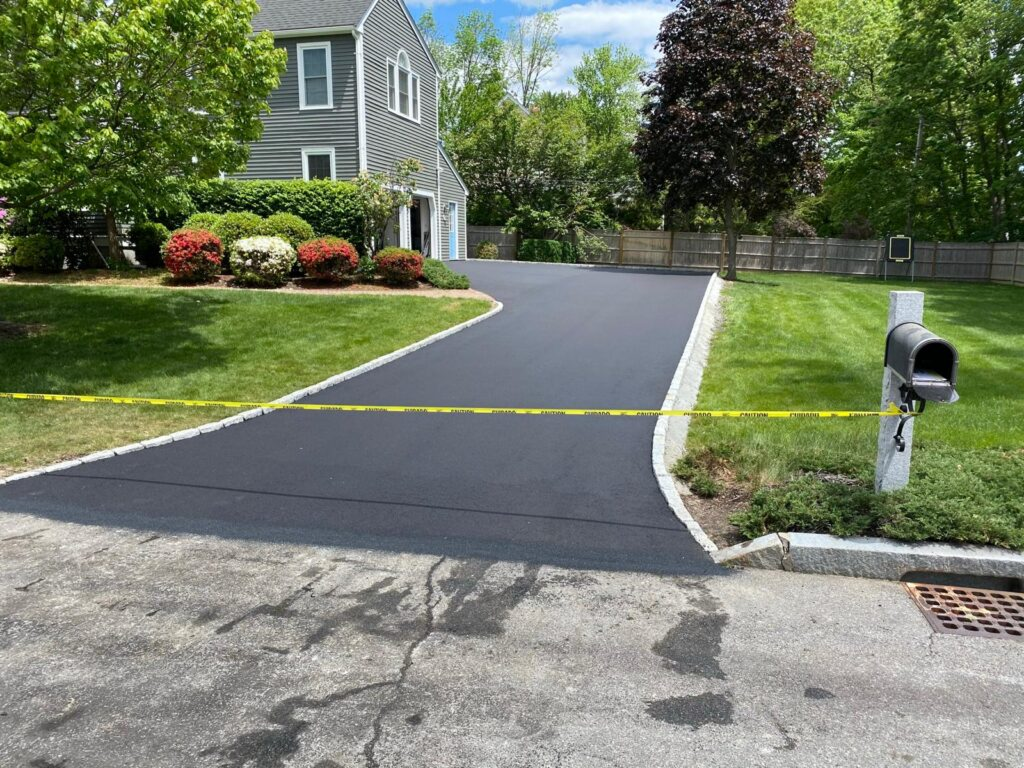
What the repairs are
A short, steep lakeside drive near Shrewsbury sheds water fast but concentrates wear and cracking at the bottom. A wider subdivision apron handles more daily traffic but stays flatter and wetter longer after rain, so asphalt repair approaches differ accordingly.
Mature trees near older Shrewsbury properties mean roots working beneath the asphalt's edge. Heaving or cracking along a tree line is usually root pressure rather than frost.
A steep Shrewsbury drive that pools water at a low point is a drainage problem wearing an asphalt costume.
Why It Failed Here
Shrewsbury's older lakeside streets often have short, steep drives that shed water fast but concentrate stress at the base of the slope, where a car's weight and braking meet a seam or a low point.
Timing Matters More Than People Think
A small crack filled in the fall costs little and stops water from getting underneath before winter.
Why drives fail in Shrewsbury
Shrewsbury's ground is unforgiving in a few specific ways.
Steep hillside lots mean water arrives with speed. A sloped drive carries runoff downhill, and where that water meets a low corner, a garage door or the seam of an old patch, it goes down instead of away. Over years that washes out fine material from under the asphalt and leaves the hollows that later sink. On a hillside, drainage decides how long the work lasts.
Shared drives on two-family properties take more traffic than a single-family drive was built for. More vehicles, more turning, more weight on the same few feet. That is exactly where alligator cracking appears first, and where edges break down from vehicles clipping the sides.
Tight frontages put the apron directly against the sidewalk. Plows and shoveling push snow and meltwater straight onto that strip, and the edge there takes constant punishment. It is also the part of the drive most likely to involve the town, so if the damage reaches the apron or the sidewalk line, we will tell you before work begins what is yours to fix and what isn't.
And in every case, frost is the engine behind it. Water enters a small crack, freezes, expands and pries the crack wider. It thaws and drains into the opening, and the cycle repeats all winter. A hairline crack in October can be a pothole by March.

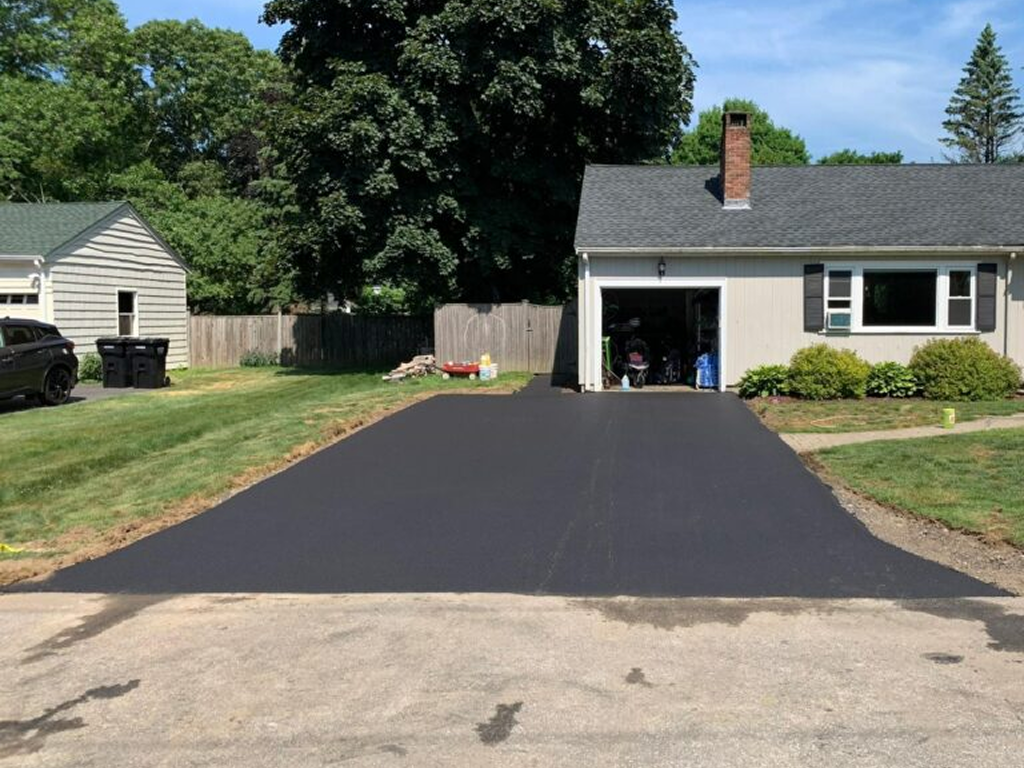
Why timing matters
A crack that is filled this fall is a small job. The same crack left through a winter lets water into the base, and the cost of the repair rises with every freeze. A pothole gets larger as vehicles break its edges away. An edge failure keeps retreating.
Spring is when the damage that has been hiding becomes obvious, and when everyone calls at once. The cheapest repairs happen before that, while the problem is still the size of a hand.
Asphalt repair questions in Shrewsbury
Can a cracked asphalt driveway in Shrewsbury be repaired instead of replaced?
Often, yes. If the damage is limited to surface cracking or an isolated soft spot and the base underneath is still intact, patching or crack filling solves it. Widespread alligator cracking or multiple sunken areas usually mean the base has failed, which is a different conversation.
How do I know if it's the base or just the surface that's damaged?
Alligator cracking – tight, interconnected cracks in a pattern – points to base failure. Hairline cracks in a loose grid, with no sinking or softness underfoot, are usually surface-level and much simpler to fix.
Why does asphalt damage get worse over a Massachusetts winter?
Water gets into any crack, then freezes and expands, widening the crack with each freeze-thaw cycle. A small crack in the fall can become a much larger failure by spring if it isn't addressed first.
Is edge crumbling along my driveway something that needs full replacement?
Not usually. Edge failure is often a localized support problem – the perimeter wasn't holding up to traffic and plow contact. Rebuilding that edge is typically a contained repair, not a reason to redo the whole surface.
What causes a sunken spot near my garage or at the bottom of a sloped driveway?
Sinking usually means the base material underneath has compacted unevenly or washed out, often where water collects. Regrading that section to correct drainage, combined with rebuilding the base, addresses the actual cause rather than just filling the dip.
Next step
Call us at (413) 337-3772. Tell us what you are looking at and where on the drive it is. We will come out, look at the damage and the ground around it, and tell you honestly whether it can be repaired and what that involves.