
Asphalt Repair in Southborough, MA
You’re standing over it right now, maybe. A pothole that opened up after the last freeze. A patch of asphalt gone to pieces like a dry lakebed. An edge along the lawn that’s crumbled into gravel. Or a low spot near the garage door that holds water every time it rains. You don’t need a lecture on paving. You need to know if this is fixable, and what that actually looks like.
Southborough’s lots tend to be large, the terrain rolling and wooded, and a lot of the driveways here are long with real grade change from the road down to the house. That combination puts specific, predictable stress on asphalt, and it shows up in a handful of recognizable ways. Tree roots from the mature oaks and maples that line so many of these properties push up from underneath long before you ever see a leaf on the surface. Runoff from sloped lots finds every low spot and weak seam, especially where a driveway crosses near a drainage swale or culvert. The good news is that most early and mid-stage damage can be repaired without tearing out the whole drive. The trick is knowing which kind of damage you’re looking at, and acting before one season of neglect turns a patch job into a full rebuild.
Reading the damage
Hairline cracks are the asphalt surface drying and contracting. On their own, they’re cosmetic and cheap to address before water gets underneath and starts the freeze-thaw cycle that pries them wider every winter. Alligator cracking, the web of interlocking cracks that looks like reptile skin, means the base underneath has already failed in that spot; sealing the surface won’t fix it, and driving over it daily only accelerates the breakdown. Edge failure, where the asphalt crumbles along the border of the driveway, is almost always a lack of support at the edge, often made worse by plow blades catching it every winter on these longer, snow-prone drives. Sinking tells you the base has settled or washed out underneath, frequently from poor drainage on a sloped lot or a culvert that’s been overwhelmed. Heaving, where asphalt lifts, usually points to a root pushing up from below or frost working under a section that wasn’t draining, both common where driveways cut through wooded lots.
Each of these calls for a different fix, and each one gets more expensive the longer it sits:
- Hairline cracks: crack sealing to keep water out before winter
- Alligator cracking: full-depth patch down to a rebuilt base
- Edge failure: edge restoration with proper base support
- Sinking or settling: excavation and regrading, not just a surface patch
- Heaving: root removal or drainage correction before repaving
None of this is guesswork from the curb. A proper assessment means getting down to what’s actually happening under the surface, not just patching what’s visible and hoping it holds through another Southborough winter.


What Our Clients Say
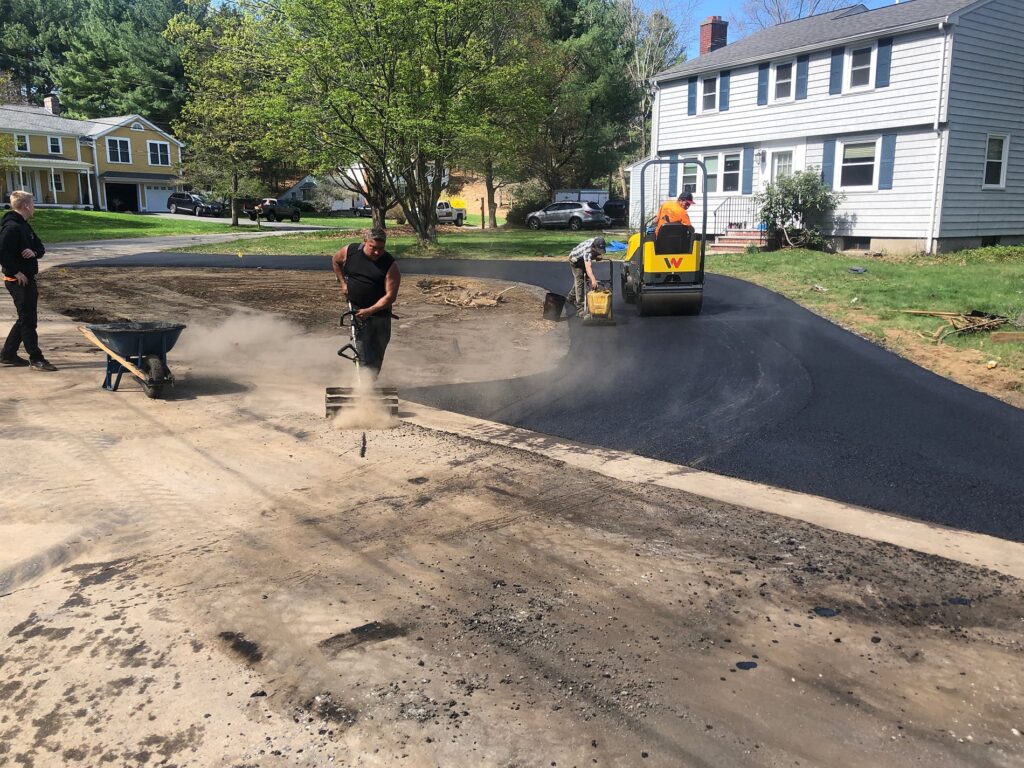
How to read the damage
Asphalt rarely fails for the reason it appears to. The surface shows a symptom, and the cause is usually underneath.
Repair or replace
Isolated damage, a single crack, sunken corner, eroded edge, is worth repairing. Widespread alligator cracking or multiple sinking areas usually means base failure, where patching just means paying twice. Get an honest assessment before committing to either, Southborough.
Infrared patching
For surface-level cracking and shallow depressions, infrared patching heats the existing asphalt, blends in new material, and fuses it without a visible seam.
Saw-cut and replace
Where alligator cracking or a pothole shows the base has failed, we cut out a clean section, rebuild what’s underneath, and replace the asphalt. It’s the right call when the damage is deeper than the surface.
Crack filling
Hairline and early-stage cracks around Southborough driveways get sealed before water, winter frost, and road salt work their way underneath. It’s the cheapest intervention on this page, and the one most homeowners wait too long to schedule.
Edge rebuilding
Crumbled edges along the lawn or gravel shoulder in Southborough get rebuilt with proper compacted base support underneath, not just filled with loose asphalt.
Regrading sunken areas
A sunken section near a garage apron, at the bottom of a slope, or along a low spot where runoff collects usually means the base underneath has washed out or compacted unevenly. On Southborough properties with older stone driveways or asphalt laid decades ago, this is one of the most common repair calls we get, especially after a wet spring or a hard winter freeze-thaw cycle that loosens subsurface material. Patching over a sunken area without addressing the base only buries the problem, and the dip usually returns within a season or two, often worse than before.
Proper regrading starts with cutting out the affected asphalt, excavating down to the failed base, and rebuilding it with compacted gravel graded to shed water away from the house, garage, or low-lying edge rather than toward it. Once the base is solid and properly sloped, we repave the section so it ties in level and flush with the surrounding surface. This approach corrects the structural cause rather than masking a surface symptom, giving you a driveway section that holds up through Southborough’s seasonal freeze-thaw swings instead of resinking.
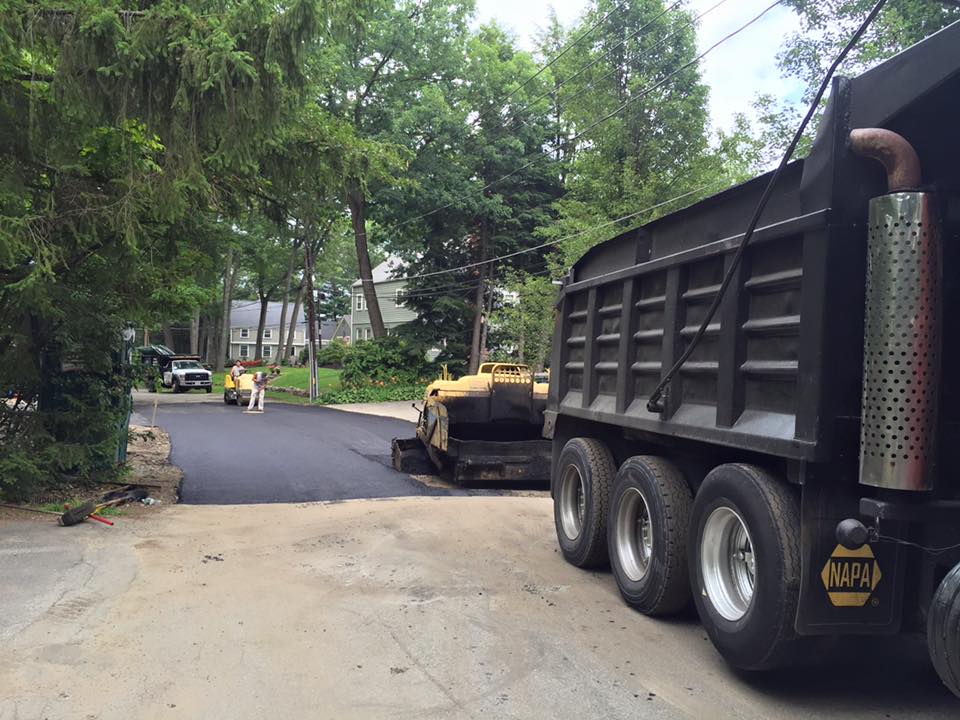
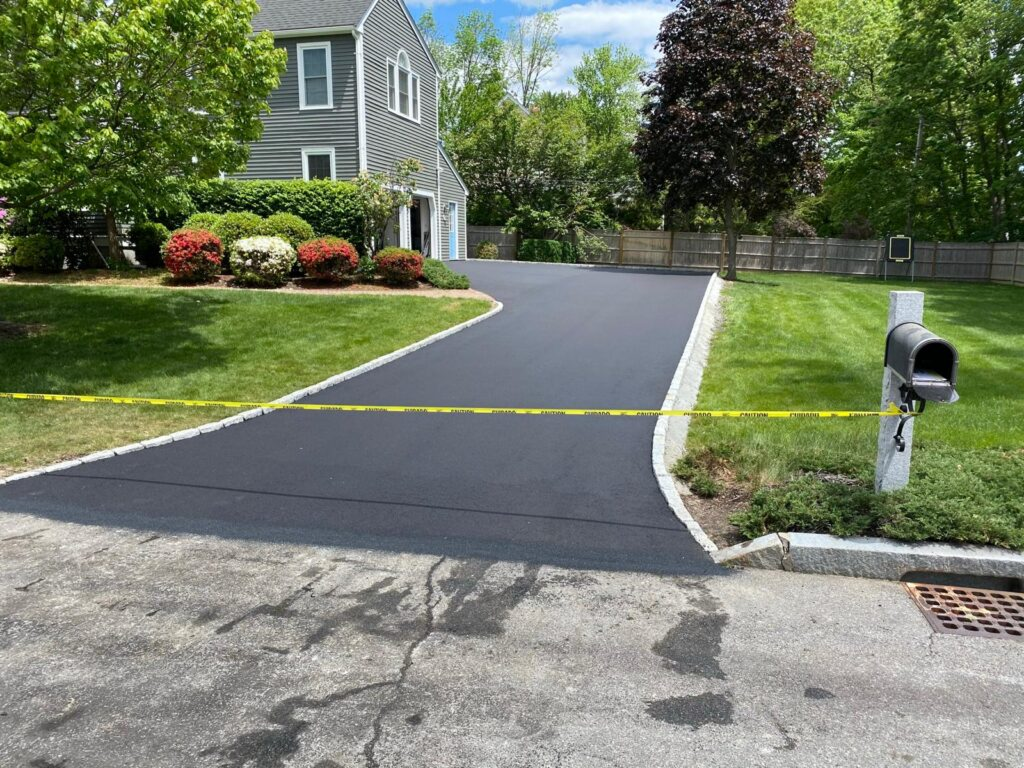
What the repairs are
Why it failed here
Southborough's wooded, sloped lots stack the odds: poor grading pushes water under the base, tree roots heave edges, and shaded sections stay damp longer.
Timing matters
A hairline crack costs little to fill. Left through a Southborough winter, freeze-thaw cycles widen it, water gets into the base, and by spring it’s an alligator-cracked section needing a full cut-and-replace instead of a simple patch.
What a heavy vehicle does
A delivery truck, dumpster, or oil delivery idling repeatedly on one spot in a Southborough driveway concentrates weight the asphalt wasn’t built for there, especially over a base already softened by spring water or shifting tree roots nearby.
Grade changes the risk
A long driveway with real fall toward the garage is managing water whether it was designed to or not. Where that water collects and sits is usually where the next failure shows up first.
Getting it looked at
Unsure if that crack is a quick patch or something bigger? Have it looked at. We'll tell you plainly which category your Southborough driveway falls into and what repair actually fits—not the priciest option.
Why drives fail in Southborough
Southborough's ground is unforgiving in a few specific ways.
Steep hillside lots mean water arrives with speed. A sloped drive carries runoff downhill, and where that water meets a low corner, a garage door or the seam of an old patch, it goes down instead of away. Over years that washes out fine material from under the asphalt and leaves the hollows that later sink. On a hillside, drainage decides how long the work lasts.
Shared drives on two-family properties take more traffic than a single-family drive was built for. More vehicles, more turning, more weight on the same few feet. That is exactly where alligator cracking appears first, and where edges break down from vehicles clipping the sides.
Tight frontages put the apron directly against the sidewalk. Plows and shoveling push snow and meltwater straight onto that strip, and the edge there takes constant punishment. It is also the part of the drive most likely to involve the town, so if the damage reaches the apron or the sidewalk line, we will tell you before work begins what is yours to fix and what isn't.
And in every case, frost is the engine behind it. Water enters a small crack, freezes, expands and pries the crack wider. It thaws and drains into the opening, and the cycle repeats all winter. A hairline crack in October can be a pothole by March.
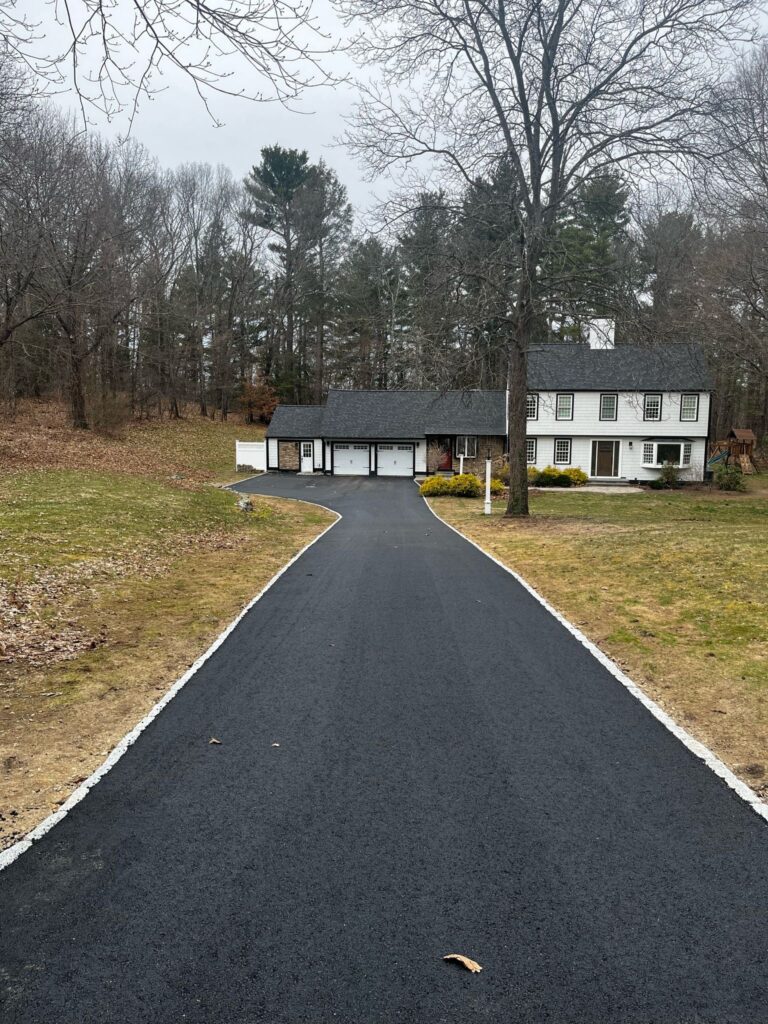
Why timing matters
A crack that is filled this fall is a small job. The same crack left through a winter lets water into the base, and the cost of the repair rises with every freeze. A pothole gets larger as vehicles break its edges away. An edge failure keeps retreating.
Spring is when the damage that has been hiding becomes obvious, and when everyone calls at once. The cheapest repairs happen before that, while the problem is still the size of a hand.
Asphalt repair questions in Southborough
Can a sunken section of driveway really be fixed without replacing the whole thing?
Usually, yes, if the sinking is isolated to one area. We dig out the affected section, rebuild the base properly with drainage in mind, and repave just that area. It only becomes a full-replacement situation when multiple sections are sinking independently, which usually means the base has failed broadly rather than in one spot.
How do I know if it's alligator cracking or just a lot of small cracks?
Alligator cracking forms a connected web of cracks that outline rough polygon shapes, like reptile skin, and it means the base underneath has already broken down. Separate hairline cracks that aren't connected to each other are a surface issue and far cheaper to deal with.
Why does my driveway keep failing in the same spot every winter?
That's usually a drainage or root problem that hasn't been addressed at the source. A patch placed over a spot that's still collecting water, or still being pushed on by a growing root, will fail again. Fixing it properly means dealing with what's underneath, not just the surface.
Is it worth fixing cracks now if I'm not sure how long the driveway has left?
Generally yes. Crack filling is inexpensive, and it stops water from getting into the base and causing the deeper damage that turns a small job into a large one. It buys the driveway time regardless of its long-term outlook.
Do you repair driveways near the historic centre differently?
The repair methods are the same, but where a frontage is visually sensitive, we take more care with how clean the patch line looks and how well it matches the surrounding surface, rather than just closing the hole functionally.
Next step
Call us at (413) 337-3772. Tell us what you are looking at and where on the drive it is. We will come out, look at the damage and the ground around it, and tell you honestly whether it can be repaired and what that involves.