
Asphalt Repair in Bedford, MA
You are standing over a pothole by the mailbox, or a patch of cracks spreading out from the garage apron like a spider web, or a dip in the asphalt that fills with water every time it rains. You do not need a lecture on paving. You need to know if this can be fixed, and what that fix actually looks like.
Bedford’s older colonials and capes mostly sit on flat lots with wide frontages, which is good news for repair work. There is usually room to stage a truck and equipment without blocking the street or squeezing past a fence line, and a flat drive does not carry the drainage problems that come with a steep grade. But flat has its own issue: water that lands on the surface has nowhere to run off, so it sits, soaks into any weak spot, and goes to work on the base underneath. That is the root cause behind most of the damage we see called out to in this town.
Reading the damage correctly matters more than most homeowners realize, because the right fix depends entirely on what is actually failing. Hairline cracks that run in a rough grid, not yet connected, usually mean the surface is aging but the base below is still doing its job. Left alone through a few New England winters, water gets into those cracks, freezes, expands them, and they start linking up into something bigger and more expensive to ignore.
Alligator cracking, the tight, interlocking pattern that looks like reptile skin, is a different story. That pattern means the base has already failed in that spot. The asphalt is flexing under load because there is nothing solid holding it up anymore. Patching the surface without addressing the base underneath that patch is a short-term fix at best, and often just delays the same repair by a season or two while the surrounding area deteriorates further.
Edge failure, where the asphalt crumbles or breaks away along the perimeter of the drive, is common on wider Bedford frontages where the edge was never confined by a curb. Snowplow blades catch an unprotected edge every winter, and each pass takes a little more. Left unaddressed, this works its way inward, turning a cosmetic issue into a structural one.
Sinking and heaving are opposite problems with similar causes. A sunken section usually means the base material has washed out or settled under water infiltration. A heaved section, pushed upward, often points to a root from a nearby maple or oak working under the pavement, or frost lifting a saturated spot that never drained.
Not every problem needs the same approach. Depending on what we find, the right fix might be one of these:
- Surface-level crack sealing for grid cracking caught early, before water reaches the base
- Cut-out-and-patch repair for isolated alligator cracking or sunken spots, replacing the failed base material, not just the top layer
- Edge rebuilding with proper compaction for perimeter crumbling along unconfined drive edges
- Root or drainage correction paired with patching for heaved sections, so the same spot does not fail again next season


What Our Clients Say
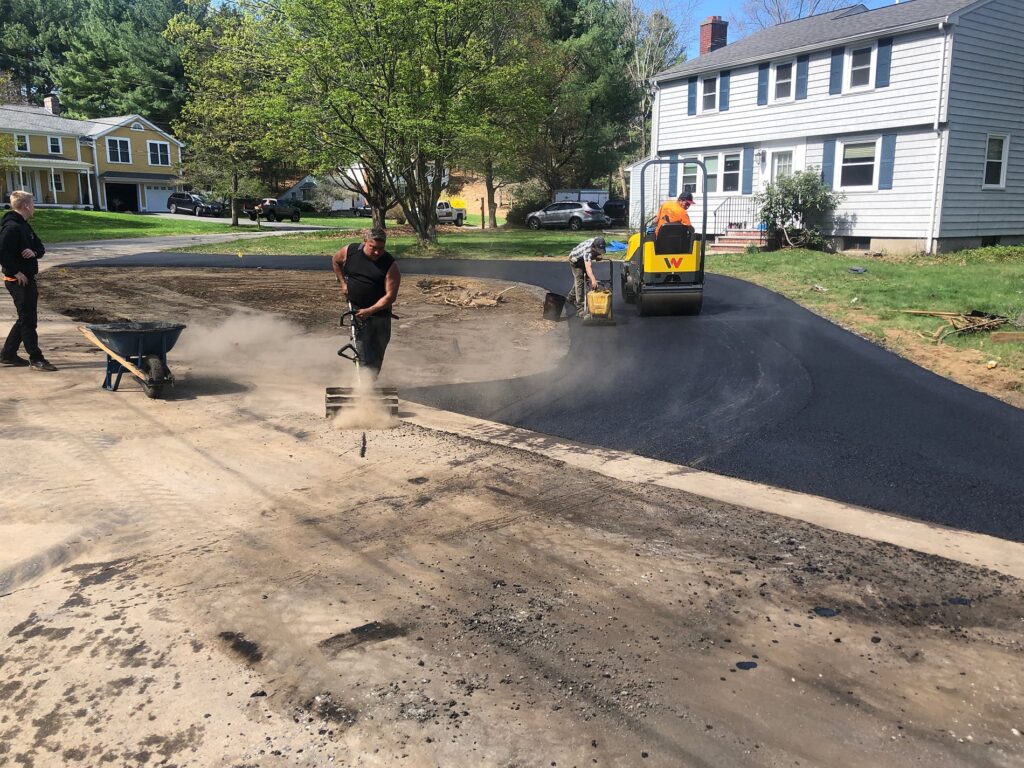
How to read the damage
Asphalt rarely fails for the reason it appears to. The surface shows a symptom, and the cause is usually underneath.
A hairline crack today is a cheap fix. Left through one more Bedford freeze-thaw cycle, it becomes a base repair.
Repair or replace?
Not every failure needs a new driveway. Isolated cracking or small sections point to repair, while widespread alligator cracking, sinking, and edge failure mean the base is done and patching wastes money.
Infrared patching
Infrared patching heats the existing asphalt, blends it with new material, and fuses the repair to the surrounding surface.
Saw-cut and replace
For damage with a failed base underneath, we saw-cut a clean square around it, remove the full depth, rebuild the base, and lay new asphalt.
Crack filling
Hairline and grid cracking that hasn't yet reached the base responds well to crack filling, which keeps Bedford's seasonal rain and frost from getting underneath, expanding gaps and turning a small, cheap fix into costly base repair or full resurfacing later.
Why Bedford drives fail where they do
Bedford’s flat lots keep water from running off the way it would on a sloped drive elsewhere in Middlesex County. It pools, finds the weakest point, and that’s almost always a crack left too long or a low spot where the original base ran thin. A hard New England freeze-thaw cycle then does the rest, expanding trapped water under the surface all winter until that weak point grows fast.
Mature trees around Bedford’s mid-century properties add to the problem. Oak and maple roots spread wide searching for moisture, and a driveway sitting over one rarely survives the heave that follows. Shaded sections also stay damp longer after rain or snowmelt, so that asphalt ages faster than areas getting full sun. A root-crossed, shaded stretch failing before the rest of the drive is rarely a coincidence.
Heavy vehicles play their part as well. A delivery truck or a contractor’s equipment parked repeatedly on one spot presses it down faster than ordinary driving, especially where the base underneath was already thin or compromised.
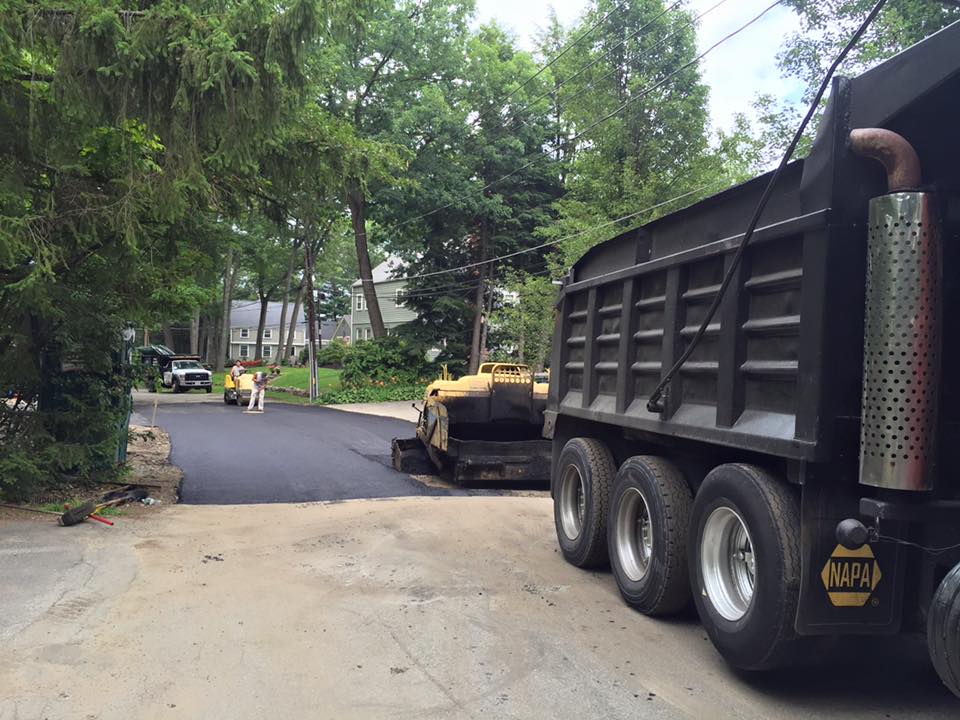
What the repairs are
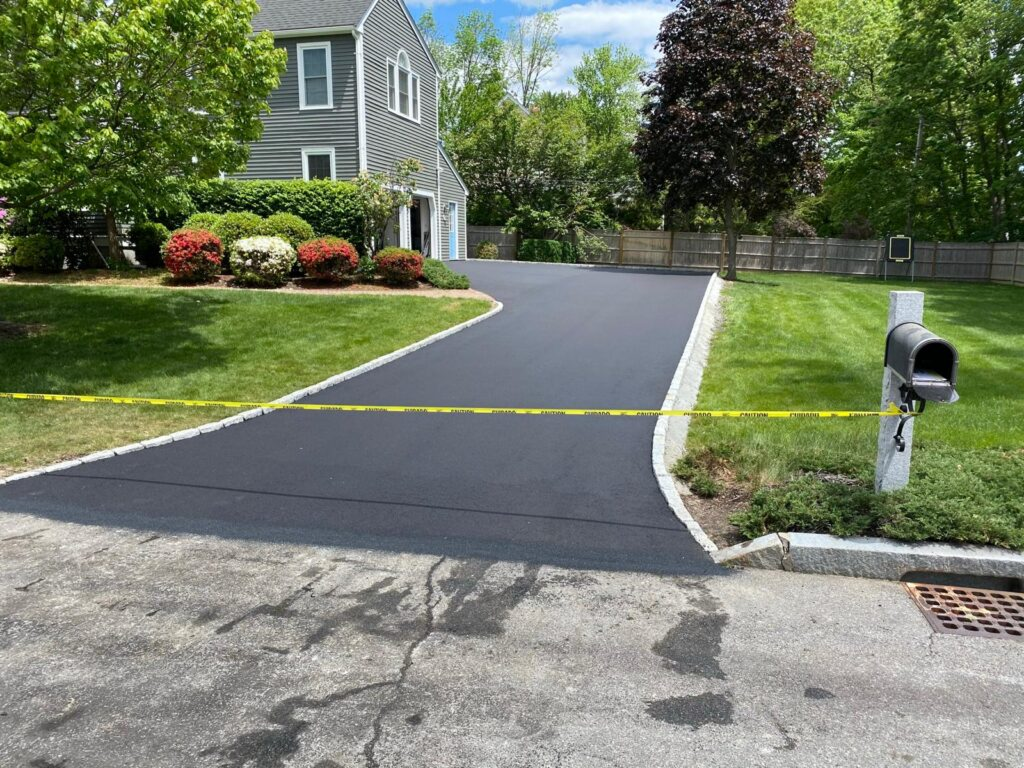
Edge rebuilding restores a confined, plow-resistant perimeter where asphalt has crumbled away along the side of the drive, usually from repeated plow contact.
Regrading a sunken section means rebuilding the base to pitch water away from the low point, not just filling it level, which would fail again within a season.
Timing matters more than it seems
A crack filled this fall costs far less than one left to take on winter water and freeze solid. By spring, that same crack can widen into a full saw-cut repair instead of a quick, affordable fix.
Waiting through even one Bedford winter can turn a simple crack-fill job into a base rebuild, because frozen water does more damage in one season than most people expect.
What to do next
If you are looking at damage on a Bedford drive and are not sure whether it is a quick fix or something bigger, that is exactly what we look at for you before recommending anything.
Why drives fail in Bedford
Bedford's ground is unforgiving in a few specific ways.
Steep hillside lots mean water arrives with speed. A sloped drive carries runoff downhill, and where that water meets a low corner, a garage door or the seam of an old patch, it goes down instead of away. Over years that washes out fine material from under the asphalt and leaves the hollows that later sink. On a hillside, drainage decides how long the work lasts.
Shared drives on two-family properties take more traffic than a single-family drive was built for. More vehicles, more turning, more weight on the same few feet. That is exactly where alligator cracking appears first, and where edges break down from vehicles clipping the sides.
Tight frontages put the apron directly against the sidewalk. Plows and shoveling push snow and meltwater straight onto that strip, and the edge there takes constant punishment. It is also the part of the drive most likely to involve the town, so if the damage reaches the apron or the sidewalk line, we will tell you before work begins what is yours to fix and what isn't.
And in every case, frost is the engine behind it. Water enters a small crack, freezes, expands and pries the crack wider. It thaws and drains into the opening, and the cycle repeats all winter. A hairline crack in October can be a pothole by March.
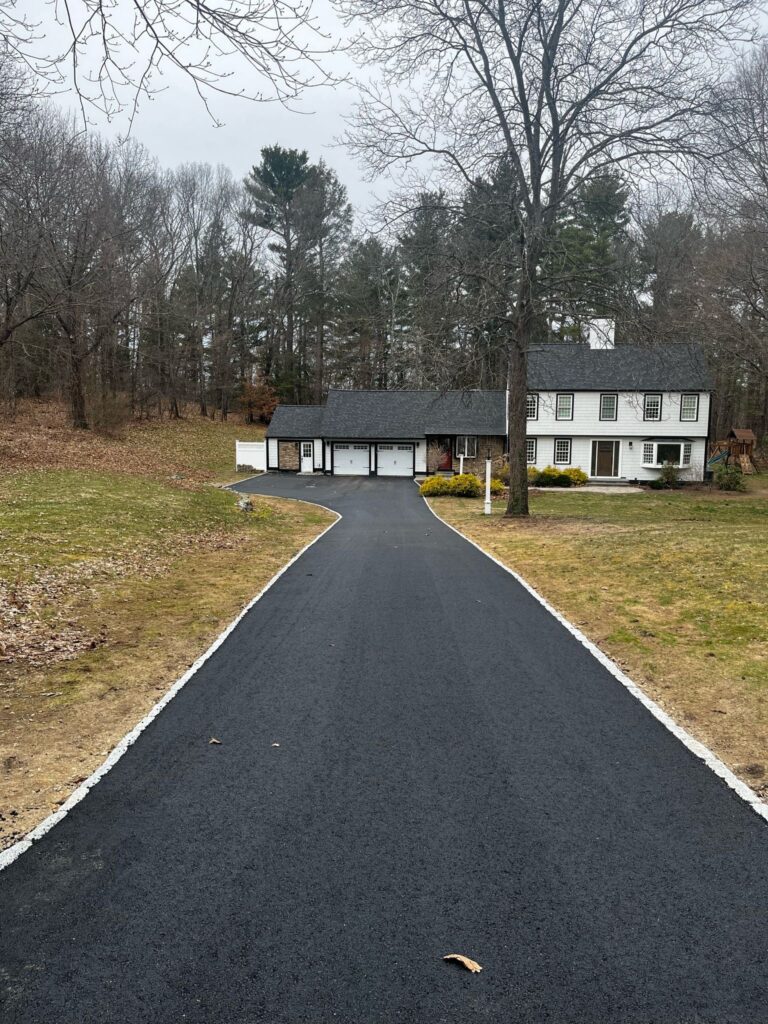
Why timing matters
A crack that is filled this fall is a small job. The same crack left through a winter lets water into the base, and the cost of the repair rises with every freeze. A pothole gets larger as vehicles break its edges away. An edge failure keeps retreating.
Spring is when the damage that has been hiding becomes obvious, and when everyone calls at once. The cheapest repairs happen before that, while the problem is still the size of a hand.
Asphalt repair questions in Bedford
Can a sunken section of driveway be repaired without replacing the whole drive?
Usually, yes, if the sinking is isolated to one area. We cut out the affected section, rebuild the base so water can drain away from the low point, and repave just that area. If sinking shows up in multiple spots across the drive, that points to a wider base problem worth addressing together.
How do I know if it's alligator cracking or just surface cracks?
Surface cracks run in a loose, disconnected pattern and the asphalt around them still feels solid underfoot. Alligator cracking is tight, interlocking, and the asphalt often flexes slightly when you walk on it, which means the base underneath has already given way.
Is it worth fixing cracks if I'm not sure how long the driveway has left?
Yes. Crack filling is inexpensive compared to what happens if water gets underneath and freezes over a winter. Even a driveway that will eventually need replacement is better off without active water infiltration in the meantime.
Why does my driveway fail faster under the trees than the rest of the drive?
Shade keeps that section damp longer after rain or snowmelt, which accelerates wear. Roots from mature trees common around Bedford's older properties also push up from underneath, cracking or heaving the surface independent of any water issue.
Will patch repairs look different from the rest of the driveway?
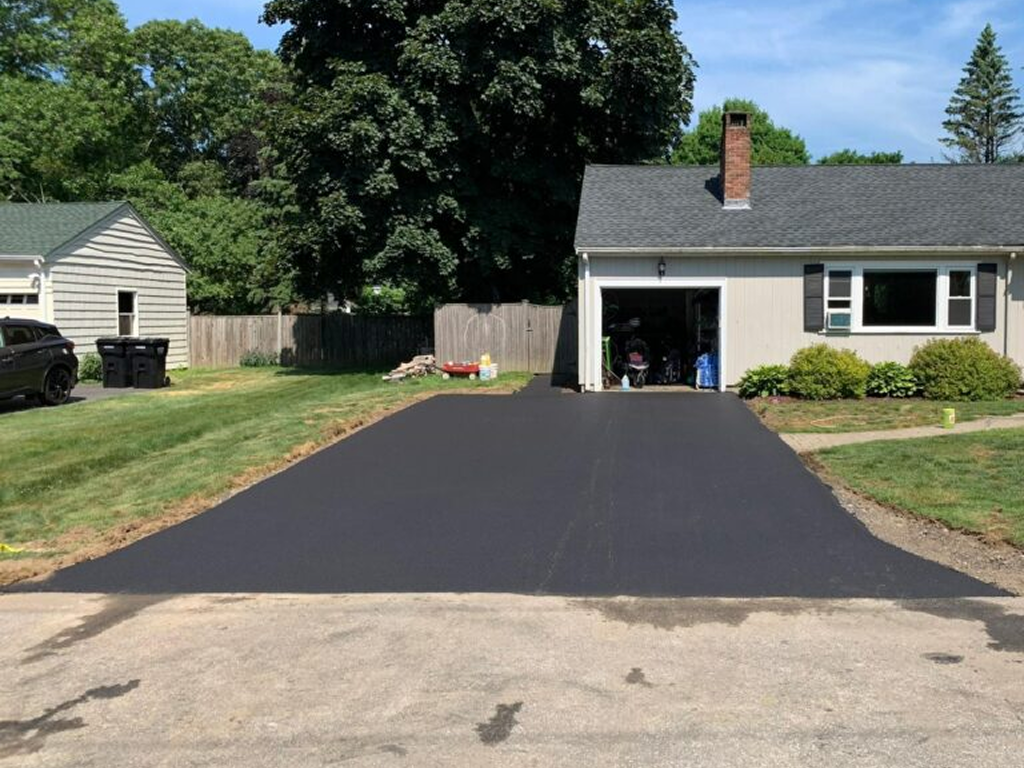
A new patch will be visibly darker than surrounding weathered asphalt at first, since it is fresh material. That difference fades as it ages and is a cosmetic point, not a sign of a worse repair.
Next step
Call us at (413) 337-3772. Tell us what you are looking at and where on the drive it is. We will come out, look at the damage and the ground around it, and tell you honestly whether it can be repaired and what that involves.